Ottawa vs Raleigh: which should you move to?
Ottawa or Raleigh? Housing, rent, crime, climate, income, taxes and transit, side by side, from each city's own published figures. Written for someone deciding where to live, not for a ranking.
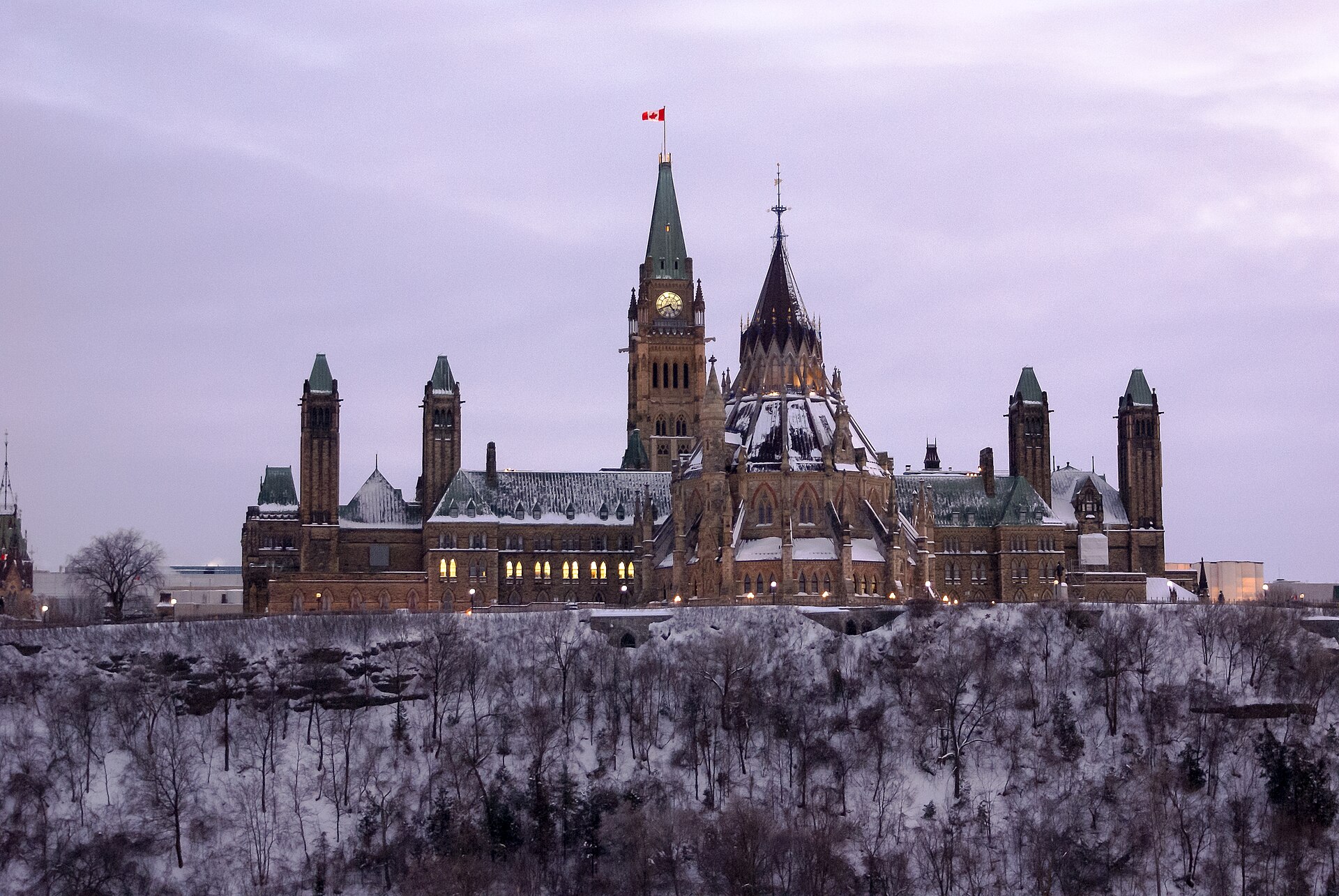
Ottawa
.jpg)

Raleigh

The two housing bills are in different currencies and do not net, and held against local pay they come out nearly level. Mortgage, property tax and insurance run about $3,350 CAD a month in Ottawa and about $2,808 USD in Raleigh, roughly 39% and 40% of each city's median household income: Raleigh's house is cheaper against income, 5.0 times against 6.2, and its 7.03% mortgage rate against 4.34% hands that back. The labor market is Raleigh's, with metro unemployment at 3.1% in July 2026 against 6.8% in Ottawa-Gatineau, where the federal public service is to lose about 28,000 more positions by 2029. Safety is Ottawa's on homicide, 21 in 2025 at 1.59 per 100,000 against 25 at about 4.9. Choose Ottawa for coverage that comes with residency, a 21.2 C July and a city where 11.2% of commuters took transit in 2021. Choose Raleigh for the job market, lighter taxes and a 5.5 C January instead of -10.0 C.
Ottawa prices are in CAD and Raleigh prices are in USD. The tables leave them in their own currency and compare ratios and rates instead; a conversion would be stale by the time you read it.
| Measure | Ottawa | Raleigh | Advantage |
|---|---|---|---|
| City population | 1,188,114 (2025) | 506,306 (2025) | Not directly comparable |
| Metro population | 1,700,014 (2025) | 1,595,720 (2025) | Not directly comparable |
| Five-year growth Growth is pressure on rents and roads as much as it is opportunity, so it is reported without a winner. | 8.9% (2016-2021) | 8.2% (2020-2025) | Not directly comparable |
What a home costs in each
The figures the two cities' rent-versus-buy and mortgage calculators run on, read from the same tables.
| Measure | Ottawa | Raleigh | Advantage |
|---|---|---|---|
| Benchmark home price MLS® HPI or equivalent benchmark. Lower is treated as the advantage, which is the buyer's view rather than the owner's. | $634,000 (July 2026) | $428,671 (August 2026) | Not directly comparable |
| Detached house benchmark | $725,000 | $440,555 | Not directly comparable |
| Apartment or condominium benchmark | $385,500 | $270,056 | Not directly comparable |
| Two-bedroom rent | $1,916/mo (average, October 2025) | $1,655/mo (average, August 2026) | Not directly comparable |
| One-bedroom rent | $1,593/mo | $1,409/mo | Not directly comparable |
| Two-bedroom rent against median income A year of two-bedroom rent as a share of the median household income below. A household paying the median rent out of the median income is a fiction, but it is the same fiction in both columns and it crosses currencies. | 22.5% of a year's income | 23.3% of a year's income | Ottawa |
| Mortgage payment on the benchmark, 20% down 25 years in Ottawa against 30 in Raleigh, each compounding the way its own country's lenders do. The rates are not a spread you can shop: they are what each market charges. | $2,762/mo at 4.34% | $2,288/mo at 7.03% | Not directly comparable |
| Price to household income Benchmark price divided by the median household income below. A ratio is comparable across currencies; the dollars are not. | 6.2× | 5.0× | Raleigh |
| Property tax on the benchmark home The effective rate on market value, which is what the two rates have in common and what the Advantage column is decided on; the bills are in each city's own dollars. | $5,262/yr (0.83%, 2026) | $3,717/yr (0.867%, 2026) | Ottawa |
| Transfer tax on the benchmark home Compared as a share of the price. Where the seller pays it, it is a cost of leaving rather than arriving. | $9,155 (buyer pays) | $857 (seller pays) | Raleigh |
| Rent control A cap protects a sitting tenant and does nothing for the next lease, so neither column is simply better. | 2.1% guideline (2026) | Forbidden by state law | Not directly comparable |
Ottawa: About 0.83% of market value. Ottawa levies roughly 1.26%, but against a Current Value Assessment frozen at 1 January 2016 values, because Ontario has deferred every reassessment since. The average urban home is assessed at $415,000 and pays about $5,246 in 2026, which on the $634,000 composite benchmark is 0.83%. Ottawa's municipal taxes on a representative detached house were the lowest of Ontario's ten largest cities in 2025. Raleigh: About 0.87% of market value. Raleigh levies 90.91 cents per $100 for fiscal 2027, Wake County's 53.71 cents plus the City's 37.20 cents, against values set at the 1 January 2024 revaluation. North Carolina measures the gap itself: the Department of Revenue puts Wake's assessment level at 95.39% of sale price, which is how it publishes an effective county rate of 0.4933% against a nominal 0.5171%. Wake revalues again on 1 January 2027 and every two years after that, so the next bill resets to what houses are worth then. Inside the downtown municipal service district the bill carries a further 6.8 cents per $100.
How safe each city is, by the numbers it publishes
Police-reported figures for the most recent year each force or statistics agency has released. Rates describe a whole city or metro area, and the spread between neighbourhoods inside one city is usually wider than the gap between the two cities.
| Measure | Ottawa | Raleigh | Advantage |
|---|---|---|---|
| Crime Severity Index Statistics Canada's weighted index for the metropolitan area, where 100 is Canada in 2006. American cities have no equivalent series. | 50.6 (2025) | Not published | Not directly comparable |
| Violent crime per 100,000 Canada counts every violent Criminal Code incident; the FBI counts four offences. The Canadian figure is always the larger one for that reason alone. | 814 (2025) | 396 (2025) | Not directly comparable |
| Property crime per 100,000 | 2,835 (2025) | 2,316 (2025) | Not directly comparable |
| Homicides Counts, not rates, and a single year in a small city moves a long way on chance alone. What each figure covers is under the table. | 21 (2025) | 25 (2025) | Not directly comparable |
The Ontario-part CSI rose from 46.85 in 2021 to 54.20 in 2023, held at 54.12 in 2024 and fell 6% to 50.61 in 2025 (table 35-10-0026-01). The violent crime rate has kept climbing, from 744 per 100k in 2021 to 814 in 2025, while property crime peaked in 2024 at 2,957 per 100k and eased to 2,835 in 2025.
What the rates cover: Total violent Criminal Code violations, rate per 100,000, Ottawa-Gatineau CMA Ontario part, table 35-10-0177-01 (10,745 incidents).
Homicides: Ottawa-Gatineau CMA Ontario part, table 35-10-0177-01; rate 1.59 per 100,000. 2024 was 27 (2.10 per 100k), the highest of the last five years.
On the FBI's definitions, violent offenses in Raleigh went from 2,573 in 2023 to 2,399 in 2024 and 2,007 in 2025, a 16% drop in the last year, and property offenses from 12,665 to 13,854 and then 11,725. RPD's own 2025 report shows motor vehicle thefts down 32% (2,444 to 1,664), thefts from vehicles down 27%, non-fatal shooting incidents down from 91 to 79 and aggravated assaults without a firearm down 12%, while its all-assault total was flat at 7,418 and murders held at 25 after 24. The 2025 CDE counts were read on 26 September 2026 from a feed last refreshed on 15 September and can still be revised.
What the rates cover: Computed: 2,007 violent offenses (murder, rape, robbery and aggravated assault) in the FBI Crime Data Explorer's summarized data for the Raleigh Police Department (ORI NC0920100) in calendar 2025, divided by the 506,306 Vintage 2025 city population. On the CDE's own agency population of 508,719 the rate is 395. RPD's 2025 annual report does not publish a count on this definition: its total violent crime of 8,541 counts every assault, simple assaults included (7,418 in all), and lists no rapes, so it runs more than four times the FBI figure and measures something else.
Homicides: 25 murders and nonnegligent manslaughters in 2025 in both RPD's annual report and the FBI CDE, against 24 in 2024, about 4.9 per 100,000 on the city population. RPD's wider count of homicide incidents, which adds one negligent manslaughter and two justifiable homicides, was 28. The high point in the CDE series since 2021 is 45, in 2022.
Winters, summers and what the weather can do to a house
| Measure | Ottawa | Raleigh | Advantage |
|---|---|---|---|
| January mean | -10.0 °C | 5.5 °C | Not directly comparable |
| July mean | 21.2 °C | 26.9 °C | Not directly comparable |
| Precipitation a year | 930 mm | 1,170 mm | Not directly comparable |
| Snowfall a year | 232 cm | 13 cm | Not directly comparable |
| Sunshine a year | 2,084 hours | 2,606 hours | Raleigh |
Environment and Climate Change Canada 1991-2020 normals at Ottawa Macdonald-Cartier Int'l A (climate ID 6106000). Annual mean 6.5 C, rainfall 757.2 mm. Sunshine hours are from the 1981-2010 normals at Ottawa CDA (climate ID 6105976) because the 1991-2020 airport table does not publish sunshine totals.
Hazards: Cold winters with regular snowstorms and freezing rain, spring flooding along the Ottawa River (2017 and 2019), summer heat and humidity, occasional severe thunderstorms and tornadoes (September 2018, the May 2022 derecho), and wildfire smoke episodes such as June 2023.
NOAA NCEI 1991-2020 normals for Raleigh-Durham International Airport (station USW00013722): January mean 41.9F, July mean 80.5F, annual mean 61.2F, 46.07 in of precipitation, 5.2 in of snow. July is the warmest month, ahead of August's 78.8F, with a mean high of 90.8F; January's mean low is 31.8F. Most of the snow falls in January (2.6 in) and February (1.4 in), and September (5.15 in) and July (5.02 in) are the wettest months. Converted here to 5.5 C, 26.9 C, 1,170 mm and 13.2 cm. Sunshine hours are the older 1961-1990 NCDC means (2,606 hours, 58% of possible), since the 1991-2020 normals do not include sunshine.
Hazards: Humid subtropical, with long hot summers and thunderstorms, and winters mild enough that snow is an event. The record storm, on 24 to 25 January 2000, left 20.3 in (52 cm) at the airport, 17.9 in of it in 24 hours, beating a 1927 record of 17.8 in. Hurricanes reach Raleigh weakened but not harmless: Fran in September 1996 dropped 8.80 in (224 mm) of rain at RDU, uprooted trees across the region and did about $900 million of damage in Raleigh and Wake County, and the State Climate Office writes that no storm since has had so wide or lasting an impact on the Triangle. Flooding along the creeks after heavy rain and summer heat are the routine risks.
What people earn and what the government takes
| Measure | Ottawa | Raleigh | Advantage |
|---|---|---|---|
| Median household income | $102,000 CAD (2020) | $85,060 USD (2024) | Not directly comparable |
| Unemployment rate Statistics Canada and the Bureau of Labor Statistics define unemployment slightly differently; the Canadian measure runs about a point higher on the same labour market. | 6.8% (July 2026) | 3.1% (July 2026) | Not directly comparable |
| Sales tax | 13% | 7.25% | Raleigh |
| Top marginal income tax Federal plus provincial or state. The American figure leaves out payroll taxes and the cost of health insurance, both of which a Canadian household covers through the tax it pays here. | 53.53% | 41.25% | Raleigh |
| Income tax on $100,000, single filer Computed from each jurisdiction's brackets at a single filer's $100,000 and rounded to the dollar, so a gap of a dollar is rounding rather than tax. Two cities in one province or state are shown as Even, because there the two cells describe the same tax and whatever separates them is method. | $21,930 CAD | $17,157 USD | Not directly comparable |
The federal government is the anchor employer: 130,628 of 279,707 federal public servants were based in the National Capital Region at March 31, 2025, and Budget 2025 announced about 28,000 more public service job cuts by 2029. Regional unemployment ran from 6.4% in mid 2025 to 7.3% in late 2025 before easing to 6.8% in July 2026.
Main sectors: Federal public administration, Technology (Kanata North, Shopify, telecom and defence), Health care and hospitals, Post-secondary education, Tourism and national institutions.
Property tax is set by the City of Ottawa; not verified here.
BLS counted 784,100 nonfarm jobs in the Raleigh MSA in July 2026 (not seasonally adjusted), up 15,900 or 2.1% on the year. Construction grew fastest (+6.8%), then education and health (+4.7%), while information (-5.9%), manufacturing (-1.7%) and trade, transportation and utilities (-0.4%) shrank. Professional and business services is the largest sector at 156,200 jobs, and government, with the state capital and NC State inside it, employs 107,400. The seasonally adjusted series (FRED RALE537NA) reached 786,100 in August 2026, 2.5% above August 2025. Average weekly wages across Wake, Johnston and Franklin counties were $1,621 in the first quarter of 2026 against $1,654 nationally. The newest large employers are drug plants in Holly Springs: Fujifilm Diosynth plans 1,400 jobs there by 2031 after a $1.2 billion expansion announced in April 2024, and Amgen about 725 across two plants after a $1.02 billion second one announced in December 2024.
Main sectors: Professional and business services, the metro's largest sector, Government (the state capital, NC State University, the county school system), Education and health care (WakeMed, UNC Health Rex, Duke Raleigh), Trade, transportation and utilities, Biomanufacturing and life sciences (Fujifilm and Amgen in Holly Springs, Research Triangle Park between Raleigh and Durham).
North Carolina's flat rate has come down every year since 2022: 4.99% (2022), 4.75% (2023), 4.50% (2024), 4.25% (2025) and 3.99% for 2026 and later, with further cuts from 2027 only if revenue triggers are met. Property tax is separate, with Wake County and the City of Raleigh each levying a rate on assessed value.
Whether you need a car
| Measure | Ottawa | Raleigh | Advantage |
|---|---|---|---|
| System | OC Transpo (buses, O-Train Lines 1, 2 and 4, Para Transpo); STO serves Gatineau | GoRaleigh city buses (38 fixed routes), GoTriangle regional buses to Durham, Chapel Hill, Research Triangle Park and RDU, and Amtrak's Piedmont, Carolinian and Floridian at Raleigh Union Station; no rail transit inside the city | Not directly comparable |
| Commute by public transit | 11.2% (2021) | 1.7% (2024) | Ottawa |
| Walk or cycle to work | 8.5% (2021) | 1.5% (2024) | Ottawa |
| Airport | Ottawa Macdonald-Cartier International Airport, YOW, 4.9 million passengers in 2025, up 6% on 2024 (Ottawa International Airport Authority, 2025 results) | Raleigh-Durham International Airport (RDU), 15.6 million passengers in 2025, a record just above 2024's 15.5 million, per the Airport Authority. It sits between Raleigh and Durham, and a $1.1 billion replacement primary runway, 10,639 ft long, has been under construction since October 2023. | Not directly comparable |
70.6 million O-Train and bus trips in 2025, up 3.9% on 2024 (OC Transpo report to Transit Committee, February 12, 2026). Ridership fell in early 2026: 11.5 million trips in January-February versus 12.4 million a year earlier.
GoRaleigh carried 7,991,200 unlinked trips in 2025 and about 25,300 a weekday in the second quarter of 2026 (APTA ridership reports, as cited by Wikipedia). Fares came back on August 1, 2024, at $1.25 a ride after the pandemic fare-free years, and riders 65 and over or 18 and under still ride free once enrolled. The half-cent Wake Transit sales tax pays for the expansion. Its first bus rapid transit line, on New Bern Avenue east of downtown, has two of three construction phases under way, and the city expects the corridor finished by the end of 2028, with lines south to Garner, west to Cary and north to North Hills planned after it. Commuter rail between Durham and Clayton, the rail half of the same plan, met what GoTriangle calls significant feasibility challenges, and the two regional planning bodies are now studying smaller, incremental passenger rail options instead. Intercity rail is moving faster: NCDOT holds a $1.09 billion federal grant (December 2023) for the Raleigh to Wake Forest segment of the S-Line to Richmond, with bridges replacing road crossings under construction in 2026, and Amtrak counted 289,230 passengers at Raleigh Union Station in fiscal 2025.
Health care, schools and what each city is like
Health care
Care is publicly funded through OHIP after a residency waiting period for newcomers, with prescription drugs, dental and vision outside the public plan for most working-age adults. The main hospitals are The Ottawa Hospital (Civic and General campuses), CHEO for children, the Queensway Carleton and Montfort; a replacement Civic campus was promised for 2028 but construction on the hospital itself had not begun as of 2026, and finding a family doctor is the hardest part of access, with the Ontario College of Family Physicians projecting 4.4 million Ontarians without one by 2026.
Education
The University of Ottawa (bilingual) and Carleton University are the large universities, with Algonquin College and La Cite for applied programs. Publicly funded schools run through four boards: the Ottawa-Carleton District School Board, the Ottawa Catholic School Board, and French-language public and Catholic boards, so French immersion and full French schooling are both widely available.
Living there
Ottawa is a government town that behaves like a mid-sized city: quiet downtown evenings, a large share of households with two stable incomes, and a weekend life built around the Rideau Canal, the Gatineau Park hills across the river and the river pathways. Winters are long and cold, with roughly 232 cm of snow in a normal year, and summers are warm and humid. The O-Train light rail has had reliability problems since it opened in 2019, and the bus network has been cut back, so most households still drive.
Health care
Care is paid for through employer or individual private insurance, Medicare and Medicaid, and North Carolina expanded Medicaid on December 1, 2023; about 740,000 people are covered by the expansion. Federal changes narrow it: non-citizen eligibility rules tighten from October 1, 2026, and from January 1, 2027 most expansion adults face a work requirement of 80 hours a month (or equivalent earnings) and renewals every six months. Three systems run Raleigh's hospitals. WakeMed's Raleigh Campus is a Level I trauma center, with a Level III center at WakeMed Cary, and WakeMed describes itself as Wake County's only provider of trauma services. UNC Health Rex, founded in 1894, is the UNC Health hospital in the city, and Duke Raleigh Hospital has 204 inpatient beds for cancer, heart, neuroscience and gastrointestinal care. The academic medical centers of Duke in Durham and UNC in Chapel Hill are inside the same region. This file did not verify a wait time figure for primary or specialist care.
Education
The Wake County Public School System is one county-wide district and enrolled 160,413 students in 2025-26, 702 fewer than the year before; it projects 161,461 across 204 schools for 2026-27. More than a quarter of the county's students now attend charter or private schools or are home-schooled, according to the News & Observer. Every address has a base school, and families can also apply to magnet and year-round calendar schools. NC State University enrolled 40,503 students in fall 2025 (30,504 undergraduate, 9,999 graduate) and is the city's research university; Meredith College, William Peace University, Shaw University and Wake Technical Community College are also in Raleigh, and Duke and UNC-Chapel Hill are in Durham and Chapel Hill. Saint Augustine's University, a historically Black university in the city, filed for Chapter 11 in April 2026 after a long fight over its accreditation and is offering no classes in fall 2026.
Living there
Raleigh is a state capital and a university town at the center of a metro of 1.6 million, and most of it lives like a ring of suburbs around a compact downtown. Two workers in three drive to work alone, fewer than one in fifty rides a bus, and more than one in five works from home. The city's greenways run for more than 100 miles along its creeks and the Neuse River, yet walking and cycling together carry 1.5% of commutes. Work is spread across the Triangle rather than gathered in the city: state government and NC State in the city, Research Triangle Park between Raleigh and Durham, drug plants in Holly Springs, and Durham and Chapel Hill close enough to share the airport. Summers are long, hot and humid, with a July mean of 80.5F, and winters are mild. The open question is whether the region can build the transit its growth now calls for. The half-cent tax Wake voters approved in 2016 is paying for more buses and a first bus rapid transit line on New Bern Avenue, due by the end of 2028, but the commuter rail at the center of that plan is back at the study stage, so for now living here without a car depends on choosing exactly where to live.
Where each city wins, and where it loses
Ottawa's figures are in Canadian dollars and Raleigh's in US dollars. Ottawa's composite benchmark was $634,000 CAD in July 2026, down 0.5%, with a detached house at $725,000 and an apartment at $385,500; Raleigh's typical home value was $428,671 USD in August 2026 on Zillow's index of all homes, down 1.7%. That is 6.2 times Ottawa's 2020 median household income of $102,000 CAD and 5.0 times Raleigh's 2024 median of $85,060 USD. At 20% down, Ottawa's mortgage at 4.34% is $2,762 CAD a month over 25 years, and Raleigh's $342,937 loan at 7.03%, Freddie Mac's rate for 24 September 2026, is about $2,288 USD over 30. Property tax lands close as a share of price: $5,262 CAD a year in Ottawa, 0.83% of market value, and about $3,717 USD in Raleigh, 0.867%. With insurance at $145 CAD and $210 USD a month, the Ottawa owner carries about $3,350 CAD and the Raleigh owner about $2,808 USD, roughly 39% and 40% of local median income. A two-bedroom averaged $1,916 CAD in October 2025 against $1,655 USD in August 2026. Ontario caps increases at 2.1% for 2026, but only in units first occupied before 15 November 2018; North Carolina forbids rent control.
Homicide is the one count that crosses the border intact, and it favors Ottawa, though Ottawa's covers the Ontario part of its metro and Raleigh's covers the city. The Ontario part of Ottawa-Gatineau recorded 21 homicides in 2025, 1.59 per 100,000, down from 27 in 2024; Raleigh recorded 25, about 4.9 per 100,000, after 24 in 2024 and 45 in 2022. The other rates are different instruments. Statistics Canada put the Crime Severity Index for the Ontario part at 50.61 in 2025, down 6% and below the national 75.0, and American cities have no equivalent. Ottawa's violent rate of 813.79 per 100,000 counts every violent Criminal Code violation, common assault and uttering threats included; Raleigh's 396 is 2,007 FBI-definition offenses of murder, rape, robbery and aggravated assault, divided by the Census estimate. Property crime, 2,834.59 per 100,000 against 2,316, is defined differently too. The directions differ: Ottawa's violent rate has risen every year since 2021, from 744 per 100,000, while Raleigh's violent offenses fell 16% in 2025. The Raleigh rates are federal counts read on 26 September 2026 and can still be revised.
Raleigh has the mild winter and Ottawa the milder summer, and the winter gap is the wider one. January averages 5.5 C at Raleigh-Durham International and -10.0 C at Ottawa's airport; July averages 26.9 C and humid against 21.2 C. Snow is 13.2 cm a year in Raleigh and 231.9 cm in Ottawa, and precipitation 1,170 mm against 929.8. Sunshine is on different series, 2,606 hours for Raleigh on 1961-1990 and 2,083.7 for Ottawa on the 1981-2010 normals. Ottawa's hazards are inland and recurring: freezing rain on the power lines, spring flooding along the Ottawa River in 2017 and 2019, the September 2018 tornadoes, the May 2022 derecho and wildfire smoke such as June 2023's. Raleigh's hurricanes arrive weakened but still do damage: Fran in September 1996 dropped about 224 mm of rain at the airport and did about $900 million of damage in Raleigh and Wake County. Creek flooding and long summer heat are its routine risks, and the rare big snow does come, about 52 cm on 24 and 25 January 2000. An owner's utility premium over a renter is $155 CAD a month in Ottawa, mostly heat from October to April, and $130 USD in Raleigh, mostly cooling.
Both are capitals with government as a large employer, and the two labor markets are in different condition. Raleigh-Cary's unemployment rate was 3.1% in July 2026, seasonally adjusted, on 784,100 nonfarm jobs, up 2.1% on the year; government, with the state capital and NC State inside it, employs 107,400, and professional and business services is the largest sector at 156,200. Ottawa-Gatineau's rate was 6.8% the same month, above Canada's 6.4%. Its anchor is the federal public service, with 130,628 of 279,707 federal public servants based in the National Capital Region at 31 March 2025, and Budget 2025 announced about 28,000 more positions to go by 2029. Median household income was $102,000 CAD in Ottawa in 2020 and $85,060 USD in Raleigh in 2024, give or take $7,119. Income tax on $100,000 is about $21,930 CAD in Ottawa, including the $750 Ontario Health Premium and before CPP and EI, against $17,157 USD in Raleigh for 2025, before 7.65% payroll tax, and North Carolina's 3.99% rate takes that to $16,651 for 2026. Sales tax is 13% HST against 7.25% in Wake County, and the top combined marginal rate 53.53% against 41.25%.
Ottawa's transit is troubled and still well ahead of Raleigh's. In the 2021 census, 11.2% of Ottawa commuters took transit and 8.5% walked or cycled, counted in May 2021 with remote work at its height, so the share now is unknown rather than low. In Raleigh in 2024, 1.7% took the bus, 1.5% walked or cycled, 66.3% drove alone and 21.8% worked from home. OC Transpo carried 70.6 million trips in 2025 on buses and O-Train Lines 1, 2 and 4, up 3.9%, though the O-Train has had reliability problems since it opened in 2019 and January and February 2026 slipped to 11.5 million trips from 12.4 million a year earlier. GoRaleigh carried 7,991,200 trips in 2025, all by bus, and there is no rail transit in the city. Wake County's half-cent transit sales tax is paying for a first bus rapid transit line on New Bern Avenue, due by the end of 2028, while the commuter rail in the same plan is back at the study stage. Most Ottawa households still drive. Flying favors Raleigh: RDU handled a record 15.6 million passengers in 2025, against 4.9 million at Ottawa, where many trips connect through Toronto or Montreal.
Health care is where the border shows most. In Ottawa, OHIP pays for physician and hospital care with nothing due at the point of use after a residency wait for newcomers, though prescriptions, dental and vision mostly fall outside it. The bottleneck is a family doctor: the Ontario College of Family Physicians projected 4.4 million Ontarians without one by 2026, and the replacement Civic campus of The Ottawa Hospital, promised for 2028, had not begun construction. In Raleigh care is bought through an employer or individual plan, Medicare or Medicaid. North Carolina expanded Medicaid on 1 December 2023, but from 1 January 2027 most expansion adults face a work requirement of 80 hours a month. WakeMed's Raleigh campus is a Level I trauma center, and Duke's and UNC's academic medical centers are in the same region. This site verified no wait time figure for either city. Ottawa has four publicly funded school boards, English and French, public and Catholic, so French immersion and full French schooling are ordinary choices. The Wake County Public School System is one county-wide district where every address has a base school and families can apply to magnet schools. The University of Ottawa and Carleton are Ottawa's universities; NC State enrolled 40,503 students in fall 2025.
What people underestimate is how alike the two housing bills are against pay, about 39% and 40% of local median income, and how differently each is exposed to change. Both property tax bills rest on dated values. Ottawa levies about 1.26% against assessments frozen at 1 January 2016, because Ontario has deferred every reassessment since, which is why the bill works out to 0.83% of what a buyer pays today, and none of this site's sources dates the next one. Wake County taxes 1 January 2024 values and revalues on 1 January 2027 and every two years after, so Raleigh's $3,717 bill resets soon. The mortgages are opposite instruments. Ottawa's 4.34% is fixed for a five-year term and then renews at whatever the rate is then; Raleigh's 7.03%, about a third of a point above the August rate this site's other American cities were written at, holds for thirty years and can be refinanced down. Getting in differs as well. An Ottawa buyer owes $9,155 in Ontario land transfer tax on the benchmark, in cash at closing, and one with less than 20% down also pays Ontario's 8% tax on the mortgage insurance premium; a Raleigh buyer pays no transfer tax.
Better here
- There were 21 homicides in 2025 across the Ontario part of the metro, 1.59 per 100,000, against 25 in Raleigh at about 4.9.
- OHIP covers physician and hospital care whoever employs you, where North Carolina's Medicaid expansion adults face an 80-hour monthly work requirement from 1 January 2027.
- Transit carried 11.2% of commuters in the 2021 census and 8.5% walked or cycled, against 1.7% and 1.5% in Raleigh in 2024, and OC Transpo ran 70.6 million trips in 2025 against GoRaleigh's 7,991,200.
- July averages 21.2 C against 26.9 C and humid in Raleigh.
- A two-bedroom averaged $1,916 CAD in October 2025, and increases are capped at 2.1% for 2026 in units first occupied before 15 November 2018, where North Carolina forbids rent control.
- The Crime Severity Index for the Ontario part of the metro fell 6% to 50.61 in 2025, against a national 75.0.
Worse here
- Regional unemployment was 6.8% in July 2026 against 3.1% in Raleigh-Cary, and Budget 2025 announced about 28,000 more federal public service cuts by 2029.
- January averages -10.0 C on a 231.9 cm snow normal, against 5.5 C and 13.2 cm in Raleigh, and an owner's utilities run $155 CAD a month over a renter's.
- The July 2026 benchmark is 6.2 times the city's 2020 median household income and a detached house at $725,000 CAD about 7.1 times, against 5.0 and about 5.2 in Raleigh.
- A single filer on $100,000 pays about $21,930 CAD against $17,157 USD in Raleigh for 2025, and sales tax is 13% HST against 7.25%.
- A buyer owes $9,155 in Ontario land transfer tax on the July 2026 benchmark, where a Raleigh buyer pays no transfer tax.
- 4.4 million Ontarians were projected to be without a family doctor by 2026, and the replacement Civic campus promised for 2028 had not begun construction.
Choose Ottawa if
- you want health coverage that comes with residency and survives a layoff
- you want transit to be a real option for part of the week now rather than a bus rapid transit line due in 2028
- you are raising children and want French schooling to be an ordinary option
- you can take a January at -10.0 C in exchange for a July at 21.2 C
The Ottawa guide · Neighbourhoods · Ottawa rent vs buy · Ottawa mortgage calculator
Better here
- Metro unemployment was 3.1% in July 2026 against 6.8% in Ottawa-Gatineau, on 784,100 nonfarm jobs growing 2.1% on the year.
- January averages 5.5 C with 13.2 cm of snow a year, against -10.0 C and 231.9 cm in Ottawa.
- Income tax on $100,000 was $17,157 USD for 2025 and falls to $16,651 for 2026, against about $21,930 CAD in Ottawa, and sales tax is 7.25% against 13%.
- The typical home value of $428,671 USD in August 2026 is 5.0 times the city's 2024 median household income, against 6.2 times in Ottawa.
- A buyer pays no transfer tax, where an Ottawa buyer owes $9,155 CAD on the July 2026 benchmark.
- The 7.03% rate of 24 September 2026 is fixed for thirty years, where Ottawa's 4.34% renews after a five-year term.
Worse here
- There were 25 homicides in 2025, about 4.9 per 100,000, against 21 and 1.59 in the Ontario part of the Ottawa metro.
- Only 1.7% of workers commuted by transit in 2024 and 66.3% drove alone, there is no rail, and the first bus rapid transit line is due by the end of 2028.
- July averages 26.9 C and humid, and Fran did about $900 million of damage in Raleigh and Wake County in September 1996.
- Care runs on employer, individual or public insurance, and from 1 January 2027 most Medicaid expansion adults must show 80 hours of work a month.
- North Carolina forbids rent control, where Ontario caps increases at 2.1% for 2026 in units first occupied before 15 November 2018.
- The 7.03% mortgage rate against 4.34% puts the three-line carry at about $2,808 USD a month, roughly 40% of the city's 2024 median household income, no lighter than Ottawa's 39%.
Choose Raleigh if
- you want a labor market at 3.1% unemployment in state government, universities, life sciences or professional services
- you want a January averaging 5.5 C and will trade it for a humid 26.9 C July
- you have employer health insurance you trust and would rather lock a rate for thirty years than renew it every five
- you want a detached house at about five times what households around you earn and will drive to most things
The Raleigh guide · Neighborhoods · Raleigh rent vs buy · Raleigh mortgage calculator
Ottawa or Raleigh, in short
Is Ottawa or Raleigh cheaper to live in?
Neither by much on the house, once each bill is held against its own city's pay, because the currencies do not convert here. An Ottawa owner pays about $3,350 CAD a month on mortgage, property tax and insurance, roughly 39% of the city's 2020 median household income of $102,000 CAD; a Raleigh owner pays about $2,808 USD, roughly 40% of the 2024 median of $85,060 USD. Raleigh's house is cheaper against income, 5.0 times against 6.2, and its mortgage dearer, 7.03% against 4.34%. A two-bedroom averaged $1,916 CAD in October 2025 against $1,655 USD in August 2026. Raleigh is cheaper on tax: about $17,157 USD on $100,000 against $21,930 CAD, 7.25% sales tax against 13%, and no transfer tax where an Ottawa buyer funds $9,155 at closing.
Is Ottawa or Raleigh safer?
Ottawa on homicide, the one count that crosses the border, though it is a count for the Ontario part of the metro against one for the City of Raleigh. Ottawa's recorded 21 homicides in 2025, 1.59 per 100,000, down from 27 in 2024; Raleigh recorded 25, about 4.9 per 100,000, after 24 in 2024. The other rates are different instruments. Ottawa's violent rate of 813.79 per 100,000 counts every violent Criminal Code violation, including common assault, while Raleigh's 396 is murder, rape, robbery and aggravated assault from the FBI's counts, divided by the Census estimate and still open to revision. Property crime, 2,834.59 per 100,000 against 2,316, is defined differently as well. Statistics Canada put Ottawa's Crime Severity Index at 50.61 in 2025 against a national 75.0; American cities have no equivalent.
Which has the better climate, Ottawa or Raleigh?
Raleigh, if winter decides it. January averages 5.5 C in Raleigh with 13.2 cm of snow a year, against -10.0 C and 231.9 cm in Ottawa, and an Ottawa owner heats from October to April. July reverses it, 26.9 C and humid in Raleigh against 21.2 C, which makes summer the better half of Ottawa's year. Raleigh is wetter, 1,170 mm against 929.8, and the sunshine figures, 2,606 hours against 2,083.7, come from different series. Ottawa's hazards are freezing rain, Ottawa River flooding as in 2017 and 2019, the May 2022 derecho and wildfire smoke; Raleigh's are weakened hurricanes, of which Fran did about $900 million of damage in Raleigh and Wake County in 1996, plus creek flooding and summer heat.
Both are capitals. How much does government matter to each job market?
A great deal in both, and on the figures this site holds only Ottawa's is shrinking. Ottawa's anchor is the federal public service: 130,628 of 279,707 federal public servants were based in the National Capital Region at 31 March 2025, which is much of why household incomes are high and steady, but Budget 2025 announced about 28,000 more positions to go by 2029, and regional unemployment was 6.8% in July 2026. Raleigh's government sector, with the state capital, NC State and the county school system inside it, employs 107,400 in the metro, behind professional and business services at 156,200, and total nonfarm jobs grew 2.1% to 784,100 in the year to July 2026, with unemployment at 3.1%. Outside government, Raleigh has Research Triangle Park and the Holly Springs drug plants, where Fujifilm plans 1,400 jobs by 2031; Ottawa has the technology, telecom and defence firms of Kanata North, its hospitals and its two universities.
Where the figures come from
Housing figures are the ones behind each city's calculators, dated on those pages. The rest are listed here with the date they were retrieved. See the methodology for how facts, estimates and opinion are kept apart.
- Census Profile, 2021 Census of Population: Ottawa, City (CSD) and Ottawa-Gatineau (Ontario part) · Statistics Canada · retrieved Supports: population.city (2021 count), Five-year growth, Median household income, Transit commute share, Walk and cycle commute share
- Census Profile, 2021 Census of Population: Ottawa-Gatineau (CMA) · Statistics Canada · retrieved Supports: population.metro (2021 count), population.growthPct5y (CMA)
- Population estimates, July 1, by census subdivision, 2021 boundaries (table 17-10-0155-01) · Statistics Canada · retrieved Supports: City population
- Population estimates, July 1, by census metropolitan area and census agglomeration, 2021 boundaries (table 17-10-0148-01) · Statistics Canada · retrieved Supports: Metro population
- Crime severity index and weighted clearance rates, Canada, provinces, territories and Census Metropolitan Areas (table 35-10-0026-01) · Statistics Canada · retrieved Supports: Crime Severity Index, Crime trend
- Police-reported Crime Severity Index and crime rate, by census metropolitan area, 2025 · Statistics Canada, The Daily · retrieved Supports: Crime Severity Index, crime.propertyRatePer100k (all-crime rate context)
- Incident-based crime statistics, by detailed violations, Canada, provinces, territories, CMAs (table 35-10-0177-01) · Statistics Canada · retrieved Supports: Violent crime rate, Property crime rate, Homicides, Crime trend
- Ottawa crime rate increases in 2025, remains above Ontario average · Yahoo News Canada (Ottawa Police Service KPI report to the Police Services Board, January 26, 2026) · retrieved Supports: crime.index (OPS city CSI 55.8)
- Canadian Climate Normals 1991-2020, Ottawa Macdonald-Cartier Int'l A · Environment and Climate Change Canada · retrieved Supports: January mean, July mean, Annual precipitation, Annual snowfall
- Canadian Climate Normals 1981-2010, Ottawa CDA · Environment and Climate Change Canada · retrieved Supports: Sunshine hours
- Labour force characteristics by census metropolitan area, three-month moving average, seasonally adjusted (table 14-10-0459-01) · Statistics Canada · retrieved Supports: Unemployment rate, Labour market
- Labour Force Survey, July 2026 · Statistics Canada, The Daily · retrieved Supports: economy.unemploymentPct (Canada and Ontario comparison)
- Federal government to cut another 28,000 public service jobs by 2029 · CTV News Ottawa · retrieved Supports: Labour market
- Federal Government Jobs in Ottawa: 2026 Hiring Guide (citing Public Service Commission counts at March 31, 2025) · Via Ottawa · retrieved Supports: economy.note (NCR public servant count)
- 2025 and 2026 Combined Federal and Ontario Tax Rates Including Surtaxes · TaxTips.ca · retrieved Supports: Top marginal income tax, Income tax on $100,000
- Ontario Health Premium · TaxTips.ca · retrieved Supports: Income tax on $100,000
- 2025 Non-Refundable Personal Tax Credits, Base Amounts · TaxTips.ca · retrieved Supports: Income tax on $100,000
- Recap: February 12, 2026 Transit Committee · OC Transpo · retrieved Supports: Transit ridership
- OC Transpo sees drop in ridership to start 2026 · CTV News Ottawa · retrieved Supports: transit.ridershipNote (early 2026)
- A transformational year: Ottawa Airport Authority reports 2025 results · Ottawa International Airport Authority · retrieved Supports: Airport passengers
- More Than Four Million Ontarians Will Be Without a Family Doctor by 2026 · Ontario College of Family Physicians · retrieved Supports: Health care
- New Ottawa Civic hospital opening likely delayed by years, says project consultant · CBC News · retrieved Supports: Health care
- Annual Estimates of the Resident Population for Incorporated Places in North Carolina: April 1, 2020 to July 1, 2025 (SUB-EST2025) · US Census Bureau · retrieved Supports: City population, Five-year growth, Violent crime rate, Property crime rate, Homicides
- Annual Resident Population Estimates and Components of Change for Metropolitan and Micropolitan Statistical Areas and Their Counties: April 1, 2020 to July 1, 2025 (CBSA-EST2025-ALLDATA) · US Census Bureau · retrieved Supports: Metro population, Five-year growth
- Annual Resident Population Estimates for Combined Statistical Areas: April 1, 2020 to July 1, 2025 (CSA-EST2025-ALLDATA) · US Census Bureau · retrieved Supports: Metro population
- Crime Data Explorer summarized agency data, Raleigh Police Department (NC0920100): violent crime, property crime and homicide, 2021-2025 · FBI · retrieved Supports: Violent crime rate, Property crime rate, Homicides, Crime trend
- 2025 Annual Crime Data · Raleigh Police Department · retrieved Supports: Violent crime rate, Property crime rate, Homicides, Crime trend
- Raleigh's Crime Data · City of Raleigh · retrieved Supports: Crime trend
- US Climate Normals 1991-2020, station USW00013722 Raleigh-Durham International Airport (Access Data Service) · NOAA National Centers for Environmental Information · retrieved Supports: January mean, July mean, Annual precipitation, Annual snowfall, Climate normals, January 41.9F, July 80.5F and August 78.8F from the monthly series, and annual mean 61.2F, precipitation 46.07 in and snowfall 5.2 in from dataset=normals-annualseasonal-1991-2020 for the same station
- Average Annual Sunshine in US Cities · Current Results (NCDC Comparative Climatic Data, 1961-1990) · retrieved Supports: Sunshine hours
- Raleigh's Record Snow Surprised Everyone in January 2000 · North Carolina State Climate Office · retrieved Supports: Climate hazards
- Then and Now, Fran a Standard-Bearer for Hurricane Destruction · North Carolina State Climate Office · retrieved Supports: Climate hazards
- Hurricane Fran, September 1996 · National Weather Service, Raleigh · retrieved Supports: Climate hazards
- ACS 2024 1-year tables B08301 and B19013 for Raleigh city and the Raleigh-Cary MSA · Census Reporter API (US Census Bureau ACS) · retrieved Supports: Median household income, Transit commute share, Walk and cycle commute share, Character
- Unemployment Rate in Raleigh-Cary, NC (MSA), RALE537UR and RALE537URN · FRED, Federal Reserve Bank of St. Louis (BLS LAUS data) · retrieved Supports: Unemployment rate
- All Employees: Total Nonfarm in Raleigh-Cary, NC (MSA), RALE537NA · FRED, Federal Reserve Bank of St. Louis (BLS CES data) · retrieved Supports: Labour market
- Raleigh, NC, Area Economic Summary · US Bureau of Labor Statistics · retrieved Supports: Unemployment rate, Main sectors, Labour market
- FUJIFILM Diosynth Biotechnologies Expanding Manufacturing Operations in Holly Springs · Wake County Government · retrieved Supports: Main sectors, Labour market
- Amgen to add 370 jobs as part of $1B investment in Holly Springs, NC, officials say · WRAL · retrieved Supports: Main sectors, Labour market
- Current Sales and Use Tax Rates (effective July 1, 2026) · North Carolina Department of Revenue · retrieved Supports: Sales tax
- Investment in Wake County Transit System Begins · Research Triangle Park · retrieved Supports: Sales tax, Transit ridership
- Prepared Food & Beverage Tax · Wake County Tax Administration · retrieved Supports: Sales tax
- Tax Rate Schedules · North Carolina Department of Revenue · retrieved Supports: Top marginal income tax, Income tax on $100,000, Tax notes
- North Carolina Standard Deduction or North Carolina Itemized Deductions · North Carolina Department of Revenue · retrieved Supports: Income tax on $100,000
- 2025 D-401 North Carolina Individual Income Tax Instructions · North Carolina Department of Revenue · retrieved Supports: Income tax on $100,000
- 2025 Tax Brackets and Federal Income Tax Rates · Tax Foundation · retrieved Supports: Top marginal income tax, Income tax on $100,000
- 2026 Tax Brackets and Federal Income Tax Rates · Tax Foundation · retrieved Supports: Top marginal income tax, Income tax on $100,000
- GoRaleigh (citing the APTA Transit Ridership Reports, Q4 2025 and Q2 2026) · Wikipedia · retrieved Supports: Transit system, Transit ridership
- GoRaleigh Resumes Fare Collection · GoRaleigh · retrieved Supports: Transit ridership
- Raleigh City Council Awards Second Construction Contract for Wake BRT: New Bern Avenue · City of Raleigh · retrieved Supports: Transit ridership, Character
- Wake BRT: New Bern Avenue · City of Raleigh · retrieved Supports: Transit ridership
- Commuter Rail · GoTriangle · retrieved Supports: Transit ridership, Character
- Construction Advances on S-Line Rail Corridor in Wake County · North Carolina Department of Transportation · retrieved Supports: Transit ridership
- Raleigh Union Station (citing Amtrak fiscal 2025 station ridership) · Wikipedia · retrieved Supports: Transit system, Transit ridership
- Just in: RDU Airport welcomed 15.6 million total passengers in 2025, up slightly from the previous year · Raleigh-Durham Airport Authority (RDU Airport on X) · retrieved Supports: Airport passengers
- Raleigh-Durham International Airport (2025 and 2024 passenger totals) · Wikipedia · retrieved Supports: Airport passengers
- Big Runway, Big Numbers, Big Progress · Raleigh-Durham International Airport · retrieved Supports: Airport passengers
- NCDHHS Launches the Know What's Next Toolkit on Medicaid Changes Starting Oct. 1, 2026 · North Carolina Department of Health and Human Services · retrieved Supports: Health care
- Trauma Centers · WakeMed Health & Hospitals · retrieved Supports: Health care
- About Duke Raleigh · Duke Health · retrieved Supports: Health care
- UNC Rex Healthcare · Wikipedia · retrieved Supports: Health care
- Wake's student enrollment has dropped overall, but pockets of growth remain · The News & Observer (via Yahoo News) · retrieved Supports: Education
- Stats and Facts · Wake County Public School System · retrieved Supports: Education
- Base Schools · Wake County Public School System · retrieved Supports: Education
- About Us (fall 2025 headcount enrollment) · North Carolina State University Catalog · retrieved Supports: Education
- Bankrupt Saint Augustine's Will Not Offer Fall Classes · Inside Higher Ed · retrieved Supports: Education
- Saint Augustine's University (North Carolina) · Wikipedia · retrieved Supports: Education
- Trails · City of Raleigh Parks, Recreation and Cultural Resources · retrieved Supports: Character
- MLS® Home Price Index: Ottawa Real Estate Board, July 2026 · Canadian Real Estate Association / Ottawa Real Estate Board · retrieved Supports: Composite MLS® HPI benchmark of $634,000 in July 2026, down 0.5% year over year, Single-family benchmark of $725,000, up 0.7% year over year, Townhouse and row benchmark of $542,500, down 5.1% year over year, Apartment benchmark of $385,500, down 5.2% year over year, 1,325 sales and 4,678 active listings in July 2026
- Rental Market Survey: Ottawa, average rent by bedroom type, October 2025 · Canada Mortgage and Housing Corporation · retrieved Supports: Ottawa average purpose-built rents of $1,332 studio, $1,593 one-bedroom, $1,916 two-bedroom and $2,090 three-bedroom-plus, An overall average of $1,743 across 89,170 purpose-built units, Year-over-year increases of 3.4% on one- and two-bedroom units and 3.9% overall, Average rent of $2,320 in buildings completed in 2000 or later against $1,529 in buildings from before 1960
- Rental Market Statistics Summary: Ottawa (CV), October 2025 · Canada Mortgage and Housing Corporation · retrieved Supports: City of Ottawa purpose-built vacancy rate of 2.9% across 86,550 units, City of Ottawa average rent of $1,741 and median rent of $1,675
- 2026 Tax Policy and Other Revenue Matters · City of Ottawa, Revenue Services · retrieved Supports: Ontario's last province-wide reassessment was completed in 2016 and municipalities rely on 2016 assessment values for the 2026 tax year, The average urban Ottawa home is assessed at $415,000, A 2026 net municipal increase of $184 on that home: $166 from the 3.75% budget increase and $18 from the multi-residential ratio change, The 2026 budget was approved on 10 December 2025 with a 3.75% overall municipal tax increase, Ottawa's 2025 average municipal taxes on a representative two-storey detached house were $5,490, the lowest of Ontario's ten largest municipalities
- Education property tax rates · Government of Ontario · retrieved Supports: The residential education tax rate of 0.153% of assessed value, unchanged since 2020
- Premium information for homeowner and small rental loans · Canada Mortgage and Housing Corporation · retrieved Supports: Mortgage default insurance premium rates by loan-to-value
- Regulations amending the Insurable Housing Loan Regulations and the Eligible Mortgage Loan Regulations (SOR/2025-55) · Canada Gazette, Part II · retrieved Supports: The $1.5 million insured price cap, 30-year amortization for first-time buyers and new builds
- Minimum qualifying rate for uninsured mortgages · Office of the Superintendent of Financial Institutions · retrieved Supports: The qualifying rate of the contract rate plus two points, or 5.25%
- Interest rates charged for new and existing lending by chartered banks · Bank of Canada · retrieved Supports: The default mortgage rate of 4.34%, uninsured five-year-plus fixed, funds advanced May 2026
- Calculating Land Transfer Tax · Ontario Ministry of Finance · retrieved Supports: Provincial transfer tax brackets, The conditional 2.5% band
- Municipal Land Transfer Tax rates and fees · City of Toronto · retrieved Supports: Toronto municipal transfer tax brackets, First-time buyer rebate
- Residential rent increases · Government of Ontario · retrieved Supports: 2026 rent increase guideline of 2.1%, The 2018 occupancy exemption
- Retail Sales Tax · Government of Ontario · retrieved Supports: 8% retail sales tax on insurance premiums
- Zillow Home Value Index, all homes, middle tier, smoothed and seasonally adjusted, by city · Zillow Research · retrieved Supports: A typical home value of $428,671 for the city of Raleigh in August 2026, $436,286 in August 2025, so a fall of 1.7% over the year
- Zillow Home Value Index, single-family and condominium series, by city · Zillow Research · retrieved Supports: A typical single-family value of $440,555 in the city of Raleigh in August 2026, down 1.5% on the year, A typical condominium value of $270,056 in the same month, down 8.0% on the year, from the condominium file at https://files.zillowstatic.com/research/public_csvs/zhvi/City_zhvi_uc_condo_tier_0.33_0.67_sm_sa_month.csv
- Raleigh, NC average rent and rent trends · RentCafe / Yardi Matrix · retrieved Supports: An average Raleigh apartment rent of $1,588, down 1.61% from $1,613 a year earlier, updated 31 August 2026, Average rents of $1,322 studio, $1,409 one-bedroom, $1,655 two-bedroom and $2,028 three-bedroom
- Wake County tax rates, current to 2017 · Wake County Department of Tax Administration · retrieved Supports: A Wake County rate of 53.71 cents per $100 for 2026, against 51.71 cents in 2025, A City of Raleigh rate of 37.20 cents per $100 for 2026, against 35.50 cents in 2025, A Raleigh downtown municipal service district rate of 6.8 cents per $100, levied only inside the district, 2024 marked as a revaluation year
- Sales assessment ratio studies as of January 1, 2025 · North Carolina Department of Revenue, Local Government Division · retrieved Supports: Wake County last revalued in 2024, A median sales assessment ratio of 95.39% for Wake: assessed values are 95.39% of sale prices, An effective county tax rate of 0.4933% against a nominal 0.5171%, computed as rate times assessment level, A coefficient of dispersion of 8.64 for Wake, Wake's next reappraisal scheduled for 2027
- Primary Mortgage Market Survey, 24 September 2026 · Freddie Mac · retrieved Supports: A 30-year fixed-rate mortgage averaging 7.03%, up from 6.95% the week before and 6.30% a year earlier, Rates for first-lien prime conventional conforming home purchase mortgages with a loan-to-value of 80%, which is the 20% down payment the hub's payment figure assumes
- Zillow Observed Rent Index, all homes plus multifamily, smoothed, by city · Zillow Research · retrieved Supports: An observed rent index of $1,577 for the city of Raleigh in August 2026, up 0.45% from $1,570 a year earlier
- Wake County commissioners adopt $2.28 billion fiscal year 2027 budget · Wake County · retrieved Supports: The county property tax rate rises 2 cents to 53.71 cents per $100 for FY2027, adopted 1 June 2026
- Raleigh leaders approve budget with property tax increase · WRAL · retrieved Supports: The City of Raleigh's FY2027 budget raises the property tax rate by 1.7 cents per $100
- Wake County shortens revaluation cycle · Wake County · retrieved Supports: The last revaluation took effect on 1 January 2024, The next revaluations take effect on 1 January 2027 and 1 January 2029, and every two years after that
- Commissioner Causey negotiates settlement on Rate Bureau's homeowners' insurance request · North Carolina Department of Insurance · retrieved Supports: Base rate increases of 7.5% on 1 June 2025 and 7.5% on 1 June 2026 in territory 270, the cities of Durham and Raleigh, against a Rate Bureau request of 39.8%, No further rate filing before 1 June 2027
- How much is homeowners insurance in Raleigh, NC? · Insure.com · retrieved Supports: An average Raleigh premium of $2,850 a year for $300,000 of dwelling cover, $100,000 of liability and a $1,000 deductible, updated 27 May 2026
- North Carolina homeowners insurance · NerdWallet · retrieved Supports: An average Raleigh premium of $2,420 a year and a North Carolina average of $3,025, for $400,000 of dwelling cover
- Renters insurance in North Carolina · NerdWallet · retrieved Supports: An average Raleigh renters premium of $160 a year for $30,000 of personal property
- Monthly homeowners' or condominium association fee, table B25143, 2024 American Community Survey 1-year estimates, Raleigh city · United States Census Bureau · retrieved Supports: A median monthly association fee of $114 among Raleigh owner-occupied units that pay one, 58,527 of 108,529 owner-occupied units, or 53.9%, paying such a fee, from table B25142
- Homebuyer assistance · City of Raleigh Housing and Neighborhoods · retrieved Supports: 0% deferred loans for first-time buyers at or below 80% of area median income, Up to $45,000 citywide on a home priced up to $389,500, and up to $60,000 in designated areas on a home up to $450,000
- Conforming loan limit values for 2026 · Federal Housing Finance Agency · retrieved Supports: A baseline one-unit conforming loan limit of $832,750 for 2026, which is the limit in Wake County
- Annual estimates of the resident population for incorporated places, 2020 to 2025 · United States Census Bureau, Population Estimates Program · retrieved Supports: A population of 506,306 for Raleigh on 1 July 2025, against 467,665 at the 2020 census
- 2025 Gazetteer files: places, North Carolina · United States Census Bureau · retrieved Supports: A land area of 152.263 square miles for Raleigh city, against 147.116 in the 2020 file