Ottawa vs Charlotte: which should you move to?
Ottawa or Charlotte? Housing, rent, crime, climate, income, taxes and transit, side by side, from each city's own published figures. Written for someone deciding where to live, not for a ranking.
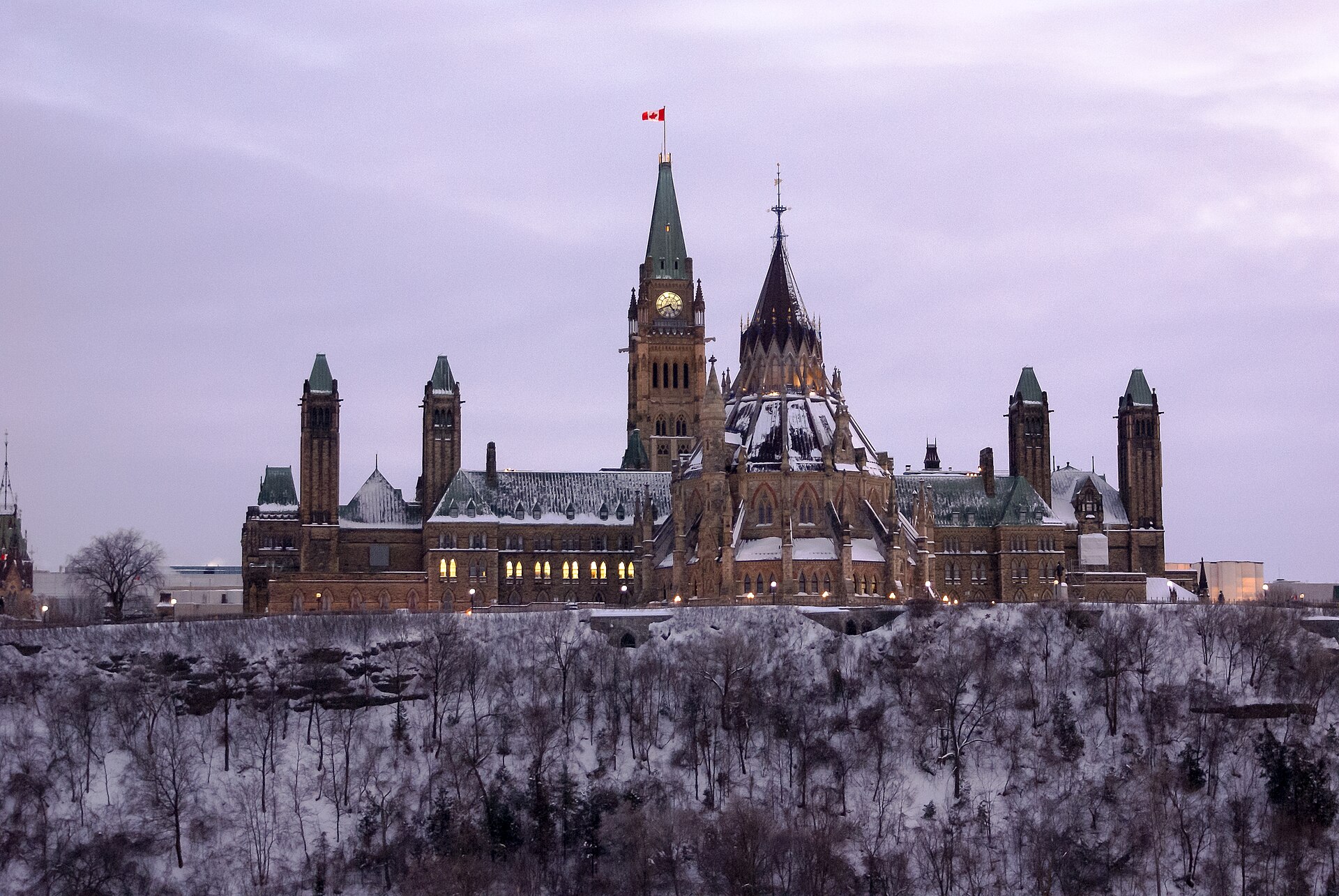
Ottawa
.jpg)

Charlotte

The dollars here are not the same dollars, so compare what each buys at home. Ottawa's benchmark house was $634,000 CAD in July 2026 with a payment of $2,762 at 4.34%; Charlotte's was $430,000 USD in July 2026 with a payment of $2,213 at 6.67%. Charlotte gives you more house per unit of income and a labour market that grew 1.6% over the year, while Ottawa's anchor employer is cutting about 28,000 more positions by 2029. Ottawa gives you a homicide rate of 1.59 per 100,000 against roughly 10, OHIP instead of a premium, and a cap on what your landlord can add. Pick Charlotte for money and jobs, Ottawa for the floor under you.
Ottawa prices are in CAD and Charlotte prices are in USD. The tables leave them in their own currency and compare ratios and rates instead; a conversion would be stale by the time you read it.
| Measure | Ottawa | Charlotte | Advantage |
|---|---|---|---|
| City population | 1,188,114 (2025) | 964,784 (2025) | Not directly comparable |
| Metro population | 1,700,014 (2025) | 2,938,830 (2025) | Not directly comparable |
| Five-year growth Growth is pressure on rents and roads as much as it is opportunity, so it is reported without a winner. | 8.9% (2016-2021) | 10.3% (2020-2025) | Not directly comparable |
What a home costs in each
The figures the two cities' rent-versus-buy and mortgage calculators run on, read from the same tables.
| Measure | Ottawa | Charlotte | Advantage |
|---|---|---|---|
| Benchmark home price MLS® HPI or equivalent benchmark. Lower is treated as the advantage, which is the buyer's view rather than the owner's. | $634,000 (July 2026) | $430,000 (July 2026) | Not directly comparable |
| Detached house benchmark | $725,000 | $420,000 | Not directly comparable |
| Apartment or condominium benchmark | $385,500 | $292,000 | Not directly comparable |
| Two-bedroom rent | $1,916/mo (average, October 2025) | $1,781/mo (average, August 2026) | Not directly comparable |
| One-bedroom rent | $1,593/mo | $1,470/mo | Not directly comparable |
| Two-bedroom rent against median income A year of two-bedroom rent as a share of the median household income below. A household paying the median rent out of the median income is a fiction, but it is the same fiction in both columns and it crosses currencies. | 22.5% of a year's income | 24.7% of a year's income | Ottawa |
| Mortgage payment on the benchmark, 20% down 25 years in Ottawa against 30 in Charlotte, each compounding the way its own country's lenders do. The rates are not a spread you can shop: they are what each market charges. | $2,762/mo at 4.34% | $2,213/mo at 6.67% | Not directly comparable |
| Price to household income Benchmark price divided by the median household income below. A ratio is comparable across currencies; the dollars are not. | 6.2× | 5.0× | Charlotte |
| Property tax on the benchmark home The effective rate on market value, which is what the two rates have in common and what the Advantage column is decided on; the bills are in each city's own dollars. | $5,262/yr (0.83%, 2026) | $3,010/yr (0.70%, 2026) | Charlotte |
| Transfer tax on the benchmark home Compared as a share of the price. Where the seller pays it, it is a cost of leaving rather than arriving. | $9,155 (buyer pays) | $860 (seller pays) | Charlotte |
| Rent control A cap protects a sitting tenant and does nothing for the next lease, so neither column is simply better. | 2.1% guideline (2026) | Forbidden by state law | Not directly comparable |
Ottawa: About 0.83% of market value. Ottawa levies roughly 1.26%, but against a Current Value Assessment frozen at 1 January 2016 values, because Ontario has deferred every reassessment since. The average urban home is assessed at $415,000 and pays about $5,246 in 2026, which on the $634,000 composite benchmark is 0.83%. Ottawa's municipal taxes on a representative detached house were the lowest of Ontario's ten largest cities in 2025. Charlotte: About 0.70% of market value. Charlotte levies 0.7857%: Mecklenburg County's 49.27¢ plus the City's 29.30¢ per $100, but against a value frozen at the 1 January 2023 revaluation. North Carolina measures that gap itself: the Department of Revenue certifies Mecklenburg's assessment level at 88.78% of sale price, which is how it publishes an effective county rate of 0.4374% against a nominal 0.4927%. The next revaluation takes effect 1 January 2027, and it will move assessments to what houses are worth then, not to what you paid.
How safe each city is, by the numbers it publishes
Police-reported figures for the most recent year each force or statistics agency has released. Rates describe a whole city or metro area, and the spread between neighbourhoods inside one city is usually wider than the gap between the two cities.
| Measure | Ottawa | Charlotte | Advantage |
|---|---|---|---|
| Crime Severity Index Statistics Canada's weighted index for the metropolitan area, where 100 is Canada in 2006. American cities have no equivalent series. | 50.6 (2025) | Not published | Not directly comparable |
| Violent crime per 100,000 Canada counts every violent Criminal Code incident; the FBI counts four offences. The Canadian figure is always the larger one for that reason alone. | 814 (2025) | 607 (2025) | Not directly comparable |
| Property crime per 100,000 | 2,835 (2025) | 3,639 (2025) | Not directly comparable |
| Homicides Counts, not rates, and a single year in a small city moves a long way on chance alone. What each figure covers is under the table. | 21 (2025) | 96 (2025) | Not directly comparable |
The Ontario-part CSI rose from 46.85 in 2021 to 54.20 in 2023, held at 54.12 in 2024 and fell 6% to 50.61 in 2025 (table 35-10-0026-01). The violent crime rate has kept climbing, from 744 per 100k in 2021 to 814 in 2025, while property crime peaked in 2024 at 2,957 per 100k and eased to 2,835 in 2025.
What the rates cover: Total violent Criminal Code violations, rate per 100,000, Ottawa-Gatineau CMA Ontario part, table 35-10-0177-01 (10,745 incidents).
Homicides: Ottawa-Gatineau CMA Ontario part, table 35-10-0177-01; rate 1.59 per 100,000. 2024 was 27 (2.10 per 100k), the highest of the last five years.
CMPD's 15 January 2026 year-end report put overall crime down 9% in 2025, violent crime down 21% (5,852 offenses versus 7,436 in 2024) and property crime down 6%, with homicides falling from 110 to 96, robberies down 24% and vehicle thefts down from 7,442 to 5,960. Homicides had been above 100 a year since 2020, so 2025 was the first clear drop in several years; the August 2025 killing of a passenger on the LYNX Blue Line kept transit safety in the news despite the citywide numbers.
What the rates cover: 5,852 violent offenses (UCR summary definitions) reported by CMPD for 2025, divided by the 964,784 city population estimate. CMPD's jurisdiction is the city plus unincorporated Mecklenburg County, so the true rate per resident is slightly lower.
Homicides: 96 homicides in 2025 versus 110 in 2024, about 10 per 100,000 on the city population; CMPD reports a 79% clearance rate.
Winters, summers and what the weather can do to a house
| Measure | Ottawa | Charlotte | Advantage |
|---|---|---|---|
| January mean | -10.0 °C | 5.6 °C | Not directly comparable |
| July mean | 21.2 °C | 26.7 °C | Not directly comparable |
| Precipitation a year | 930 mm | 1,107 mm | Not directly comparable |
| Snowfall a year | 232 cm | 9 cm | Not directly comparable |
| Sunshine a year | 2,084 hours | 2,821 hours | Charlotte |
Environment and Climate Change Canada 1991-2020 normals at Ottawa Macdonald-Cartier Int'l A (climate ID 6106000). Annual mean 6.5 C, rainfall 757.2 mm. Sunshine hours are from the 1981-2010 normals at Ottawa CDA (climate ID 6105976) because the 1991-2020 airport table does not publish sunshine totals.
Hazards: Cold winters with regular snowstorms and freezing rain, spring flooding along the Ottawa River (2017 and 2019), summer heat and humidity, occasional severe thunderstorms and tornadoes (September 2018, the May 2022 derecho), and wildfire smoke episodes such as June 2023.
NOAA 1991-2020 normals for Charlotte Douglas International Airport (station USW00013881): January mean 42.1F, July mean 80.1F, annual mean 61.4F, 43.60 in of precipitation, 3.5 in of snow. July is the warmest month at 80.1F, ahead of August's 78.6F. The set this file carried until September 2026 was an older normal under the 1991-2020 label: a degree low in January and in July, and a fifth high on snow. Sunshine hours are the older 1961-1990 NCDC means (2,821 hours, 62% of possible) since the 1991-2020 normals do not include sunshine.
Hazards: Humid subtropical: long hot summers with regular thunderstorms, mild winters with occasional ice storms that close the city for a day or two, and remnant tropical systems (Hugo in 1989 hit Charlotte directly; Helene in 2024 devastated the mountains two hours west but mostly spared Charlotte). Flash flooding along creeks and summer heat indexes above 100F are the routine risks; wildfire smoke is rare.
What people earn and what the government takes
| Measure | Ottawa | Charlotte | Advantage |
|---|---|---|---|
| Median household income | $102,000 CAD (2020) | $86,416 USD (2024) | Not directly comparable |
| Unemployment rate Statistics Canada and the Bureau of Labor Statistics define unemployment slightly differently; the Canadian measure runs about a point higher on the same labour market. | 6.8% (July 2026) | 3.7% (June 2026) | Not directly comparable |
| Sales tax | 13% | 8.25% | Charlotte |
| Top marginal income tax Federal plus provincial or state. The American figure leaves out payroll taxes and the cost of health insurance, both of which a Canadian household covers through the tax it pays here. | 53.53% | 41.25% | Charlotte |
| Income tax on $100,000, single filer Computed from each jurisdiction's brackets at a single filer's $100,000 and rounded to the dollar, so a gap of a dollar is rounding rather than tax. Two cities in one province or state are shown as Even, because there the two cells describe the same tax and whatever separates them is method. | $21,930 CAD | $17,158 USD | Not directly comparable |
The federal government is the anchor employer: 130,628 of 279,707 federal public servants were based in the National Capital Region at March 31, 2025, and Budget 2025 announced about 28,000 more public service job cuts by 2029. Regional unemployment ran from 6.4% in mid 2025 to 7.3% in late 2025 before easing to 6.8% in July 2026.
Main sectors: Federal public administration, Technology (Kanata North, Shopify, telecom and defence), Health care and hospitals, Post-secondary education, Tourism and national institutions.
Property tax is set by the City of Ottawa; not verified here.
BLS counted 1,413,000 nonfarm jobs in the Charlotte MSA in June 2026, up 1.6% on the year, with construction (+9.0%) and education and health (+3.5%) growing fastest and manufacturing (-3.6%) and information (-5.8%) shrinking. Financial activities employ 128,500, a much larger share than in most metros of this size; average weekly wages in Q4 2025 were $1,515 against $1,569 nationally.
Main sectors: Banking and financial services (Bank of America HQ, Truist, Wells Fargo east coast hub), Professional and business services, Trade, transportation and logistics (CLT hub, distribution), Health care (Atrium Health, Novant Health), Construction and manufacturing (energy, motorsports).
North Carolina's flat rate drops in steps: 4.25% (2025), 3.99% (2026), with further cuts after 2026 tied to revenue triggers. Mecklenburg property tax is separate and was revalued in 2023.
Whether you need a car
| Measure | Ottawa | Charlotte | Advantage |
|---|---|---|---|
| System | OC Transpo (buses, O-Train Lines 1, 2 and 4, Para Transpo); STO serves Gatineau | Charlotte Area Transit System (CATS): LYNX Blue Line light rail (19 miles, Uptown to UNC Charlotte and I-485/South Blvd), CityLYNX Gold Line streetcar, local and express buses | Not directly comparable |
| Commute by public transit | 11.2% (2021) | 2.3% (2024) | Ottawa |
| Walk or cycle to work | 8.5% (2021) | 2.4% (2024) | Ottawa |
| Airport | Ottawa Macdonald-Cartier International Airport, YOW, 4.9 million passengers in 2025, up 6% on 2024 (Ottawa International Airport Authority, 2025 results) | Charlotte Douglas International Airport (CLT), 53.6 million passengers in 2025, second busiest year after 58.8 million in 2024; an American Airlines hub where about 65% of passengers connect. | Not directly comparable |
70.6 million O-Train and bus trips in 2025, up 3.9% on 2024 (OC Transpo report to Transit Committee, February 12, 2026). Ridership fell in early 2026: 11.5 million trips in January-February versus 12.4 million a year earlier.
CATS carried about 15.7 million passenger trips in calendar 2024, up 11% on 2023 but still only about 65% of 2019 levels; bus ridership has lost roughly 65% of riders since 2013 while the Blue Line was at about 70% of its 2019 ridership (WFAE, February 2025). A November 2025 referendum passed 52.3% to 47.7% and adds a 1 cent sales tax from July 2026 expected to raise about $19.4 billion over 30 years, split 40% roads, 40% rail and 20% bus; the Red Line commuter rail to Lake Norman comes first, then the Silver Line light rail to the airport. A state audit in August 2026 estimated 45% of riders do not pay fares.
Health care, schools and what each city is like
Health care
Care is publicly funded through OHIP after a residency waiting period for newcomers, with prescription drugs, dental and vision outside the public plan for most working-age adults. The main hospitals are The Ottawa Hospital (Civic and General campuses), CHEO for children, the Queensway Carleton and Montfort; a replacement Civic campus was promised for 2028 but construction on the hospital itself had not begun as of 2026, and finding a family doctor is the hardest part of access, with the Ontario College of Family Physicians projecting 4.4 million Ontarians without one by 2026.
Education
The University of Ottawa (bilingual) and Carleton University are the large universities, with Algonquin College and La Cite for applied programs. Publicly funded schools run through four boards: the Ottawa-Carleton District School Board, the Ottawa Catholic School Board, and French-language public and Catholic boards, so French immersion and full French schooling are both widely available.
Living there
Ottawa is a government town that behaves like a mid-sized city: quiet downtown evenings, a large share of households with two stable incomes, and a weekend life built around the Rideau Canal, the Gatineau Park hills across the river and the river pathways. Winters are long and cold, with roughly 232 cm of snow in a normal year, and summers are warm and humid. The O-Train light rail has had reliability problems since it opened in 2019, and the bus network has been cut back, so most households still drive.
Health care
Care is paid for through employer or individual private insurance, Medicare and Medicaid (North Carolina expanded Medicaid in December 2023), and uninsured adults still face full charges at hospitals. Two systems dominate: Atrium Health (part of Advocate Health, with Carolinas Medical Center as the region's Level I trauma centre and a new Wake Forest University School of Medicine campus in Charlotte) and Novant Health (Presbyterian Medical Center); primary care and specialist wait times run weeks rather than months, and costs depend far more on your plan than on the provider.
Education
UNC Charlotte enrolled a record 32,207 students in fall 2025 and is the city's main research university; Davidson College, Queens University, Johnson C. Smith University and Central Piedmont Community College round out the options. Charlotte-Mecklenburg Schools is a single county-wide district of roughly 140,000 students with a large magnet lottery system and a sizeable charter sector; enrollment fell to its lowest level since 2010-11 in 2025-26, and school quality varies sharply by neighbourhood.
Living there
Charlotte is a banking city that grew fast and recently: most of what you see was built after 1990, the Uptown skyline is compact and quiet after office hours, and daily life runs through car-oriented suburbs like Ballantyne, University City and the Lake Norman towns. South End and NoDa along the Blue Line are where the walkable apartment-and-brewery growth has concentrated. Summers are hot and humid, traffic on I-77 and I-485 is the main complaint, and the city is still working out what transit, schools and housing it wants to be as it passes a million residents.
Where each city wins, and where it loses
Ottawa's composite benchmark was $634,000 CAD in July 2026, and 20% down at 4.34% puts the payment at $2,762 a month. Charlotte's was $430,000 USD in July 2026, and 20% down at 6.67% puts it at $2,213. Do not convert the two currencies; look at what each carries locally. Ottawa's property tax on the benchmark is $5,262 and insurance is budgeted at $145 a month, so the house holds at roughly $3,350 a month. Charlotte's are $3,010 and $180, holding at about $2,644. Closing runs the opposite way to what people assume: an Ottawa buyer owes $9,155 in land transfer tax, while a Charlotte buyer owes nothing, because North Carolina's $880 excise falls on the seller. Rents sit close in nominal terms, an average two-bedroom at $1,916 in Ottawa in October 2025 against $1,781 in Charlotte in August 2026, but only Ottawa limits increases, at 2.1% for 2026 and only in units first occupied before 15 November 2018.
Ottawa's 2025 violent crime rate of 813.79 per 100,000 looks worse than Charlotte's 607, and it is not. Statistics Canada counts every violent Criminal Code violation, common assault and uttering threats included, while the American figure counts murder, rape, robbery and aggravated assault only, and CMPD's version also covers unincorporated Mecklenburg County alongside the city. Homicide is the measure that survives the border. The Ontario part of the Ottawa-Gatineau CMA recorded 21 in 2025, a rate of 1.59 per 100,000, down from 27 the year before. Charlotte recorded 96, roughly 10 per 100,000, down from 110. Property crime was 2,834.59 per 100,000 in Ottawa against 3,639 in Charlotte. Ottawa's Crime Severity Index fell 6% to 50.61 in 2025 against a national figure of 75.0, though its violent rate has climbed every year since 2021, while Charlotte's violent crime fell 21% in a single year.
Ottawa's January mean is -10.0 C and a normal year brings 231.9 cm of snow, with July averaging 21.2 C. Charlotte's January mean is 5.6 C, its annual snow 8.9 cm, its July mean 26.7 C. That gap is a season of work: winter tyres, a shovel or a contract for the driveway, a furnace running from October into April, and freezing rain that pulls down power lines. Ottawa also gets spring flooding along the river, as in 2017 and 2019, the derecho of May 2022, and wildfire smoke episodes such as June 2023. Charlotte's hazards land in summer: heat indexes above 100 F, thunderstorms, flash flooding along the creeks and the remnants of tropical systems, plus the occasional ice storm that stops the city because nothing there is equipped for ice. Charlotte gets 2,821 hours of sun a year against Ottawa's 2,084.
Ottawa's median household income was $102,000 CAD in 2020, and the reason it is steady is the federal government: 130,628 of 279,707 federal public servants worked in the National Capital Region as of March 2025. That anchor is being trimmed, with about 28,000 more positions to go by 2029, and regional unemployment was 6.8% in July 2026. Charlotte's median household income was $86,416 USD in 2024, metro unemployment was 3.7% in June 2026, and its 1,413,000 nonfarm jobs grew 1.6% over the year, with construction up 9.0%. Tax is the visible difference: a single filer on $100,000 pays about $21,930 in Ottawa and about $17,158 in Charlotte, and sales tax is 13% against 8.25%. The Ottawa premium buys OHIP, which covers physician and hospital care outright. In Charlotte, coverage arrives with the job or off the marketplace, and it stops when the job does.
Ottawa is no one's model transit city, but it is one next to Charlotte. Transit carried 11.2% of Ottawa commuters in the 2021 Census, a share held down by pandemic remote work, with another 8.5% walking or cycling. OC Transpo ran 70.6 million trips in 2025, up 3.9%, although ridership fell again in early 2026 and the O-Train has been unreliable since it opened in 2019. Charlotte's transit share was 2.3% in 2024 and its walk and cycle share 2.4%, on about 15.7 million CATS trips in 2024, roughly 65% of the 2019 total. A car is optional in a handful of Ottawa neighbourhoods and effectively required everywhere in Charlotte, where I-77 and I-485 are the standing complaint. Flying reverses the picture: CLT handled 53.6 million passengers in 2025 as an American Airlines hub, while Ottawa handled 4.9 million and often connects through Toronto or Montreal.
Health care is the sharpest trade in this pair. The Ottawa Hospital, CHEO, the Queensway Carleton and Montfort are free at the point of use, but getting a family doctor is the hard part, with the Ontario College of Family Physicians projecting 4.4 million Ontarians without one by 2026, and the replacement Civic campus promised for 2028 had not begun construction. Atrium Health and Novant Health answer in weeks rather than months, and what you pay turns on your plan, though North Carolina expanded Medicaid in December 2023. Schools are organised differently: Ottawa runs four publicly funded boards, so French immersion and full French schooling are widely available, while Charlotte-Mecklenburg is one county-wide district of roughly 140,000 students with magnet lotteries and a large charter sector. Ottawa is a quiet government town built around a canal and the Gatineau hills. Charlotte is a young banking city that passed a million residents and is still deciding what it wants to be.
What people underestimate here is the price of the money. Ottawa's benchmark costs 44% more than Charlotte's in local currency, yet the payment is only 22% higher, because Canadian mortgages are priced at 4.34% and American ones at 6.67%. Two things follow. A rate move reaches the Ottawa owner sooner, since Canadian mortgages come up for renewal every few years instead of sitting fixed for thirty. And the American disadvantage is refinanceable while the Canadian one is not: if rates fall, Charlotte's payment can fall with them, but the $634,000 you paid in Ottawa is permanent. Put the $9,155 Ottawa land transfer tax, payable in cash on closing, next to Charlotte's nothing, and the cost of getting in tilts further than the two sticker prices suggest.
Better here
- Homicide ran at 1.59 per 100,000 in 2025, 21 deaths, against roughly 10 per 100,000 and 96 deaths in Charlotte.
- OHIP covers physician and hospital care, with no premium beyond the income-tested Ontario Health Premium.
- Property crime was 2,834.59 per 100,000 in 2025 against Charlotte's 3,639.
- Mortgage money is priced at 4.34% against 6.67%, so a house costing 44% more carries a payment only 22% higher.
- Transit carried 11.2% of commuters in 2021 and 8.5% walked or cycled, against 2.3% and 2.4% in Charlotte.
- Rent increases are capped at 2.1% for 2026 in units first occupied before 15 November 2018, while state law bars Charlotte from capping rent at all.
Worse here
- The benchmark house was $634,000 CAD in July 2026 and a detached one $725,000, against $430,000 USD and $420,000 in Charlotte.
- A buyer owes $9,155 in land transfer tax on closing, where Charlotte's $880 excise is charged to the seller.
- A single filer on $100,000 pays about $21,930 against $17,158, and sales tax is 13% against 8.25%.
- Regional unemployment was 6.8% in July 2026 against 3.7% in the Charlotte metro, with about 28,000 more federal positions to be cut by 2029.
- A normal winter brings 231.9 cm of snow and a January mean of -10.0 C.
- Access, not cost, is the health care problem: 4.4 million Ontarians are projected to be without a family doctor by 2026.
Choose Ottawa if
- you are paid in Canadian dollars and do not want your health coverage attached to a job
- you want a detached house at $725,000 CAD and a mortgage priced at 4.34%
- you can make use of winter rather than only endure it
- you would take 1.59 homicides per 100,000 over a shorter heating season
The Ottawa guide · Neighbourhoods · Ottawa rent vs buy · Ottawa mortgage calculator
Better here
- The benchmark house was $430,000 USD in July 2026 and detached stock $420,000, against $634,000 CAD and $725,000 in Ottawa.
- Property tax on the benchmark is $3,010 against $5,262, and a buyer pays no transfer tax against Ottawa's $9,155.
- Metro unemployment was 3.7% in June 2026 against 6.8% in Ottawa-Gatineau, on 1,413,000 nonfarm jobs growing 1.6% over the year.
- A single filer on $100,000 pays about $17,158 against $21,930, and sales tax is 8.25% against 13%.
- January averages 5.6 C with 8.9 cm of snow in a normal year, against -10.0 C and 231.9 cm.
- CLT is an American Airlines hub that handled 53.6 million passengers in 2025, against 4.9 million at Ottawa.
Worse here
- 96 homicides in 2025, roughly 10 per 100,000, against 21 and 1.59 per 100,000 in Ottawa.
- Property crime ran at 3,639 per 100,000 against Ottawa's 2,834.59.
- Coverage comes from an employer or the marketplace, so a gap between jobs is a financial risk rather than an inconvenience.
- Transit carried 2.3% of commuters in 2024, and CATS's 15.7 million trips were about 65% of the 2019 level.
- Mortgage money is priced at 6.67% against 4.34%, which is most of why a $430,000 house still costs $2,213 a month.
- Nothing caps a renewal increase: N.C.G.S. 42-14.1 forbids the city from regulating rents.
Choose Charlotte if
- you earn in US dollars and someone in the household already carries health insurance
- you want the payment under $2,300 a month and no transfer tax to fund at closing
- you would trade transit and snow for a cheaper house and a longer summer
- you work in banking, health care or logistics and want a market that is still hiring
The Charlotte guide · Neighborhoods · Charlotte rent vs buy · Charlotte mortgage calculator
Ottawa or Charlotte, in short
Is Ottawa or Charlotte cheaper to live in?
Charlotte, though the currencies differ and the figures should not be converted. Charlotte's benchmark was $430,000 USD in July 2026 against Ottawa's $634,000 CAD in July 2026, and the payment with 20% down is $2,213 against $2,762 despite the higher American rate. Property tax is $3,010 against $5,262 and insurance $180 a month against $145. Income tax at $100,000 is about $17,158 against $21,930 and sales tax 8.25% against 13%. Rents are the exception: an average two-bedroom was $1,781 in Charlotte and $1,916 in Ottawa, which is close in local money.
Is Ottawa or Charlotte safer?
Ottawa, clearly, once the counting rules are lined up. The Ontario part of the Ottawa-Gatineau CMA recorded 21 homicides in 2025, 1.59 per 100,000, against Charlotte's 96 and roughly 10 per 100,000. Ottawa's headline violent rate of 813.79 per 100,000 is higher than Charlotte's 607 only because Canada counts every violent Criminal Code violation, including common assault, while the American figure counts four serious offences. Property crime is lower in Ottawa too, 2,834.59 per 100,000 against 3,639. Both cities improved in 2025.
Which has the better climate, Ottawa or Charlotte?
Charlotte, if you dislike winter. Its January mean of 5.6 C and 8.9 cm of annual snow sit against Ottawa's -10.0 C and 231.9 cm, and it gets 2,821 hours of sun a year to Ottawa's 2,084. Charlotte pays in summer, with a July mean of 26.7 C, heat indexes above 100 F and flash flooding after storms. Ottawa's July mean is 21.2 C, which makes summer the better half of its year, and its hazards include river flooding, the 2022 derecho and smoke episodes such as June 2023.
What happens to health coverage if I move from Ottawa to Charlotte?
It stops being automatic. In Ottawa, OHIP pays for physician and hospital care and the only direct charge is the income-tested Ontario Health Premium, though a new resident waits up to three months for coverage and a family doctor can take much longer to find. In Charlotte you buy a plan through an employer or the marketplace, and what you pay for a visit or a hospital stay depends on that plan more than on the provider. North Carolina expanded Medicaid in December 2023, which cushions low-income adults, but an uninsured stretch between jobs still means full charges.
Where the figures come from
Housing figures are the ones behind each city's calculators, dated on those pages. The rest are listed here with the date they were retrieved. See the methodology for how facts, estimates and opinion are kept apart.
- Census Profile, 2021 Census of Population: Ottawa, City (CSD) and Ottawa-Gatineau (Ontario part) · Statistics Canada · retrieved Supports: population.city (2021 count), Five-year growth, Median household income, Transit commute share, Walk and cycle commute share
- Census Profile, 2021 Census of Population: Ottawa-Gatineau (CMA) · Statistics Canada · retrieved Supports: population.metro (2021 count), population.growthPct5y (CMA)
- Population estimates, July 1, by census subdivision, 2021 boundaries (table 17-10-0155-01) · Statistics Canada · retrieved Supports: City population
- Population estimates, July 1, by census metropolitan area and census agglomeration, 2021 boundaries (table 17-10-0148-01) · Statistics Canada · retrieved Supports: Metro population
- Crime severity index and weighted clearance rates, Canada, provinces, territories and Census Metropolitan Areas (table 35-10-0026-01) · Statistics Canada · retrieved Supports: Crime Severity Index, Crime trend
- Police-reported Crime Severity Index and crime rate, by census metropolitan area, 2025 · Statistics Canada, The Daily · retrieved Supports: Crime Severity Index, crime.propertyRatePer100k (all-crime rate context)
- Incident-based crime statistics, by detailed violations, Canada, provinces, territories, CMAs (table 35-10-0177-01) · Statistics Canada · retrieved Supports: Violent crime rate, Property crime rate, Homicides, Crime trend
- Ottawa crime rate increases in 2025, remains above Ontario average · Yahoo News Canada (Ottawa Police Service KPI report to the Police Services Board, January 26, 2026) · retrieved Supports: crime.index (OPS city CSI 55.8)
- Canadian Climate Normals 1991-2020, Ottawa Macdonald-Cartier Int'l A · Environment and Climate Change Canada · retrieved Supports: January mean, July mean, Annual precipitation, Annual snowfall
- Canadian Climate Normals 1981-2010, Ottawa CDA · Environment and Climate Change Canada · retrieved Supports: Sunshine hours
- Labour force characteristics by census metropolitan area, three-month moving average, seasonally adjusted (table 14-10-0459-01) · Statistics Canada · retrieved Supports: Unemployment rate, Labour market
- Labour Force Survey, July 2026 · Statistics Canada, The Daily · retrieved Supports: economy.unemploymentPct (Canada and Ontario comparison)
- Federal government to cut another 28,000 public service jobs by 2029 · CTV News Ottawa · retrieved Supports: Labour market
- Federal Government Jobs in Ottawa: 2026 Hiring Guide (citing Public Service Commission counts at March 31, 2025) · Via Ottawa · retrieved Supports: economy.note (NCR public servant count)
- 2025 and 2026 Combined Federal and Ontario Tax Rates Including Surtaxes · TaxTips.ca · retrieved Supports: Top marginal income tax, Income tax on $100,000
- Ontario Health Premium · TaxTips.ca · retrieved Supports: Income tax on $100,000
- 2025 Non-Refundable Personal Tax Credits, Base Amounts · TaxTips.ca · retrieved Supports: Income tax on $100,000
- Recap: February 12, 2026 Transit Committee · OC Transpo · retrieved Supports: Transit ridership
- OC Transpo sees drop in ridership to start 2026 · CTV News Ottawa · retrieved Supports: transit.ridershipNote (early 2026)
- A transformational year: Ottawa Airport Authority reports 2025 results · Ottawa International Airport Authority · retrieved Supports: Airport passengers
- More Than Four Million Ontarians Will Be Without a Family Doctor by 2026 · Ontario College of Family Physicians · retrieved Supports: Health care
- New Ottawa Civic hospital opening likely delayed by years, says project consultant · CBC News · retrieved Supports: Health care
- Population Growth Holds Steady in Midsized Cities Amid Widespread Slowdown (Vintage 2025 city and town estimates) · US Census Bureau · retrieved Supports: City population, Five-year growth
- 2020 Census, North Carolina: Total Population by Municipality (PL 94-171) · North Carolina General Assembly · retrieved Supports: Five-year growth
- Resident Population in Charlotte-Concord-Gastonia, NC-SC (MSA) (CGRPOP) · FRED, Federal Reserve Bank of St. Louis (Census Bureau data) · retrieved Supports: Metro population, Five-year growth
- CMPD End of Year Report: Violent, Property and Overall Crime Decrease · Charlotte-Mecklenburg Police Department · retrieved Supports: Violent crime rate, Property crime rate, Homicides, Crime trend
- NOAA 1991-2020 US Climate Normals, station USW00013881 Charlotte Douglas International Airport (NCEI data service) · NOAA National Centers for Environmental Information · retrieved Supports: January mean, July mean, Annual precipitation, Annual snowfall, January 42.1F, July 80.1F and August 78.6F from the monthly series, and annual mean 61.4F, precipitation 43.60 in and snowfall 3.5 in from dataset=normals-annualseasonal-1991-2020 for the same station
- Average Annual Sunshine in US Cities · Current Results (NCDC Comparative Climatic Data, 1961-1990) · retrieved Supports: Sunshine hours
- Charlotte, NC profile (ACS 2024 1-year), tables B19013 and B08301 · Census Reporter (US Census Bureau ACS) · retrieved Supports: Median household income, Transit commute share, Walk and cycle commute share
- Unemployment Rate in Charlotte-Concord-Gastonia, NC-SC (MSA) (CHAR737UR) · FRED, Federal Reserve Bank of St. Louis (BLS LAUS) · retrieved Supports: Unemployment rate
- Charlotte, NC-SC, Area Economic Summary · US Bureau of Labor Statistics · retrieved Supports: Unemployment rate, Main sectors, Labour market
- Important Notice: Mecklenburg County Sales and Use Tax Increase · North Carolina Department of Revenue · retrieved Supports: Sales tax
- Tax Rate Schedules · North Carolina Department of Revenue · retrieved Supports: Top marginal income tax, Income tax on $100,000
- North Carolina Standard Deduction or North Carolina Itemized Deductions · North Carolina Department of Revenue · retrieved Supports: Income tax on $100,000
- 2025 Tax Brackets and Federal Income Tax Rates · Tax Foundation · retrieved Supports: Top marginal income tax, Income tax on $100,000
- CATS sees ridership grow by 11% in last year · WFAE · retrieved Supports: Transit ridership
- In a historic vote, Mecklenburg transit and transportation sales tax wins approval · WFAE · retrieved Supports: Transit ridership, Sales tax
- Rapid Response Special Report: Charlotte Area Transit System · North Carolina Office of the State Auditor · retrieved Supports: Transit ridership, Crime trend
- CLT Welcomes 53.6 Million Passengers in 2025, Second Busiest Year on Record · Charlotte Douglas International Airport · retrieved Supports: Airport passengers
- UNC Charlotte's enrollment surge sets another record · UNC Charlotte University Communications · retrieved Supports: Education
- Charlotte-Mecklenburg Schools enrollment hits lowest since 2010-11 · WSOC-TV · retrieved Supports: Education
- MLS® Home Price Index: Ottawa Real Estate Board, July 2026 · Canadian Real Estate Association / Ottawa Real Estate Board · retrieved Supports: Composite MLS® HPI benchmark of $634,000 in July 2026, down 0.5% year over year, Single-family benchmark of $725,000, up 0.7% year over year, Townhouse and row benchmark of $542,500, down 5.1% year over year, Apartment benchmark of $385,500, down 5.2% year over year, 1,325 sales and 4,678 active listings in July 2026
- Rental Market Survey: Ottawa, average rent by bedroom type, October 2025 · Canada Mortgage and Housing Corporation · retrieved Supports: Ottawa average purpose-built rents of $1,332 studio, $1,593 one-bedroom, $1,916 two-bedroom and $2,090 three-bedroom-plus, An overall average of $1,743 across 89,170 purpose-built units, Year-over-year increases of 3.4% on one- and two-bedroom units and 3.9% overall, Average rent of $2,320 in buildings completed in 2000 or later against $1,529 in buildings from before 1960
- Rental Market Statistics Summary: Ottawa (CV), October 2025 · Canada Mortgage and Housing Corporation · retrieved Supports: City of Ottawa purpose-built vacancy rate of 2.9% across 86,550 units, City of Ottawa average rent of $1,741 and median rent of $1,675
- 2026 Tax Policy and Other Revenue Matters · City of Ottawa, Revenue Services · retrieved Supports: Ontario's last province-wide reassessment was completed in 2016 and municipalities rely on 2016 assessment values for the 2026 tax year, The average urban Ottawa home is assessed at $415,000, A 2026 net municipal increase of $184 on that home: $166 from the 3.75% budget increase and $18 from the multi-residential ratio change, The 2026 budget was approved on 10 December 2025 with a 3.75% overall municipal tax increase, Ottawa's 2025 average municipal taxes on a representative two-storey detached house were $5,490, the lowest of Ontario's ten largest municipalities
- Education property tax rates · Government of Ontario · retrieved Supports: The residential education tax rate of 0.153% of assessed value, unchanged since 2020
- Premium information for homeowner and small rental loans · Canada Mortgage and Housing Corporation · retrieved Supports: Mortgage default insurance premium rates by loan-to-value
- Regulations amending the Insurable Housing Loan Regulations and the Eligible Mortgage Loan Regulations (SOR/2025-55) · Canada Gazette, Part II · retrieved Supports: The $1.5 million insured price cap, 30-year amortization for first-time buyers and new builds
- Minimum qualifying rate for uninsured mortgages · Office of the Superintendent of Financial Institutions · retrieved Supports: The qualifying rate of the contract rate plus two points, or 5.25%
- Interest rates charged for new and existing lending by chartered banks · Bank of Canada · retrieved Supports: The default mortgage rate of 4.34%, uninsured five-year-plus fixed, funds advanced May 2026
- Calculating Land Transfer Tax · Ontario Ministry of Finance · retrieved Supports: Provincial transfer tax brackets, The conditional 2.5% band
- Municipal Land Transfer Tax rates and fees · City of Toronto · retrieved Supports: Toronto municipal transfer tax brackets, First-time buyer rebate
- Residential rent increases · Government of Ontario · retrieved Supports: 2026 rent increase guideline of 2.1%, The 2018 occupancy exemption
- Retail Sales Tax · Government of Ontario · retrieved Supports: 8% retail sales tax on insurance premiums
- More choice, steady sales define Charlotte's July housing market · Canopy Realtor® Association / Canopy MLS · retrieved Supports: City of Charlotte median sale price of $430,000 in July 2026, down 2.3% year over year, with the year-to-date median also $430,000, Charlotte region median sale price of $410,000, up 1.1% year over year, and Mecklenburg County's $468,500, up 2.0%, City of Charlotte inventory of 3,754 homes, up 15.8%, at 3.7 months of supply against 3.2 a year earlier, City of Charlotte days on market of 40, against 38 a year earlier, Regional medians by type: single-family $420,000, townhome $349,990 and condominium $292,000, all of which are regional rather than city figures
- Charlotte, NC average rent and rent trends, August 2026 · RentCafe / Yardi Matrix · retrieved Supports: Average Charlotte apartment rent of $1,672 across 949 sq ft, down 0.92% year over year, Average rents of $1,377 studio, $1,470 one-bedroom, $1,781 two-bedroom and $2,117 three-bedroom
- Charlotte multifamily market insights, 2026 · Northmarq · retrieved Supports: Charlotte apartment vacancy of 6.2%, Approximately 18,000 units under construction, a 6.2% expansion of inventory, More than half of Charlotte apartment properties offering concessions, Eleven consecutive quarters of year-over-year asking rent declines
- Fiscal Year 2026 Fair Market Rents · US Department of Housing and Urban Development · retrieved Supports: Two-bedroom Fair Market Rent of $1,847 for the Charlotte-Concord-Gastonia NC-SC HUD Metro FMR Area
- Tax rates, fiscal year 2027 · Mecklenburg County Office of the Tax Collector · retrieved Supports: Mecklenburg County rate of 49.27 cents per $100 of assessed value, unchanged for FY2027, City of Charlotte rate of 29.30 cents per $100, applied on top of the county rate inside the city
- Board of County Commissioners adopts $2.6 billion operating budget for FY2027 · Mecklenburg County · retrieved Supports: The county property tax rate holds at 49.27 cents per $100 for FY2027
- Charlotte City Council adopts the FY2027 budget · WCNC Charlotte · retrieved Supports: City property tax rate rising 1.89 cents from 27.41 to 29.30 cents per $100, adopted 8 June 2026, The increase is dedicated to police and fire pay and raises about $85 million
- Sales assessment ratio studies as of January 1, 2025 · North Carolina Department of Revenue, Local Government Division · retrieved Supports: Mecklenburg County last revalued in 2023, A certified median sales assessment ratio of 88.78%: assessed values are 88.78% of sale prices, An effective county tax rate of 0.4374% against a nominal 0.4927%, computed as rate × assessment level, A coefficient of dispersion of 9.63, among the lowest in the state
- Primary Mortgage Market Survey, 13 August 2026 · Freddie Mac · retrieved Supports: 30-year fixed-rate mortgage averaging 6.67%, against 6.58% a year earlier
- Commissioner Causey negotiates settlement on Rate Bureau's homeowners' insurance request · North Carolina Department of Insurance · retrieved Supports: Statewide average base rate increases of 7.5% on 1 June 2025 and 7.5% on 1 June 2026, Charlotte territory increases of 9.3% and 9.2%, No further rate filing before June 2027
- Conforming loan limit values for 2026 · Federal Housing Finance Agency · retrieved Supports: Baseline one-unit conforming loan limit of $832,750 for 2026, which is the limit in Mecklenburg County