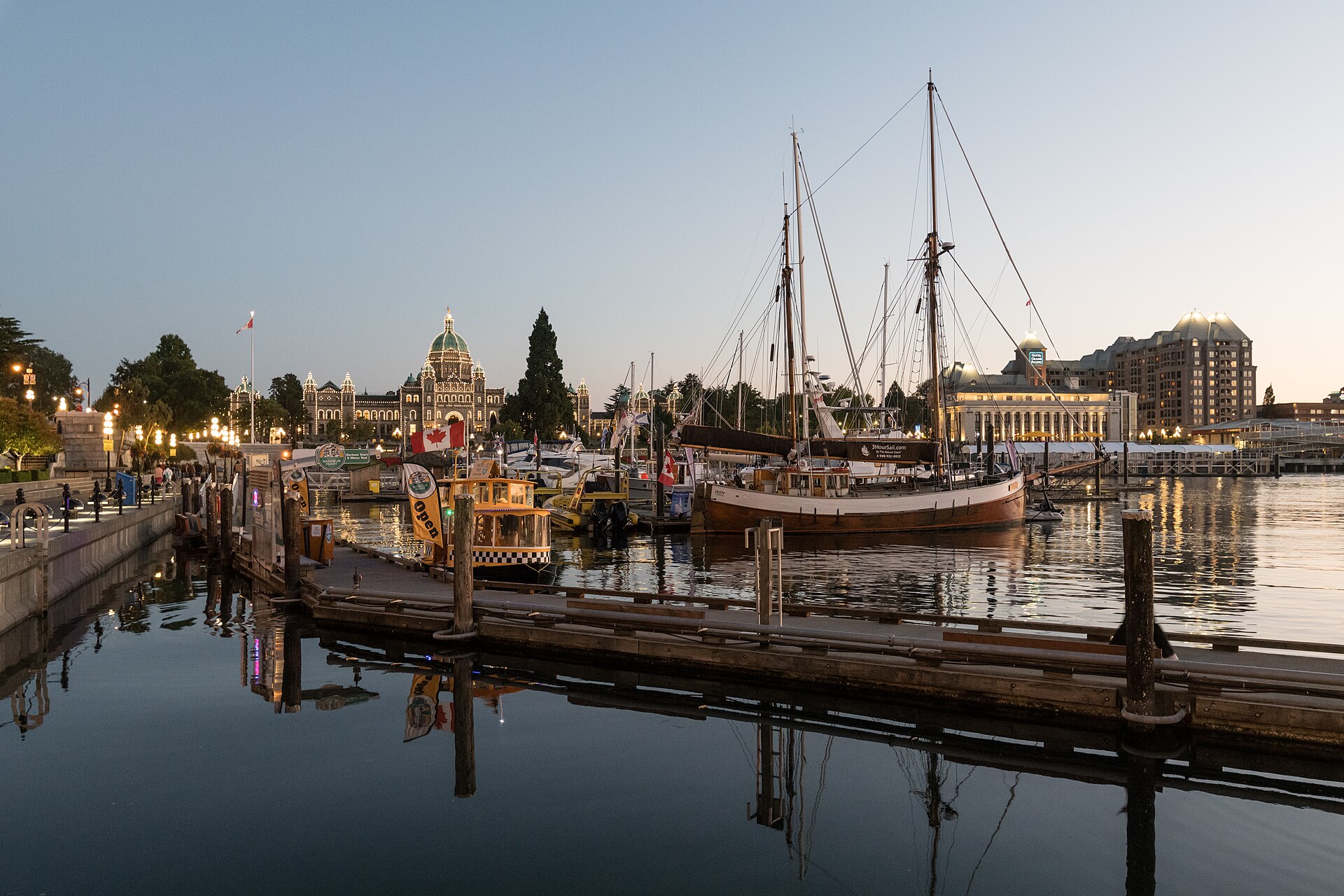
Victoria is thirteen municipalities, and only one of them is the City
Victoria is a city of 12 neighbourhoods squeezed into 19.5 km², with twelve other municipalities pressed against its edges, so which side of a boundary street you land on changes your tax bill, your recreation card and your school catchment, not just your commute. This is a guide to the city one neighbourhood at a time, with the arithmetic of buying here worked out alongside it.

Living in Victoria
What the household next door earns, what the government takes, how people get to work and what the two ends of the year feel like. Every figure below is the one the comparison pages run on, with the year it describes where the source publishes one, and anything the source does not publish is left out rather than guessed.
The cost of living in Victoria, and what a home costs
Two calculators on British Columbia's own rules: semi-annual compounding and the real minimum down payment tiers, and the closing costs this province actually charges.
Rent or buy in Victoria
Whether buying beats renting in a market where the house benchmark is falling and the rental vacancy rate is the loosest since 1999. Both households start with the same cash and whichever of them has the cheaper month invests the difference, so the comparison is not rigged in either direction.
Mortgage calculator
Semi-annual compounding, every payment frequency including the accelerated ones, BC's property transfer tax with its first-time-buyer exemption, and what an extra payment takes off the end of the loan.
Then find where in it to live
The neighbourhood index groups Victoria into four quarters: an editorial grouping, since the City publishes boundaries and no grouping above them. Every guide keeps sourced facts apart from editorial observation, credits its photographs, and dates what it claims.

All 12 neighbourhoods
Every neighbourhood the City draws a boundary around, each with sourced facts, schools, parks, amenities, walking and drive times and an honest account of the trade-offs.
Browse every neighbourhood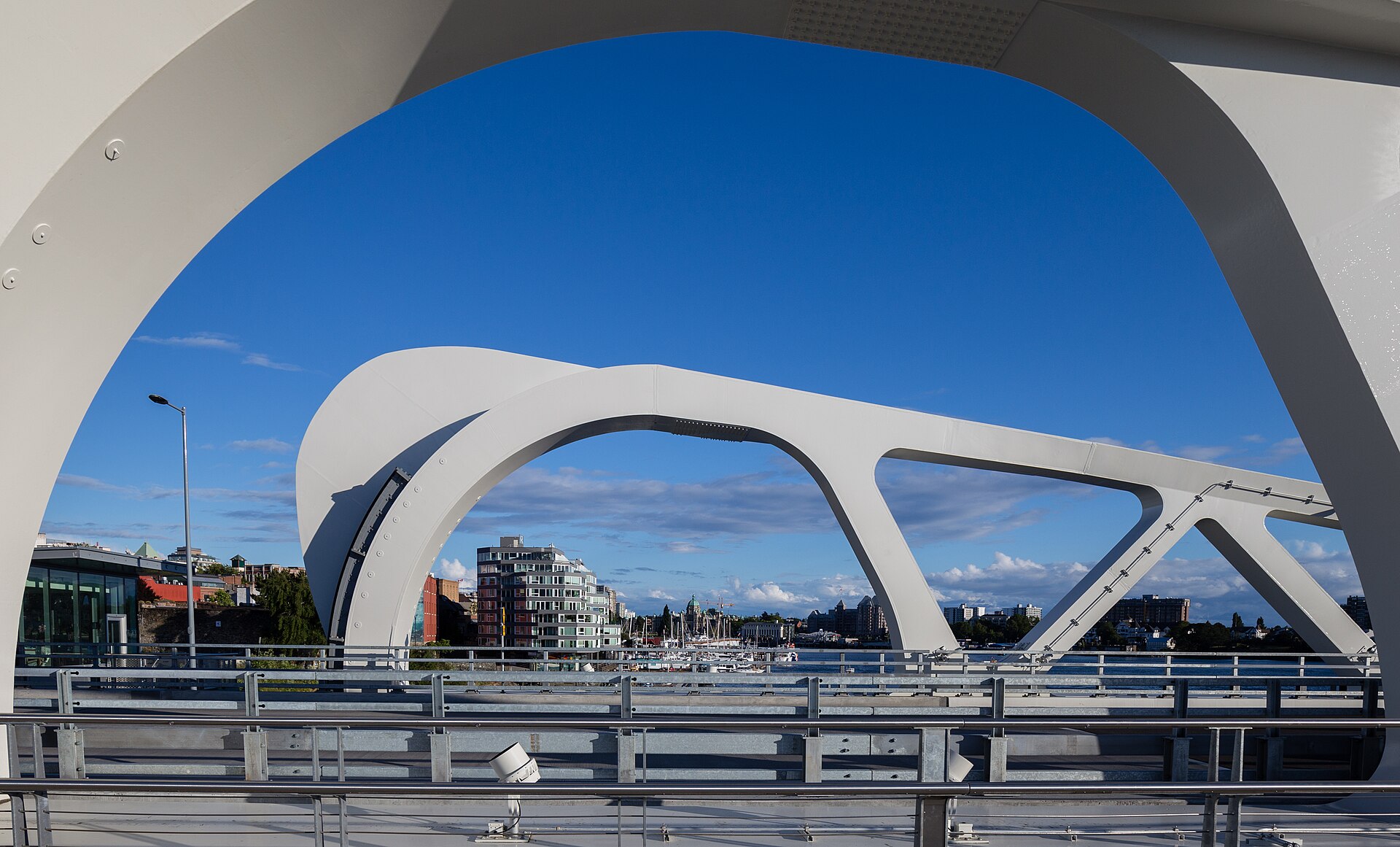
Harbour, North, Central and South
The City publishes neighbourhood boundaries and nothing above them, so these four quarters are ours. The harbour-facing three, the three north of Bay Street, the inland belt, and the three along the Juan de Fuca shore.
Compare the four quartersWhat buying in Victoria actually involves
The City of Victoria is a small part of the urban area that carries its name. Thirteen municipalities sit inside the same continuous city on this peninsula, each with its own council, its own rate and its own rules, and a postal address that says Victoria may be in Saanich, Oak Bay or Esquimalt. Establishing which municipality a property is actually in is the first step here, not a detail.
The housing stock is the oldest in western Canada. Pre-1940 houses are common, character conversions are everywhere, and both come with the questions that follow century construction: knob-and-tube wiring, buried oil tanks, foundations built before anyone thought about drainage, and heritage designations that govern what may be changed. An insurance quote on an older house here should be obtained before an offer, not after.
Water and sewer are regional rather than municipal, and the region's growth is constrained by the peninsula itself: there is very little land left to build on, which is why so much of the new supply is infill and why the older stock holds its value the way it does.
Being on an island is a cost as well as a setting. Everything that arrives by ferry costs more and takes longer, trades are in short supply and booked out, and the same is true of materials for a renovation. Budget both the money and the wait.
Moving to Victoria: check these before you commit
- Which of the region's municipalities the address is actually in, since the postal city does not say
- Buried oil tanks, knob-and-tube wiring and the foundation on anything pre-war
- Heritage designation and what it permits, which covers a good deal of the older core
- An insurance quote on older construction before making an offer
- The real cost and lead time of trades and materials, which the ferry adds to
Victoria compared
Home prices, rents, crime, climate, taxes and transit next to each of the other cities on the site, with what each does better and who should choose which. Nearest first.
- Victoria vs Vancouver94 km
- Victoria vs Kelowna325 km
- Victoria vs Calgary728 km
- Victoria vs El Paso2,333 km
- Victoria vs Fort Worth2,782 km
- Victoria vs Dallas2,814 km
- Victoria vs Austin2,962 km
- Victoria vs San Antonio2,990 km
- Victoria vs Houston3,153 km
- Victoria vs Toronto3,388 km
- Victoria vs Ottawa3,577 km
- Victoria vs Charlotte3,758 km
- Victoria vs Greensboro3,776 km
- Victoria vs Tallahassee3,849 km
- Victoria vs Raleigh3,884 km
- Victoria vs Jacksonville4,042 km
- Victoria vs Boston4,058 km
- Victoria vs Tampa4,167 km
- Victoria vs St. Petersburg4,168 km
- Victoria vs Orlando4,197 km
- Victoria vs Cape Coral4,302 km
- Victoria vs Port St. Lucie4,365 km
- Victoria vs Hialeah4,481 km
- Victoria vs Miami4,498 km
Sourced, dated, and separated from the guesswork
Every Victoria figure below is cited, stamped with the period it describes, and editable, because a number for the whole city rarely describes your purchase. Appreciation and investment returns are assumptions rather than facts, and they are labelled that way. Read the methodology for how the line is drawn.
- Prices, rents and tax rates: published statistics and the official schedules.
- Nothing here is a lender quote, a pre-approval or financial advice.
Where the Victoria figures come from
- July 2026 statistics: Victoria Real Estate Board monthly news release · Victoria Real Estate Board · retrieved Supports: Victoria Core single-family benchmark of $1,311,000, down 2.8% year over year, Victoria Core condominium benchmark of $548,600, down 2.2% year over year, Victoria Core townhouse benchmark of $857,300, 673 sales and 3,847 active listings board-wide in July 2026
- Rental Market Survey: Victoria (CY), average rent by bedroom type, October 2025 · Canada Mortgage and Housing Corporation · retrieved Supports: One-bedroom average rent of $1,594, Two-bedroom average rent of $2,076, Three-bedroom-plus average rent of $3,035, Victoria CMA vacancy rate of 3.3%
- 2026 Property Tax Mill Rate · City of Victoria · retrieved Supports: 2026 Class 1 residential total rate of $5.6559 per $1,000 of taxable value, Municipal residential rate of $3.7229, of which $1.3782 is police, Additional school tax of 0.2000 above $3 million and 0.4000 above $4 million
- Premium information for homeowner and small rental loans · Canada Mortgage and Housing Corporation · retrieved Supports: Mortgage default insurance premium rates by loan-to-value
- Regulations amending the Insurable Housing Loan Regulations and the Eligible Mortgage Loan Regulations (SOR/2025-55) · Canada Gazette, Part II · retrieved Supports: The $1.5 million insured price cap, 30-year amortization for first-time buyers and new builds
- Property transfer tax · Province of British Columbia · retrieved Supports: Transfer tax brackets, First-time buyer and new build exemptions