Ottawa vs Orlando: which should you move to?
Ottawa or Orlando? Housing, rent, crime, climate, income, taxes and transit, side by side, from each city's own published figures. Written for someone deciding where to live, not for a ranking.
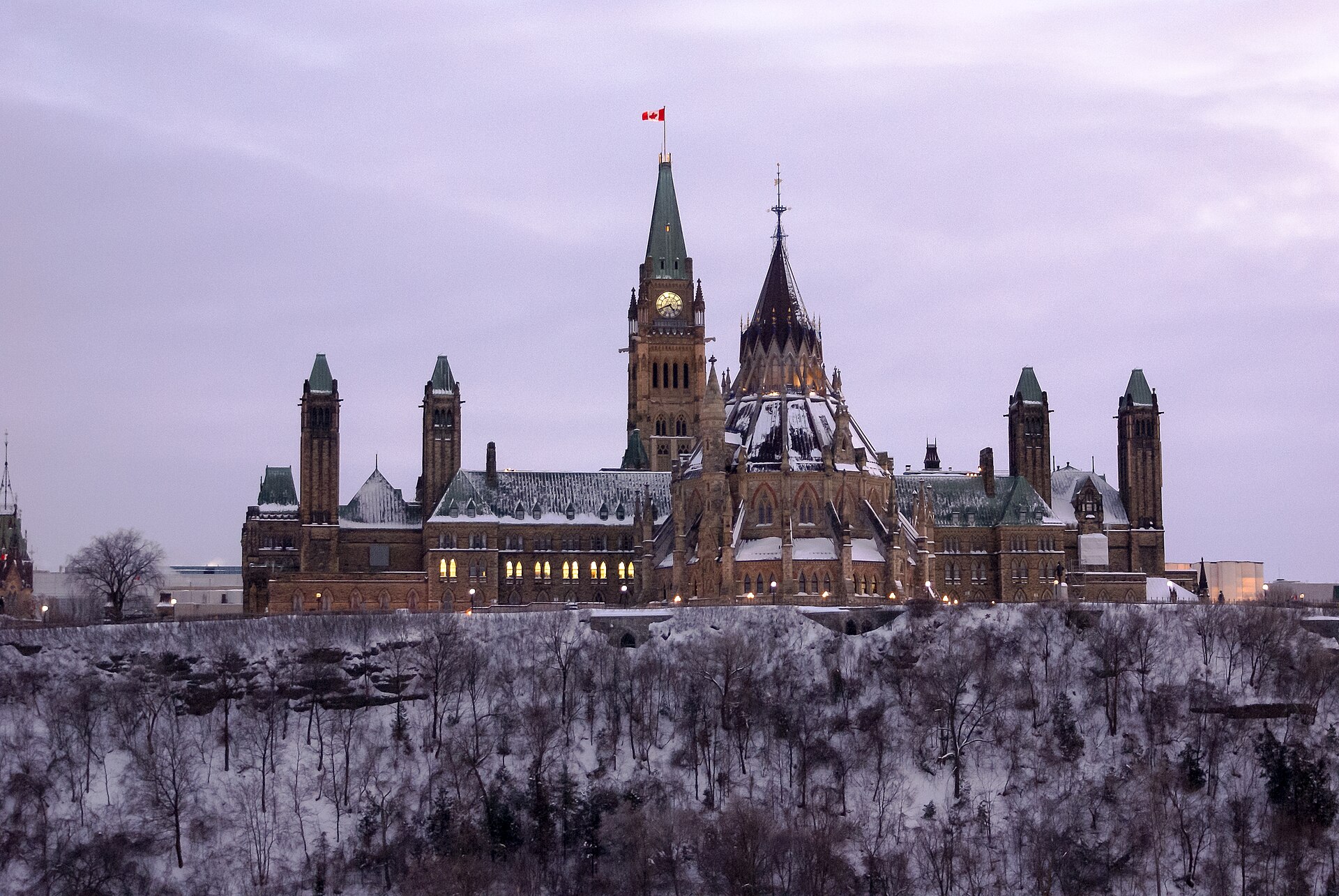

.jpg)

Ottawa and Orlando are both mid-priced cities anchored by one dominant employer, and that employer decides the comparison. Ottawa's benchmark home was $634,000 CAD in July 2026 with a $2,762 monthly payment, its median household income was $102,000 CAD, and the federal government is shedding about 28,000 jobs by 2029. Orlando's typical home was $375,175 USD with a $1,931 payment, its median income $77,597 USD, and a fifth of its jobs are in tourism. Pick Ottawa for a stable two-income household that wants public health care, French schooling and a real winter. Pick Orlando for lower tax and cheaper entry if your income comes from health care, aerospace or anything that is not a theme park, and if you can price in hurricanes.
Ottawa prices are in CAD and Orlando prices are in USD. The tables leave them in their own currency and compare ratios and rates instead; a conversion would be stale by the time you read it.
| Measure | Ottawa | Orlando | Advantage |
|---|---|---|---|
| City population | 1,188,114 (2025) | 333,888 (2025) | Not directly comparable |
| Metro population | 1,700,014 (2025) | 2,957,672 (2025) | Not directly comparable |
| Five-year growth Growth is pressure on rents and roads as much as it is opportunity, so it is reported without a winner. | 8.9% (2016-2021) | 8.3% (2020-2025) | Not directly comparable |
What a home costs in each
The figures the two cities' rent-versus-buy and mortgage calculators run on, read from the same tables.
| Measure | Ottawa | Orlando | Advantage |
|---|---|---|---|
| Benchmark home price MLS® HPI or equivalent benchmark. Lower is treated as the advantage, which is the buyer's view rather than the owner's. | $634,000 (July 2026) | $375,175 (June 2026) | Not directly comparable |
| Detached house benchmark Orlando publishes a single house index rather than a composite, so the two rows repeat. | $725,000 | $375,175 | Not directly comparable |
| Apartment or condominium benchmark | $385,500 | Not published | Not directly comparable |
| Two-bedroom rent | $1,916/mo (average, October 2025) | $1,904/mo (median, June 2026) | Not directly comparable |
| One-bedroom rent | $1,593/mo | $1,637/mo | Not directly comparable |
| Two-bedroom rent against median income A year of two-bedroom rent as a share of the median household income below. A household paying the median rent out of the median income is a fiction, but it is the same fiction in both columns and it crosses currencies. | 22.5% of a year's income | 29.4% of a year's income | Ottawa |
| Mortgage payment on the benchmark, 20% down 25 years in Ottawa against 30 in Orlando, each compounding the way its own country's lenders do. The rates are not a spread you can shop: they are what each market charges. | $2,762/mo at 4.34% | $1,931/mo at 6.67% | Not directly comparable |
| Price to household income Benchmark price divided by the median household income below. A ratio is comparable across currencies; the dollars are not. | 6.2× | 4.8× | Orlando |
| Property tax on the benchmark home The effective rate on market value, which is what the two rates have in common and what the Advantage column is decided on; the bills are in each city's own dollars. | $5,262/yr (0.83%, 2026) | $6,043/yr (1.611%, 2025) | Ottawa |
| Transfer tax on the benchmark home Compared as a share of the price. Where the seller pays it, it is a cost of leaving rather than arriving. | $9,155 (buyer pays) | $2,626 (seller pays) | Orlando |
| Rent control A cap protects a sitting tenant and does nothing for the next lease, so neither column is simply better. | 2.1% guideline (2026) | Forbidden by state law | Not directly comparable |
Ottawa: About 0.83% of market value. Ottawa levies roughly 1.26%, but against a Current Value Assessment frozen at 1 January 2016 values, because Ontario has deferred every reassessment since. The average urban home is assessed at $415,000 and pays about $5,246 in 2026, which on the $634,000 composite benchmark is 0.83%. Ottawa's municipal taxes on a representative detached house were the lowest of Ontario's ten largest cities in 2025. Orlando: About 1.61% of what you pay for the house, which is lower than the 18.0878 mills Orlando is taxed at, and the difference is the homestead exemption rather than any assessment lag. Florida assesses at full market value and a purchase resets the assessment to the price, so there is no gap to correct for. What there is instead is an exemption: $25,000 of taxable value comes off for every taxing authority and a second slice comes off for all of them except the Orange County school district, which levies 6.4490 of the 18.0878. That second slice was $25,000 through the 2024 tax roll and has been adjusted for inflation every 1 January since, under the 2024 amendment to Article VII section 6 of the state constitution, so it is now somewhat more than $25,000. The figures here use the base amount, because the Department of Revenue sends the adjusted figure to the county property appraisers rather than publishing it. The difference is worth a few dollars a year on a bill, and the county property appraiser can tell you the amount in force. So a homesteaded buyer's first-year bill is the school millage on the price less $25,000 plus everything else on the price less $50,000, about $6,043 a year on the $375,175 typical home value here. The exemption is not automatic: you file for it with the county property appraiser by 1 March of the year after you buy, and until you do the rate is the full 1.81%. The seller's tax bill is not a guide to yours. Save Our Homes caps a homesteaded property's assessed value at 3% growth a year, and that cap resets to full market value the January after the sale, so a long-tenured owner can be taxed on a fraction of what you will be taxed on for the same house. Ask the property appraiser what the assessment would be at your purchase price, not what the current bill is.
How safe each city is, by the numbers it publishes
Police-reported figures for the most recent year each force or statistics agency has released. Rates describe a whole city or metro area, and the spread between neighbourhoods inside one city is usually wider than the gap between the two cities.
| Measure | Ottawa | Orlando | Advantage |
|---|---|---|---|
| Crime Severity Index Statistics Canada's weighted index for the metropolitan area, where 100 is Canada in 2006. American cities have no equivalent series. | 50.6 (2025) | Not published | Not directly comparable |
| Violent crime per 100,000 Canada counts every violent Criminal Code incident; the FBI counts four offences. The Canadian figure is always the larger one for that reason alone. | 814 (2025) | 836 (2022) | Not directly comparable |
| Property crime per 100,000 | 2,835 (2025) | 4,036 (2022) | Not directly comparable |
| Homicides Counts, not rates, and a single year in a small city moves a long way on chance alone. What each figure covers is under the table. | 21 (2025) | 10 (2025) | Not directly comparable |
The Ontario-part CSI rose from 46.85 in 2021 to 54.20 in 2023, held at 54.12 in 2024 and fell 6% to 50.61 in 2025 (table 35-10-0026-01). The violent crime rate has kept climbing, from 744 per 100k in 2021 to 814 in 2025, while property crime peaked in 2024 at 2,957 per 100k and eased to 2,835 in 2025.
What the rates cover: Total violent Criminal Code violations, rate per 100,000, Ottawa-Gatineau CMA Ontario part, table 35-10-0177-01 (10,745 incidents).
Homicides: Ottawa-Gatineau CMA Ontario part, table 35-10-0177-01; rate 1.59 per 100,000. 2024 was 27 (2.10 per 100k), the highest of the last five years.
Orlando PD reports overall crime down 18% in 2024 and another 19% in 2025, violent crime down 10% in 2024 and 9% in 2025, and shootings with victims down 41% from 2023 to 2025. Homicides fell from 31 in 2023 to 10 in 2025. The FBI's public feed has no usable Orlando data after 2022, so these are the department's own figures.
What the rates cover: FBI Crime Data Explorer, Orlando Police Department (ORI FL0480400), 2022: 2,597 violent offenses, 835.8 per 100k. 2022 is the last year with twelve complete months in the FBI feed; 2023 through 2025 show zeros for this agency, so no FBI rate exists for those years. Orlando PD's own count of violent crime incidents (a broader in-house definition) was 6,754 in 2023 and 5,928 in 2025, which would be about 1,775 per 100k on the 2025 population.
Homicides: Orlando Police Department: 10 homicides in 2025, the lowest since 1971, down from 23 in 2024 and 31 in 2023 (OPD's 2023 figure was reported as 38 in a January 2025 release and 31 in the February 2026 release). About 3.0 per 100k on the 2025 city population. FBI CDE 2022: 32 homicides, 10.3 per 100k.
Winters, summers and what the weather can do to a house
| Measure | Ottawa | Orlando | Advantage |
|---|---|---|---|
| January mean | -10.0 °C | 15.9 °C | Not directly comparable |
| July mean | 21.2 °C | 28.1 °C | Not directly comparable |
| Precipitation a year | 930 mm | 1,307 mm | Not directly comparable |
| Snowfall a year | 232 cm | 0 cm | Not directly comparable |
| Sunshine a year | 2,084 hours | Not published | Not directly comparable |
Environment and Climate Change Canada 1991-2020 normals at Ottawa Macdonald-Cartier Int'l A (climate ID 6106000). Annual mean 6.5 C, rainfall 757.2 mm. Sunshine hours are from the 1981-2010 normals at Ottawa CDA (climate ID 6105976) because the 1991-2020 airport table does not publish sunshine totals.
Hazards: Cold winters with regular snowstorms and freezing rain, spring flooding along the Ottawa River (2017 and 2019), summer heat and humidity, occasional severe thunderstorms and tornadoes (September 2018, the May 2022 derecho), and wildfire smoke episodes such as June 2023.
NOAA 1991-2020 normals at Orlando International Airport (USW00012815): January mean 60.6F, July mean 82.6F, annual precipitation 51.45 in, annual snowfall 0.0 in, annual mean 73.0F. June through September each average 6.4 to 8.1 in of rain. Sunshine hours are not part of the NOAA normals product and were not verified.
Hazards: Hurricanes are the main hazard: Charley (2004), Irma (2017), Ian (2022, 14 in of rain and 74 mph gusts at MCO) and Milton (2024, over 15 in of rain in parts of Central Florida plus a record one-day tornado outbreak) all damaged the area. The city sits about 100 ft above sea level and 42 mi inland, so storm surge is not a concern but inland flooding, wind damage and long power outages are. Summer heat and daily thunderstorms with lightning are routine.
What people earn and what the government takes
| Measure | Ottawa | Orlando | Advantage |
|---|---|---|---|
| Median household income | $102,000 CAD (2020) | $77,597 USD (2024) | Not directly comparable |
| Unemployment rate Statistics Canada and the Bureau of Labor Statistics define unemployment slightly differently; the Canadian measure runs about a point higher on the same labour market. | 6.8% (July 2026) | 4.6% (June 2026) | Not directly comparable |
| Sales tax | 13% | 6.5% | Orlando |
| Top marginal income tax Federal plus provincial or state. The American figure leaves out payroll taxes and the cost of health insurance, both of which a Canadian household covers through the tax it pays here. | 53.53% | 37% | Orlando |
| Income tax on $100,000, single filer Computed from each jurisdiction's brackets at a single filer's $100,000 and rounded to the dollar, so a gap of a dollar is rounding rather than tax. Two cities in one province or state are shown as Even, because there the two cells describe the same tax and whatever separates them is method. | $21,930 CAD | $13,449 USD | Not directly comparable |
The federal government is the anchor employer: 130,628 of 279,707 federal public servants were based in the National Capital Region at March 31, 2025, and Budget 2025 announced about 28,000 more public service job cuts by 2029. Regional unemployment ran from 6.4% in mid 2025 to 7.3% in late 2025 before easing to 6.8% in July 2026.
Main sectors: Federal public administration, Technology (Kanata North, Shopify, telecom and defence), Health care and hospitals, Post-secondary education, Tourism and national institutions.
Property tax is set by the City of Ottawa; not verified here.
Leisure and hospitality employed 305,500 of 1,506,600 nonfarm jobs in the MSA in June 2026 (BLS CES, not seasonally adjusted, preliminary), about 20%, roughly double the national share, and those jobs pay below the private-sector average, which is why household income trails the US median despite fast job growth. Disney is the largest employer at about 77,000 in the region; AdventHealth employs about 37,700 and Lockheed Martin more than 14,000.
Main sectors: Tourism and hospitality (Disney, Universal, convention centre), Health care (AdventHealth, Orlando Health), Aerospace, defence and simulation (Lockheed Martin, Central Florida Research Park), Construction and real estate, Professional and business services.
No state or city income tax. Property tax runs around 1% of assessed value with a homestead exemption and the Save Our Homes 3% cap for owner-occupiers; not verified here.
Whether you need a car
| Measure | Ottawa | Orlando | Advantage |
|---|---|---|---|
| System | OC Transpo (buses, O-Train Lines 1, 2 and 4, Para Transpo); STO serves Gatineau | LYNX (bus, Orange, Osceola and Seminole counties), SunRail (commuter rail, 16 stations DeLand to Poinciana), Brightline (intercity rail from MCO to South Florida) | Not directly comparable |
| Commute by public transit | 11.2% (2021) | 1.5% (2024) | Ottawa |
| Walk or cycle to work | 8.5% (2021) | 1.7% (2024) | Ottawa |
| Airport | Ottawa Macdonald-Cartier International Airport, YOW, 4.9 million passengers in 2025, up 6% on 2024 (Ottawa International Airport Authority, 2025 results) | Orlando International Airport (MCO), 57,675,573 passengers in 2025, up 0.8% on 2024, seventh busiest in the US (GOAA press release, July 28, 2026). | Not directly comparable |
70.6 million O-Train and bus trips in 2025, up 3.9% on 2024 (OC Transpo report to Transit Committee, February 12, 2026). Ridership fell in early 2026: 11.5 million trips in January-February versus 12.4 million a year earlier.
LYNX carried 21,476,203 passenger trips in FY2025 (October 2024 to September 2025), more than 67,000 per weekday, on 62 routes (LYNX Facts at a Glance). SunRail passed 1.2 million riders in calendar 2024, up 12% on 2023 (SunRail press release, January 2025); APTA puts 2025 at about 1.32 million. SunRail runs weekdays only.
Health care, schools and what each city is like
Health care
Care is publicly funded through OHIP after a residency waiting period for newcomers, with prescription drugs, dental and vision outside the public plan for most working-age adults. The main hospitals are The Ottawa Hospital (Civic and General campuses), CHEO for children, the Queensway Carleton and Montfort; a replacement Civic campus was promised for 2028 but construction on the hospital itself had not begun as of 2026, and finding a family doctor is the hardest part of access, with the Ontario College of Family Physicians projecting 4.4 million Ontarians without one by 2026.
Education
The University of Ottawa (bilingual) and Carleton University are the large universities, with Algonquin College and La Cite for applied programs. Publicly funded schools run through four boards: the Ottawa-Carleton District School Board, the Ottawa Catholic School Board, and French-language public and Catholic boards, so French immersion and full French schooling are both widely available.
Living there
Ottawa is a government town that behaves like a mid-sized city: quiet downtown evenings, a large share of households with two stable incomes, and a weekend life built around the Rideau Canal, the Gatineau Park hills across the river and the river pathways. Winters are long and cold, with roughly 232 cm of snow in a normal year, and summers are warm and humid. The O-Train light rail has had reliability problems since it opened in 2019, and the bus network has been cut back, so most households still drive.
Health care
Care is paid for through employer or marketplace insurance, Medicare and Medicaid; Florida did not expand Medicaid under the ACA, so a larger share of working adults is uninsured than in most states, and hospitality jobs often come with thin coverage. Two large non-profit systems dominate: AdventHealth Orlando (one of the biggest hospitals in the country) and Orlando Health with Orlando Regional Medical Center, the region's Level I trauma centre, plus Nemours Children's Hospital at Lake Nona and the UCF Lake Nona Hospital.
Education
The University of Central Florida enrols about 70,000 students, among the largest campuses in the US, and anchors the Central Florida Research Park; Rollins College in Winter Park and Valencia College (a two-year college with a national Aspen Prize) are the other main institutions. Orange County Public Schools is the eighth largest district in the US with roughly 200,000 students, and Florida's universal school-choice vouchers, charter schools and magnet programmes mean many families do not attend their zoned school.
Living there
Orlando is a sprawling, car-first region of master-planned subdivisions, toll roads and strip centres, with a small walkable core around Lake Eola, Thornton Park, Mills 50 and College Park, and the theme parks 15 miles southwest in a separate world of their own. Summers are long, humid and stormy, winters mild, and the population skews young and Latino, with the largest Puerto Rican community in Florida. Housing and insurance costs have risen faster than the tourism-weighted wages, and hurricane season shapes the calendar every year.
Where each city wins, and where it loses
Ottawa's housing is Canadian dollars, Orlando's American, so read the ratios. Ottawa's composite benchmark was $634,000 CAD in July 2026, with detached houses at $725,000 and apartments at $385,500. Orlando's typical home was $375,175 USD in June 2026. With 20% down the mortgage is $2,762 a month in Ottawa at 4.34% and $1,931 in Orlando at 6.67%; the higher US rate takes back part of the price advantage. Rents are almost identical in number: a two-bedroom averaged $1,916 in Ottawa in October 2025 and the median was $1,904 in Orlando in June 2026. Carrying costs favour Ottawa. Property tax on the benchmark is about $5,262 a year there against $6,043 in Orlando after the homestead exemption, and home insurance about $145 a month against $310. Ottawa's buyer pays $9,155 in land transfer tax; in Orlando the seller pays $2,626 in stamps.
The crime numbers need a translation before they mean anything. Ottawa's 2025 violent rate of 813.79 per 100,000 counts every violent Criminal Code violation including common assault and threats; Orlando's FBI figure of 835.8 covers only murder, rape, robbery and aggravated assault, and it is from 2022 because the FBI feed has shown zeros for Orlando since. Property crime was 2,834.59 per 100,000 in Ottawa and 4,035.6 in Orlando in 2022, again on different definitions. Homicide is comparable. Ottawa recorded 21 in 2025, 1.59 per 100,000, down from 27 the year before; Orlando recorded 10, its fewest since 1971, about 3.0 per 100,000 on a smaller city population. Ottawa's Crime Severity Index fell 6% to 50.61 in 2025, though its violent rate has climbed steadily since 2021. Orlando PD reports overall crime down 19% in 2025 on its own count.
Ottawa has one of the hardest winters of any large Canadian city: a January mean of minus 10.0 C and 231.9 cm of snow a year, with freezing rain, spring flooding on the Ottawa River in 2017 and 2019, the May 2022 derecho and wildfire smoke in June 2023. Summers reach a July mean of 21.2 C and are humid. Orlando's January mean is 15.9 C, its July 28.1 C, with 1,307 mm of rain, mostly summer thunderstorms with lightning, and no snow. Its hazard is wind and water from hurricanes: Charley, Irma, Ian and Milton all damaged the area, Ian bringing 14 inches of rain to the airport in 2022. Being 42 miles inland rules out storm surge but not flooding or long outages. The insurance estimates tell the story: about $145 a month in Ottawa, $310 in Orlando.
Ottawa's incomes are higher and its jobs less certain than they used to be. The city's median household income was $102,000 CAD in 2020, against $77,597 USD in Orlando in 2024, and Ottawa's edge comes from two-income public-service households: 130,628 federal public servants were based in the National Capital Region in March 2025, and Budget 2025 announced about 28,000 cuts by 2029. Unemployment was 6.8% in July 2026 against 4.6% in Orlando in June. Orlando's 1,506,600 jobs include 305,500 in leisure and hospitality, which pay below average. Tax on $100,000 is about $21,930 in Ontario including the health premium, against $13,449 federal-only in Florida, and sales tax is 13% HST against 6.5%. The Ontario bill buys OHIP; the Florida saving has to buy health insurance and the storm premium.
Neither city is a transit city, but Ottawa is closer. OC Transpo carried 70.6 million trips in 2025 on buses and three O-Train lines, and 11.2% of city commuters used transit in 2021, a pandemic-depressed figure. The light rail has had reliability problems since 2019 and bus service has been cut, so most households drive, but one car often suffices. Orlando's LYNX carried 21.5 million trips in fiscal 2025 and SunRail about 1.2 million in 2024, weekdays only; transit share in the city was 1.5% in 2024 and walking and cycling 1.7%. The region runs on toll roads and subdivisions and a car per adult is assumed. The airports differ in scale: 4.9 million passengers at Ottawa in 2025 against 57.7 million at Orlando International, the seventh busiest in the US.
Day to day, Ottawa is a government town with quiet evenings, the Rideau Canal and Gatineau Park, and OHIP coverage after a waiting period, though finding a family doctor is the hardest part and the replacement Civic hospital promised for 2028 had not started construction in 2026. Four school boards mean French immersion and full French schooling are widely available, and uOttawa and Carleton are the universities. Orlando has AdventHealth and Orlando Regional's Level I trauma centre, but Florida did not expand Medicaid and hospitality jobs often carry thin coverage. Orange County Public Schools has roughly 200,000 students, and universal vouchers and charters mean many families do not use their zoned school. UCF enrols about 70,000. Orlando's population skews young and Latino; Ottawa's skews stable and bilingual.
The thing people miss here is that Ottawa's affordability rests on an employer that is shrinking while Orlando's rests on one that pays poorly. Ottawa's $102,000 median income makes its $2,762 payment manageable for a two-salary federal household, but 28,000 public service cuts by 2029 land disproportionately on this region. Orlando's $1,931 payment looks easy until you add $6,043 in property tax and about $3,720 a year in insurance on a $77,597 median income shaped by tourism wages. Renters face another asymmetry: Ontario caps increases at 2.1% in 2026 in units first occupied before November 2018, while Florida forbids rent control outright.
Better here
- Median household income was $102,000 CAD in 2020, and home insurance is about $145 a month against $310 in Orlando.
- Property tax on the benchmark is about $5,262 a year, lower than Orlando's $6,043 despite the higher price, and the lowest among Ontario's ten largest cities on a detached house.
- OC Transpo carried 70.6 million trips in 2025 and 11.2% of commuters used transit in 2021, against 1.5% in Orlando.
- OHIP covers doctors and hospitals without a premium, and four school boards offer French immersion and full French schooling.
- Rent increases are capped at 2.1% in 2026 in units first occupied before November 2018; Florida bans rent control.
- There are no hurricanes, and the homicide rate of 1.59 per 100,000 in 2025 was below Orlando's roughly 3.0.
Worse here
- The benchmark was $634,000 CAD in July 2026 with a $2,762 payment, against $375,175 USD and $1,931 in Orlando.
- January averages minus 10.0 C and a normal winter brings 231.9 cm of snow plus freezing rain.
- Income tax on $100,000 is about $21,930 against $13,449 in Florida, and HST is 13% against 6.5%.
- Unemployment was 6.8% in July 2026 and about 28,000 federal public service cuts are scheduled by 2029.
- The violent crime rate has risen every year since 2021, from 744 to 814 per 100,000, and the O-Train has been unreliable since 2019.
- The buyer pays $9,155 in land transfer tax on the benchmark.
Choose Ottawa if
- you have a stable salaried job, ideally two in the household, and earn in Canadian dollars
- you want public health insurance and French-language schooling for your children
- you prefer a quiet, mid-sized city with canal skating and Gatineau Park over theme parks and toll roads
- you can live with minus 10 C Januaries and 232 cm of snow
The Ottawa guide · Neighbourhoods · Ottawa rent vs buy · Ottawa mortgage calculator
Better here
- The typical home cost $375,175 USD in June 2026 with a $1,931 monthly payment at 20% down.
- No state income tax: tax on $100,000 is the federal $13,449, and sales tax is 6.5%.
- Metro unemployment was 4.6% in June 2026 and the MSA grew 10.3% from 2020 to 2025.
- January averages 15.9 C with no snow, and Orlando International handled 57.7 million passengers in 2025.
- Homicides fell to 10 in 2025, the lowest since 1971, and the seller pays the $2,626 transfer stamp.
Worse here
- Home insurance is about $310 a month and property tax about $6,043 a year on the benchmark, both above Ottawa's.
- Hurricanes Charley, Irma, Ian and Milton all damaged the area, with inland flooding and long power outages.
- Transit share was 1.5% in 2024 and SunRail runs weekdays only; a car per adult is assumed.
- Median household income was $77,597 in 2024, held down by 305,500 hospitality jobs in a 1.5 million job metro.
- Florida did not expand Medicaid, and the FBI has had no usable Orlando crime data since 2022.
- Florida forbids rent control, so the $1,904 two-bedroom median has no legal ceiling.
Choose Orlando if
- you earn in US dollars in health care, aerospace or defence rather than tourism
- you carry employer health insurance and want the $8,000-plus income tax saving
- you can budget for $310 a month in insurance and a power outage after a storm
- you want a warm winter and do not mind a car-first region
The Orlando guide · Neighborhoods · Orlando rent vs buy · Orlando mortgage calculator
Ottawa or Orlando, in short
Is Ottawa or Orlando cheaper to live in?
Orlando is cheaper to buy into: $375,175 USD for the typical home in June 2026 against $634,000 CAD in Ottawa in July 2026, with a $1,931 monthly payment against $2,762. Rents are level, a $1,904 two-bedroom median in Orlando against a $1,916 average in Ottawa. Ottawa is cheaper to hold: about $5,262 in property tax and $145 a month in insurance against $6,043 and $310. Income tax on $100,000 is $13,449 in Florida against about $21,930 in Ontario. The figures are in different currencies and were not converted.
Is Ottawa or Orlando safer?
Ottawa on homicide: 21 in 2025, or 1.59 per 100,000, against Orlando's 10, about 3.0 per 100,000 on a smaller city. The headline violent rates, 813.79 in Ottawa and 835.8 in Orlando, are not comparable, because Canadian counting includes common assault and threats and the Orlando figure is the FBI's narrower measure from 2022, the last year with complete data. Ottawa's Crime Severity Index fell 6% to 50.61 in 2025 but its violent rate has risen since 2021; Orlando PD reports crime down 19% in 2025.
Which has the better climate, Ottawa or Orlando?
Orlando is warm all year, 15.9 C in January and 28.1 C in July, with no snow; Ottawa averages minus 10.0 C in January and gets 231.9 cm of snow, with freezing rain and a July mean of 21.2 C. Orlando pays for its winter with 1,307 mm of rain, daily summer lightning and hurricanes, Ian and Milton most recently. Ottawa's hazards are river floods, the 2022 derecho and wildfire smoke. Insurance puts a price on it: about $310 a month in Orlando against $145 in Ottawa.
How exposed is each city to its biggest employer?
Very, in different ways. Ottawa had 130,628 federal public servants in the National Capital Region in March 2025, and Budget 2025 announced about 28,000 cuts across the service by 2029, which pushed regional unemployment to 7.3% in late 2025 before it eased to 6.8%. Orlando's leisure and hospitality sector employed 305,500 of 1,506,600 jobs in June 2026, with Disney alone at about 77,000, and those wages explain a $77,597 median income. Orlando's other anchors are AdventHealth at about 37,700 and Lockheed Martin above 14,000; Ottawa's are Kanata North tech and the hospitals.
Where the figures come from
Housing figures are the ones behind each city's calculators, dated on those pages. The rest are listed here with the date they were retrieved. See the methodology for how facts, estimates and opinion are kept apart.
- Census Profile, 2021 Census of Population: Ottawa, City (CSD) and Ottawa-Gatineau (Ontario part) · Statistics Canada · retrieved Supports: population.city (2021 count), Five-year growth, Median household income, Transit commute share, Walk and cycle commute share
- Census Profile, 2021 Census of Population: Ottawa-Gatineau (CMA) · Statistics Canada · retrieved Supports: population.metro (2021 count), population.growthPct5y (CMA)
- Population estimates, July 1, by census subdivision, 2021 boundaries (table 17-10-0155-01) · Statistics Canada · retrieved Supports: City population
- Population estimates, July 1, by census metropolitan area and census agglomeration, 2021 boundaries (table 17-10-0148-01) · Statistics Canada · retrieved Supports: Metro population
- Crime severity index and weighted clearance rates, Canada, provinces, territories and Census Metropolitan Areas (table 35-10-0026-01) · Statistics Canada · retrieved Supports: Crime Severity Index, Crime trend
- Police-reported Crime Severity Index and crime rate, by census metropolitan area, 2025 · Statistics Canada, The Daily · retrieved Supports: Crime Severity Index, crime.propertyRatePer100k (all-crime rate context)
- Incident-based crime statistics, by detailed violations, Canada, provinces, territories, CMAs (table 35-10-0177-01) · Statistics Canada · retrieved Supports: Violent crime rate, Property crime rate, Homicides, Crime trend
- Ottawa crime rate increases in 2025, remains above Ontario average · Yahoo News Canada (Ottawa Police Service KPI report to the Police Services Board, January 26, 2026) · retrieved Supports: crime.index (OPS city CSI 55.8)
- Canadian Climate Normals 1991-2020, Ottawa Macdonald-Cartier Int'l A · Environment and Climate Change Canada · retrieved Supports: January mean, July mean, Annual precipitation, Annual snowfall
- Canadian Climate Normals 1981-2010, Ottawa CDA · Environment and Climate Change Canada · retrieved Supports: Sunshine hours
- Labour force characteristics by census metropolitan area, three-month moving average, seasonally adjusted (table 14-10-0459-01) · Statistics Canada · retrieved Supports: Unemployment rate, Labour market
- Labour Force Survey, July 2026 · Statistics Canada, The Daily · retrieved Supports: economy.unemploymentPct (Canada and Ontario comparison)
- Federal government to cut another 28,000 public service jobs by 2029 · CTV News Ottawa · retrieved Supports: Labour market
- Federal Government Jobs in Ottawa: 2026 Hiring Guide (citing Public Service Commission counts at March 31, 2025) · Via Ottawa · retrieved Supports: economy.note (NCR public servant count)
- 2025 and 2026 Combined Federal and Ontario Tax Rates Including Surtaxes · TaxTips.ca · retrieved Supports: Top marginal income tax, Income tax on $100,000
- Ontario Health Premium · TaxTips.ca · retrieved Supports: Income tax on $100,000
- 2025 Non-Refundable Personal Tax Credits, Base Amounts · TaxTips.ca · retrieved Supports: Income tax on $100,000
- Recap: February 12, 2026 Transit Committee · OC Transpo · retrieved Supports: Transit ridership
- OC Transpo sees drop in ridership to start 2026 · CTV News Ottawa · retrieved Supports: transit.ridershipNote (early 2026)
- A transformational year: Ottawa Airport Authority reports 2025 results · Ottawa International Airport Authority · retrieved Supports: Airport passengers
- More Than Four Million Ontarians Will Be Without a Family Doctor by 2026 · Ontario College of Family Physicians · retrieved Supports: Health care
- New Ottawa Civic hospital opening likely delayed by years, says project consultant · CBC News · retrieved Supports: Health care
- Annual Estimates of the Resident Population for Incorporated Places in Florida: April 1, 2020 to July 1, 2025 (SUB-EST2025) · US Census Bureau · retrieved Supports: City population, Five-year growth, crime.homicides rate
- Annual Resident Population Estimates for Metropolitan and Micropolitan Statistical Areas: April 1, 2020 to July 1, 2025 (CBSA-EST2025-ALLDATA) · US Census Bureau · retrieved Supports: Metro population, Five-year growth
- Crime Data Explorer, Orlando Police Department summarized offenses (violent crime, property crime, homicide), 2021-2025 · FBI · retrieved Supports: Violent crime rate, Property crime rate, crime.homicides 2022
- Proactive policing in Orlando yields significant crime reductions · WFTV · retrieved Supports: Homicides, Crime trend, crime notes
- Police say crimes, including homicides, declining in Orlando · Spectrum News 13 · retrieved Supports: Homicides, Crime trend
- Orlando Police: 2025 violent crime down 9 percent in the City Beautiful · Headline Surfer · retrieved Supports: Crime trend, crime.homicides 2024
- Orlando Police Department releases 2024 crime statistics · WFTV via Yahoo News · retrieved Supports: Crime trend
- U.S. Climate Normals 1991-2020, station USW00012815 (Orlando International Airport), monthly and annual · NOAA NCEI · retrieved Supports: January mean, July mean, Annual precipitation, Annual snowfall
- Orlando, Florida (climate and hurricane history) · Wikipedia · retrieved Supports: Climate hazards, character
- Hurricane Milton · Wikipedia · retrieved Supports: Climate hazards
- ACS 2024 1-year, tables B19013 and B08301, Orlando city and Orlando-Kissimmee-Sanford MSA · US Census Bureau via Census Reporter API · retrieved Supports: Median household income, Transit commute share, Walk and cycle commute share
- Local Area Unemployment Statistics, series LAUMT123674000000003 (Orlando-Kissimmee-Sanford MSA unemployment rate) · US Bureau of Labor Statistics · retrieved Supports: Unemployment rate
- Current Employment Statistics, series SMU12367400000000001 and SMU12367407000000001 (Orlando MSA total nonfarm and leisure and hospitality) · US Bureau of Labor Statistics · retrieved Supports: Labour market
- Top employers and talent report search results (Disney, AdventHealth, Lockheed Martin employment) · Orlando Economic Partnership · retrieved Supports: Main sectors, Labour market
- Orange County, Florida sales tax rate 2026 · Avalara · retrieved Supports: Sales tax
- 2025 Tax Brackets · Tax Foundation · retrieved Supports: Top marginal income tax, Income tax on $100,000
- Facts at a Glance · LYNX (Central Florida Regional Transportation Authority) · retrieved Supports: Transit system, Transit ridership
- SunRail Ridership Grows to 1.2 Million Riders in 2024 · SunRail · retrieved Supports: Transit ridership
- Orlando International Moves Up In 2025 National Rankings for Busiest Airport · Greater Orlando Aviation Authority · retrieved Supports: Airport passengers
- MLS® Home Price Index: Ottawa Real Estate Board, July 2026 · Canadian Real Estate Association / Ottawa Real Estate Board · retrieved Supports: Composite MLS® HPI benchmark of $634,000 in July 2026, down 0.5% year over year, Single-family benchmark of $725,000, up 0.7% year over year, Townhouse and row benchmark of $542,500, down 5.1% year over year, Apartment benchmark of $385,500, down 5.2% year over year, 1,325 sales and 4,678 active listings in July 2026
- Rental Market Survey: Ottawa, average rent by bedroom type, October 2025 · Canada Mortgage and Housing Corporation · retrieved Supports: Ottawa average purpose-built rents of $1,332 studio, $1,593 one-bedroom, $1,916 two-bedroom and $2,090 three-bedroom-plus, An overall average of $1,743 across 89,170 purpose-built units, Year-over-year increases of 3.4% on one- and two-bedroom units and 3.9% overall, Average rent of $2,320 in buildings completed in 2000 or later against $1,529 in buildings from before 1960
- Rental Market Statistics Summary: Ottawa (CV), October 2025 · Canada Mortgage and Housing Corporation · retrieved Supports: City of Ottawa purpose-built vacancy rate of 2.9% across 86,550 units, City of Ottawa average rent of $1,741 and median rent of $1,675
- 2026 Tax Policy and Other Revenue Matters · City of Ottawa, Revenue Services · retrieved Supports: Ontario's last province-wide reassessment was completed in 2016 and municipalities rely on 2016 assessment values for the 2026 tax year, The average urban Ottawa home is assessed at $415,000, A 2026 net municipal increase of $184 on that home: $166 from the 3.75% budget increase and $18 from the multi-residential ratio change, The 2026 budget was approved on 10 December 2025 with a 3.75% overall municipal tax increase, Ottawa's 2025 average municipal taxes on a representative two-storey detached house were $5,490, the lowest of Ontario's ten largest municipalities
- Education property tax rates · Government of Ontario · retrieved Supports: The residential education tax rate of 0.153% of assessed value, unchanged since 2020
- Premium information for homeowner and small rental loans · Canada Mortgage and Housing Corporation · retrieved Supports: Mortgage default insurance premium rates by loan-to-value
- Regulations amending the Insurable Housing Loan Regulations and the Eligible Mortgage Loan Regulations (SOR/2025-55) · Canada Gazette, Part II · retrieved Supports: The $1.5 million insured price cap, 30-year amortization for first-time buyers and new builds
- Minimum qualifying rate for uninsured mortgages · Office of the Superintendent of Financial Institutions · retrieved Supports: The qualifying rate of the contract rate plus two points, or 5.25%
- Interest rates charged for new and existing lending by chartered banks · Bank of Canada · retrieved Supports: The default mortgage rate of 4.34%, uninsured five-year-plus fixed, funds advanced May 2026
- Calculating Land Transfer Tax · Ontario Ministry of Finance · retrieved Supports: Provincial transfer tax brackets, The conditional 2.5% band
- Municipal Land Transfer Tax rates and fees · City of Toronto · retrieved Supports: Toronto municipal transfer tax brackets, First-time buyer rebate
- Residential rent increases · Government of Ontario · retrieved Supports: 2026 rent increase guideline of 2.1%, The 2018 occupancy exemption
- Retail Sales Tax · Government of Ontario · retrieved Supports: 8% retail sales tax on insurance premiums
- Zillow Home Value Index (ZHVI), all homes, mid-tier, smoothed and seasonally adjusted: city file, June 2026 · Zillow Research · retrieved Supports: A typical home value for the 35th to 65th percentile of each municipality's market, computed on one method across all twenty-four, Year-over-year change to June 2026, which is negative in twenty-two of the twenty-four, The same series and month the Charlotte metro pages use, so the two American metros can be read against each other
- 2025 Final Millage Rates · Orange County Property Appraiser · retrieved Supports: Orange County general at 4.4347 mills, the library district at 0.3748 and the St Johns River Water Management District at 0.1793, School state and local levies totalling 6.449 mills, Municipal rates from Windermere's 3.7425 to Eatonville's 7.2938, A published total against every mill code, including Winter Park's 15.3615 on codes 2, 4 and 6, Maitland's 16.3055 on code 6, and Windermere's 15.2311 on code 35 and 15.4839 on code 75, A blank library column on every Winter Park and Maitland code, which is what puts both municipalities outside the district
- Special taxing district information: the Orange County Library District's boundary · Orange County Library System · retrieved Supports: The district's boundary is Orange County exclusive of Winter Park and Maitland, each of which operates its own library, Laws of Florida chapter 99-486 as the enabling act behind it
- Final 2025 Millage Rates, fiscal year 2025-26 · Seminole County Property Appraiser · retrieved Supports: Total millage by taxing authority for every Seminole municipality, from Lake Mary's 14.3929 to Casselberry's 18.1808, School required local and discretionary levies totalling 5.2490 mills, The county fire and road MSTUs, which apply in the unincorporated area and in some cities but not others
- 2025 Final Millage Rates · Osceola County Property Appraiser · retrieved Supports: Kissimmee at 17.4114 mills and Saint Cloud at 17.8989, School levies totalling 5.3060 mills across required local, discretionary and capital, Dozens of separate municipal service taxing units in the unincorporated county, from 0.13 to 12.42 mills, which is why an unincorporated Osceola address cannot be given one rate
- 2025 Final Millage Rates by district, and the 2025 Final Millage Rates and Values Comparison Sheet · Lake County Property Appraiser · retrieved Supports: Total millage for every Lake municipality, from Leesburg's 15.9477 to Eustis's 19.8623, Leesburg's own adopted rate of 3.4752 mills, on the district sheet and again as the 2025 adopted rate on the comparison sheet, School board state and local levies totalling 6.0850 mills, The county fire, ambulance and stormwater MSTUs and which municipalities are subject to them, including that an incorporated city pays neither the fire nor the stormwater MSTU
- Annual estimates of the resident population for incorporated places, 2020 to 2024 · United States Census Bureau, Population Estimates Program · retrieved Supports: 2020 census counts and 2024 population estimates for each municipality, Leesburg's growth from 27,011 to 37,815, the fastest in the metro in percentage terms, Orlando at 334,854, which is twelve percent of its own metropolitan area
- Primary Mortgage Market Survey · Freddie Mac · retrieved Supports: 30-year fixed-rate mortgage averaging 6.67%
- Average cost of homeowners insurance in Florida, 2026 · MoneyGeek · retrieved Supports: A Florida average of about $3,815 a year against a national average of about $2,543, Orange County premiums in the $3,200 to $4,500 range, at the cheaper end of the state because the metro is inland
- Conforming loan limit values for 2026 · Federal Housing Finance Agency · retrieved Supports: A baseline one-unit conforming loan limit of $832,750 for 2026, which applies in every county in this metro
- Documentary stamp tax · Florida Department of Revenue · retrieved Supports: 70 cents per $100 on a deed, in every county except Miami-Dade, which charges 60 cents plus a 45-cent surtax, 35 cents per $100 on a promissory note or other written obligation to pay money
- Governmental leasehold intangible personal property tax and the non-recurring intangible tax on mortgages · Florida Department of Revenue · retrieved Supports: A non-recurring intangible tax of 2 mills: 0.2%, on the obligation secured by a mortgage on Florida real property
- Property tax exemptions and additional benefits · Florida Department of Revenue · retrieved Supports: A $25,000 homestead exemption applying to all taxing authorities and a second slice, $25,000 in the 2024 base year and adjusted for inflation each 1 January since, applying to all but the school district, The Save Our Homes assessment limitation of 3% or the change in CPI, whichever is lower, Portability of up to $500,000 of accrued Save Our Homes benefit to a new homestead, The 1 March filing deadline
- Chapter 2023-17, Laws of Florida: preemption of rent control · The Florida Senate · retrieved Supports: The repeal of the referendum exception that had allowed a local rent control ordinance in a declared housing emergency