Ottawa vs Fayetteville: which should you move to?
Ottawa or Fayetteville? Housing, rent, crime, climate, income, taxes and transit, side by side, from each city's own published figures. Written for someone deciding where to live, not for a ranking.
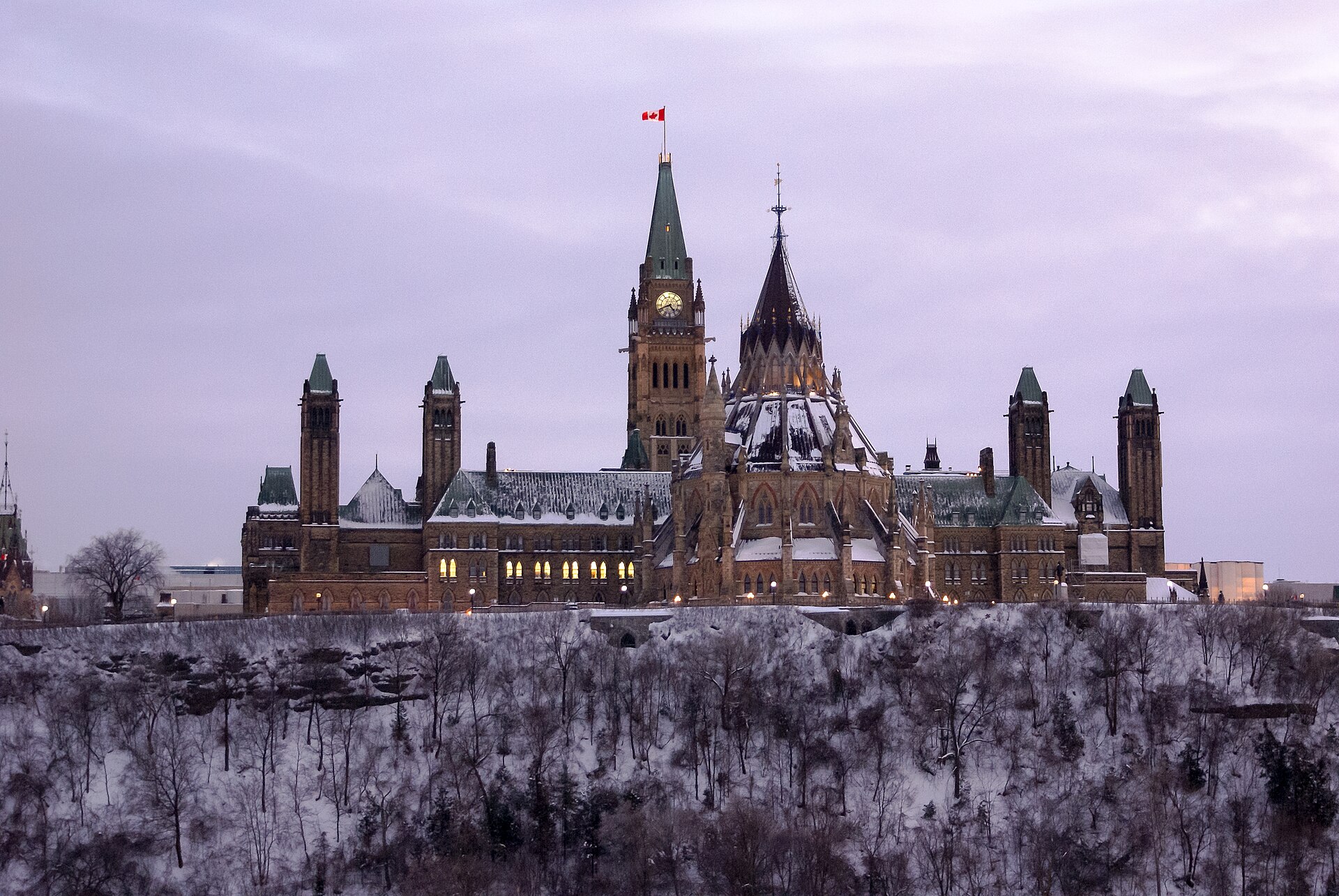
Ottawa


Fayetteville

The two housing bills are in different currencies, and held against local pay they are level. Ottawa's composite benchmark is 6.2 times local median household income and Zillow's typical value for the City of Fayetteville about 4.1 times, but mortgage, property tax and insurance come to about $3,350 CAD a month in Ottawa and about $1,717 USD in Fayetteville, roughly 39% and 38% of local median income, because the Fayetteville loan costs 7.28% against 4.34%, its insurance runs $312 a month, and it is held against an income, $54,562 USD, that is the lowest of the six North Carolina cities this site compares. Both are government towns. Ottawa runs on the federal public service, which is being cut; Fayetteville on Fort Bragg, where federal civilian jobs fell 10.1% in the year to August 2026, with metro unemployment at 4.7% in July 2026 on an unadjusted count against 6.8%. Homicide is where they part: 21 in the Ontario part of Ottawa-Gatineau in 2025 at 1.59 per 100,000, against 40 in the City of Fayetteville at about 19.1, the highest rate of any US city this site compares. The Januaries are 16.1 degrees apart, -10.0 C against 6.1 C, and Fayetteville takes less income tax. Ottawa has the train, the busier airport, French schooling and coverage that comes with residency. Choose Ottawa for public health care, French schools and a train to work. Choose Fayetteville for a home at about four times local pay, an almost snowless winter and a lighter income tax, if you can live with its crime figures and will drive.
Ottawa prices are in CAD and Fayetteville prices are in USD. The tables leave them in their own currency and compare ratios and rates instead; a conversion would be stale by the time you read it.
| Measure | Ottawa | Fayetteville | Advantage |
|---|---|---|---|
| City population | 1,188,114 (2025) | 209,120 (2025) | Not directly comparable |
| Metro population | 1,700,014 (2025) | 395,412 (2025) | Not directly comparable |
| Five-year growth Growth is pressure on rents and roads as much as it is opportunity, so it is reported without a winner. | 8.9% (2016-2021) | 0.3% (2020-2025) | Not directly comparable |
What a home costs in each
The figures the two cities' rent-versus-buy and mortgage calculators run on, read from the same tables.
| Measure | Ottawa | Fayetteville | Advantage |
|---|---|---|---|
| Benchmark home price MLS® HPI or equivalent benchmark. Lower is treated as the advantage, which is the buyer's view rather than the owner's. | $634,000 (July 2026) | $224,044 (August 2026) | Not directly comparable |
| Detached house benchmark | $725,000 | $225,609 | Not directly comparable |
| Apartment or condominium benchmark | $385,500 | $149,144 | Not directly comparable |
| Two-bedroom rent | $1,916/mo (average, October 2025) | $1,291/mo (median, 2024) | Not directly comparable |
| One-bedroom rent | $1,593/mo | $1,186/mo | Not directly comparable |
| Two-bedroom rent against median income A year of two-bedroom rent as a share of the median household income below. A household paying the median rent out of the median income is a fiction, but it is the same fiction in both columns and it crosses currencies. | 22.5% of a year's income | 28.4% of a year's income | Ottawa |
| Mortgage payment on the benchmark, 20% down 25 years in Ottawa against 30 in Fayetteville, each compounding the way its own country's lenders do. The rates are not a spread you can shop: they are what each market charges. | $2,762/mo at 4.34% | $1,226/mo at 7.28% | Not directly comparable |
| Price to household income Benchmark price divided by the median household income below. A ratio is comparable across currencies; the dollars are not. | 6.2× | 4.1× | Fayetteville |
| Property tax on the benchmark home The effective rate on market value, which is what the two rates have in common and what the Advantage column is decided on; the bills are in each city's own dollars. | $5,262/yr (0.83%, 2026) | $2,144/yr (0.957%, 2026) | Ottawa |
| Transfer tax on the benchmark home Compared as a share of the price. Where the seller pays it, it is a cost of leaving rather than arriving. | $9,155 (buyer pays) | $448 (seller pays) | Fayetteville |
| Rent control A cap protects a sitting tenant and does nothing for the next lease, so neither column is simply better. | 2.1% guideline (2026) | Forbidden by state law | Not directly comparable |
Ottawa: About 0.83% of market value. Ottawa levies roughly 1.26%, but against a Current Value Assessment frozen at 1 January 2016 values, because Ontario has deferred every reassessment since. The average urban home is assessed at $415,000 and pays about $5,246 in 2026, which on the $634,000 composite benchmark is 0.83%. Ottawa's municipal taxes on a representative detached house were the lowest of Ontario's ten largest cities in 2025. Fayetteville: About 0.96% of market value. A house in the City of Fayetteville pays two levies: Cumberland County's 49.90 cents per $100 and the City's 44.95, 94.85 in all on the County's rate sheet, and both governments kept those rates for fiscal 2027. The County's special recreation and fire district taxes are levied in the unincorporated county, not inside the City. Both are charged on the values of the revaluation effective 1 January 2025, the County's first since 2017, and the next is set for 2031. North Carolina measures how close the values are: the Department of Revenue put Cumberland's assessments at 100.90% of sale prices on 1 January 2025 and publishes an effective county rate of 0.5035% against the nominal 0.499% on that arithmetic, with a coefficient of dispersion of 5.32, so single houses sit close to the average. The same ratio on the combined rate gives 0.957%, about $2,144 a year on Zillow's $224,044 typical home. A buyer does not reset the assessment by buying, so the seller's bill is the guide to the first one. Inside downtown's Municipal Service District the bill carries 14.89 cents more. The rate is not the whole bill: the City's solid waste and stormwater fees and the County's solid waste fee are lines on the same bill, outside the rate.
How safe each city is, by the numbers it publishes
Police-reported figures for the most recent year each force or statistics agency has released. Rates describe a whole city or metro area, and the spread between neighbourhoods inside one city is usually wider than the gap between the two cities.
| Measure | Ottawa | Fayetteville | Advantage |
|---|---|---|---|
| Crime Severity Index Statistics Canada's weighted index for the metropolitan area, where 100 is Canada in 2006. American cities have no equivalent series. | 50.6 (2025) | Not published | Not directly comparable |
| Violent crime per 100,000 Canada counts every violent Criminal Code incident; the FBI counts four offences. The Canadian figure is always the larger one for that reason alone. | 814 (2025) | 614 (2025) | Not directly comparable |
| Property crime per 100,000 | 2,835 (2025) | 2,831 (2025) | Not directly comparable |
| Homicides Counts, not rates, and a single year in a small city moves a long way on chance alone. What each figure covers is under the table. | 21 (2025) | 40 (2025) | Not directly comparable |
The Ontario-part CSI rose from 46.85 in 2021 to 54.20 in 2023, held at 54.12 in 2024 and fell 6% to 50.61 in 2025 (table 35-10-0026-01). The violent crime rate has kept climbing, from 744 per 100k in 2021 to 814 in 2025, while property crime peaked in 2024 at 2,957 per 100k and eased to 2,835 in 2025.
What the rates cover: Total violent Criminal Code violations, rate per 100,000, Ottawa-Gatineau CMA Ontario part, table 35-10-0177-01 (10,745 incidents).
Homicides: Ottawa-Gatineau CMA Ontario part, table 35-10-0177-01; rate 1.59 per 100,000. 2024 was 27 (2.10 per 100k), the highest of the last five years.
Down for a fifth year in violent crime, with homicide the exception. On the FBI CDE's figures violent offenses were 1,853 in 2019, 2,102 in 2020, 2,027 in 2021, 2,054 in 2022, 1,859 in 2023, 1,440 in 2024 and 1,285 in 2025, about 887, 689 and 614 per 100,000 in the last three years on each July's Vintage 2025 population, so 2025 was 10.8% below 2024 and 39% below the 2020 peak. Aggravated assaults carried the fall, from 1,704 in 2020 to 976. Property offenses fell 10.5% in 2025, to 5,920, 21% below 2019's 7,540. Homicides did not follow: the CDE counts 31 in 2024 and 40 in 2025. The SBI's summaries show the 2023 and 2024 violent totals within 13 offenses of the FBI's (1,858 and 1,427). The department's own third-quarter review for 2025 put total crime down 10.39% on the year and property crime down 12.31%, and in September 2026 it reported homicides, rapes, aggravated assaults, robberies, burglaries and vehicle thefts down in the first half of 2026, with overall crime up 1% (ABC11). The FBI series needs care in two places. The CDE lists the department as reporting incident-based (NIBRS) data from 1 January 2019, and its 2018 counts (1,549 violent, 6,742 property) come before that, so 2018 is not used. And its 2026 rows stop being complete after August: September holds 42 violent offenses and October none, so 2026 is compared through August: January to August brought 801 violent offenses against 883 in the same months of 2025, down 9.3%, and 3,625 property offenses against 3,982, down 9.0%. The CDE counts were read on 19 October 2026 from a feed last refreshed on 15 October and can still be revised; the SBI's 2025 summary had not been published.
What the rates cover: Computed: 1,285 violent offenses (murder, rape, robbery and aggravated assault) in the FBI Crime Data Explorer's summarized data for the Fayetteville Police Department (ORI NC0260100) in calendar 2025, divided by the 209,120 Vintage 2025 city population; on the CDE's own agency population of 209,151 the rate is also 614. That is a little less than twice the CDE's 2025 rate for reporting North Carolina agencies (334 per 100,000 as read on 19 October 2026) and for the nation (330). Of the six North Carolina cities this site compares it is third, below Winston-Salem's 744 and Greensboro's 705 and above Charlotte's 607 (on CMPD's own count), Durham's 510 and Raleigh's 396; among the US cities here Houston's 890, Winston-Salem's, Greensboro's and Tallahassee's 635 are higher in 2025 (and Orlando's 835.8 for 2022). Among the state's largest city police departments on the CDE's 2025 counts and populations it is third of seven, behind Winston-Salem's 744 and Greensboro's 702. Aggravated assault is 976 of the 1,285 offenses (76%); there were 211 robberies, 58 rapes and 40 homicides. The North Carolina State Bureau of Investigation's most recent annual summary, for 2024 (published October 2025), counts 1,427 violent offenses for the department that year, 13 fewer than the FBI's 1,440, about 683 per 100,000. The department's own reports count homicides by incident and victim and the rest of violent crime in other groupings (its 'person crimes' include simple assaults), so its totals are not the FBI's. The rate is for the whole City population, including the residents of the part of Fort Bragg inside the City limits; whether offenses on the installation reach the department's counts, or are handled by the Army's own law enforcement, was not checked.
Homicides: 40 murders and nonnegligent manslaughters in 2025 in the FBI CDE, about 19.1 per 100,000 on the city population, against the CDE's 6.6 for North Carolina and 4.3 for the nation. That is the highest rate of any US city this site compares on their stored counts, against Greensboro's 37 (12.0 per 100,000), Houston's 270 (about 11.3), Durham's 33 (10.8), Winston-Salem's 27 (10.5) and Charlotte's 96 (about 10). The CDE series is 24 in 2019, 32 in 2020, 47 in 2021, 38 in 2022, 48 in 2023, 31 in 2024 and 40 in 2025. The department's own third-quarter review counted 32 homicide incidents with 34 victims from January to September 2025, against 19 in the same months of 2024, 22 of them with firearms, and its chief told the City Council that none were random: ten were domestic and 18 involved people who knew each other, with 87.5% cleared (Fayetteville Police Department; CityView). Its year-end count for 2025 is not covered here. The SBI's 2024 count is 25 murders against the FBI's 31, a gap nothing read explains. In 2026 the department reported 11 homicide incidents with 14 victims from January to June, against 24 incidents and 26 victims a year earlier (ABC11).
Winters, summers and what the weather can do to a house
| Measure | Ottawa | Fayetteville | Advantage |
|---|---|---|---|
| January mean | -10.0 °C | 6.1 °C | Not directly comparable |
| July mean | 21.2 °C | 27.2 °C | Not directly comparable |
| Precipitation a year | 930 mm | 1,217 mm | Not directly comparable |
| Snowfall a year | 232 cm | 3 cm | Not directly comparable |
| Sunshine a year | 2,084 hours | Not published | Not directly comparable |
Environment and Climate Change Canada 1991-2020 normals at Ottawa Macdonald-Cartier Int'l A (climate ID 6106000). Annual mean 6.5 C, rainfall 757.2 mm. Sunshine hours are from the 1981-2010 normals at Ottawa CDA (climate ID 6105976) because the 1991-2020 airport table does not publish sunshine totals.
Hazards: Cold winters with regular snowstorms and freezing rain, spring flooding along the Ottawa River (2017 and 2019), summer heat and humidity, occasional severe thunderstorms and tornadoes (September 2018, the May 2022 derecho), and wildfire smoke episodes such as June 2023.
NOAA NCEI 1991-2020 normals for the cooperative station at the Public Works Commission (USC00313017, Fayetteville PWC), about 1.4 miles east of City Hall and 7 miles east of the city's center point: January mean 42.9F, July mean 81.0F, annual mean 61.9F, 47.93 in of precipitation, 1.2 in of snow. July is the warmest month, ahead of August's 79.1F, with a mean high of 90.9F; January's mean low is 31.8F. July (5.72 in), August (5.20 in) and September (4.93 in) are the wettest months and February (3.24 in) the driest. Snow is rare: 0.6 in in January and 0.3 in each in February and December. The normals count 53.2 days a year at 90F or above, 1.3 at 100F or above, 63.1 nights at or below freezing, 5.8 at or below 20F and 1.4 days that stay below freezing. Converted here to 6.1 C, 27.2 C, 1,217 mm and 3.0 cm. The temperatures are NCEI's standard normals; the annual precipitation is flagged representative (22 years) and the snowfall provisional (15 years), so the snow figure is the least certain. This station is used because Fayetteville Regional Airport (USW00093740), the Weather Service station 4 miles south of City Hall, publishes no snowfall normal at all, and every one of its normals is flagged representative; for what they are worth the airport runs warmer and drier, 44.0F in January and 81.7F in July with 44.58 in a year, 70.5 days at 90F and 46.9 freezing nights. On either station Fayetteville has the mildest winter, the hottest summer and the least snow of the six North Carolina cities this site compares, against Charlotte's 5.6 C and 8.9 cm, Raleigh's and Durham's 5.5 C and 13.2 cm and Greensboro's and Winston-Salem's 4.3 C and 18.0 cm, and on this station the most rain. Sunshine is not stored: Current Results' US city table, the source and 1961-1990 basis of the other US profiles' sunshine hours, lists Charlotte and Raleigh but no Fayetteville station, and the 1991-2020 normals do not include sunshine.
Hazards: River and creek floods from tropical storms more than anything else, and heat. Fayetteville is on the Cape Fear River in the Sandhills, inland on the Coastal Plain (Wikipedia), so storm surge is not its hazard, but two hurricanes in three years flooded it. Matthew, on 8 October 2016, dropped 14.00 inches on the airport in one day, its wettest day since 2010 (the National Hurricane Center's storm total there is 14.99), more than 700 swiftwater rescues were needed in Cumberland County alone, the Cape Fear crested at 58.94 feet on 10 October, and three dams in the city, at Devonwood-Loch Lomond, Upper Rayconda and Arran Lake, overtopped and breached and no longer hold water; the owners' suit against the City ended in a directed verdict for the City in December 2025 and was appealed (NHC; National Water Prediction Service; CityView). Florence, in September 2018, brought 18.38 inches 1.4 miles southwest of the city in NHC's table, and the river crested at 61.58 feet on 19 September, its highest since the record 68.9 feet of 1945; the airport's daily record shows 15.25 inches from 14 to 16 September against the 10.26 NHC's table gives for the station, a difference nothing read explains. The City's flood maps in force are FEMA's panels of 5 January 2007, from before both storms, and the City is not in FEMA's Community Rating System, so no flood insurance discount applies inside it (FEMA). An EF3 tornado struck the city on 16 April 2011, in North Carolina's largest tornado outbreak; the Fayetteville Observer counted eight dead in the Fayetteville area (Wikipedia). Heat is the routine risk: the normals count about 53 to 70 days a year at 90F depending on the station, the airport's highest reading since 2010 is 106F on 29 June 2012, and 2026 has been unusually hot, with 94 days at 90F or above at the airport through 15 October, ten of them at 100F or above, and 102F on 5 July. The state's record, 110F on 21 August 1983, was set in Fayetteville (Wikipedia). Its lowest reading since 2010 is 8F on 30 January 2014, and its highest gust since 2010 72 mph on 5 September 2026.
What people earn and what the government takes
| Measure | Ottawa | Fayetteville | Advantage |
|---|---|---|---|
| Median household income | $102,000 CAD (2020) | $54,562 USD (2024) | Not directly comparable |
| Unemployment rate Statistics Canada and the Bureau of Labor Statistics define unemployment slightly differently; the Canadian measure runs about a point higher on the same labour market. | 6.8% (July 2026) | 4.7% (July 2026) | Not directly comparable |
| Sales tax | 13% | 7% | Fayetteville |
| Top marginal income tax Federal plus provincial or state. The American figure leaves out payroll taxes and the cost of health insurance, both of which a Canadian household covers through the tax it pays here. | 53.53% | 41.25% | Fayetteville |
| Income tax on $100,000, single filer Computed from each jurisdiction's brackets at a single filer's $100,000 and rounded to the dollar, so a gap of a dollar is rounding rather than tax. Two cities in one province or state are shown as Even, because there the two cells describe the same tax and whatever separates them is method. | $21,930 CAD | $17,157 USD | Not directly comparable |
The federal government is the anchor employer: 130,628 of 279,707 federal public servants were based in the National Capital Region at March 31, 2025, and Budget 2025 announced about 28,000 more public service job cuts by 2029. Regional unemployment ran from 6.4% in mid 2025 to 7.3% in late 2025 before easing to 6.8% in July 2026.
Main sectors: Federal public administration, Technology (Kanata North, Shopify, telecom and defence), Health care and hospitals, Post-secondary education, Tourism and national institutions.
Property tax is set by the City of Ottawa; not verified here.
BLS counted 132,900 nonfarm jobs in the Fayetteville MSA in August 2026 (not seasonally adjusted, preliminary), down 1,400 or 1.0% on the year. Federal government lost 1,500 (-10.1%, to 13,400), retail trade 200 (to 16,700), private education and health services 300 (to 16,400) and construction, manufacturing, financial activities and other services 100 each, while professional and business services (+300, to 13,700), leisure and hospitality (+200, to 16,700), local government (+300, to 20,200) and state government (+100, to 4,300) added a few. Government is 28.5% of the metro's civilian payroll jobs, and that is before the soldiers, whom BLS leaves out: the ACS counts 24,303 city residents in the armed forces, 22.6% of the city's labor force of 107,631 including them. BLS publishes no health care series for this metro. Among the city's 78,302 civilian workers, education, health care and social assistance employ 26.2%, retail 12.6% and manufacturing 8.3% (ACS 2024 1-year, C24050). The principal employer table is Cumberland County's, Schedule 14 of its annual comprehensive financial report for the fiscal year ended June 30, 2025, sourced to the Fayetteville Cumberland Economic Development Corporation; its shares put the military against a county employment total of 100,530 that does not appear to include them, so no share is given here. The City of Fayetteville's own reports for 2024 and 2025 were not found at the addresses tried. 78.0% of the city's 101,068 workers worked inside it in 2024 and 12.6% outside Cumberland County. 7.5% worked from home, the smallest share of the six North Carolina cities here, and the mean commute for the rest was 20 minutes, with 3.5% spending an hour or more (ACS 2024 1-year, B08007, B08008, B08013, B08301 and B08303).
Main sectors: Fort Bragg and the Department of Defense, far the largest employer: Cumberland County's annual report for fiscal 2025 lists 47,000 military personnel and 16,200 Defense Department civilians, against 9,500 civilians in 2016, and the State's Department of Commerce figure on the economic development corporation's list is 63,200; Wikipedia puts the post's military population at more than 52,000. Soldiers are outside BLS's count of nonfarm jobs, which covers civilians only, and federal government, mostly those civilians, held 13,400 of the metro's 132,900 nonfarm jobs in August 2026, down 1,500 or 10.1% on the year, Health care: Cape Fear Valley Health System, based at Cape Fear Valley Medical Center on Owen Drive, employs 5,200 and the Veterans Administration 2,000 on the County's table, and Womack Army Medical Center on Fort Bragg 950 on the Commerce list; private education and health services hold 16,400 metro jobs, Retail and distribution, the civilian economy that serves the post and the I-95 corridor: Walmart Associates (4,300), Amazon (1,400), Food Lion (1,200) and the Army and Air Force Exchange Service (1,150) are among the county's largest employers, and retail trade holds 16,700 metro jobs, one in eight, Manufacturing, and the loss of its largest plant: Goodyear Tire and Rubber employs 2,100 on the County's table, and in May 2026 ABC11 reported the company in discussions to close the plant, open more than 50 years, by the end of 2027, putting more than 2,000 jobs at risk; Mann+Hummel Purolator Filters (900) and Eaton (630) are on the Commerce list, and manufacturing holds 7,500 metro jobs, Schools, colleges, local government and defense contracting: Cumberland County Schools (5,800), Cumberland County (2,100), the City (2,000), Fayetteville Technical Community College (1,300), Fayetteville State University (1,080) and PWC, the City's utility (670), are on the Commerce list with Booz Allen Hamilton (700); the City names Lockheed Martin, Boeing, Northrop Grumman, General Dynamics and L-3 among the defense contractors with offices in the city, and local government holds 20,200 metro jobs.
North Carolina's flat income tax rate has come down every year since 2022, to 4.25% for 2025 and 3.99% for 2026. Property tax is levied by Cumberland County and the City on assessed value. For 2026-27 (the bills mailed in the summer of 2026) a house in the City pays 94.85 cents per $100 of assessed value, the County's 49.9 cents and the City's 44.95, both kept from 2025-26 in budgets adopted on 23 June 2026 (Cumberland County; CityView); the County's 5-cent recreation tax and 15-cent fire districts are levied only outside the City. The values date from the County's revaluation effective 1 January 2025, its first since 2017, which raised assessed values 64.7% countywide and 86.2% for residential property, and the County cut its rate from 79.9 cents to 49.9; the next revaluation is set for 2031. The Department of Revenue measures how close the values sit to sale prices: on 2024 sales assessments averaged 100.90% of prices, with a coefficient of dispersion of 5.32, so single houses sit close to the average, and the bill on a house assessed like the average one is about 0.957% of its market value, about $2,144 a year on Zillow's $224,044 typical home. On the Department's 2025-26 table Fayetteville's combined rate (94.85 cents) was below Greensboro's 140.30, Winston-Salem's 110.22 and Durham's 99.13 and above Raleigh's 87.21 and Charlotte's 76.68, and its effective rate, 0.9571% of market value, was fourth of the six North Carolina cities this site compares, a hair below Greensboro's 0.9583% (Winston-Salem 1.115%, Durham 0.9936%, Raleigh 0.8319%, Charlotte 0.6808%). Downtown's Municipal Service District adds 14.89 cents. The rate is not the whole bill: the City's residential solid waste fee ($285 for 2026), the County's $130 solid waste fee and the City's $84 stormwater fee are lines on the same tax bill, about $499 a year, and each registered vehicle carries the City's $25 vehicle fee and $5 transit fee. Zillow's typical home value for the City, a model of every home rather than a count of sales, was $224,044 in August 2026, up 0.3% on the year, the lowest of the six North Carolina cities here (Winston-Salem's $263,057, Greensboro's $263,264, Durham's $389,634, Charlotte's $392,573, Raleigh's $428,671) and of every US city this site compares, below El Paso's $238,475. No sale median for the City could be read: Longleaf Pine REALTORS' August 2026 figure is for all of Cumberland County, $265,000 for existing single-family homes, up 1.1% on 256 sales. Zillow's observed rent index for the City was $1,367 a month in August, up 2.1%, also the lowest of the US cities here, below San Antonio's $1,386 and Greensboro's $1,392. The bills, insurance and fees that follow from these figures belong to the housing layer.
Whether you need a car
| Measure | Ottawa | Fayetteville | Advantage |
|---|---|---|---|
| System | OC Transpo (buses, O-Train Lines 1, 2 and 4, Para Transpo); STO serves Gatineau | The Fayetteville Area System of Transit (FAST), the City's bus system since 1976 (Wikipedia): its own feed lists 18 weekday routes from 1 October 2026, under a version named '2026 Service Reduction', almost all hourly, route 14 on Fort Bragg Road every 30 minutes, all ending by about 7:30 p.m., with 16 Saturday patterns and 10 Sunday routes from about 9 a.m.; there is no night service, and what the reduction cut was not found. Most routes meet at the FAST Transit Center at 505 Franklin Street downtown. The fare is $1.25 and a day pass $3, and FAST's home page counts 33 buses (City of Fayetteville; FAST). Whether any FAST route serves Fort Bragg was not checked. There is no rail transit. Amtrak's Palmetto and Silver Meteor stop at the 1911 Atlantic Coast Line station on Hay Street, one round trip each a day between New York, Washington, Savannah and Florida (Amtrak; Wikipedia); there is no state-supported Piedmont or Carolinian train to Raleigh or Charlotte. Interstate 95 and its business route serve the city (Wikipedia), and Interstate 295 crosses its western side. | Not directly comparable |
| Commute by public transit | 11.2% (2021) | 0.6% (2024) | Ottawa |
| Walk or cycle to work | 8.5% (2021) | 8.8% (2024) | Fayetteville |
| Airport | Ottawa Macdonald-Cartier International Airport, YOW, 4.9 million passengers in 2025, up 6% on 2024 (Ottawa International Airport Authority, 2025 results) | Fayetteville Regional Airport (FAY, Grannis Field), owned by the City and about 3 nautical miles south of downtown (Wikipedia), with two airlines, each to its hub: American to Charlotte and Delta to Atlanta, daily (City of Fayetteville). The airport says it serves nearly 500,000 travelers a year; the busiest routes from August 2025 to July 2026 carried 81,560 passengers to Charlotte and 77,240 to Atlanta (Wikipedia). For more choice residents drive to Raleigh-Durham International, the airport Raleigh's and Durham's profiles name; Raleigh's center point is about 52 miles from Fayetteville's. Pope Field on Fort Bragg is an Air Force airfield, not a public airport. | Not directly comparable |
70.6 million O-Train and bus trips in 2025, up 3.9% on 2024 (OC Transpo report to Transit Committee, February 12, 2026). Ridership fell in early 2026: 11.5 million trips in January-February versus 12.4 million a year earlier.
FAST carried 1,328,044 unlinked trips in 2025 on the National Transit Database's monthly ridership file (Federal Transit Administration, reporter 'City of Fayetteville'), 1,283,194 of them on its buses and the rest on demand-response service. That is about 6.4 trips a year for every resident, the fewest of the six North Carolina cities here (Winston-Salem's WSTA about 6.6, Greensboro's GTA about 7.5, Raleigh's GoRaleigh about 16, Durham's GoDurham about 22, and Charlotte's CATS about 15.7 million trips in 2024). Ridership peaked recently: 1,781,784 in 2019, a high of 1,970,640 in 2022 and 1,910,099 in 2023, then a fall of 24% to 1,451,357 in 2024 and 8.5% more in 2025, a third below 2022; why it fell was not found. January to August 2026 ran 3.6% above the same months of 2025, before the October service reduction. Amtrak counted 57,742 passengers boarding or leaving trains at Fayetteville in fiscal 2025, against 154,793 at Durham and 210,652 at Greensboro (Amtrak).
Health care, schools and what each city is like
Health care
Care is publicly funded through OHIP after a residency waiting period for newcomers, with prescription drugs, dental and vision outside the public plan for most working-age adults. The main hospitals are The Ottawa Hospital (Civic and General campuses), CHEO for children, the Queensway Carleton and Montfort; a replacement Civic campus was promised for 2028 but construction on the hospital itself had not begun as of 2026, and finding a family doctor is the hardest part of access, with the Ontario College of Family Physicians projecting 4.4 million Ontarians without one by 2026.
Education
The University of Ottawa (bilingual) and Carleton University are the large universities, with Algonquin College and La Cite for applied programs. Publicly funded schools run through four boards: the Ottawa-Carleton District School Board, the Ottawa Catholic School Board, and French-language public and Catholic boards, so French immersion and full French schooling are both widely available.
Living there
Ottawa is a government town that behaves like a mid-sized city: quiet downtown evenings, a large share of households with two stable incomes, and a weekend life built around the Rideau Canal, the Gatineau Park hills across the river and the river pathways. Winters are long and cold, with roughly 232 cm of snow in a normal year, and summers are warm and humid. The O-Train light rail has had reliability problems since it opened in 2019, and the bus network has been cut back, so most households still drive.
Health care
Care is paid for through employer or individual private insurance, Medicare and Medicaid, and North Carolina is one of the 41 states, counting the District of Columbia, that have adopted the Medicaid expansion (KFF); the expansion covers about 740,000 people statewide. Federal and state changes narrow it: from January 1, 2027 most expansion adults aged 19 to 64 must show 80 hours a month of work, school or volunteering, or $580 a month in earnings, and renew every six months (NCDHHS). The City of Fayetteville's uninsured rate was 7.3% in 2024 (13,394 of 183,497), the same as Cumberland County's, against 8.6% for North Carolina and 8.2% nationally; of the six North Carolina cities here only Raleigh's 7.1% is lower (Greensboro 7.5%, Durham 8.3%, Winston-Salem 10.5%, Charlotte 12.1%) (ACS 2024 1-year, B27001). The table counts the civilian population outside institutions, so soldiers on active duty are not in it. Cape Fear Valley Medical Center on Owen Drive, the hub of Cape Fear Valley Health (5,200 staff on the County's table of employers), was a Level III trauma center asking the state for Level II designation in April 2025 (CityView); whether it was granted, and its bed count, are not covered here. The Fayetteville VA Medical Center on Ramsey Street serves veterans (2,000 staff on the County's table), and Womack Army Medical Center is the Army's hospital on Fort Bragg, on the part of the post inside the City limits. This file did not verify wait times for primary or specialist care.
Education
Fayetteville is a college city on a smaller scale than Durham or Winston-Salem. On the ACS 2024 1-year estimates 19,129 of its 199,102 residents aged 3 and over were enrolled in college (15,485 undergraduates) or graduate school (3,644), 9.6%, against 6.6% nationally and 6.7% in North Carolina; graduate students are 19% of them, against 22% nationally. Fayetteville State University, a public historically Black university that began as the Howard School in 1867 and calls itself the second-oldest state-supported school in North Carolina, part of the University of North Carolina system since 1972 (Wikipedia), enrolled 7,107 students in fall 2024, 6,074 of them undergraduates. Methodist University, a private United Methodist university founded in 1956 that began online programs in 2020-21 aimed at soldiers, veterans and their families (Wikipedia), enrolled 1,822, 1,467 of them undergraduates. Fayetteville Technical Community College, founded in 1961, enrolled 11,755 credit students, all undergraduates (all three IPEDS, fall 2024, through NCES College Navigator). Public schools are run by Cumberland County Schools, the countywide district, with 49,002 students and 86 schools in 2024-25 (NCES); its board voted in May 2026 to close J.W. Coon and Manchester elementary schools for 2026-27 (CityView). Children of families living on Fort Bragg may attend the Defense Department's own schools on the post, which take only on-post families (Military OneSource).
Living there
Fayetteville is the Army's city. It began as two towns on the Cape Fear River settled by Scottish immigrants, Campbellton and Cross Creek, which united in 1783 as the first town in the country named for the Marquis de Lafayette; the state convention that ratified the Constitution met here in 1789, and the Market House, built in 1832 on the site of the burned state house, is a National Historic Landmark (Wikipedia). Since 1918 its story has been Fort Bragg's: the post, home of the XVIII Airborne Corps, the 82nd Airborne Division and Army Special Operations Command, was renamed Fort Liberty in 2023 and Fort Bragg again in 2025 for a World War II private (army.mil), and part of it, with 20,300 residents in 2020, is inside the City limits. Today it is North Carolina's sixth city, with 209,120 people, barely grown since 2020 (0.3%), the youngest of the six North Carolina cities this site compares (median age 30.8), with one resident in seven aged 16 and over in uniform. It has the lowest household income ($54,562), the cheapest typical home ($224,044 on Zillow's index) and the cheapest rent ($1,367) of any US city here, the warmest winters and least snow of the six, and a violent crime rate of 614 per 100,000 on the FBI's 2025 counts, about twice the state's and third of the six, though that was 39% below 2020; its 40 homicides in 2025 were the highest rate of any US city here. Its civilian economy leans on the post, on health care and on retail, and its largest factory, Goodyear's, is in talks to close by the end of 2027. Its property tax is on values reset to market in 2025, 94.85 cents per $100 for 2026-27, about 0.96% of value, and Raleigh, the nearest of the other cities here, is about 52 miles north-northeast.
Where each city wins, and where it loses
Ottawa's figures are in Canadian dollars and Fayetteville's in US dollars, and against local pay the two are level. Ottawa's composite benchmark, a blend of houses, townhouses and apartments, was $634,000 CAD in July 2026, 6.2 times the city's 2020 median household income of $102,000 CAD. Fayetteville's price is Zillow's home value index for the City, $224,044 USD in August 2026, up 0.3% on the year. It is a model of a typical value rather than a sale price, because no sale median for the City is published: the only one read is Longleaf Pine REALTORS' figure for all of Cumberland County, $265,000 for existing single-family homes in August 2026, up 1.1% on 256 sales, a county figure that takes in much of the new construction outside the City. Zillow's single-family index for the City stood at $225,609 and its condominium index at $149,144, down 5.7% on the year. The all-homes index is about 4.1 times the city's 2024 median household income of $54,562 USD, the lowest of the six North Carolina cities this site compares and a figure with a margin of error of $2,955. At 20% down, Ottawa's mortgage at 4.34% is $2,762 CAD a month over 25 years, and the $179,235 loan on the Fayetteville index at Freddie Mac's 7.28% of 1 October 2026 about $1,226 USD over 30. Property tax is 0.83% of market value in Ottawa, $5,262 CAD a year, against about $2,144 USD in Fayetteville, where a house in the City pays Cumberland County's 49.90 cents per $100 and the City's 44.95, 94.85 cents in all, both kept for fiscal 2027, on values from the County's revaluation effective 1 January 2025 that the state measured at 100.90% of sale prices: about 0.957% of market value, if the house is assessed like the average one. With insurance at $145 CAD and $312 USD a month, the Fayetteville figure Insure.com's city average for $300,000 of dwelling cover, with no flood cover in it, the owners carry about $3,350 CAD and $1,717 USD, roughly 39% and 38% of local median income. A two-bedroom averaged $1,916 CAD in October 2025, about 23% of Ottawa's median income. Fayetteville has no current asking rent by bedroom: the Census Bureau's 2024 two-bedroom median gross rent, utilities included and sitting tenants counted, was $1,291 USD, about 28% of local median income; Apartment List's median across all sizes was $1,206 in October 2026, down 1.6% on the year, about 27%; and Zillow's observed rent index for the City, $1,367 in August, up 2.1%, about 30%. Ontario caps increases at 2.1% for 2026 in units first occupied before 15 November 2018; North Carolina forbids rent control by statute.
Homicide is the one count that crosses the border intact, and on it the two cities are far apart, though Ottawa's figure covers the Ontario part of its metro and Fayetteville's the city. The Ontario part of Ottawa-Gatineau recorded 21 homicides in 2025, 1.59 per 100,000, against 27 in 2024. Fayetteville recorded 40 in the FBI's Crime Data Explorer, about 19.1 per 100,000 in a city of 209,120, against 6.6 for North Carolina and 4.3 for the nation, the highest rate of any US city this site compares, after 48 in 2023 and 31 in 2024. The department's own year-end count for 2025 is not covered here; its third-quarter review counted 32 homicide incidents with 34 victims from January to September, against 19 a year earlier, ten of them domestic and 18 among people who knew each other, and from January to June 2026 it reported 11 incidents against 24 a year earlier. The other rates are different instruments. Statistics Canada put the Crime Severity Index for the Ontario part at 50.61 in 2025, below the national 75.0; American cities have no equivalent. Ottawa's violent rate of 813.79 per 100,000 counts every violent Criminal Code violation, common assault and uttering threats included. Fayetteville's 614 per 100,000 is 1,285 offenses of murder, rape, robbery and aggravated assault reported by the Fayetteville Police Department in 2025, divided by the Census estimate: a little less than twice North Carolina's 334 and the nation's 330, and third of the six North Carolina cities this site compares, below Winston-Salem's and Greensboro's. Aggravated assault is 976 of the 1,285, 76%. Property crime, 2,834.59 per 100,000 against 2,831, is nearly level in number but defined differently, and Fayetteville's is about one and a half times the state's rate, with vehicle thefts at 654 in 2025 against 395 in 2019. The directions differ. Ottawa's violent rate has increased every year since 2021. Fayetteville's violent offenses fell 10.8% in 2025, from 1,440 to 1,285, and stand 39% below the 2020 peak, the fall carried by aggravated assault; January to August 2026 brought 801 against 883 a year earlier, down 9.3%, and the FBI's rows after August are plainly incomplete, so the comparison stops there. The City's population includes the residents of the part of Fort Bragg inside its limits, and whether offenses on the post reach the department's counts was not checked. The Fayetteville counts were read on 19 October 2026 from a federal feed that can still be revised.
The two Januaries are 16.1 degrees apart. Ottawa's mean of -10.0 C at the airport is the coldest of the cities this site compares, and Fayetteville's is 6.1 C at the cooperative station at its Public Works Commission, about 1.4 miles east of City Hall, the mildest of the six North Carolina cities here, where the normals count 63.1 nights a year at or below freezing and 3.0 cm of snow, a provisional figure on 15 years and the least certain of the normals. July is 21.2 C in Ottawa and 27.2 C in Fayetteville, with a mean high of 90.9F; the normals count 53.2 days a year at or above 32.2 C (90F) and 1.3 at 100F, and 2026 brought 94 days at 90F or above at the airport through 15 October, ten of them at 100F or above. Fayetteville gets 1,217 mm of precipitation a year, wettest in July, August and September, against 929.8 mm, and Ottawa's snow normal is 231.9 cm. Ottawa records 2,083.7 hours of sunshine; no sunshine figure is stored for Fayetteville. Ottawa's hazards are freezing rain, spring flooding along the Ottawa River in 2017 and 2019, the September 2018 tornadoes, the May 2022 derecho and wildfire smoke. Fayetteville sits on the Cape Fear River in the Sandhills, inland on the Coastal Plain, so storm surge is not its hazard, but river and creek floods from tropical storms are: Matthew dropped 14.00 inches on the airport in one day in October 2016, and three dams in the city overtopped and breached, at Devonwood-Loch Lomond, Upper Rayconda and Arran Lake, and no longer hold water; Florence sent the Cape Fear to 61.58 feet in September 2018, its highest since 1945. An EF3 tornado struck the city on 16 April 2011, and the state's record, 110F on 21 August 1983, was set in Fayetteville. An owner's utility premium over a renter is budgeted at $155 CAD a month in Ottawa, mostly heat from October to April, and an estimated $120 USD in Fayetteville, mostly cooling, with the solid waste and stormwater fees on the tax bill outside it.
Both cities run on government. Ottawa is a capital: it had 130,628 of 279,707 federal public servants based in the National Capital Region at 31 March 2025, and Budget 2025 announced about 28,000 more positions to go by 2029. Fayetteville is the Army's city. Fort Bragg, home of the XVIII Airborne Corps, the 82nd Airborne Division and Army Special Operations Command, is far the largest employer: Cumberland County's annual report for fiscal 2025 lists 47,000 military personnel and 16,200 Defense Department civilians, and since 2008 part of the post has been inside the City limits, with 20,300 residents in 2020. The Census Bureau counts 24,303 of the city's 164,902 residents aged 16 and over in the armed forces, 14.7%, about one in seven. Soldiers are outside BLS's count of nonfarm jobs, and federal government, mostly the post's civilians, held 13,400 of the metro's 132,900 in August 2026, down 1,500 or 10.1% on the year, while the metro as a whole lost 1,400, 1.0%; government of every level is 28.5% of the metro's civilian payroll jobs. Cape Fear Valley Health employs 5,200 and the Veterans Administration 2,000; Walmart, with 4,300, and Amazon, with 1,400, lead a retail and distribution economy that serves the post and the I-95 corridor; and Goodyear, whose plant employs 2,100, was reported in May 2026 to be in talks to close it by the end of 2027. The metro's unemployment rate was 4.7% in July 2026, not seasonally adjusted, against 3.7% for North Carolina and 4.4% for the US, the highest of the six North Carolina metros here, and it fell from 5.2% a year earlier partly because the labor force shrank, from 152,437 to 145,413. Ottawa-Gatineau's rate was 6.8% the same month, seasonally adjusted and above Canada's 6.4%; the two are not directly comparable, though the gap is wide. Median household income was $102,000 CAD in Ottawa in 2020 and $54,562 USD in Fayetteville in 2024, give or take $2,955, in a city whose median age is 30.8, the youngest of the six North Carolina cities here, and where 9.6% of residents aged three and over are enrolled in college or graduate school. Ontario levies a provincial income tax, so $100,000 pays about $21,930 CAD, including the $750 Ontario Health Premium and before CPP and EI, with a top combined rate of 53.53% and 13% HST. North Carolina levies a flat income tax, 4.25% for 2025 and 3.99% for 2026, so the same salary pays $17,157 USD for 2025, $13,449 federal and $3,708 state, 17.2% before 7.65% payroll tax, and $16,651 for 2026; the top combined rate is 41.25%, and sales tax in Cumberland County is 7%, with no transit half-cent. Property tax is about 0.957% of value in Fayetteville against 0.83% on Ottawa's benchmark.
Transit is Ottawa's by a wide margin. In the 2021 census 11.2% of Ottawa commuters took transit and 8.5% walked or cycled, counted in May 2021 with remote work at its height, so the share now is unknown rather than low. OC Transpo carried 70.6 million trips in 2025 on buses and O-Train Lines 1, 2 and 4, though the O-Train has had reliability problems since it opened in 2019. The Fayetteville Area System of Transit runs 18 weekday bus routes from 1 October 2026, on a schedule its own feed calls a service reduction, almost all of them hourly and all ending by about 7:30 p.m., most meeting at the FAST Transit Center downtown, for a $1.25 fare or $3 a day. It carried 1,328,044 trips in 2025, about 6.4 for every resident and the fewest per resident of the six North Carolina cities this site compares, a third below its 2022 high, and January to August 2026 ran 3.6% higher, before the reduction. In 2024, 0.6% of the city's workers commuted by transit, on an estimate whose margin of error runs from about 0.3% to 0.8%, 71.3% drove alone and 7.5% worked from home. Another 8.8% walked or cycled, about Ottawa's share and by far the largest of the six North Carolina cities here, almost all of it on foot; the likely reason is the post inside the City, where soldiers in barracks can walk to their units, but the survey does not say where the walkers live or work, so that is an inference. There is no rail transit, but Amtrak's Palmetto and Silver Meteor stop at the 1911 station on Hay Street, one round trip each a day between New York and Florida, with no state train to Raleigh or Charlotte. The mean commute is 20 minutes, and 78.0% of the city's workers work inside it. The airports favor Ottawa too. Ottawa's handled 4.9 million passengers in 2025, with many trips connecting through Toronto or Montreal, and Fayetteville Regional Airport, owned by the City about 3 nautical miles south of downtown, has two airlines, American to Charlotte and Delta to Atlanta, and says it serves nearly 500,000 travelers a year; for more choice residents drive to Raleigh-Durham International, and Raleigh's center point is about 52 miles north-northeast.
Health care is where the border shows most. In Ottawa, OHIP pays for physician and hospital care with nothing due at the point of use after a residency wait for newcomers, though prescriptions, dental and vision mostly fall outside it. The bottleneck is a family doctor: the Ontario College of Family Physicians projected 4.4 million Ontarians without one by 2026, and the replacement Civic campus, promised for 2028, had not begun construction. In Fayetteville care is bought through an employer or individual plan, Medicare or Medicaid. North Carolina is one of the 41 states, counting the District of Columbia, that have expanded Medicaid, and the expansion covers about 740,000 people statewide, but from 1 January 2027 most expansion adults aged 19 to 64 must show 80 hours a month of work, school or volunteering, or $580 a month in earnings, and renew every six months. The City's uninsured rate was 7.3% in 2024, against 8.6% for North Carolina and 8.2% nationally, and of the six North Carolina cities here only Raleigh's is lower; the survey counts civilians, so soldiers on active duty are not in it. Cape Fear Valley Medical Center on Owen Drive, the hub of Cape Fear Valley Health, was a Level III trauma center asking the state for Level II designation in April 2025; whether it was granted, and its bed count, are not covered here. The Fayetteville VA Medical Center serves veterans, and Womack Army Medical Center is the Army's hospital on the part of Fort Bragg inside the City. This site verified no wait time for either city. Ottawa has four publicly funded school boards, English and French, public and Catholic, so French immersion and full French schooling are ordinary choices. Fayetteville's public schools are Cumberland County Schools', a countywide district with 49,002 students and 86 schools in 2024-25, whose board voted in May 2026 to close two elementary schools; children of families living on Fort Bragg may attend the Defense Department's own schools on the post. Fayetteville State University, a public historically Black university that began as the Howard School in 1867, enrolled 7,107 students in fall 2024, 6,074 of them undergraduates; Methodist University, a private United Methodist university, enrolled 1,822, and Fayetteville Technical Community College 11,755 credit students.
What people underestimate is that the two tax bills sit on values of very different ages, and that the Fayetteville figure rests on a model rather than a sale. Ottawa levies about 1.26% against assessments frozen at 1 January 2016, which is why the bill works out to 0.83% of what a buyer pays today, and none of this site's sources dates the next reassessment. Fayetteville's rest on values set at the market. Cumberland County revalued every parcel effective 1 January 2025, its first since 2017; residential values rose 86.2% and the County cut its rate from 79.9 cents to 49.9, and both lines were kept for fiscal 2027. The state's study put assessments at 100.90% of sale prices with a coefficient of dispersion of 5.32, the tightest of the North Carolina cities here, so single houses sit close to the average; a buyer does not reset the assessment by buying, the seller's bill is the guide to the first one, and the next revaluation is set for 2031. Inside downtown's Municipal Service District the bill carries 14.89 cents more. No sale median for the City is published, so the price is Zillow's estimate of a typical value, and the only sale median, $265,000 for existing single-family homes across Cumberland County, is a county figure. The rate is not the whole bill: the City's solid waste fee, $285 for 2026, the County's $130 solid waste fee and the City's $84 stormwater fee ride on the same tax bill, about $499 a year, and each registered vehicle adds a $25 vehicle fee and a $5 transit fee. Electric, water and sewer come monthly from PWC, the City's own utility, whose electric rates rose on 1 May 2026, about $8.02 a month at 1,000 kilowatt-hours, and rise again in May 2027. The $312 a month of insurance, against $179 in Greensboro and $187 in Winston-Salem, buys no flood cover, and Cumberland County's rate territory took increases of 8.7% in June 2025 and again in June 2026, against the 45.5% the Rate Bureau asked for. The City is not in FEMA's Community Rating System, so no flood insurance discount applies inside it, and its flood maps date from January 2007, before Matthew and Florence. A condominium adds an association fee this site estimates at $250 a month. At closing North Carolina charges the seller an excise of $1 per $500, about $448 on the index value, and nothing on the loan, and an attorney handles the closing. An Ottawa buyer owes $9,155 CAD in Ontario land transfer tax on the benchmark. Fayetteville grew 0.3% from 2020 to 2025, to 209,120, the slowest of North Carolina's large cities, while its metro grew 2.2%; how much of the moving in and out is soldiers and their families arriving and leaving with their assignments, nothing read measures. Ottawa's 4.34% is fixed for a five-year term and then renews at whatever the rate is then, while the Fayetteville 7.28% holds for thirty years; at 7.03%, Freddie Mac's rate a week earlier, the Fayetteville carry would be about $1,687.
Better here
- Property tax is 0.83% of the benchmark, $5,262 CAD a year, against about 0.957% of value in Fayetteville, where about $499 a year of fees ride on the same bill.
- OHIP covers physician and hospital care whoever employs you, where Fayetteville's Medicaid expansion adults face a work requirement from 1 January 2027.
- The Ontario part of the metro recorded 21 homicides in 2025, 1.59 per 100,000, against 40 in the City of Fayetteville, about 19.1.
- Transit carried 11.2% of commuters in the 2021 census and OC Transpo 70.6 million trips in 2025 on buses and the O-Train, against 0.6% and 1,328,044 bus trips in Fayetteville.
- July averages 21.2 C on the 1991-2020 normals, against 27.2 C in Fayetteville.
- Four publicly funded school boards, English and French, public and Catholic, make French schooling an ordinary choice.
Worse here
- Regional unemployment was 6.8% in July 2026 against 4.7% in the Fayetteville metro on an unadjusted basis, and Budget 2025 announced about 28,000 more federal public service cuts by 2029.
- January averages -10.0 C on a 231.9 cm snow normal, the coldest January mean of the cities this site compares, against 6.1 C and 3.0 cm in Fayetteville.
- Income tax on $100,000 is about $21,930 CAD for 2025 against $17,157 USD in Fayetteville, sales tax is 13% HST against 7%, and the top combined rate is 53.53% against 41.25%.
- A buyer owes $9,155 in Ontario land transfer tax on the July 2026 benchmark, where a Fayetteville buyer pays none and the seller pays about $448.
- 4.4 million Ontarians were projected to be without a family doctor by 2026, and the replacement Civic campus promised for 2028 had not begun construction.
- The composite benchmark is 6.2 times the city's 2020 median household income, against about 4.1 times for Zillow's typical value in Fayetteville.
Choose Ottawa if
- you want health coverage that comes with residency and survives a layoff
- you are raising children and want French schooling to be an ordinary option
- you want to get to work by train or bus rather than by car
- you want a homicide rate near 1.6 per 100,000 rather than near 19
The Ottawa guide · Neighbourhoods · Ottawa rent vs buy · Ottawa mortgage calculator
Better here
- Unemployment in the Fayetteville metro was 4.7% in July 2026, not seasonally adjusted, against 6.8% in Ottawa-Gatineau.
- Zillow's typical value for the City, $224,044 USD in August 2026, is about 4.1 times the city's 2024 median household income, against 6.2 times for Ottawa's composite benchmark.
- Income tax on $100,000 was $17,157 USD for 2025 and falls to $16,651 for 2026 at North Carolina's 3.99% flat rate, against about $21,930 CAD in Ottawa.
- January averages 6.1 C with 3.0 cm of snow, against -10.0 C and 231.9 cm in Ottawa.
- The 7.28% mortgage rate is fixed for thirty years, and the County's 2025 values sit at 100.90% of sale prices with the tightest dispersion of the North Carolina cities here.
- The City's uninsured rate was 7.3% in 2024, below the state's 8.6% and the nation's 8.2%, and Fayetteville State, Methodist and Fayetteville Tech are all in the city.
Worse here
- There were 40 homicides in 2025, about 19.1 per 100,000, the highest rate of any US city this site compares, and violent offenses ran 614 per 100,000 on the FBI's definitions, a little less than twice North Carolina's rate.
- Insurance is budgeted at $312 a month with no flood cover, the City is not in FEMA's Community Rating System, and its flood maps date from 2007, before Matthew and Florence.
- Only 0.6% of workers commuted by transit in 2024, 71.3% drove alone, and the buses run almost all hourly and stop by about 7:30 p.m.
- July averages 27.2 C and humid, and 2026 brought 94 days at 90F or above at the airport through 15 October.
- Federal government jobs in the metro fell 10.1% in the year to August 2026, and Goodyear was reported in talks to close its 2,100-job plant by the end of 2027.
- The price is Zillow's model of a typical value, because no sale median for the City is published, and North Carolina forbids rent control.
Choose Fayetteville if
- you want a 6.1 C January and almost no snow to clear, and can plan around a humid summer
- you are posted to Fort Bragg, work for the Defense Department or a contractor, or study at Fayetteville State, Methodist or Fayetteville Tech
- you have employer health insurance you trust and would rather lock a rate for thirty years than renew it every five
- you want a home at about four times what households around you earn and will drive to most things
The Fayetteville guide · Neighborhoods · Fayetteville rent vs buy · Fayetteville mortgage calculator
Ottawa or Fayetteville, in short
Is Ottawa or Fayetteville cheaper to live in?
They are level to own and close to rent, once each bill is held against its own city's pay, because the currencies do not convert here. Fayetteville's home is the smaller multiple of income: Zillow's typical value for the City, $224,044 USD in August 2026, is about 4.1 times the city's 2024 median household income of $54,562 USD, and Ottawa's $634,000 CAD composite benchmark 6.2 times the city's 2020 median of $102,000 CAD. But an Ottawa owner pays about $3,350 CAD a month on mortgage, property tax and insurance and a Fayetteville owner about $1,717 USD, roughly 39% and 38% of local income, because the mortgage rate is 7.28% against 4.34%, the property tax about 0.957% of value against 0.83%, and insurance $312 a month against $145. The Fayetteville value is a model rather than a sale price, because no sale median for the City is published. A two-bedroom averaged $1,916 CAD in October 2025 in Ottawa, about 23% of median income, against about 28% for the Census Bureau's 2024 two-bedroom median gross rent in Fayetteville, $1,291 USD, and about 27% for Apartment List's citywide median, $1,206. Fayetteville takes less income tax, $17,157 USD on $100,000 for 2025 against about $21,930 CAD, and less sales tax, 7% against 13%, and an Ottawa buyer funds $9,155 CAD of land transfer tax at closing.
Is Ottawa or Fayetteville safer?
Ottawa, by a wide margin on homicide, the one count that crosses the border. The Ontario part of Ottawa-Gatineau recorded 21 homicides in 2025, 1.59 per 100,000, against 27 in 2024; the City of Fayetteville recorded 40 in the FBI's file, about 19.1 per 100,000, in a city of 209,120, the highest rate of any US city this site compares, though its police department reported 11 homicide incidents from January to June 2026 against 24 a year earlier. The other rates are different instruments. Ottawa's violent rate of 813.79 per 100,000 counts every violent Criminal Code violation, including common assault, while Fayetteville's 614 is murder, rape, robbery and aggravated assault from the FBI's counts, divided by the Census estimate, a little less than twice North Carolina's rate and mostly aggravated assault. Property crime, 2,834.59 per 100,000 against 2,831, is defined differently as well. Statistics Canada put Ottawa's Crime Severity Index at 50.61 in 2025 against a national 75.0; American cities have no equivalent. Ottawa's violent rate has increased every year since 2021, while Fayetteville's violent offenses fell 10.8% in 2025 and are 39% below the 2020 peak, and January to August 2026 ran 9.3% lower.
Which has the better climate, Ottawa or Fayetteville?
Fayetteville in winter and Ottawa in summer, and the Januaries are 16.1 degrees apart. January averages 6.1 C at Fayetteville's cooperative station, with 63.1 nights a year at or below freezing and 3.0 cm of snow on the normals, against -10.0 C and 231.9 cm in Ottawa, the coldest January mean of the cities this site compares. July averages 21.2 C in Ottawa against 27.2 C and humid in Fayetteville, where the normals count 53.2 days a year at or above 32.2 C (90F) and the airport recorded 94 in 2026 through 15 October. Fayetteville gets more precipitation, 1,217 mm against 929.8 mm. Ottawa's hazards are freezing rain, Ottawa River flooding, tornadoes, the May 2022 derecho and wildfire smoke; Fayetteville's are river and creek floods from tropical storms, as in Matthew in 2016 and Florence in 2018, heat and the occasional tornado, and the state's record high, 110F in 1983, was set there.
What happens to my health care if I move from Ottawa to Fayetteville?
Coverage stops coming with residency and starts coming with a job or a purchase. In Ottawa, OHIP pays for physician and hospital care with nothing due at the point of use after a residency wait for newcomers, and an employer plan matters for prescriptions, dental and vision; the problem is access, with 4.4 million Ontarians projected to be without a family doctor by 2026. In Fayetteville you need an employer or individual plan, Medicare or Medicaid, with the premium, deductible and copay that come with it. North Carolina has expanded Medicaid, but from 1 January 2027 most expansion adults must show 80 hours a month of work, school or volunteering, or $580 a month in earnings, and renew every six months. The City's uninsured rate was 7.3% in 2024, against 8.2% nationally, on a count that leaves out soldiers on active duty. Cape Fear Valley Medical Center, a Level III trauma center that asked the state for Level II designation in April 2025, is the city's main hospital, with the Fayetteville VA Medical Center for veterans and Womack Army Medical Center on the post. This site verified no wait time figure for either city.
Where the figures come from
Housing figures are the ones behind each city's calculators, dated on those pages. The rest are listed here with the date they were retrieved. See the methodology for how facts, estimates and opinion are kept apart.
- Census Profile, 2021 Census of Population: Ottawa, City (CSD) and Ottawa-Gatineau (Ontario part) · Statistics Canada · retrieved Supports: population.city (2021 count), Five-year growth, Median household income, Transit commute share, Walk and cycle commute share
- Census Profile, 2021 Census of Population: Ottawa-Gatineau (CMA) · Statistics Canada · retrieved Supports: population.metro (2021 count), population.growthPct5y (CMA)
- Population estimates, July 1, by census subdivision, 2021 boundaries (table 17-10-0155-01) · Statistics Canada · retrieved Supports: City population
- Population estimates, July 1, by census metropolitan area and census agglomeration, 2021 boundaries (table 17-10-0148-01) · Statistics Canada · retrieved Supports: Metro population
- Crime severity index and weighted clearance rates, Canada, provinces, territories and Census Metropolitan Areas (table 35-10-0026-01) · Statistics Canada · retrieved Supports: Crime Severity Index, Crime trend
- Police-reported Crime Severity Index and crime rate, by census metropolitan area, 2025 · Statistics Canada, The Daily · retrieved Supports: Crime Severity Index, crime.propertyRatePer100k (all-crime rate context)
- Incident-based crime statistics, by detailed violations, Canada, provinces, territories, CMAs (table 35-10-0177-01) · Statistics Canada · retrieved Supports: Violent crime rate, Property crime rate, Homicides, Crime trend
- Ottawa crime rate increases in 2025, remains above Ontario average · Yahoo News Canada (Ottawa Police Service KPI report to the Police Services Board, January 26, 2026) · retrieved Supports: crime.index (OPS city CSI 55.8)
- Canadian Climate Normals 1991-2020, Ottawa Macdonald-Cartier Int'l A · Environment and Climate Change Canada · retrieved Supports: January mean, July mean, Annual precipitation, Annual snowfall
- Canadian Climate Normals 1981-2010, Ottawa CDA · Environment and Climate Change Canada · retrieved Supports: Sunshine hours
- Labour force characteristics by census metropolitan area, three-month moving average, seasonally adjusted (table 14-10-0459-01) · Statistics Canada · retrieved Supports: Unemployment rate, Labour market
- Labour Force Survey, July 2026 · Statistics Canada, The Daily · retrieved Supports: economy.unemploymentPct (Canada and Ontario comparison)
- Federal government to cut another 28,000 public service jobs by 2029 · CTV News Ottawa · retrieved Supports: Labour market
- Federal Government Jobs in Ottawa: 2026 Hiring Guide (citing Public Service Commission counts at March 31, 2025) · Via Ottawa · retrieved Supports: economy.note (NCR public servant count)
- 2025 and 2026 Combined Federal and Ontario Tax Rates Including Surtaxes · TaxTips.ca · retrieved Supports: Top marginal income tax, Income tax on $100,000
- Ontario Health Premium · TaxTips.ca · retrieved Supports: Income tax on $100,000
- 2025 Non-Refundable Personal Tax Credits, Base Amounts · TaxTips.ca · retrieved Supports: Income tax on $100,000
- Recap: February 12, 2026 Transit Committee · OC Transpo · retrieved Supports: Transit ridership
- OC Transpo sees drop in ridership to start 2026 · CTV News Ottawa · retrieved Supports: transit.ridershipNote (early 2026)
- A transformational year: Ottawa Airport Authority reports 2025 results · Ottawa International Airport Authority · retrieved Supports: Airport passengers
- More Than Four Million Ontarians Will Be Without a Family Doctor by 2026 · Ontario College of Family Physicians · retrieved Supports: Health care
- New Ottawa Civic hospital opening likely delayed by years, says project consultant · CBC News · retrieved Supports: Health care
- Annual Estimates of the Resident Population for Incorporated Places of 50,000 or More (all states, SUB-EST2025) · US Census Bureau · retrieved Supports: City population, Five-year growth, Metro population, Violent crime rate, Property crime rate, Homicides, Crime trend, Transit ridership, Character, Fayetteville city (North Carolina, place 22920, Cumberland County) 208,427 (April 2020 base), 210,827 (2020), 212,223 (2021), 211,271 (2022), 209,625 (2023), 209,047 (2024) and 209,120 (2025); national rank 118 (Grand Prairie 209,434, Little Rock 206,427) and North Carolina rank 6; Cumberland County 334,724 (base) and 338,473; Winston-Salem 257,271, Greensboro 308,667, Durham 305,561, Raleigh 506,306, Charlotte 964,784; 90th of the 129 cities of 200,000 or more for growth since 2020 (file downloaded for the Winston-Salem profile on 6 October 2026)
- Annual Resident Population Estimates and Components of Change for Metropolitan and Micropolitan Statistical Areas and Their Counties: April 1, 2020 to July 1, 2025 (CBSA-EST2025-ALLDATA) · US Census Bureau · retrieved Supports: Metro population, Five-year growth, Fayetteville, NC MSA (CBSA 22180) 386,798 (April 2020 base) and 395,412 (2025), 144th of 387 metros (Tallahassee 397,442, Montgomery 388,747); Cumberland 334,724 and 338,473, Hoke 52,074 and 56,939; births, deaths and domestic and international migration by county and year, 2021 to 2025
- Annual Resident Population Estimates for Combined Statistical Areas: April 1, 2020 to July 1, 2025 (CSA-EST2025-ALLDATA) · US Census Bureau · retrieved Supports: Metro population, Fayetteville-Lumberton-Pinehurst, NC CSA (246) 701,335 in 2025
- 2025 Gazetteer Files: Places, North Carolina · US Census Bureau · retrieved Supports: point, City population, Climate normals, Airport passengers, Character, Fayetteville city (3722920): land 148.266 sq mi, water 1.818 sq mi, internal point 35.082766, -78.973515
- City Boundary layer and 2020 census blocks, as read for the Fayetteville guides · City of Fayetteville GIS and United States Census Bureau (TIGERweb) · retrieved Supports: City population, Character, 34 polygons, 96,666 acres, among them the 34,676-acre Ft Bragg Annex, House Bill 2414 of the North Carolina General Assembly, effective 2008-09-01; 34,794 of the City's acres on Fort Bragg, The 2020 census blocks of Fayetteville city (place 3722920) hold 208,501 residents; the blocks inside the current City Boundary hold 208,745, 20,300 of the residents on Fort Bragg
- Fort Liberty becomes Fort Bragg, renamed for Battle of Bulge hero · U.S. Army · retrieved Supports: City population, Character, Fort Liberty, North Carolina, was renamed Fort Bragg, March 7, 2025., honors Army Pfc. Roland L. Bragg, a native of Maine, who enlisted in July 1943
- Fort Bragg · Wikipedia · retrieved Supports: City population, Main sectors, Character, Fort Bragg (renamed Fort Liberty from 2023 to 2025) is a U.S. Army military installation located in North Carolina. It ranks among the largest military bases in the world by population, with more than 52,000 military personnel., Covering more than 251 square miles (650 km2), Fort Bragg is home to the Army's XVIII Airborne Corps and serves as the headquarters of the U.S. Army Special Operations Command, Cumberland / Hoke counties (main post), Harnett County (Linden Oaks), On 10 February 2025, Secretary of Defense Pete Hegseth issued a memorandum directing the U.S. Army to rename Fort Liberty back to Fort Bragg ... The renaming took effect on 14 February 2025.
- Fayetteville, North Carolina (history, climate, economy, transportation) · Wikipedia · retrieved Supports: Climate hazards, Main sectors, Transit system, Character, In 1783, Cross Creek and Campbelton united, and the new town was incorporated as Fayetteville in honor of Gilbert du Motier, Marquis de Lafayette ... Fayetteville was the first city to be named in his honor in the United States., It was the site in 1789 for the state convention that ratified the U.S. Constitution, Temperature records range from -5 F (-21 C) on February 13, 1899, to 110 F (43 C) on August 21, 1983, which was the highest temperature ever recorded in the State of North Carolina. On April 16, 2011, Fayetteville was struck by an EF3 tornado during North Carolina's largest tornado outbreak., Jacobs, Chick (April 16, 2021). '10 years ago today, deadly tornadoes struck the Fayetteville area killing 8 and injuring hundreds'. The Fayetteville Observer (reference), In May 2026, the Goodyear Tire and Rubber Company was reported to shutdown its Fayetteville plant.
- Market House (Fayetteville, North Carolina) · Wikipedia · retrieved Supports: Character, It was built in 1832 on the site of the old state house and Town Hall which burned down in 1831., was declared a National Historic Landmark in 1973
- About Fayetteville · City of Fayetteville · retrieved Supports: Main sectors, Lockheed Martin, Boeing, Northrop Grumman, General Dynamics, and L-3 Communications (named as defense contractors in the city), Cape Fear Valley Health System, the Cumberland County Public School System, and Goodyear Tire and Rubber Company
- Crime Data Explorer summarized agency data, Fayetteville Police Department (NC0260100): violent crime, 2018 to 2025 · FBI Crime Data Explorer · retrieved Supports: Violent crime rate, Crime trend, Character, Fayetteville Police Department violent offenses 1,549 (2018), 1,853 (2019), 2,102 (2020), 2,027 (2021), 2,054 (2022), 1,859 (2023), 1,440 (2024) and 1,285 (2025); agency population 209,151 in 2025; 2025 rates per 100,000 summed from the monthly series: Fayetteville 614.4, North Carolina 334.2, United States 329.6; data refreshed 10/15/2026
- Crime Data Explorer summarized agency data, Fayetteville Police Department (NC0260100): property crime, 2018 to 2025 · FBI Crime Data Explorer · retrieved Supports: Property crime rate, Crime trend, Fayetteville Police Department property offenses 6,742 (2018), 7,540 (2019), 7,326 (2020), 6,177 (2021), 7,326 (2022), 6,768 (2023), 6,616 (2024) and 5,920 (2025); 2025 rates: Fayetteville 2,830.5, North Carolina 1,815.1, United States 1,552.3
- Crime Data Explorer summarized agency data, Fayetteville Police Department (NC0260100): homicide, with the rape, robbery, aggravated assault, burglary, larceny, motor vehicle theft and arson series (HOM, RPE, ROB, ASS, BUR, LAR, MVT, ARS), 2018 to 2025 · FBI Crime Data Explorer · retrieved Supports: Violent crime rate, Property crime rate, Homicides, Crime trend, 2025: homicide 40, rape 58, robbery 211, aggravated assault 976, burglary 756, larceny-theft 4,482, motor vehicle theft 654, arson 28; homicide 24, 32, 47, 38, 48 and 31 in 2019 to 2024; aggravated assault 1,704 (2020); burglary 1,382 (2019); motor vehicle theft 395 (2019), 545 (2022), 713 (2023), 758 (2024); 2025 homicide rates 19.1 (Fayetteville), 6.6 (North Carolina), 4.3 (United States); January to September homicides 37 (2025) and 19 (2024)
- Crime Data Explorer summarized agency data, Fayetteville Police Department (NC0260100): violent and property crime, 2026 to date · FBI Crime Data Explorer · retrieved Supports: Crime trend, 2026 violent offenses by month, January to October: 63, 93, 110, 124, 92, 107, 98, 114, 42, 0; property (the P series, same dates): 439, 396, 452, 489, 507, 460, 472, 410, 249, 0; January to August 2025: 883 violent and 3,982 property
- Crime Data Explorer agency list, North Carolina · FBI Crime Data Explorer · retrieved Supports: Violent crime rate, Crime trend, Fayetteville Police Department, ORI NC0260100, Cumberland County, NIBRS reporting since 2019-01-01
- Crime Data Explorer summarized agency data, 2025 violent crime: Winston-Salem (NC0340200), Greensboro (NC0410200), Charlotte-Mecklenburg (NC0600100), High Point (NC0410300), Durham (NC0320100) and Raleigh (NC0920100) · FBI Crime Data Explorer · retrieved Supports: Violent crime rate, 2025 CDE rates as worked in the Greensboro, Durham and Winston-Salem profiles: Winston-Salem 743.9, Greensboro 701.5, Charlotte-Mecklenburg 559.1, High Point 521.0, Durham 506.9, Raleigh 394.5
- Crime in North Carolina 2024: Annual Summary Report of 2024 Uniform Crime Reporting Data · North Carolina State Bureau of Investigation · retrieved Supports: Violent crime rate, Property crime rate, Homicides, Crime trend, Table 5, Fayetteville: 2023 8,565 index, 1,858 violent, 6,707 property, 48 murders; 2024 7,963 index, 1,427 violent, 6,536 property, 25 murders, 73 rapes, 217 robberies, 1,112 aggravated assaults (as read for the Durham profile)
- January to September 2025 3rd Quarter Review · Fayetteville Police Department · retrieved Supports: Violent crime rate, Homicides, Crime trend, Homicide 19 incidents 19 victims (2024); 32 incidents 34 victims (2025) +68.42%, Total Crime is down by (-10.39%); Property Crimes Total 7,729 6,777 -12.31%, 2025 Homicide ... 22 incidents firearms used
- Fayetteville's overall crime drops, but homicides continue to surge in 2025 · CityView · retrieved Supports: Homicides, Despite the spike, Police Chief Roberto Bryan emphasized the department's clearance rate, which stands at 87.5%, Ten were domestic-related, and 18 involved individuals who knew each other.
- Violent crimes drop in Fayetteville; here's what police say is working · ABC11 · retrieved Supports: Homicides, Crime trend, January - June 2025: 24 homicide incidents and 26 victims ... January - June 2026: 11 homicide incidents and 14 victims, Overall crime in the city has seen a 1% increase.
- US Climate Normals 1991-2020, monthly, station USC00313017 Fayetteville (PWC) · NOAA National Centers for Environmental Information · retrieved Supports: January mean, July mean, Annual precipitation, Annual snowfall, Climate normals, FAYETTEVILLE (PWC), NC US, 35.0592, -78.8589; January MLY-TAVG-NORMAL 42.9 (high 54.1, low 31.8), July 81.0 (high 90.9), August 79.1; monthly precipitation July 5.72, August 5.20, September 4.93, February 3.24; snow January 0.6, February 0.3, December 0.3 (flag P)
- US Climate Normals 1991-2020, annual and seasonal, station USC00313017 Fayetteville (PWC) · NOAA National Centers for Environmental Information · retrieved Supports: Climate normals, Climate hazards, ANN-TAVG-NORMAL 61.9 (S, 27 years); ANN-PRCP-NORMAL 47.93 (R, 22 years); ANN-SNOW-NORMAL 1.2 (P, 15 years); 53.2 days at 90F, 1.3 at 100F, 63.1 nights at or below 32F, 5.8 at or below 20F, 1.4 days with a high below 32F
- U.S. Climate Normals 1991-2020, monthly and annual, USW00093740 Fayetteville Regional Airport · NOAA National Centers for Environmental Information · retrieved Supports: Climate normals, Climate hazards, January mean 44.0F, July mean 81.7F; annual 44.58 in, 70.5 days at 90F, 3.1 at 100F, 46.9 nights at or below 32F; every value flagged R; no snowfall normal (as read for the Fayetteville guides)
- NCEI data search, normals-monthly-1991-2020 stations within 35.4N to 34.7N and 79.3W to 78.5W · NOAA National Centers for Environmental Information · retrieved Supports: Climate normals, Fayetteville Rgnl AP (USW00093740) with 79 data types and no snow normal; Fayetteville (PWC) (USC00313017) with 104 including snow; Ft Bragg WTP (USC00313168) precipitation and snow only
- Global Historical Climatology Network daily, station USW00093740 Fayetteville Regional Airport (full record file) · NOAA National Centers for Environmental Information · retrieved Supports: Climate hazards, Since 2010: TMAX 106F on 2012-06-29; TMIN 8F on 2014-01-30; PRCP 14.00 in on 2016-10-08, 3.11, 5.81 and 6.33 in on 2018-09-14 to 16; WSF5 72.0 mph on 2026-09-05; 94 days at or above 90F and 10 at or above 100F in 2026 through 15 October, highest 102F on 2026-07-05; no snowfall recorded
- Tropical Cyclone Report: Hurricane Matthew (AL142016) · NOAA National Hurricane Center · retrieved Supports: Climate hazards, Fayetteville Regional Airport (KFAY) (34.99N 78.88W) 14.99, More than 700 swiftwater rescues were required in Cumberland County alone.
- Tropical Cyclone Report: Hurricane Florence (AL062018) · NOAA National Hurricane Center · retrieved Supports: Climate hazards, Fayetteville Regional Airport (KFAY) ... 10.26, Fayetteville 1.4 SW (NC-CM-68) 18.38
- Cape Fear River at Fayetteville (FAYN7), gauge metadata and historic crests · NOAA National Water Prediction Service · retrieved Supports: Climate hazards, 2018-09-19: 61.58 ft; 2016-10-10: 58.94 ft; 1945-09-21: 68.9 ft
- Court of Appeals revives property owners' destroyed dams lawsuit against Fayetteville · CityView · retrieved Supports: Climate hazards, Devonwood-Loch Lomond, Upper Rayconda, Arran Lake (which all overtopped and breached during Hurricane Matthew, and no longer hold water)
- Fayetteville HOAs Appeal Judge's Decision to Halt Dam Lawsuit · CityView · retrieved Supports: Climate hazards, A notice of appeal has been filed, but the state appeals court has not yet set a briefing schedule.
- Community Rating System eligible communities, April 2025 · Federal Emergency Management Agency · retrieved Supports: Climate hazards, NC 370076 Cumberland County 01-Oct-96 01-Oct-10 8 10, No row for the City of Fayetteville, North Carolina
- National Flood Hazard Layer, FIRM panels (layer 28) · Federal Emergency Management Agency · retrieved Supports: Climate hazards, Panels 3720043700J and others, Statewide, Panel Printed, effective 2007-01-05, DFIRM 37051C
- Average Annual Sunshine in US Cities · Current Results (NCDC Comparative Climatic Data, 1961-1990) · retrieved Supports: Sunshine hours, Climate normals, Charlotte and Raleigh listed; no Fayetteville station (as read for the Durham profile)
- ACS 2024 1-year tables B19013, B25003 and B01002 for Fayetteville city, Cumberland County, the Fayetteville MSA, North Carolina and the US · Census Reporter API (US Census Bureau ACS) · retrieved Supports: Median household income, Character, Fayetteville city median household income $54,562 (+/- $2,955); 43,295 of 83,705 occupied homes owner-occupied; median age 30.8 (+/- 0.7); Cumberland County $60,729 (+/- $2,022) and 77,731 of 131,536 owner-occupied; MSA $61,379, Other cities on the same table, as stored in their profiles: Charlotte $86,416, Raleigh $85,060, Durham $82,916, Greensboro $63,516, Winston-Salem $57,758, Tallahassee $56,511, Hialeah $57,151
- ACS 2024 1-year tables B23025 (employment status) and C24050 (industry by occupation) for Fayetteville city, Cumberland County and the Fayetteville MSA · Census Reporter API (US Census Bureau ACS) · retrieved Supports: City population, Labour market, Character, Fayetteville city: 164,902 aged 16 and over; labor force 107,631; civilian labor force 83,328; armed forces 24,303 (+/- 2,031), Civilian employed 78,302: educational services, health care and social assistance 20,521; retail trade 9,843; manufacturing 6,478
- ACS 2024 1-year table B08301 (means of transportation to work) for Fayetteville city, Cumberland County, the Fayetteville MSA, North Carolina and the US · Census Reporter API (US Census Bureau ACS) · retrieved Supports: Transit commute share, Walk and cycle commute share, Labour market, Fayetteville city: 101,068 workers; drove alone 72,018, carpooled 10,852, public transportation 566 (+/- 289, all bus), bicycle 142 (+/- 139), walked 8,702 (+/- 1,258), worked from home 7,588; MSA public transportation 697 of 178,208
- ACS 2024 1-year tables B08006, B08007, B08008, B08013 and B08303 for Fayetteville city and Cumberland County · Census Reporter API (US Census Bureau ACS) · retrieved Supports: Labour market, Fayetteville city: 78,789 of 101,068 worked in the place of residence; 11,115 and 1,658 outside the county and state; 1,861,070 aggregate minutes over 93,480 commuters; 1,682 and 1,606 at 60 to 89 and 90 or more minutes
- ACS 2020-2024 5-year table B08301 (means of transportation to work) for Fayetteville city and Cumberland County · Census Reporter API (US Census Bureau ACS) · retrieved Supports: Transit commute share, Walk and cycle commute share, Fayetteville city: 102,035 workers, public transportation 505 (+/- 140), walked 6,844, bicycle 97
- ACS 2024 1-year tables B14001 and B14007 (school enrollment by level) for Fayetteville city, Cumberland County, the Fayetteville MSA, North Carolina and the US · Census Reporter API (US Census Bureau ACS) · retrieved Supports: Education, Fayetteville city: 199,102 aged 3 and over, 15,485 enrolled in college undergraduate years and 3,644 in graduate or professional school
- ACS 2024 1-year table B27001 (health insurance coverage) for Fayetteville city, Cumberland County, the Fayetteville MSA, North Carolina and the US · Census Reporter API (US Census Bureau ACS) · retrieved Supports: Health care, Universe: civilian noninstitutionalized population; Fayetteville city 13,394 uninsured of 183,497; Cumberland County 22,218 of 305,816
- Local Area Unemployment Statistics, Fayetteville, NC MSA (LAUMT372218000000003), not seasonally adjusted · US Bureau of Labor Statistics · retrieved Supports: Unemployment rate, July 2026: labor force 145,413, employed 138,541, unemployment rate 4.7%; June 2026 4.4%; July 2025 152,437, 144,525, 5.2%; August 2026 4.6% (preliminary); October 2025 not available
- Local Area Unemployment Statistics, Fayetteville city (LAUCT372292000000003) and Cumberland County (LAUCN370510000000003), not seasonally adjusted · US Bureau of Labor Statistics · retrieved Supports: Unemployment rate, July 2026: Fayetteville city 5.1%, Cumberland County 4.7%; the other metros, North Carolina and the US as read for the Winston-Salem profile on 6 October 2026: Raleigh-Cary 3.2%, Durham-Chapel Hill 3.4%, Charlotte-Concord-Gastonia 3.7%, Winston-Salem 3.8%, Greensboro-High Point 4.1%, North Carolina 3.7%, US 4.4%
- Current Employment Statistics, Fayetteville, NC MSA: total nonfarm (SMU37221800000000001) and the supersector series · US Bureau of Labor Statistics · retrieved Supports: Main sectors, Labour market, Total nonfarm 134.3 thousand (August 2025) and 132.9 (August 2026, preliminary); government 39.0 and 37.9 (federal 14.9 and 13.4, state 4.2 and 4.3, local 19.9 and 20.2); retail trade 16.9 and 16.7; leisure and hospitality 16.5 and 16.7; private education and health services 16.7 and 16.4; professional and business services 13.4 and 13.7; manufacturing 7.6 and 7.5; mining, logging and construction 6.3 and 6.2; financial activities 4.0 and 3.9; other services 5.4 and 5.3; no series returned for health care and social assistance
- Handbook of Methods: Current Employment Statistics, Concepts · US Bureau of Labor Statistics · retrieved Supports: Main sectors, Labour market, Government employment covers only civilian employees; military personnel are excluded.
- Annual Comprehensive Financial Report, fiscal year ended June 30, 2025, Schedule 14 (Principal Employers) · Cumberland County, North Carolina · retrieved Supports: Main sectors, Labour market, Health care, Fiscal Year 2025: U.S. Department of Defense-Military 47,000; U.S. Department of Defense-Civilians 16,200; Cumberland County Schools 5,800; Cape Fear Valley Health System 5,200; Wal-Mart Associates Inc. 4,300; Goodyear Tire & Rubber Co. 2,100; Cumberland County Government 2,100; City of Fayetteville 2,000; Veterans Administration 2,000; Amazon 1,400; Total Employment 100,530, Fiscal Year 2016: Department of Defense civilians 9,500; Total Employment 117,059. Sources: Fayetteville Cumberland County Economic Development
- Industry Support: Largest Employers (Source: NC Department of Commerce, updated 02/18/2025) · Fayetteville Cumberland Economic Development Corporation · retrieved Supports: Main sectors, Health care, Department of Defense 63,200; Cumberland County Schools 5,800; Cape Fear Valley Health Systems 5,200; Wal-mart Associates 4,300; Goodyear Tire & Rubber Co 2,100; Cumberland County 2,100; Veteran's Affairs Administration 2,000; City of Fayetteville 2,000; Amazon 1,400; Fayetteville Technical Community College 1,300; Food Lion 1,200; U.S. Postal Service 1,200; Army & Air Force Exchange Service (AAFES) 1,150; Fayetteville State University 1,080; Womack Army Hospital 950; Mann+Hummel Purolator Filters 900; Booz Allen Hamilton 700; Fayetteville PWC 670; Eaton Corporation 630; Methodist University 370
- Goodyear in discussions to close Cumberland County plant after more than 50 years · ABC11 · retrieved Supports: Main sectors, Character, The closure of the more than 2.2 million-square-foot plant would leave more than 2,000 people without jobs., the county's fifth-largest employer, The Goodyear Tire & Rubber Co, is in discussions to close by the end of 2027
- Current Sales and Use Tax Rates · North Carolina Department of Revenue · retrieved Supports: Sales tax, Cumberland 7%; Forsyth 7%; Guilford 6.75%; Durham 7.5%*; Wake 7.25%*; Mecklenburg 8.25%*, Effective July 1, 2026, Mecklenburg County levied an additional 1% local rate of tax., These rates do not include any prepared meal taxes imposed and administered by local jurisdictions.
- Tax Rate Schedules · North Carolina Department of Revenue · retrieved Supports: Top marginal income tax, Income tax on $100,000, Tax notes, For Taxable Years beginning in 2025, the North Carolina individual income tax rate is 4.25%, For Taxable Years after 2025, the North Carolina individual income tax rate is 3.99%
- North Carolina Standard Deduction or North Carolina Itemized Deductions · North Carolina Department of Revenue · retrieved Supports: Income tax on $100,000, Single $12,750
- 2025 Tax Brackets and Federal Income Tax Rates · Tax Foundation · retrieved Supports: Top marginal income tax, Income tax on $100,000, 37% above $626,350 for single filers; standard deduction Single $15,750
- 2026 Tax Brackets and Federal Income Tax Rates · Tax Foundation · retrieved Supports: Top marginal income tax, Income tax on $100,000, 37% above $640,600 for single filers; standard deduction Single $16,100
- County and Municipal Tax Rates, Effective Tax Rates and Special District Rates, Fiscal Year 2025-2026 · North Carolina Department of Revenue · retrieved Supports: Tax notes, Character, Cumberland / Fayetteville / Cumberland: sales assessment ratio 1.009, latest appraisal 2025, county 0.499, municipal 0.4495, combined 0.9485, effective combined 0.9571, Fayetteville Dntwn Serv Dist 0.1489; Rural Recreation 0.05 and fire districts 0.15 (county), Comparison rows as read for the other North Carolina profiles: Guilford / Greensboro 1.403 (0.9583 effective); Forsyth / Winston-Salem 1.1022 (1.115); Durham 0.9913 (0.9936); Wake / Raleigh 0.8721 (0.8319); Mecklenburg / Charlotte 0.7668 (0.6808)
- Ad Valorem Tax Rates Per $100 Valuation For Cumberland County and its Municipalities for 2025 Year Tax Bills (FY26) · Cumberland County Tax Administration · retrieved Supports: Tax notes, 1000 - City of Fay .4495 N/A .499 0.9485 .009485, 1002 - Fayetteville Revitalization District .1489 + .4495 N/A .499 1.0974, SPECIAL RECREATION TAX ... 5.0 cents; FIRE PROTECTION SERVICE DISTRICT ... 15.0 cents (levied in the unincorporated county), $130 Cumberland County Solid Waste Fee; City of Fayetteville, Residential $84; City of Fayetteville $25 VEH FEE; City of Fayetteville $5 TRANSTAX
- Board of Commissioners Adopts FY27 Budget, Maintains Property Tax Rate and Invests in Community Priorities · Cumberland County · retrieved Supports: Tax notes, The budget maintains the current property tax rate of 49.9 cents
- Fayetteville City Council Adopts $327 Million Budget That Avoids Tax Increase · CityView · retrieved Supports: Tax notes, maintains the city's current property tax rate of $0.4495 per $100 of value, A $10 annual increase to the solid-waste fee
- Board of Commissioners Adopts FY2026 Budget Reduces Property Tax Rate by 30 Cents · Cumberland County · retrieved Supports: Tax notes, We lowered the property tax rate to 49.9 cents, down from 79.9 cents
- 2025 Revaluation presentation · Cumberland County Tax Administration · retrieved Supports: Tax notes, Countywide, the total real property assessed value has increased by 64.7%, Residential 86.2%
- County to Appraise Property Every 6 Years to Blunt Taxpayer Sticker Shock · CityView · retrieved Supports: Tax notes, voted unanimously on Monday to conduct its next revaluation in 2031
- Sales assessment ratio studies as of January 1, 2025 · North Carolina Department of Revenue, Local Government Division · retrieved Supports: Tax notes, 26 CUMBERLAND 2025 100.90 .4990 .5035 5.32
- Solid Waste · City of Fayetteville · retrieved Supports: Tax notes, Single-family residences and residential units in multi-family properties of 7 units or less. $285.00
- Stormwater · City of Fayetteville · retrieved Supports: Tax notes, Under the City's current stormwater rate, a single-family residential property will be billed $84 per year.
- Zillow Home Value Index and Observed Rent Index, city files, August 2026 · Zillow Research · retrieved Supports: Tax notes, Character, City_zhvi_uc_sfrcondo_tier_0.33_0.67_sm_sa_month.csv, Fayetteville, NC (RegionID 52001): 2026-08-31 224,044.25; 2025-08-31 223,419.01 (as read for lib/housing/fayetteville.ts), City_zori_uc_sfrcondomfr_sm_month.csv, Fayetteville, NC: 2026-08-31 1,367.12; 2025-08-31 1,338.99, Other cities, August 2026, as stored in their profiles: Winston-Salem 263,056.54, Greensboro 263,263.79, Durham 389,633.91, Charlotte 392,573.05, Raleigh 428,671.08, El Paso 238,474.73; observed rent San Antonio 1,386.12, Greensboro 1,391.69
- Local Market Update for August 2026: Cumberland County · Longleaf Pine REALTORS (ShowingTime Plus) · retrieved Supports: Tax notes, Single Family - Existing: Closed Sales 287 256 - 10.8%, Median Sales Price* $262,000 $265,000 + 1.1%
- Monthly Module Adjusted Data Release, complete monthly ridership with adjustments and estimates (North Carolina reporters) · Federal Transit Administration, National Transit Database · retrieved Supports: Transit ridership, City of Fayetteville (NTD ID 40009): unlinked passenger trips 1,328,044 in 2025 (MB directly operated 1,283,194, DR 44,850), 1,451,357 in 2024, 1,910,099 in 2023, 1,970,640 in 2022, 1,781,784 in 2019; January to August 2025 870,044 and 2026 901,221, City of Winston Salem (40012) 1,705,020; City of Greensboro (40093) 2,329,584; City of Durham (40087) 6,838,342; City of Raleigh (40007) 7,987,727 in 2025
- FAST GTFS (google_transit.zip) · City of Fayetteville (Fayetteville Area System of Transit) · retrieved Supports: Transit system, feed_version 2026 Service Reduction, feed_start_date 20261001, feed_end_date 20271231, Eighteen weekday routes (3 to 19, 31 and the X1 express), all ending by about 7:20 p.m.; route 14 every 30 minutes at midday; 16 Saturday patterns; 10 Sunday routes (as read for the Fayetteville guides)
- Fares and Passes · City of Fayetteville (FAST) · retrieved Supports: Transit system, Adult Bus Fare $1.25, Discount $0.50, One Day Pass $3.00, FAST Transit Center, 505 Franklin Street
- Fayetteville Area System of Transit (home) · City of Fayetteville (FAST) · retrieved Supports: Transit system, FAST operates a fleet of 33 fixed-route buses on 18 routes to provide service Monday through Friday from 5:00 AM to 7:30 PM, Saturday from 7:00 AM to 7:30 PM, and on Sunday from 9:00 AM to 7:30 PM.
- Fayetteville Area System of Transit · Wikipedia · retrieved Supports: Transit system, Founded 1976
- Fayetteville station (North Carolina) · Wikipedia · retrieved Supports: Transit system, The station was originally built in 1911 by the Atlantic Coast Line Railroad, The station, operated by Amtrak, provides inter-city rail service via two routes: Palmetto and Silver Meteor.
- Amtrak Fact Sheet, Fiscal Year 2025: State of North Carolina · Amtrak · retrieved Supports: Transit system, Transit ridership, Fayetteville (FAY) 57,742; Durham (DNC) 154,793; Greensboro (GRO) 210,652, Palmetto ... Fayetteville ... (1 round trip daily); Silver Meteor ... Fayetteville
- Fayetteville Regional Airport · Wikipedia · retrieved Supports: Airport passengers, It is owned by the city of Fayetteville and located three nautical miles (6 km) south of its central business district., Busiest domestic routes from Fayetteville (NC) (August 2025 to July 2026): Charlotte 81,560; Atlanta 77,240
- Fayetteville Regional Airport (home) · City of Fayetteville (Fayetteville Regional Airport) · retrieved Supports: Airport passengers, offers commercial flights serviced by two main airlines: American Airlines, with daily service to its Charlotte, NC hub, and Delta Air Lines, with daily service to its Atlanta, GA hub, Serving nearly 500,000 travelers each year
- Pope Field · Wikipedia · retrieved Supports: Airport passengers
- Status of State Medicaid Expansion Decisions · KFF · retrieved Supports: Health care, To date, 41 states (including DC) have adopted the Medicaid expansion
- NCDHHS Launches the Know What's Next Toolkit on Medicaid Changes Starting Oct. 1, 2026 · North Carolina Department of Health and Human Services · retrieved Supports: Health care
- Level up: Cape Fear Valley Medical Center looks to move to Level II trauma center designation · CityView · retrieved Supports: Health care, The Cape Fear Valley Medical Center is asking the state to bump up its trauma center designation, going from Level III to Level II.
- Cape Fear Valley Medical Center · Cape Fear Valley Health · retrieved Supports: Health care, 1638 Owen Drive
- College Navigator: Fayetteville State University, Methodist University and Fayetteville Technical Community College · National Center for Education Statistics · retrieved Supports: Education, Fayetteville State: Total enrollment 7,107; Undergraduate enrollment 6,074 (fall 2024), Methodist (id 198969): 1,822 (1,467 undergraduate), FTCC (id 198534): 11,755 (all undergraduate)
- Fayetteville State University · Wikipedia · retrieved Supports: Education, The second oldest state-supported school in North Carolina had humble beginnings., In 1867, the schools consolidated to form the Howard School, in 1972, Dr. Lyons became the first chancellor of FSU when it was made a constituent institution of The University of North Carolina
- Methodist University · Wikipedia · retrieved Supports: Education, Universities and colleges established in 1956, Methodist University began offering online programs in the 2020-21 school year. Primarily designed to help adult learners, active-duty soldiers and their family members, veterans
- Fayetteville Technical Community College · Wikipedia · retrieved Supports: Education, 1961 establishments in North Carolina
- Search for Public School Districts: Cumberland County Schools (3700011) · National Center for Education Statistics, Common Core of Data · retrieved Supports: Education, Cumberland County Schools, PO Box 2357, Fayetteville: Students 49,002; Schools 86 (membership from the 2024-2025 district data)
- Divided Cumberland School Board Votes To Close 2 Schools · CityView · retrieved Supports: Education, the Cumberland County Board of Education voted Tuesday to close J.W. Coon and Manchester elementary schools ahead of the 2026 to 27 school year
- Fort Bragg: Education · Military OneSource (Department of Defense) · retrieved Supports: Education, Only Families that reside on the installation or will reside on the installation within 90 school days are approved to attend Fort Bragg Schools.
- MLS® Home Price Index: Ottawa Real Estate Board, July 2026 · Canadian Real Estate Association / Ottawa Real Estate Board · retrieved Supports: Composite MLS® HPI benchmark of $634,000 in July 2026, down 0.5% year over year, Single-family benchmark of $725,000, up 0.7% year over year, Townhouse and row benchmark of $542,500, down 5.1% year over year, Apartment benchmark of $385,500, down 5.2% year over year, 1,325 sales and 4,678 active listings in July 2026
- Rental Market Survey: Ottawa, average rent by bedroom type, October 2025 · Canada Mortgage and Housing Corporation · retrieved Supports: Ottawa average purpose-built rents of $1,332 studio, $1,593 one-bedroom, $1,916 two-bedroom and $2,090 three-bedroom-plus, An overall average of $1,743 across 89,170 purpose-built units, Year-over-year increases of 3.4% on one- and two-bedroom units and 3.9% overall, Average rent of $2,320 in buildings completed in 2000 or later against $1,529 in buildings from before 1960
- Rental Market Statistics Summary: Ottawa (CV), October 2025 · Canada Mortgage and Housing Corporation · retrieved Supports: City of Ottawa purpose-built vacancy rate of 2.9% across 86,550 units, City of Ottawa average rent of $1,741 and median rent of $1,675
- 2026 Tax Policy and Other Revenue Matters · City of Ottawa, Revenue Services · retrieved Supports: Ontario's last province-wide reassessment was completed in 2016 and municipalities rely on 2016 assessment values for the 2026 tax year, The average urban Ottawa home is assessed at $415,000, A 2026 net municipal increase of $184 on that home: $166 from the 3.75% budget increase and $18 from the multi-residential ratio change, The 2026 budget was approved on 10 December 2025 with a 3.75% overall municipal tax increase, Ottawa's 2025 average municipal taxes on a representative two-storey detached house were $5,490, the lowest of Ontario's ten largest municipalities
- Education property tax rates · Government of Ontario · retrieved Supports: The residential education tax rate of 0.153% of assessed value, unchanged since 2020
- Premium information for homeowner and small rental loans · Canada Mortgage and Housing Corporation · retrieved Supports: Mortgage default insurance premium rates by loan-to-value
- Regulations amending the Insurable Housing Loan Regulations and the Eligible Mortgage Loan Regulations (SOR/2025-55) · Canada Gazette, Part II · retrieved Supports: The $1.5 million insured price cap, 30-year amortization for first-time buyers and new builds
- Minimum qualifying rate for uninsured mortgages · Office of the Superintendent of Financial Institutions · retrieved Supports: The qualifying rate of the contract rate plus two points, or 5.25%
- Interest rates charged for new and existing lending by chartered banks · Bank of Canada · retrieved Supports: The default mortgage rate of 4.34%, uninsured five-year-plus fixed, funds advanced May 2026
- Calculating Land Transfer Tax · Ontario Ministry of Finance · retrieved Supports: Provincial transfer tax brackets, The conditional 2.5% band
- Municipal Land Transfer Tax rates and fees · City of Toronto · retrieved Supports: Toronto municipal transfer tax brackets, First-time buyer rebate
- Residential rent increases · Government of Ontario · retrieved Supports: 2026 rent increase guideline of 2.1%, The 2018 occupancy exemption
- Retail Sales Tax · Government of Ontario · retrieved Supports: 8% retail sales tax on insurance premiums
- Zillow Home Value Index by city, all homes, middle tier, smoothed and seasonally adjusted · Zillow Research · retrieved Supports: Fayetteville, NC (RegionID 52001): 2026-08-31 224044.25; 2025-08-31 223419.01
- Primary Mortgage Market Survey, 1 October 2026 · Freddie Mac · retrieved Supports: The 30-year fixed-rate mortgage averaged 7.28% as of October 1, 2026, up from last week when it averaged 7.03%. A year ago at this time, the 30-year FRM averaged 6.34%.
- Median gross rent by bedrooms, tenure and median value, tables B25031, B25064, B25003 and B25077, 2024 American Community Survey 1-year estimates, Fayetteville city, North Carolina · United States Census Bureau, via the Census Reporter API · retrieved Supports: Median gross rent: total 1372 (+/- 33); no bedroom 1225; 1 bedroom 1186 (+/- 71); 2 bedrooms 1291 (+/- 64); 3 bedrooms 1572 (+/- 61); 4 bedrooms 1710, Tenure: owner occupied 43,295; renter occupied 40,410 of 83,705, Median value (dollars) 211,300 +/- 7,698
- Fayetteville Rent Report: October 2026 · Apartment List · retrieved Supports: Currently, the overall median rent in the city stands at $1,206, roughly the same as last month. Prices are now down 1.6% year-over-year.
- Zillow Observed Rent Index, by city and single-family by metro · Zillow Research · retrieved Supports: Fayetteville, NC: 2026-08-31 1367.12; 2025-08-31 1338.99, Fayetteville, NC metro, single-family: 2026-08-31 1698.63; 2025-08-31 1646.88, from https://files.zillowstatic.com/research/public_csvs/zori/Metro_zori_uc_sfr_sm_month.csv
- August 2026 housing market update: inventory expands as closed sales decline · BizFayetteville · retrieved Supports: Cumberland County: Existing single-family pending sales declined 8.2% year over year to 256, while closed sales decreased 10.8% to 256. The median sales price increased 1.1% to $265,000.
- Zillow Home Value Index by city, single-family and condominium series · Zillow Research · retrieved Supports: Fayetteville, NC single-family: 2026-08-31 225608.62; 2025-08-31 224808.65, Fayetteville, NC condo: 2026-08-31 149144.03; 2025-08-31 158214.61, from https://files.zillowstatic.com/research/public_csvs/zhvi/City_zhvi_uc_condo_tier_0.33_0.67_sm_sa_month.csv
- ACS 2024 1-year, table B23025, Fayetteville city, North Carolina · United States Census Bureau, via the Census Reporter API · retrieved Supports: Fayetteville, NC: armed forces 24,303 +/- 2,031 of 164,902 aged 16 and over
- Residential Rates/Fees · Fayetteville Public Works Commission · retrieved Supports: A customer using 1,000 kwh would have a $8.02 increase in May 2026 and an $8.59 increase in May 2027.
- 2024 Proposed Homeowners Insurance Increase Settlement Table · North Carolina Department of Insurance · retrieved Supports: 220 Cumberland County 45.5% 8.7% 8.7%, Territory, NCRB Request, 2025 Approved, 2026 Approved
- How much is homeowners insurance in Fayetteville, North Carolina? · Insure.com · retrieved Supports: The average annual cost for homeowners insurance in Fayetteville is $3,748 for $300,000 in dwelling coverage, $100,000 in liability protection and a $1,000 deductible.
- VA funding fee and loan closing costs · U.S. Department of Veterans Affairs · retrieved Supports: First use Less than 5% 2.15% 5% or more 1.5% 10% or more 1.25%, You're receiving VA compensation for a service-connected disability
- VA home loan entitlement and limits · U.S. Department of Veterans Affairs · retrieved Supports: You have full entitlement, You don't have a loan limit (as long as you can afford the loan amount and the property appraisal supports the purchase price of the home)
- City of Fayetteville Development Guide · City of Fayetteville · retrieved Supports: Review of a Floodplain Development Permit is the procedure used by the City to review applications for land-disturbing activities such as grading or deposition of fill within the Special Flood Hazard Area., The City's standards require that all development be at least two feet above the base flood elevation.