Ottawa vs Greensboro: which should you move to?
Ottawa or Greensboro? Housing, rent, crime, climate, income, taxes and transit, side by side, from each city's own published figures. Written for someone deciding where to live, not for a ranking.
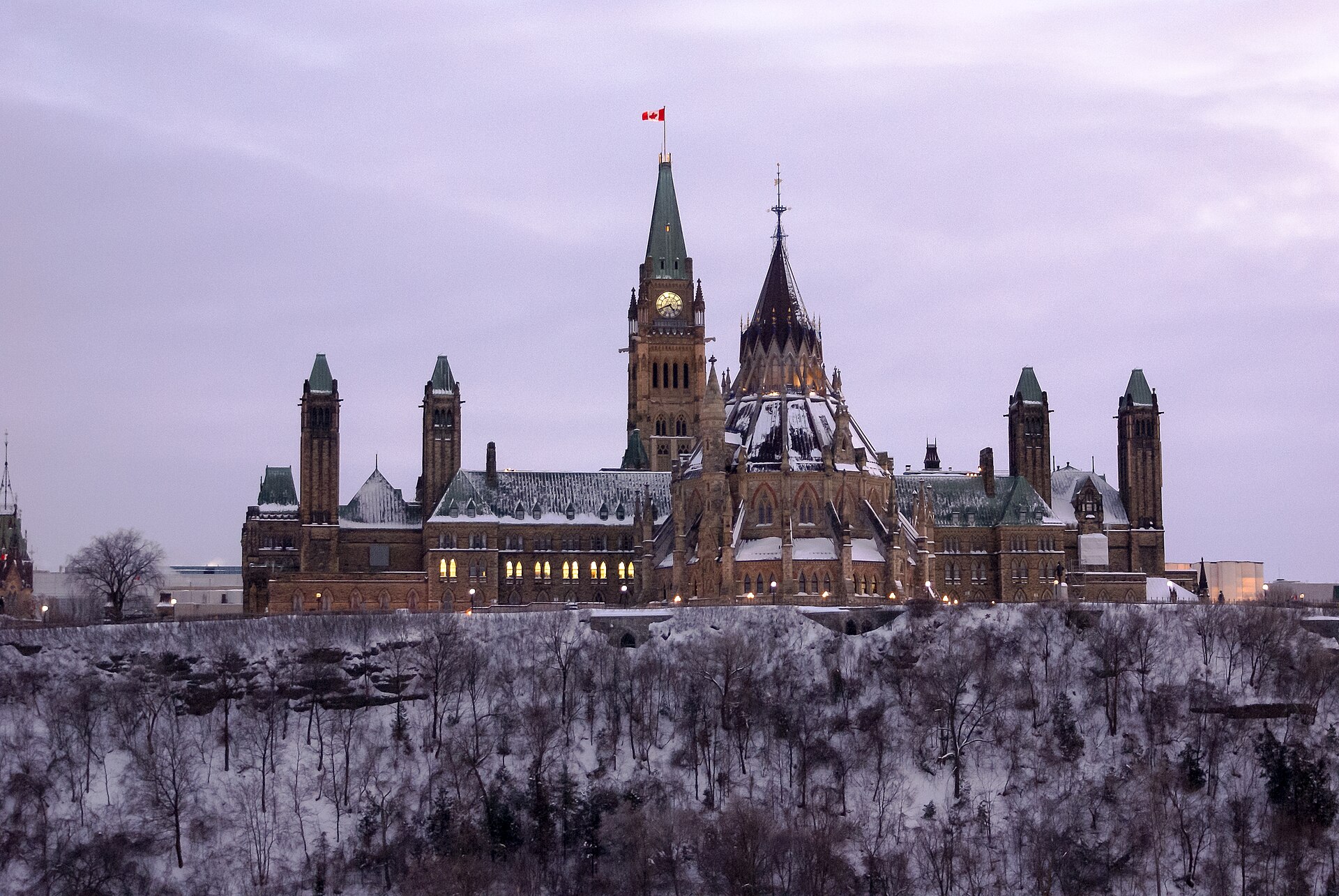
Ottawa

.jpg)

The two housing bills are in different currencies, and held against local pay they are close, with Ottawa's a little the lighter. Ottawa's composite benchmark is 6.2 times local median household income and Redfin's single-family median for the City of Greensboro about 5.1 times, but mortgage, property tax and insurance come to about $3,350 CAD a month in Ottawa, roughly 39% of the city's 2020 median, against about $2,231 USD in Greensboro, roughly 42% of the city's 2024 median, the lowest of the three North Carolina cities this site compares, because the Greensboro loan costs 7.28% against 4.34%. Ottawa runs on the federal public service, which is being cut; Greensboro on manufacturing, health care and freight, with metro unemployment at 4.1% in July 2026 on an unadjusted count against 6.8%. Homicide is where they part: 21 in the Ontario part of Ottawa-Gatineau in 2025 at 1.59 per 100,000, against 37 in the City of Greensboro at about 12.0. The Januaries are 14.3 degrees apart, -10.0 C against 4.3 C, and Greensboro takes less income tax. Ottawa has the transit, French schooling and coverage that comes with residency. Choose Ottawa for public health care, French schools and a train to work. Choose Greensboro for a house at about five times local pay, a mild winter and a lighter income tax, if you can live with its crime figures.
Ottawa prices are in CAD and Greensboro prices are in USD. The tables leave them in their own currency and compare ratios and rates instead; a conversion would be stale by the time you read it.
| Measure | Ottawa | Greensboro | Advantage |
|---|---|---|---|
| City population | 1,188,114 (2025) | 308,667 (2025) | Not directly comparable |
| Metro population | 1,700,014 (2025) | 805,945 (2025) | Not directly comparable |
| Five-year growth Growth is pressure on rents and roads as much as it is opportunity, so it is reported without a winner. | 8.9% (2016-2021) | 3.2% (2020-2025) | Not directly comparable |
What a home costs in each
The figures the two cities' rent-versus-buy and mortgage calculators run on, read from the same tables.
| Measure | Ottawa | Greensboro | Advantage |
|---|---|---|---|
| Benchmark home price MLS® HPI or equivalent benchmark. Lower is treated as the advantage, which is the buyer's view rather than the owner's. | $634,000 (July 2026) | $321,811 (August 2026) | Not directly comparable |
| Detached house benchmark Greensboro publishes a single house index rather than a composite, so the two rows repeat. | $725,000 | $321,811 | Not directly comparable |
| Apartment or condominium benchmark | $385,500 | $166,658 | Not directly comparable |
| Two-bedroom rent | $1,916/mo (average, October 2025) | $1,126/mo (median, September 2026) | Not directly comparable |
| One-bedroom rent | $1,593/mo | $1,010/mo | Not directly comparable |
| Two-bedroom rent against median income A year of two-bedroom rent as a share of the median household income below. A household paying the median rent out of the median income is a fiction, but it is the same fiction in both columns and it crosses currencies. | 22.5% of a year's income | 21.3% of a year's income | Greensboro |
| Mortgage payment on the benchmark, 20% down 25 years in Ottawa against 30 in Greensboro, each compounding the way its own country's lenders do. The rates are not a spread you can shop: they are what each market charges. | $2,762/mo at 4.34% | $1,762/mo at 7.28% | Not directly comparable |
| Price to household income Benchmark price divided by the median household income below. A ratio is comparable across currencies; the dollars are not. | 6.2× | 5.1× | Greensboro |
| Property tax on the benchmark home The effective rate on market value, which is what the two rates have in common and what the Advantage column is decided on; the bills are in each city's own dollars. | $5,262/yr (0.83%, 2026) | $3,492/yr (1.085%, 2026) | Ottawa |
| Transfer tax on the benchmark home Compared as a share of the price. Where the seller pays it, it is a cost of leaving rather than arriving. | $9,155 (buyer pays) | $644 (seller pays) | Greensboro |
| Rent control A cap protects a sitting tenant and does nothing for the next lease, so neither column is simply better. | 2.1% guideline (2026) | Forbidden by state law | Not directly comparable |
Ottawa: About 0.83% of market value. Ottawa levies roughly 1.26%, but against a Current Value Assessment frozen at 1 January 2016 values, because Ontario has deferred every reassessment since. The average urban home is assessed at $415,000 and pays about $5,246 in 2026, which on the $634,000 composite benchmark is 0.83%. Ottawa's municipal taxes on a representative detached house were the lowest of Ontario's ten largest cities in 2025. Greensboro: About 1.08% of market value. A house in the City of Greensboro pays two levies for fiscal 2027: Guilford County's 78.95 cents per $100 and the City's 79.85, 158.80 in all on the County's rate table, against 140.30 a year earlier. Both are charged on the values of the 1 January 2022 revaluation: the County reappraised for 2026, but Senate Bill 889, signed on 19 June 2026, put the new values off to the 2027 bills, and both governments raised their rates on the old base instead. North Carolina measures how far the old values lag: the Department of Revenue put Guilford's assessments at 68.31% of sale prices on 1 January 2025 and publishes an effective county rate of 0.4990% against the nominal 0.7305% on that arithmetic. The same ratio on the combined rate gives 1.085%, about $3,492 a year on the $321,811 single-family median, if the house is assessed like the average one. A buyer does not reset the assessment by buying, so the seller's bill is the guide to the 2026 one; the 2027 bill will be on the new value at rates not yet set. Inside the Dunleath Historic District the bill carries 5 cents more, in the College Hill Historic District 1 cent and in the Downtown Improvement District 9. Stormwater and solid waste are not on the tax bill: the City charges them on the water bill, about $8.74 a month for a typical house on figures this site could only read secondhand.
How safe each city is, by the numbers it publishes
Police-reported figures for the most recent year each force or statistics agency has released. Rates describe a whole city or metro area, and the spread between neighbourhoods inside one city is usually wider than the gap between the two cities.
| Measure | Ottawa | Greensboro | Advantage |
|---|---|---|---|
| Crime Severity Index Statistics Canada's weighted index for the metropolitan area, where 100 is Canada in 2006. American cities have no equivalent series. | 50.6 (2025) | Not published | Not directly comparable |
| Violent crime per 100,000 Canada counts every violent Criminal Code incident; the FBI counts four offences. The Canadian figure is always the larger one for that reason alone. | 814 (2025) | 705 (2025) | Not directly comparable |
| Property crime per 100,000 | 2,835 (2025) | 2,996 (2025) | Not directly comparable |
| Homicides Counts, not rates, and a single year in a small city moves a long way on chance alone. What each figure covers is under the table. | 21 (2025) | 37 (2025) | Not directly comparable |
The Ontario-part CSI rose from 46.85 in 2021 to 54.20 in 2023, held at 54.12 in 2024 and fell 6% to 50.61 in 2025 (table 35-10-0026-01). The violent crime rate has kept climbing, from 744 per 100k in 2021 to 814 in 2025, while property crime peaked in 2024 at 2,957 per 100k and eased to 2,835 in 2025.
What the rates cover: Total violent Criminal Code violations, rate per 100,000, Ottawa-Gatineau CMA Ontario part, table 35-10-0177-01 (10,745 incidents).
Homicides: Ottawa-Gatineau CMA Ontario part, table 35-10-0177-01; rate 1.59 per 100,000. 2024 was 27 (2.10 per 100k), the highest of the last five years.
Down sharply in 2025 after a 2024 peak. On the FBI CDE's figures violent offenses were 2,466 in 2019, 2,723 in 2020, 2,642 in 2021, 2,456 in 2022, 2,514 in 2023, 2,820 in 2024 and 2,177 in 2025, about 829, 920 and 705 per 100,000 in the last three years on each July's Vintage 2025 population, so 2025 was 23% below 2024, the drop the police department itself announced (WFDD). Property offenses peaked at 11,446 in 2023 and fell to 10,410 in 2024 and 9,248 in 2025, down 11%. The SBI's summaries show the same 2023 and 2024 figures within a few offenses (2,509 and 2,816 violent). The FBI series needs care in two places. The CDE lists the department as reporting incident-based (NIBRS) data from 1 January 2019, and its 2018 counts are lower (1,860 violent), so 2018 is not used. And its January 2026 row is plainly incomplete, 37 violent and 78 property offenses against 216 and 730 in January 2025, with February also low, so 2026 is compared from March: March to August brought 1,078 violent offenses against 1,154 in the same months of 2025, down 7%, and 4,546 property offenses against 4,819, down 6%. The September 2026 row is partial. The CDE counts were read on 4 October 2026 from a feed last refreshed on 15 September and can still be revised; the SBI's 2025 summary had not been published.
What the rates cover: Computed: 2,177 violent offenses (murder, rape, robbery and aggravated assault) in the FBI Crime Data Explorer's summarized data for the Greensboro Police Department (ORI NC0410200) in calendar 2025, divided by the 308,667 Vintage 2025 city population; on the CDE's own agency population of 310,328 the rate is 702. The rate is high, for North Carolina and for the country: the CDE's 2025 rate for reporting North Carolina agencies is 331 per 100,000 and for the nation 329, so Greensboro's is a little more than twice either. It is the highest of the three North Carolina cities this site compares, above Charlotte's 607 (on CMPD's own count) and Raleigh's 396, and of the US cities here only Houston's 890 is higher in 2025 (Orlando's 835.8 is for 2022). Among the state's largest city police departments on the CDE's 2025 counts and populations it is second to Winston-Salem's 744, ahead of Fayetteville's 614, Charlotte-Mecklenburg's 559, High Point's 521, Durham's 507 and Raleigh's 395. The North Carolina State Bureau of Investigation's most recent annual summary, for 2024 (published October 2025), counts 2,816 violent offenses for the department that year, about 919 per 100,000, the highest rate of any city police department in its table of the state's largest agencies, ahead of Gastonia (826), Winston-Salem (806) and Asheville (801). The department's own year-end figures, 1,601 aggravated assaults and 426 robberies, are within 16 and 10 of the FBI's.
Homicides: 37 murders and nonnegligent manslaughters in 2025 in the FBI CDE, about 12.0 per 100,000 on the city population, against the CDE's 6.5 for North Carolina and 4.3 for the nation, and against Raleigh's 25 (4.9 per 100,000) and Charlotte's 96 (about 10). The CDE series is 44 in 2019, 60 in 2020, 51 in 2021, 41 in 2022, 74 in 2023, 43 in 2024 and 37 in 2025; the 2023 figure is the city's record, a spike for which the police department still has no single explanation (The Assembly). The department's own provisional year-end count for 2025 is 42 homicides, against 45 in 2024, and a quarter of them were tied directly to domestic violence (WFDD; The Assembly); nothing read explains the five-homicide gap between its count and the FBI's.
Winters, summers and what the weather can do to a house
| Measure | Ottawa | Greensboro | Advantage |
|---|---|---|---|
| January mean | -10.0 °C | 4.3 °C | Not directly comparable |
| July mean | 21.2 °C | 26.1 °C | Not directly comparable |
| Precipitation a year | 930 mm | 1,116 mm | Not directly comparable |
| Snowfall a year | 232 cm | 18 cm | Not directly comparable |
| Sunshine a year | 2,084 hours | Not published | Not directly comparable |
Environment and Climate Change Canada 1991-2020 normals at Ottawa Macdonald-Cartier Int'l A (climate ID 6106000). Annual mean 6.5 C, rainfall 757.2 mm. Sunshine hours are from the 1981-2010 normals at Ottawa CDA (climate ID 6105976) because the 1991-2020 airport table does not publish sunshine totals.
Hazards: Cold winters with regular snowstorms and freezing rain, spring flooding along the Ottawa River (2017 and 2019), summer heat and humidity, occasional severe thunderstorms and tornadoes (September 2018, the May 2022 derecho), and wildfire smoke episodes such as June 2023.
NOAA NCEI 1991-2020 normals for Piedmont Triad International Airport (station USW00013723), the Weather Service station for Greensboro, about 7 miles west of the city's center point: January mean 39.7F, July mean 78.9F, annual mean 59.6F, 43.95 in of precipitation, 7.1 in of snow. July is the warmest month, ahead of August's 77.3F, with a mean high of 88.5F; January's mean low is 30.1F. Rain is spread through the year: September (4.59 in), August (4.36 in) and July (4.18 in) are the wettest months and February (2.81 in) the driest. Most of the snow falls in January (2.9 in) and February (2.0 in), with 1.2 in in December and 0.9 in in March. The normals count 33.3 days a year at 90F or above, 0.2 at 100F or above, 68.4 nights at or below freezing, 10.2 at or below 20F and 3.6 days that stay below freezing. Converted here to 4.3 C, 26.1 C, 1,116 mm and 18.0 cm. The cooperative station at the City's water treatment plant (USC00313625), inside the city, runs a little warmer in summer, 39.9F in January and 79.5F in July with 45.89 in a year. Greensboro has the coldest winter and the most snow of the three North Carolina cities this site compares, against Raleigh's 5.5 C and 13.2 cm and Charlotte's 5.6 C and 8.9 cm, and of the US cities here only Boston is colder or snowier; its rain is between Charlotte's 1,107 mm and Raleigh's 1,170 mm. Sunshine is not stored: Current Results' US city table, the source and 1961-1990 basis of the other US profiles' sunshine hours, lists Charlotte and Raleigh but no Greensboro station, and the 1991-2020 normals do not include sunshine.
Hazards: Ice, snow and severe thunderstorms more than hurricanes. Greensboro is in the Piedmont, far from the coast, so storm surge is not its hazard, but cold air banked against the mountains to the west often turns winter storms to freezing rain, which Wikipedia calls a more pressing concern than snow. Snow comes most winters and varies widely: the airport measured 12.0 inches on 9 December 2018, its largest one-day fall since 2010, and 10.3 inches on 31 January 2026, two days before its lowest reading since 2010, 3F on 2 February 2026. Tornadoes are the deadliest record: an F4 on 2 April 1936 cut a seven-mile path through southern Greensboro and part of downtown, killing 14, and tornadoes struck the Greensboro area again on 7 May 2008 and the city on 15 April 2018 (Wikipedia). Thunderstorm winds are the routine risk; the airport's highest gust since 2010 is 74.0 mph on 13 July 2015, and it recorded 68.9 mph on 18 September 2026. Its two wettest days since 2010 both came in the autumn of 2018, 4.60 inches on 16 September and 4.13 inches on 11 October. Summer heat is real but rarely extreme: the normals count 33 days a year at 90F and almost none at 100F, and the airport's highest reading since 2010 is 102F on 29 June 2012. 2026 has been unusually hot, with 61 days at 90F or above through 29 September, nearly twice the normal, and 100F on 2 July, the first 100F day there since 2012. The city's records are 104F, set in 1911 and 1914, and -8F on 21 January 1985 (Wikipedia).
What people earn and what the government takes
| Measure | Ottawa | Greensboro | Advantage |
|---|---|---|---|
| Median household income | $102,000 CAD (2020) | $63,516 USD (2024) | Not directly comparable |
| Unemployment rate Statistics Canada and the Bureau of Labor Statistics define unemployment slightly differently; the Canadian measure runs about a point higher on the same labour market. | 6.8% (July 2026) | 4.1% (July 2026) | Not directly comparable |
| Sales tax | 13% | 6.75% | Greensboro |
| Top marginal income tax Federal plus provincial or state. The American figure leaves out payroll taxes and the cost of health insurance, both of which a Canadian household covers through the tax it pays here. | 53.53% | 41.25% | Greensboro |
| Income tax on $100,000, single filer Computed from each jurisdiction's brackets at a single filer's $100,000 and rounded to the dollar, so a gap of a dollar is rounding rather than tax. Two cities in one province or state are shown as Even, because there the two cells describe the same tax and whatever separates them is method. | $21,930 CAD | $17,157 USD | Not directly comparable |
The federal government is the anchor employer: 130,628 of 279,707 federal public servants were based in the National Capital Region at March 31, 2025, and Budget 2025 announced about 28,000 more public service job cuts by 2029. Regional unemployment ran from 6.4% in mid 2025 to 7.3% in late 2025 before easing to 6.8% in July 2026.
Main sectors: Federal public administration, Technology (Kanata North, Shopify, telecom and defence), Health care and hospitals, Post-secondary education, Tourism and national institutions.
Property tax is set by the City of Ottawa; not verified here.
BLS counted 374,600 nonfarm jobs in the Greensboro-High Point MSA in August 2026 (not seasonally adjusted, preliminary), up 3,500 or 0.9% on the year. Health care and social assistance (+1,800, or 3.7%, to 50,700), professional and business services (+1,500, or 3.1%, to 49,500) and construction (mining, logging and construction +1,400, or 7.4%, to 20,400) added the most, while manufacturing lost 1,500 (-3.1%, to 47,300), information 400 (to 3,200) and trade, transportation and utilities 400 (to 83,600). Manufacturing is 12.6% of the metro's jobs, and three of the ten largest employers on Guilford County's 2025 list are truck, bus and apparel companies. That list is the county's, from its 2025 financial report; the City of Greensboro's own report was not reachable from this environment, so no city list is given. It is led by Cone Health (13,000), Guilford County Schools (10,667), the City (3,753), the Postal Service (3,683) and the Volvo Group (3,037), with High Point University (2,723), Ralph Lauren (2,671), N.C. A&T (2,307) and Thomas Built Buses (2,000); in 2016 the list included UNCG, Bank of America and High Point Regional, and Guilford County Schools was first. Most residents work in the city: 71.8% of the city's 153,212 workers worked inside it in 2024 and 13.4% outside Guilford County, many of them in the Triad's other cities. 16.7% worked from home, and the mean commute for the rest was 22 minutes, with 5.3% spending an hour or more (ACS 2024 1-year, B08007, B08008, B08013, B08301 and B08303).
Main sectors: Manufacturing, about one job in eight: 47,300 of the metro's 374,600 nonfarm jobs in August 2026, down 1,500 on the year, with the Volvo Group (3,037 in Guilford County) and Thomas Built Buses (2,000) among the county's ten largest employers, Mack Trucks and Volvo Trucks of North America headquartered in the city, and Toyota's battery plant near Greensboro, which began shipping batteries in mid-2025, Health care: Cone Health, the Greensboro-based nonprofit hospital system, is Guilford County's largest employer (13,000), and health care and social assistance added 1,800 metro jobs in a year, to 50,700, the most of any sector, Trade, transportation and logistics, the metro's largest supersector at 83,600 jobs, where Interstates 40, 73 and 85 meet: FedEx's mid-Atlantic hub at the airport and a regional freight rail hub (Wikipedia), Aviation and aerospace at Piedmont Triad International Airport: Honda Aircraft's headquarters, aircraft maintenance (HAECO Americas, now part of AAR, and Marshall), and Boom Supersonic's Overture Superfactory, finished in June 2024 for an airliner that is not yet flying (Wikipedia), Education and government: Guilford County Schools (10,667 employees), the City of Greensboro (3,753), the Postal Service (3,683), Guilford County (2,975) and N.C. A&T (2,307), with UNCG and five other colleges in the city, in a government sector of 43,400 metro jobs.
North Carolina's flat income tax rate has come down every year since 2022, to 4.25% for 2025 and 3.99% for 2026. Property tax is levied by Guilford County and the City on assessed value. For 2025-26 a house in the City paid 140.30 cents per $100 of assessed value, the County's 73.05 cents plus the City's 67.25, on the North Carolina Department of Revenue's table of county and municipal rates; the County had held 73.05 cents for five years. Those values date from the County's 1 January 2022 reappraisal, and the Department measures how far they had fallen behind: assessments averaged 68.31% of sale prices, which makes the effective combined rate 0.9583% of market value. On the same table Raleigh's combined rate was 87.21 cents (0.8319% effective) and Charlotte's 76.68 cents (0.6808%), so Greensboro's was the highest of the three North Carolina cities this site compares on either measure. Downtown Improvement District parcels pay 9 cents more, and the College Hill and Dunleath historic districts 1 and 5 cents. For 2026-27 both rates rose sharply: the City adopted 79.85 cents on 16 June 2026, up 12.6 cents, and the County 78.95 cents on 25 June, up 5.9, a combined 158.80 cents. They rose because Senate Bill 889, signed on 19 June 2026, put off the County's 2026 reappraisal, so the 2026 bills are on the old 2022 values and the new values apply to the 2027 bills; the City's taxable base for the year is about $40.1 billion instead of the $56.1 billion the new values would have given (Guilford County; Rhino Times). The County estimates a revenue-neutral rate of 58.54 cents once the new values apply. Zillow's typical home value for the City was $263,264 in August 2026, flat on the year (up 0.04%) and the lowest of the three North Carolina cities here, against Raleigh's $428,671 and Charlotte's $392,573; of the US cities here only El Paso's, San Antonio's and Houston's are lower. Its observed rent index was $1,392 a month, up 2.1%, below every other US city here except San Antonio. The bills, insurance and fees that follow from these figures belong to the housing layer.
Whether you need a car
| Measure | Ottawa | Greensboro | Advantage |
|---|---|---|---|
| System | OC Transpo (buses, O-Train Lines 1, 2 and 4, Para Transpo); STO serves Gatineau | The Greensboro Transit Agency (GTA), the City's bus system, which took over the private Duke Power buses in 1990-91 and runs about fifteen fixed routes almost entirely inside the city limits, most of them meeting downtown at the J. Douglas Galyon Depot, a separate Sunday network, the Higher Education Area Transit (HEAT) routes serving the city's colleges, and Access GSO paratransit; in 2018 it put the first battery-electric buses in municipal service in North Carolina into service (Wikipedia). The Piedmont Authority for Regional Transportation (PART) runs commuter buses between the Triad's cities and the airport. There is no rail transit. The Galyon Depot is also the intercity station: Amtrak's Piedmont (four round trips a day), Carolinian and Crescent stop there, six round trips in all, connecting Greensboro with Charlotte, Raleigh, Washington, New York, Atlanta and New Orleans, and Greyhound shares the building (Amtrak; Wikipedia). Interstates 40, 73 and 85 meet at the city, with an urban loop around it (Wikipedia). | Not directly comparable |
| Commute by public transit | 11.2% (2021) | 1.6% (2024) | Ottawa |
| Walk or cycle to work | 8.5% (2021) | 2.8% (2024) | Ottawa |
| Airport | Ottawa Macdonald-Cartier International Airport, YOW, 4.9 million passengers in 2025, up 6% on 2024 (Ottawa International Airport Authority, 2025 results) | Piedmont Triad International Airport (GSO, known locally as PTI), in unincorporated Guilford County west of the city and run by the Piedmont Triad Airport Authority for Greensboro, High Point and Winston-Salem (Wikipedia). It handled 2,029,298 passengers in 2025, up 3.6% from 1,959,182 in 2024 but still below 2019's 2,145,929, with scheduled service to 14 US destinations on American, Delta, United, Allegiant and Breeze, and it is a FedEx Express hub (Wikipedia, from the airport's own statistics). The state's two larger airports serve Charlotte, about 90 miles southwest, and Raleigh, about 77 miles east (Wikipedia). | Not directly comparable |
70.6 million O-Train and bus trips in 2025, up 3.9% on 2024 (OC Transpo report to Transit Committee, February 12, 2026). Ridership fell in early 2026: 11.5 million trips in January-February versus 12.4 million a year earlier.
GTA carried 2,329,584 unlinked trips in 2025 on the National Transit Database's monthly ridership file (Federal Transit Administration), 2,152,587 of them on its buses and the rest on demand-response service. That is less than half its peak of 4,906,812 in 2012 and below the 3,413,068 of 2019; ridership fell to 1.95 million in 2021, recovered to 2.56 million in 2024, and fell 9.1% in 2025, and January to August 2026 ran 7.4% below the same months of 2025. Why it has fallen since 2024 was not found. PART carried 375,758 trips in 2025 on the same file. Amtrak counted 210,652 passengers boarding or leaving trains at Greensboro in fiscal 2025, the second-busiest station in North Carolina after Charlotte's 365,614 (Amtrak). For comparison, Raleigh's GoRaleigh carried about 8.0 million trips in 2025 and Charlotte's CATS about 15.7 million in 2024 (their profiles).
Health care, schools and what each city is like
Health care
Care is publicly funded through OHIP after a residency waiting period for newcomers, with prescription drugs, dental and vision outside the public plan for most working-age adults. The main hospitals are The Ottawa Hospital (Civic and General campuses), CHEO for children, the Queensway Carleton and Montfort; a replacement Civic campus was promised for 2028 but construction on the hospital itself had not begun as of 2026, and finding a family doctor is the hardest part of access, with the Ontario College of Family Physicians projecting 4.4 million Ontarians without one by 2026.
Education
The University of Ottawa (bilingual) and Carleton University are the large universities, with Algonquin College and La Cite for applied programs. Publicly funded schools run through four boards: the Ottawa-Carleton District School Board, the Ottawa Catholic School Board, and French-language public and Catholic boards, so French immersion and full French schooling are both widely available.
Living there
Ottawa is a government town that behaves like a mid-sized city: quiet downtown evenings, a large share of households with two stable incomes, and a weekend life built around the Rideau Canal, the Gatineau Park hills across the river and the river pathways. Winters are long and cold, with roughly 232 cm of snow in a normal year, and summers are warm and humid. The O-Train light rail has had reliability problems since it opened in 2019, and the bus network has been cut back, so most households still drive.
Health care
Care is paid for through employer or individual private insurance, Medicare and Medicaid, and North Carolina is one of the 41 states, counting the District of Columbia, that have adopted the Medicaid expansion (KFF); the expansion covers about 740,000 people statewide. Federal and state changes narrow it: from January 1, 2027 most expansion adults aged 19 to 64 must show 80 hours a month of work, school or volunteering, or $580 a month in earnings, and renew every six months, and rules for non-citizens tighten (NCDHHS). The City of Greensboro's uninsured rate was 7.5% in 2024 (22,905 of 305,237), against 8.6% for North Carolina and 8.2% nationally, slightly above Raleigh's 7.1% and well below Charlotte's 12.1% (ACS 2024 1-year, B27001). One system dominates. Cone Health, a nonprofit based in Greensboro and Guilford County's largest employer with 13,000 staff, runs Moses H. Cone Memorial Hospital, a 517-bed tertiary hospital opened in 1953 that is the largest in its four-county region and a Level II trauma center, with Wesley Long Hospital and a behavioral health hospital in the city and hospitals in Burlington and Reidsville (Wikipedia; Guilford County). It was acquired in December 2024 by Risant Health, a nonprofit created by Kaiser Permanente. Moses Cone was a whites-only hospital until 1963, when a federal appeals court ruled in Simkins v. Moses H. Cone Memorial Hospital that its federal funding barred segregation, a decision that shaped Title VI of the Civil Rights Act of 1964 (Wikipedia). This file did not verify wait times for primary or specialist care.
Education
Greensboro is a college city. On the ACS 2024 1-year estimates 40,213 of its 297,824 residents aged 3 and over were enrolled in college (35,401 undergraduates) or graduate school (4,812), 13.5%, against 6.6% nationally and 6.7% in North Carolina. North Carolina A&T State University, in East Greensboro, enrolled 15,275 students in fall 2025, up 6.7% on 14,311, with 2,018 graduate students, and is the largest historically Black university in the country (N.C. A&T); it reported an estimated 15,700 for fall 2026 with a record first-year class of 3,214 (HBCU Gameday). The University of North Carolina at Greensboro enrolled 18,682 in fall 2025, up 3.7%, and more than 19,000 in fall 2026, its most since 2020 (UNCG). Guilford College, founded by Quakers in 1837, Greensboro College and Bennett College, a historically Black college for women whose students took part in the 1960 sit-ins, are private; Elon University's law school is downtown, and Guilford Technical Community College has campuses in the city and its main campus in Jamestown (Wikipedia). Public schools are run by Guilford County Schools, the countywide district and the third-largest in the state, with 67,620 students in 2024-25 and 121 schools in 2025-26 (NCES). Enrollment has fallen since 2018-19, and in 2025 the district proposed closing four small elementary schools, citing an older population moving in and more students in charter schools (WFDD).
Living there
Greensboro is the Gate City, a railroad town that grew on textiles: the Cone brothers' denim and flannel mills turned it from a village into a city around 1900, and textile, tobacco and apparel companies still have headquarters here (Wikipedia). It is also where the sit-in movement began: on 1 February 1960 four students from N.C. A&T sat down at the whites-only Woolworth's lunch counter on Elm Street, and the building is now the International Civil Rights Center and Museum, with the counter in place. Today it is North Carolina's third city, with 308,667 people, a manufacturing economy that is still about one job in eight in the metro, with trucks, buses and aircraft made in and around the city, and Cone Health as the largest employer, and two public universities, N.C. A&T, the country's largest historically Black university, and UNCG, with nearly 34,000 students between them in fall 2025. Next to Raleigh and Charlotte it is cheaper and slower: it grew 3.2% from 2020 to 2025 against their 8% and 10%, its typical home is $263,264 and its rent $1,392 on Zillow's indexes, the lowest of the three, and its household income ($63,516) is more than $21,000 below theirs. It also has the highest violent crime rate of the three, 705 per 100,000 on the FBI's 2025 counts, twice the state's, though that was 23% below 2024, and the coldest and snowiest winters, with 7.1 in of snow a year and ice storms. Its property tax rate rose by 18.5 cents per $100 for 2026-27 because the state put off the County's reappraisal, and the 2027 bills will be the first on the new values.
Where each city wins, and where it loses
Ottawa's figures are in Canadian dollars and Greensboro's in US dollars, and against local pay the two are close. Ottawa's composite benchmark, a blend of houses, townhouses and apartments, was $634,000 CAD in July 2026, 6.2 times the city's 2020 median household income of $102,000 CAD. Greensboro's price is Redfin's median sale price for single-family homes in the City of Greensboro, $321,811 USD in August 2026 on 660 sales, 2.9% below a year earlier, computed from MLS and public records data, because no association or MLS median for 2026 could be read. Redfin's median for all home types was $289,808 on 882 sales, flat on the year, and Zillow's index for the City, which models every home rather than counting sales, stood at $263,264 in August, also flat. The single-family median is about 5.1 times the city's 2024 median household income of $63,516 USD, the lowest of the three North Carolina cities this site compares and a figure with a margin of error of $3,723, and Zillow's index about 4.1 times. At 20% down, Ottawa's mortgage at 4.34% is $2,762 CAD a month over 25 years, and the $257,449 loan on the Greensboro median at Freddie Mac's 7.28% of 1 October 2026 about $1,762 USD over 30. Property tax is 0.83% of market value in Ottawa, $5,262 CAD a year, against about $3,492 USD in Greensboro, where a house in the City pays Guilford County's 78.95 cents per $100 and the City's 79.85, 158.80 cents in all for 2026-27 against 140.30 in 2025-26, on values from the County's 2022 revaluation that the state measured at 68.31% of sale prices: about 1.085% of market value, if the house is assessed like the average one. With insurance at $145 CAD and $179 USD a month, the Greensboro figure NerdWallet's city average, with no flood cover in it, the owners carry about $3,350 CAD and $2,231 USD, roughly 39% and 42% of local median income. A two-bedroom averaged $1,916 CAD in October 2025, about 23% of Ottawa's median income. Greensboro's rents are low for North Carolina: Apartment List's two-bedroom median for the City was $1,126 USD in September 2026, about 21% of local median income; the Census Bureau's 2024 two-bedroom median gross rent, utilities included, $1,311, about 25%; and Zillow's observed rent index $1,392 in August, the lowest of the three North Carolina cities this site compares, about 26%. Ontario caps increases at 2.1% for 2026 in units first occupied before 15 November 2018; North Carolina forbids rent control by statute.
Homicide is the one count that crosses the border intact, and on it the two cities are far apart, though Ottawa's figure covers the Ontario part of its metro and Greensboro's the city. The Ontario part of Ottawa-Gatineau recorded 21 homicides in 2025, 1.59 per 100,000, against 27 in 2024. Greensboro recorded 37 in the FBI's Crime Data Explorer, about 12.0 per 100,000 in a city of 308,667, against 6.5 for North Carolina and 4.3 for the nation, after a record 74 in 2023 and 43 in 2024; the police department's own provisional count for 2025 is 42, a quarter of them tied directly to domestic violence, and nothing read explains the gap between the two counts. The other rates are different instruments. Statistics Canada put the Crime Severity Index for the Ontario part at 50.61 in 2025, below the national 75.0; American cities have no equivalent. Ottawa's violent rate of 813.79 per 100,000 counts every violent Criminal Code violation, common assault and uttering threats included. Greensboro's 705 per 100,000 is 2,177 offenses of murder, rape, robbery and aggravated assault reported by the Greensboro Police Department in 2025, divided by the Census estimate: a little more than twice North Carolina's 331 and the nation's 329, and the highest of the three North Carolina cities this site compares. Property crime, 2,834.59 per 100,000 against 2,996, is defined differently too. The directions differ. Ottawa's violent rate has increased every year from 744 per 100,000 in 2021. Greensboro's direction is down after a 2024 peak. Its violent offenses fell 23% in 2025, from 2,820 to 2,177, and March to August 2026 brought 1,078 against 1,154 a year earlier, down 7%; the FBI's January 2026 row is plainly incomplete, so the comparison starts in March. The Greensboro counts were read on 4 October 2026 from a federal feed that can still be revised.
The two Januaries are 14.3 degrees apart. Ottawa's mean of -10.0 C at the airport is the coldest of the cities this site compares, and Greensboro's is 4.3 C at Piedmont Triad International, the coldest of the three North Carolina cities this site compares, where the normals count 68.4 nights a year at or below freezing and 18.0 cm of snow, and 10.3 inches fell on 31 January 2026, two days before a low of 3F. July is 21.2 C in Ottawa and 26.1 C in Greensboro, with a mean high of 88.5F; the normals count 33.3 days a year at or above 32.2 C (90F) and almost none at 100F, though 2026 brought 61 days at 90F or above through 29 September and 100F on 2 July, the first since 2012. Greensboro gets 1,116 mm of precipitation a year against 929.8 mm, and Ottawa's 231.9 cm snow normal is nearly thirteen times Greensboro's. Ottawa records 2,083.7 hours of sunshine; this site stores no sunshine figure for Greensboro, because the source the other US profiles use lists no station there. Both cities know freezing rain. Ottawa's other hazards are spring flooding along the Ottawa River in 2017 and 2019, the September 2018 tornadoes, the May 2022 derecho and wildfire smoke. Greensboro is in the Piedmont, far from the coast, so storm surge is not its hazard; ice is. Cold air banked against the mountains to the west often turns winter storms to freezing rain, tornadoes are the deadliest record, an F4 that killed 14 in 1936 and others in 2008 and 2018, and thunderstorm winds are the routine risk, with a gust of 74.0 mph at the airport in July 2015. An owner's utility premium over a renter is budgeted at $155 CAD a month in Ottawa, mostly heat from October to April, and an estimated $120 USD in Greensboro, cooling plus the City's water-bill fees.
Ottawa is a capital and runs on government. It had 130,628 of 279,707 federal public servants based in the National Capital Region at 31 March 2025, and Budget 2025 announced about 28,000 more positions to go by 2029. Greensboro runs on manufacturing, health care and freight. Manufacturing is about one job in eight in the metro, 47,300 of 374,600 nonfarm jobs in August 2026, with Volvo Trucks of North America and Mack Trucks headquartered in the city, Honda Aircraft at the airport and Toyota's battery plant near Greensboro, which began shipping batteries in mid-2025; Cone Health is Guilford County's largest employer with 13,000 people. The metro added 3,500 jobs, 0.9%, in the year to August 2026, led by health care with 1,800, while manufacturing lost 1,500. The Greensboro-High Point metro's unemployment rate was 4.1% in July 2026, not seasonally adjusted, against 3.7% for North Carolina and 4.4% for the US, the highest of the three North Carolina metros here, and it fell on the year partly because about 11,000 fewer people were counted in the labor force. Ottawa-Gatineau's rate was 6.8% the same month, seasonally adjusted and above Canada's 6.4%; the two are not directly comparable, though the gap is wide. Median household income was $102,000 CAD in Ottawa in 2020 and $63,516 USD in Greensboro in 2024, give or take $3,723, in a city whose median age is 34.9 and where 13.5% of residents aged three and over are enrolled in college, about twice the national share. Ontario levies a provincial income tax, so $100,000 pays about $21,930 CAD, including the $750 Ontario Health Premium and before CPP and EI, with a top combined rate of 53.53% and 13% HST. North Carolina levies a flat income tax, 4.25% for 2025 and 3.99% for 2026, so the same salary pays $17,157 USD for 2025, $13,449 federal and $3,708 state, 17.2% before 7.65% payroll tax, and $16,651 for 2026; the top combined rate is 41.25%, and sales tax in Guilford County is 6.75%, the lowest rate any North Carolina county charges. Property tax is about 1.085% of value in Greensboro against 0.83% on Ottawa's benchmark.
Transit is Ottawa's by a wide margin. In the 2021 census 11.2% of Ottawa commuters took transit and 8.5% walked or cycled, counted in May 2021 with remote work at its height, so the share now is unknown rather than low. OC Transpo carried 70.6 million trips in 2025 on buses and O-Train Lines 1, 2 and 4, though the O-Train has had reliability problems since it opened in 2019. The Greensboro Transit Agency, the City's buses, runs about fifteen fixed routes almost entirely inside the city, most of them meeting downtown at the J. Douglas Galyon Depot, and carried 2,329,584 trips in 2025, less than half its 2012 peak of 4,906,812; ridership fell 9.1% in 2025 and January to August 2026 ran 7.4% lower again, and why was not found. In 2024, 1.6% of the city's workers commuted by transit, on an estimate whose margin of error runs from about 1.0% to 2.2%; 2.8% walked or cycled, 67.3% drove alone and 16.7% worked from home. There is no rail transit, but the Galyon Depot is also an Amtrak station: the Piedmont, Carolinian and Crescent stop there, six round trips a day to Charlotte, Raleigh, Washington, New York, Atlanta and New Orleans, and 210,652 passengers used it in fiscal 2025. Most residents work where they live, 71.8% of the city's workers, and the mean commute is 22 minutes. The airports favor Ottawa. Ottawa's handled 4.9 million passengers in 2025, with many trips connecting through Toronto or Montreal, and Piedmont Triad International, west of the city and shared with High Point and Winston-Salem, handled 2,029,298 passengers in 2025, with service to 14 US destinations and a FedEx hub.
Health care is where the border shows most. In Ottawa, OHIP pays for physician and hospital care with nothing due at the point of use after a residency wait for newcomers, though prescriptions, dental and vision mostly fall outside it. The bottleneck is a family doctor: the Ontario College of Family Physicians projected 4.4 million Ontarians without one by 2026, and the replacement Civic campus, promised for 2028, had not begun construction. In Greensboro care is bought through an employer or individual plan, Medicare or Medicaid. North Carolina is one of the 41 states, counting the District of Columbia, that have expanded Medicaid, and the expansion covers about 740,000 people statewide, but from 1 January 2027 most expansion adults must show 80 hours a month of work, school or volunteering and renew every six months, and rules for non-citizens tighten. The City's uninsured rate was 7.5% in 2024, against 8.6% for North Carolina and 8.2% nationally. Cone Health runs Moses H. Cone Memorial Hospital, a 517-bed Level II trauma center and the largest hospital in its four-county region, and Wesley Long Hospital in the city, and was acquired in December 2024 by Risant Health, a nonprofit created by Kaiser Permanente. This site verified no wait time for either city. Ottawa has four publicly funded school boards, English and French, public and Catholic, so French immersion and full French schooling are ordinary choices. Greensboro's public schools are Guilford County Schools', a countywide district and the state's third largest, with 67,620 students in 2024-25 and enrollment falling since 2018-19. It is a college city: N.C. A&T, the largest historically Black university in the country, enrolled 15,275 students in fall 2025 and UNCG 18,682, and it was A&T students who began the sit-in movement at the Woolworth's lunch counter on Elm Street on 1 February 1960.
What people underestimate is that both tax bills rest on values with dates on them. Ottawa levies about 1.26% against assessments frozen at 1 January 2016, which is why the bill works out to 0.83% of what a buyer pays today, and none of this site's sources dates the next reassessment. The Greensboro tax bill is about to be rebuilt. Its 2026 bills are on values from the County's 1 January 2022 revaluation; the County reappraised for 2026 and mailed the notices in February, but Senate Bill 889, signed on 19 June 2026, moved the new values to the 2027 bills, so the County and the City raised their rates on the old base instead, 18.5 cents per $100 between them. The County estimates a revenue-neutral rate of 58.54 cents for itself once the new values apply; what either government will actually set is not known, so the $3,492 is this year's bill and not a forecast. A buyer does not reset the assessment by buying, so the seller's bill is the guide to the 2026 one, and inside the Dunleath and College Hill historic districts and the Downtown Improvement District the bill carries 5, 1 and 9 cents more. Stormwater and solid waste are on the City's water bill rather than the tax bill, about $8.74 a month for a typical house on figures this site could only read secondhand, because the City's own pages refused its requests. The $179 a month of insurance buys no flood cover, and the Triad's rate territory took increases of 8.2% in June 2025 and 8.3% in June 2026. A condominium adds an association fee this site estimates at $250 a month. At closing North Carolina charges the seller an excise of $1 per $500, about $644 on the median, and nothing on the loan, and an attorney handles the closing. An Ottawa buyer owes $9,155 CAD in Ontario land transfer tax on the benchmark. Ottawa's 4.34% is fixed for a five-year term and then renews at whatever the rate is then, while the Greensboro 7.28% holds for thirty years; at 7.03%, Freddie Mac's rate a week earlier, the Greensboro carry would be about $2,188.
Better here
- Mortgage, property tax and insurance come to about $3,350 CAD a month, roughly 39% of the city's 2020 median household income, against about 42% in Greensboro.
- OHIP covers physician and hospital care whoever employs you, where Greensboro's care runs on employer, individual or public insurance and Medicaid expansion adults face a work requirement from 1 January 2027.
- The Ontario part of the metro recorded 21 homicides in 2025, 1.59 per 100,000, against 37 in the City of Greensboro, about 12.0.
- Transit carried 11.2% of commuters in the 2021 census and 8.5% walked or cycled, against 1.6% and 2.8% in Greensboro in 2024.
- July averages 21.2 C on the 1991-2020 normals, against 26.1 C in Greensboro.
- Four publicly funded school boards, English and French, public and Catholic, make French schooling an ordinary choice.
Worse here
- Regional unemployment was 6.8% in July 2026 against 4.1% in the Greensboro metro on an unadjusted basis, and Budget 2025 announced about 28,000 more federal public service cuts by 2029.
- January averages -10.0 C on a 231.9 cm snow normal, the coldest January mean of the cities this site compares, against 4.3 C in Greensboro.
- Income tax on $100,000 is about $21,930 CAD for 2025 against $17,157 USD in Greensboro, sales tax is 13% HST against 6.75%, and the top combined rate is 53.53% against 41.25%.
- A buyer owes $9,155 in Ontario land transfer tax on the July 2026 benchmark, where a Greensboro buyer pays none and the seller pays about $644.
- 4.4 million Ontarians were projected to be without a family doctor by 2026, and the replacement Civic campus promised for 2028 had not begun construction.
- The benchmark is 6.2 times the city's 2020 median household income, against about 5.1 times for Greensboro's single-family median.
Choose Ottawa if
- you want health coverage that comes with residency and survives a layoff
- you are raising children and want French schooling to be an ordinary option
- you want to get to work by train or bus rather than by car
- you want a homicide rate near 1.6 per 100,000 rather than near 12
The Ottawa guide · Neighbourhoods · Ottawa rent vs buy · Ottawa mortgage calculator
Better here
- Unemployment in the Greensboro metro was 4.1% in July 2026, not seasonally adjusted, against 6.8% in Ottawa-Gatineau.
- Redfin's single-family median for the City, $321,811 USD in August 2026, is about 5.1 times the city's 2024 median household income, against 6.2 times for Ottawa's composite benchmark.
- Income tax on $100,000 was $17,157 USD for 2025 and falls to $16,651 for 2026 at North Carolina's 3.99% flat rate, against about $21,930 CAD in Ottawa.
- January averages 4.3 C with 18.0 cm of snow, against -10.0 C and 231.9 cm in Ottawa.
- The 7.28% mortgage rate is fixed for thirty years, where Ottawa's 4.34% renews after a five-year term.
- Six Amtrak round trips a day stop downtown at the Galyon Depot, which counted 210,652 passengers in fiscal 2025.
Worse here
- There were 37 homicides in 2025, about 12.0 per 100,000, and violent offenses ran 705 per 100,000 on the FBI's definitions, the highest of the three North Carolina cities this site compares.
- Mortgage, property tax and insurance come to about $2,231 USD a month, roughly 42% of the city's median household income against 39% in Ottawa, before the City's water-bill fees or any flood policy.
- The property tax rate rose to 158.80 cents per $100 for 2026-27 from 140.30, and the County's new values reach the 2027 bills at rates not yet set.
- Only 1.6% of workers commuted by transit in 2024 and 67.3% drove alone, and the city's buses carried less than half their 2012 ridership in 2025.
- July averages 26.1 C and humid, and 2026 brought 61 days at 90F through 29 September.
- Median household income was $63,516 USD in 2024, the lowest of the three North Carolina cities this site compares, and North Carolina forbids rent control.
Choose Greensboro if
- you want a 4.3 C January and less snow to clear, and can plan around a humid summer
- you work in manufacturing, health care or freight, or study at N.C. A&T or UNCG
- you have employer health insurance you trust and would rather lock a rate for thirty years than renew it every five
- you want a house at about five times what households around you earn and will drive to most things
The Greensboro guide · Neighborhoods · Greensboro rent vs buy · Greensboro mortgage calculator
Ottawa or Greensboro, in short
Is Ottawa or Greensboro cheaper to live in?
Ottawa, narrowly, to own, and the two are about level to rent, once each bill is held against its own city's pay, because the currencies do not convert here. Greensboro's house is the smaller multiple of income: Redfin's single-family median for the City, $321,811 USD in August 2026, is about 5.1 times the city's 2024 median household income of $63,516 USD, and Ottawa's $634,000 CAD composite benchmark 6.2 times the city's 2020 median of $102,000 CAD. But an Ottawa owner pays about $3,350 CAD a month on mortgage, property tax and insurance, roughly 39% of that income, and a Greensboro owner about $2,231 USD, roughly 42%, because the mortgage rate is 7.28% against 4.34%. Zillow's index for the City of Greensboro stood at $263,264. A two-bedroom averaged $1,916 CAD in October 2025 in Ottawa, about 23% of median income, against 21% for Apartment List's two-bedroom median for Greensboro, $1,126 USD, and 26% for Zillow's observed rent index, $1,392. Greensboro takes less income tax, $17,157 USD on $100,000 for 2025 against about $21,930 CAD, and less sales tax, 6.75% against 13%, and an Ottawa buyer funds $9,155 CAD of land transfer tax at closing.
Is Ottawa or Greensboro safer?
Ottawa, by a wide margin on homicide, the one count that crosses the border. The Ontario part of Ottawa-Gatineau recorded 21 homicides in 2025, 1.59 per 100,000, against 27 in 2024; the City of Greensboro recorded 37 in the FBI's file, about 12.0 per 100,000, in a city of 308,667, and 42 on its police department's provisional count. The other rates are different instruments. Ottawa's violent rate of 813.79 per 100,000 counts every violent Criminal Code violation, including common assault, while Greensboro's 705 is murder, rape, robbery and aggravated assault from the FBI's counts, divided by the Census estimate, a little more than twice North Carolina's rate and the highest of the three North Carolina cities this site compares. Property crime, 2,834.59 per 100,000 against 2,996, is defined differently as well. Statistics Canada put Ottawa's Crime Severity Index at 50.61 in 2025 against a national 75.0; American cities have no equivalent. Ottawa's violent rate has increased every year since 2021, while Greensboro's violent offenses fell 23% in 2025 and were 7% lower again from March to August 2026.
Which has the better climate, Ottawa or Greensboro?
Greensboro in winter and Ottawa in summer, and the Januaries are 14.3 degrees apart. January averages 4.3 C in Greensboro, with 68.4 nights a year at or below freezing and 18.0 cm of snow on the normals, against -10.0 C and 231.9 cm in Ottawa, the coldest January mean of the cities this site compares. July averages 21.2 C in Ottawa against 26.1 C and humid in Greensboro, where the normals count 33.3 days a year at or above 32.2 C (90F). Greensboro gets more precipitation, 1,116 mm against 929.8 mm. Both get freezing rain; Ottawa adds Ottawa River flooding, tornadoes, the May 2022 derecho and wildfire smoke, and Greensboro tornadoes and thunderstorm winds.
What happens to my health care if I move from Ottawa to Greensboro?
Coverage stops coming with residency and starts coming with a job or a purchase. In Ottawa, OHIP pays for physician and hospital care with nothing due at the point of use after a residency wait for newcomers, and an employer plan matters for prescriptions, dental and vision; the problem is access, with 4.4 million Ontarians projected to be without a family doctor by 2026. In Greensboro you need an employer or individual plan, Medicare or Medicaid, with the premium, deductible and copay that come with it. North Carolina has expanded Medicaid, but from 1 January 2027 most expansion adults must show 80 hours a month of work, school or volunteering and renew every six months. The City's uninsured rate was 7.5% in 2024, against 8.2% nationally. Cone Health runs Moses H. Cone Memorial Hospital, a 517-bed Level II trauma center, and Wesley Long Hospital in the city. This site verified no wait time figure for either city.
Where the figures come from
Housing figures are the ones behind each city's calculators, dated on those pages. The rest are listed here with the date they were retrieved. See the methodology for how facts, estimates and opinion are kept apart.
- Census Profile, 2021 Census of Population: Ottawa, City (CSD) and Ottawa-Gatineau (Ontario part) · Statistics Canada · retrieved Supports: population.city (2021 count), Five-year growth, Median household income, Transit commute share, Walk and cycle commute share
- Census Profile, 2021 Census of Population: Ottawa-Gatineau (CMA) · Statistics Canada · retrieved Supports: population.metro (2021 count), population.growthPct5y (CMA)
- Population estimates, July 1, by census subdivision, 2021 boundaries (table 17-10-0155-01) · Statistics Canada · retrieved Supports: City population
- Population estimates, July 1, by census metropolitan area and census agglomeration, 2021 boundaries (table 17-10-0148-01) · Statistics Canada · retrieved Supports: Metro population
- Crime severity index and weighted clearance rates, Canada, provinces, territories and Census Metropolitan Areas (table 35-10-0026-01) · Statistics Canada · retrieved Supports: Crime Severity Index, Crime trend
- Police-reported Crime Severity Index and crime rate, by census metropolitan area, 2025 · Statistics Canada, The Daily · retrieved Supports: Crime Severity Index, crime.propertyRatePer100k (all-crime rate context)
- Incident-based crime statistics, by detailed violations, Canada, provinces, territories, CMAs (table 35-10-0177-01) · Statistics Canada · retrieved Supports: Violent crime rate, Property crime rate, Homicides, Crime trend
- Ottawa crime rate increases in 2025, remains above Ontario average · Yahoo News Canada (Ottawa Police Service KPI report to the Police Services Board, January 26, 2026) · retrieved Supports: crime.index (OPS city CSI 55.8)
- Canadian Climate Normals 1991-2020, Ottawa Macdonald-Cartier Int'l A · Environment and Climate Change Canada · retrieved Supports: January mean, July mean, Annual precipitation, Annual snowfall
- Canadian Climate Normals 1981-2010, Ottawa CDA · Environment and Climate Change Canada · retrieved Supports: Sunshine hours
- Labour force characteristics by census metropolitan area, three-month moving average, seasonally adjusted (table 14-10-0459-01) · Statistics Canada · retrieved Supports: Unemployment rate, Labour market
- Labour Force Survey, July 2026 · Statistics Canada, The Daily · retrieved Supports: economy.unemploymentPct (Canada and Ontario comparison)
- Federal government to cut another 28,000 public service jobs by 2029 · CTV News Ottawa · retrieved Supports: Labour market
- Federal Government Jobs in Ottawa: 2026 Hiring Guide (citing Public Service Commission counts at March 31, 2025) · Via Ottawa · retrieved Supports: economy.note (NCR public servant count)
- 2025 and 2026 Combined Federal and Ontario Tax Rates Including Surtaxes · TaxTips.ca · retrieved Supports: Top marginal income tax, Income tax on $100,000
- Ontario Health Premium · TaxTips.ca · retrieved Supports: Income tax on $100,000
- 2025 Non-Refundable Personal Tax Credits, Base Amounts · TaxTips.ca · retrieved Supports: Income tax on $100,000
- Recap: February 12, 2026 Transit Committee · OC Transpo · retrieved Supports: Transit ridership
- OC Transpo sees drop in ridership to start 2026 · CTV News Ottawa · retrieved Supports: transit.ridershipNote (early 2026)
- A transformational year: Ottawa Airport Authority reports 2025 results · Ottawa International Airport Authority · retrieved Supports: Airport passengers
- More Than Four Million Ontarians Will Be Without a Family Doctor by 2026 · Ontario College of Family Physicians · retrieved Supports: Health care
- New Ottawa Civic hospital opening likely delayed by years, says project consultant · CBC News · retrieved Supports: Health care
- Annual Estimates of the Resident Population for Incorporated Places of 50,000 or More (all states, SUB-EST2025) · US Census Bureau · retrieved Supports: City population, Five-year growth, Metro population, Violent crime rate, Property crime rate, Homicides, Crime trend, Character, Greensboro city 299,197 (April 2020 base), 295,849 (2020), 297,879 (2021), 300,706 (2022), 303,093 (2023), 306,355 (2024) and 308,667 (2025); national rank 67 and North Carolina rank 3; Durham 305,561, Winston-Salem 257,271, High Point 120,571; Guilford County 562,234; 52nd of the 129 cities of 200,000 or more for growth since 2020
- Annual Resident Population Estimates and Components of Change for Metropolitan and Micropolitan Statistical Areas and Their Counties: April 1, 2020 to July 1, 2025 (CBSA-EST2025-ALLDATA) · US Census Bureau · retrieved Supports: Metro population, Five-year growth, Greensboro-High Point MSA (CBSA 24660) 776,520 (April 2020 base) and 805,945 (2025), 78th of 387 metros; Guilford 541,254 and 562,234, Randolph 144,158 and 149,516, Rockingham 91,108 and 94,195; Winston-Salem MSA 712,206; births, deaths and domestic and international migration by county and year
- Annual Resident Population Estimates for Combined Statistical Areas: April 1, 2020 to July 1, 2025 (CSA-EST2025-ALLDATA) · US Census Bureau · retrieved Supports: Metro population, Greensboro-Winston-Salem-High Point, NC CSA (268) 1,776,615 in 2025
- 2025 Gazetteer Files: Places, North Carolina · US Census Bureau · retrieved Supports: point, City population, Climate normals, Greensboro city (3728000): 134.744 sq mi of land, 5.24 sq mi of water, internal point 36.09485, -79.823624
- Greensboro, North Carolina (history, geography, climate, economy, education, transportation) · Wikipedia · retrieved Supports: City population, Climate hazards, Main sectors, Transit system, Airport passengers, Education, Character, 2020 census 299,035; the Gate City; Cone brothers' textile plants; the Woolworth's sit-in of 1 February 1960 and the International Civil Rights Center and Museum; cold-air damming and freezing rain; the F4 tornado of 2 April 1936 (14 killed) and tornadoes on 7 May 2008 and 15 April 2018; records of 104F (1911, 1914) and -8F (21 January 1985); headquarters including Honda Aircraft, Mack Trucks and Volvo Trucks of North America; FedEx regional operations; Interstates 40, 73 and 85; 77 miles from Raleigh and 90 from Charlotte; colleges and Guilford County Schools as the state's third-largest district
- Crime Data Explorer summarized agency data, Greensboro Police Department (NC0410200): violent crime, property crime, homicide, rape, robbery, aggravated assault, burglary, larceny, motor vehicle theft and arson, 2018-2025 and 2026 to date, with North Carolina and national rates · FBI · retrieved Supports: Violent crime rate, Property crime rate, Homicides, Crime trend, Character, Violent 1,860 (2018), 2,466, 2,723, 2,642, 2,456, 2,514, 2,820 and 2,177 (2025: 37 + 87 + 436 + 1,617); property 11,168 (2019), 11,005, 10,777, 11,423, 11,446, 10,410 and 9,248 (2025: 1,317 + 6,292 + 1,539 + 100); homicides 44, 60, 51, 41, 74, 43 and 37 for 2019 to 2025; agency population 310,328 for 2025; January to September 2026 violent 37, 131, 206, 190, 152, 163, 176, 191 and 48 and property 78, 513, 669, 759, 757, 788, 785, 788 and 234; 2025 rates for reporting North Carolina agencies 330.6 violent, 1,810.8 property and 6.5 homicide, and for the US 329.3, 1,552.1 and 4.3; NIBRS reporting since 1 January 2019; data through 09/2026, refreshed 15 September 2026
- Crime Data Explorer summarized agency data, 2025 violent crime: Winston-Salem (NC0340200), Fayetteville (NC0260100), Charlotte-Mecklenburg (NC0600100), Raleigh (NC0920100), Durham (NC0320100) and High Point (NC0410300) police departments · FBI · retrieved Supports: Violent crime rate, 2025 violent offenses and CDE populations: Winston-Salem 1,915 (257,431), Fayetteville 1,284 (209,151), Charlotte-Mecklenburg 5,787 (1,035,037), Raleigh 2,007 (508,719), Durham 1,557 (307,140), High Point 623 (119,581)
- Crime in North Carolina 2024: Annual Summary Report of 2024 Uniform Crime Reporting Data · North Carolina State Bureau of Investigation · retrieved Supports: Violent crime rate, Property crime rate, Crime trend, Table 5, crime index offenses for selected cities and sheriff's offices: Greensboro 2023 2,509 violent, 11,362 property, 72 murders; 2024 2,816 violent, 10,331 property, 42 murders, 83 rapes, 528 robberies, 2,163 aggravated assaults; Gastonia 709, Winston-Salem 2,060, Asheville 762, Durham 1,862, Raleigh 2,402 violent in 2024; statewide 2024 violent rate 388.4; published October 2025
- 2025 Crime Stats For Greensboro Released: Homicides, Overdoses Down · The Assembly (Greensboro Thread) · retrieved Supports: Violent crime rate, Property crime rate, Homicides, From the Greensboro Police Department's provisional 2025 data: 42 homicides against 45 in 2024 and a record 74 in 2023; 1,601 aggravated assaults against 2,173; 426 robberies against 528; 15,006 property crimes against 17,208; 10 of 40 homicides by mid-December tied directly to domestic violence
- Greensboro sees drop in violent crime · WFDD · retrieved Supports: Homicides, Crime trend, Violent crime down 23% and property crime down 11% in 2025 against 2024; a quarter of 2025 homicides tied directly to domestic violence
- US Climate Normals 1991-2020, station USW00013723 Piedmont Triad International Airport (Access Data Service) · NOAA National Centers for Environmental Information · retrieved Supports: January mean, July mean, Annual precipitation, Annual snowfall, Climate normals, Climate hazards, Character, January 39.7F, July 78.9F and August 77.3F, the monthly highs, lows, rain and snow from the monthly series; annual mean 59.6F, precipitation 43.95 in, snowfall 7.1 in, 33.3 days at 90F, 0.2 at 100F, 68.4 nights at or below 32F, 10.2 at or below 20F and 3.6 days with a high at or below 32F from dataset=normals-annualseasonal-1991-2020 for the same station
- US Climate Normals 1991-2020, station USC00313625 Greensboro WTP (cooperative station) (Access Data Service) · NOAA National Centers for Environmental Information · retrieved Supports: Climate normals, January 39.9F, July 79.5F, 45.89 in a year and 42.1 days at 90F; no snowfall normal
- NCEI data search, normals-monthly-1991-2020 stations within 36.3N to 35.9N and 80.1W to 79.6W · NOAA National Centers for Environmental Information · retrieved Supports: Climate normals, USW00013723 Piedmont Triad Intl AP at 36.0969N, 79.9433W; USC00313625 Greensboro WTP at 36.0831N, 79.8045W; the other stations near the city are CoCoRaHS precipitation gauges
- Global Historical Climatology Network daily summaries, Piedmont Triad International Airport (USW00013723), 2010-2026 · NOAA National Centers for Environmental Information · retrieved Supports: Climate hazards, Snowfall 12.0 in on 9 December 2018 and 10.3 in on 31 January 2026; 3F on 2 February 2026; 102F on 29 June 2012 and 100F on 2 July 2026; 61 days at or above 90F in 2026 through 29 September; gusts of 74.0 mph on 13 July 2015 and 68.9 mph on 18 September 2026; precipitation 4.60 in on 16 September 2018 and 4.13 in on 11 October 2018
- Average Annual Sunshine in US Cities · Current Results (NCDC Comparative Climatic Data, 1961-1990) · retrieved Supports: Sunshine hours, Climate normals, Charlotte and Raleigh listed; no Greensboro station
- ACS 2024 1-year tables B19013, B25003 and B01002 for Greensboro city, Guilford County, the Greensboro-High Point MSA, North Carolina, the US and Charlotte, Raleigh, Durham and Winston-Salem · Census Reporter API (US Census Bureau ACS) · retrieved Supports: Median household income, Character
- ACS 2024 1-year tables B08007 (place of work by county), B08008 (place of work by place), B08013 (aggregate travel time) and B08303 (travel time to work) for Greensboro city and Guilford County · Census Reporter API (US Census Bureau ACS) · retrieved Supports: Labour market
- ACS 2024 1-year table B08301 (means of transportation to work) for Greensboro city, Guilford County, the Greensboro-High Point MSA, North Carolina, the US, Charlotte and Raleigh · Census Reporter API (US Census Bureau ACS) · retrieved Supports: Transit commute share, Walk and cycle commute share, Labour market
- ACS 2020-2024 5-year table B08301 (means of transportation to work) for Greensboro city and Guilford County · Census Reporter API (US Census Bureau ACS) · retrieved Supports: Transit commute share, Walk and cycle commute share
- ACS 2024 1-year tables B14001 and B14007 (school enrollment by level) for Greensboro city, Guilford County, the Greensboro-High Point MSA, North Carolina and the US · Census Reporter API (US Census Bureau ACS) · retrieved Supports: City population, Education, Greensboro city: 297,824 aged 3 and over, 35,401 enrolled in college undergraduate years and 4,812 in graduate or professional school; North Carolina 564,392 and 153,786 of 10,679,906; US 17,005,362 and 4,797,493 of 329,362,620
- ACS 2024 1-year table B27001 (health insurance coverage) for Greensboro city, Guilford County, the Greensboro-High Point MSA, North Carolina, the US, Charlotte and Raleigh · Census Reporter API (US Census Bureau ACS) · retrieved Supports: Health care
- Local Area Unemployment Statistics, Greensboro-High Point, NC MSA (LAUMT372466000000003), Guilford County (LAUCN370810000000003), Greensboro city (LAUCT372800000000003), Raleigh-Cary (LAUMT373958000000003) and Charlotte-Concord-Gastonia (LAUMT371674000000003) MSAs, North Carolina (LAUST370000000000003) and the US (LNU04000000), not seasonally adjusted · US Bureau of Labor Statistics · retrieved Supports: Unemployment rate
- Current Employment Statistics, Greensboro-High Point, NC MSA: total nonfarm (SMU37246600000000001), supersectors (SMU3724660xx00000001), health care and social assistance (SMU37246606562000001) and federal, state and local government · US Bureau of Labor Statistics · retrieved Supports: Main sectors, Labour market, Character
- Guilford County Annual Comprehensive Financial Report, fiscal year ended June 30, 2025, Statistical Section, Table 11: Principal Employers · Guilford County · retrieved Supports: Main sectors, Labour market, Health care, Character, 2025: Cone Health 13,000, Guilford County School System 10,667, City of Greensboro 3,753, United States Postal Service 3,683, The Volvo Group 3,037, Guilford County Government 2,975, High Point University 2,723, Ralph Lauren Corporation 2,671, North Carolina A&T State University 2,307, Thomas Built Buses 2,000; total county employment 351,900; 2016 list including High Point Regional Health System, UNCG and Bank of America
- Toyota Battery Manufacturing North Carolina · Wikipedia · retrieved Supports: Main sectors, A plant near Greensboro, announced 6 December 2021, which began shipping batteries in mid-2025
- Boom Technology · Wikipedia · retrieved Supports: Main sectors, Overture Superfactory at Piedmont Triad International Airport, construction completed in June 2024; Overture flights estimated for 2030
- Current Sales and Use Tax Rates · North Carolina Department of Revenue · retrieved Supports: Sales tax, Guilford 6.75%; Wake 7.25%* and Mecklenburg 8.25%* (* including the 0.50% transit rate); 50 of the 100 counties at 6.75%; Mecklenburg's additional 1% effective July 1, 2026; rates exclude prepared meals taxes
- Tax Rate Schedules · North Carolina Department of Revenue · retrieved Supports: Top marginal income tax, Income tax on $100,000, Tax notes, 4.25% for taxable years beginning in 2025; 3.99% after 2025
- North Carolina Standard Deduction or North Carolina Itemized Deductions · North Carolina Department of Revenue · retrieved Supports: Income tax on $100,000, Single $12,750
- 2025 Tax Brackets and Federal Income Tax Rates · Tax Foundation · retrieved Supports: Top marginal income tax, Income tax on $100,000, Single standard deduction $15,750 under the OBBBA; 37% above $626,350
- 2026 Tax Brackets and Federal Income Tax Rates · Tax Foundation · retrieved Supports: Top marginal income tax, Income tax on $100,000, Single standard deduction $16,100; 37% above $640,600
- County and Municipal Tax Rates, Effective Tax Rates and Special District Rates, Fiscal Year 2025-2026 · North Carolina Department of Revenue · retrieved Supports: Tax notes, Character, Guilford County / Greensboro: sales assessment ratio 0.6831, latest appraisal 2022, county rate 0.7305, municipal rate 0.6725, combined 1.403, effective combined 0.9583; Wake / Raleigh 0.5171 + 0.355 = 0.8721 (effective 0.8319); Mecklenburg / Charlotte 0.4927 + 0.2741 = 0.7668 (effective 0.6808); special districts: Greensboro Downtown Improvement District 0.09, College Hill Historic District 0.01, Dunleath Historic District 0.05
- North Carolina County Property Tax Rates for the Last Five Years, 2025 · North Carolina Department of Revenue · retrieved Supports: Tax notes, Guilford .7305 in 2025-26, 2024-25, 2023-24, 2022-23 and 2021-22; latest revaluation 2022, next scheduled 2026
- Board of Commissioners Adopts Balanced Fiscal Year 2027 Budget · Guilford County · retrieved Supports: Tax notes, Character, 78.95 cents per $100 for FY2027, up 5.9 cents, adopted 25 June 2026; SB 889 signed 19 June 2026: 2026 bills on 2025 values, 2026 reappraisal values applied to 2027 bills, next reappraisal 2032; estimated revenue-neutral rate of 58.54 cents for FY2028 on the 2026 values
- Board of Commissioners Approves Balanced $847.3 Million Budget for Fiscal Year 2025-2026 · Guilford County · retrieved Supports: Tax notes, Property tax rate kept at 73.05 cents per $100 for 2025-26
- Greensboro Adopts Budget With Big Tax Rate Increase · Rhino Times · retrieved Supports: Tax notes, Character, City of Greensboro 2026-27 rate 79.85 cents per $100, up 12.6 cents from 67.25, adopted 16 June 2026 on the 2022 values; taxable base about $40.1 billion against about $56.1 billion after revaluation
- Zillow Home Value Index and Observed Rent Index, city files, August 2026 · Zillow Research · retrieved Supports: Tax notes, Character, Greensboro (region 11722) all-homes value (City_zhvi_uc_sfrcondo_tier_0.33_0.67_sm_sa_month.csv) $263,264 in August 2026 against $263,146 a year earlier, up 0.04%, and observed rent (City_zori_uc_sfrcondomfr_sm_month.csv) $1,392 against $1,362, up 2.1%; the same month for Raleigh $428,671 and $1,577, Charlotte $392,573 and $1,744, El Paso $238,475, San Antonio $247,453 and $1,386, Houston $261,740
- Monthly Module Adjusted Data Release, complete monthly ridership with adjustments and estimates (City of Greensboro, NTD 40093; Piedmont Authority for Regional Transportation, NTD 40173) · Federal Transit Administration, National Transit Database (via data.transportation.gov) · retrieved Supports: Transit ridership
- Greensboro Transit Agency · Wikipedia · retrieved Supports: Transit system, Transit ridership, Fifteen routes almost entirely inside the city; HEAT; Access GSO; 2,329,500 riders in 2025; first battery-electric buses in municipal service in North Carolina in 2018
- J. Douglas Galyon Depot · Wikipedia · retrieved Supports: Transit system, Amtrak's Crescent, Carolinian and Piedmont; GTA, Greyhound and PART at the depot
- Amtrak Fact Sheet, Fiscal Year 2025: State of North Carolina · Amtrak · retrieved Supports: Transit system, Transit ridership, Greensboro (GRO) 210,652 and Charlotte (CLT) 365,614 boardings and alightings in fiscal 2025; Piedmont four round trips daily
- Piedmont Triad International Airport (location, ownership, carriers, annual passengers) · Wikipedia · retrieved Supports: Airport passengers, Main sectors, Annual passengers from the airport's statistics: 2,145,929 (2019), 1,959,182 (2024), 2,029,298 (2025); 14 US destinations; FedEx mid-Atlantic hub; Honda Aircraft headquarters; HAECO Americas acquired by AAR in 2025; Marshall maintenance facility; Boom Superfactory
- Status of State Medicaid Expansion Decisions · KFF · retrieved Supports: Health care
- NCDHHS Launches the Know What's Next Toolkit on Medicaid Changes Starting Oct. 1, 2026 · North Carolina Department of Health and Human Services · retrieved Supports: Health care
- Cone Health · Wikipedia · retrieved Supports: Health care, Main sectors
- Moses H. Cone Memorial Hospital · Wikipedia · retrieved Supports: Health care, 517 beds; Level II trauma center; largest hospital in its four-county region; Simkins v. Moses H. Cone Memorial Hospital (1963); acquired by Risant Health on 1 December 2024
- N.C A&T is First HBCU Ever to Enroll More Than 15,000 Students · North Carolina A&T State University · retrieved Supports: Education, Character, Fall 2025 enrollment 15,275, up 6.7% from 14,311; 2,018 graduate students; largest public HBCU for the 12th year and largest HBCU for the fourth
- North Carolina A&T enrollment reaches new heights with record freshman class · HBCU Gameday · retrieved Supports: Education, An estimated 15,700 students in fall 2026, including a record 3,214 first-year students
- UNCG Achieves Highest Enrollment in Four Years · UNC Greensboro · retrieved Supports: Education, Character, 18,682 students in fall 2025, up 3.7%
- UNCG Fall 2026 enrollment reaches highest level since 2020 · UNC Greensboro (PR Newswire) · retrieved Supports: Education, More than 19,000 students in fall 2026
- North Carolina A&T State University · Wikipedia · retrieved Supports: Education, Character
- Guilford College · Wikipedia · retrieved Supports: Education, Founded in 1837 by members of the Religious Society of Friends
- Bennett College · Wikipedia · retrieved Supports: Education, Bennett students took part in the 1960 campaign to integrate the lunch counters
- Guilford Technical Community College · Wikipedia · retrieved Supports: Education
- Search for Public School Districts: Guilford County Schools (3701920) · US Department of Education, National Center for Education Statistics (Common Core of Data) · retrieved Supports: Education, 67,620 students in 2024-25; 121 schools in the 2025-26 directory
- Guilford County Schools considers four elementary school closures due to low enrollment · WFDD · retrieved Supports: Education
- MLS® Home Price Index: Ottawa Real Estate Board, July 2026 · Canadian Real Estate Association / Ottawa Real Estate Board · retrieved Supports: Composite MLS® HPI benchmark of $634,000 in July 2026, down 0.5% year over year, Single-family benchmark of $725,000, up 0.7% year over year, Townhouse and row benchmark of $542,500, down 5.1% year over year, Apartment benchmark of $385,500, down 5.2% year over year, 1,325 sales and 4,678 active listings in July 2026
- Rental Market Survey: Ottawa, average rent by bedroom type, October 2025 · Canada Mortgage and Housing Corporation · retrieved Supports: Ottawa average purpose-built rents of $1,332 studio, $1,593 one-bedroom, $1,916 two-bedroom and $2,090 three-bedroom-plus, An overall average of $1,743 across 89,170 purpose-built units, Year-over-year increases of 3.4% on one- and two-bedroom units and 3.9% overall, Average rent of $2,320 in buildings completed in 2000 or later against $1,529 in buildings from before 1960
- Rental Market Statistics Summary: Ottawa (CV), October 2025 · Canada Mortgage and Housing Corporation · retrieved Supports: City of Ottawa purpose-built vacancy rate of 2.9% across 86,550 units, City of Ottawa average rent of $1,741 and median rent of $1,675
- 2026 Tax Policy and Other Revenue Matters · City of Ottawa, Revenue Services · retrieved Supports: Ontario's last province-wide reassessment was completed in 2016 and municipalities rely on 2016 assessment values for the 2026 tax year, The average urban Ottawa home is assessed at $415,000, A 2026 net municipal increase of $184 on that home: $166 from the 3.75% budget increase and $18 from the multi-residential ratio change, The 2026 budget was approved on 10 December 2025 with a 3.75% overall municipal tax increase, Ottawa's 2025 average municipal taxes on a representative two-storey detached house were $5,490, the lowest of Ontario's ten largest municipalities
- Education property tax rates · Government of Ontario · retrieved Supports: The residential education tax rate of 0.153% of assessed value, unchanged since 2020
- Premium information for homeowner and small rental loans · Canada Mortgage and Housing Corporation · retrieved Supports: Mortgage default insurance premium rates by loan-to-value
- Regulations amending the Insurable Housing Loan Regulations and the Eligible Mortgage Loan Regulations (SOR/2025-55) · Canada Gazette, Part II · retrieved Supports: The $1.5 million insured price cap, 30-year amortization for first-time buyers and new builds
- Minimum qualifying rate for uninsured mortgages · Office of the Superintendent of Financial Institutions · retrieved Supports: The qualifying rate of the contract rate plus two points, or 5.25%
- Interest rates charged for new and existing lending by chartered banks · Bank of Canada · retrieved Supports: The default mortgage rate of 4.34%, uninsured five-year-plus fixed, funds advanced May 2026
- Calculating Land Transfer Tax · Ontario Ministry of Finance · retrieved Supports: Provincial transfer tax brackets, The conditional 2.5% band
- Municipal Land Transfer Tax rates and fees · City of Toronto · retrieved Supports: Toronto municipal transfer tax brackets, First-time buyer rebate
- Residential rent increases · Government of Ontario · retrieved Supports: 2026 rent increase guideline of 2.1%, The 2018 occupancy exemption
- Retail Sales Tax · Government of Ontario · retrieved Supports: 8% retail sales tax on insurance premiums
- Greensboro, NC housing market · Redfin · retrieved Supports: A median sale price of $321,811 for single-family homes in Greensboro in August 2026, down 2.9% year over year, on 660 homes sold, from the page's single-family series, A median sale price of $289,808 for all home types in August 2026, down 0.066% year over year, on 882 homes sold, up 9.7%, Figures based on Redfin calculations of home data from MLS and/or public records
- 2026-2027 tax property rates · Guilford County Tax Department · retrieved Supports: Rate code 01, Guilford County and Greensboro: county 0.78950, total 1.58800 per $100, Greensboro (City only) 0.79850, Special tax district codes: Dunleath Historic District 0.05000, Greensboro Downtown Improvement District 0.09000, College Hill Historic District 0.01000; rate codes 19, 20 and 24 total 1.63800, 1.59800 and 1.67800
- Sales assessment ratio studies as of January 1, 2025 · North Carolina Department of Revenue, Local Government Division · retrieved Supports: Guilford County last reappraised in 2022, A median sales assessment ratio of 68.31% for Guilford: assessed values are 68.31% of sale prices, on sales from 1 January to 31 December 2024, An effective county tax rate of 0.4990% against a nominal 0.7305%, and a coefficient of dispersion of 17.48, Guilford's next reappraisal listed as 2026, and Wake's ratio as 95.39%
- Primary Mortgage Market Survey, 1 October 2026 · Freddie Mac · retrieved Supports: A 30-year fixed-rate mortgage averaging 7.28% as of 1 October 2026, up from 7.03% the week before and 6.34% a year earlier
- Zillow Home Value Index, all homes, single-family and condominium series, by city · Zillow Research · retrieved Supports: A typical home value of $263,264 for the City of Greensboro (region 11722, Guilford County) in August 2026, against $263,146 in August 2025, A typical single-family value of $272,851 against $272,451, up 0.1%, and a typical condominium value of $166,658 against $170,444, down 2.2%, from the single-family and condominium files
- Zillow Observed Rent Index, by city and single-family by metro · Zillow Research · retrieved Supports: An observed rent index of $1,392 for the City of Greensboro in August 2026, against $1,362 a year earlier, up 2.1%, A single-family observed rent index of $1,799 for the Greensboro metro area in August 2026, against $1,725 a year earlier, from the metro single-family file
- Rent estimates summary, September 2026 · Apartment List · retrieved Supports: For the City of Greensboro (FIPS 3728000), September 2026: $1,143 overall, $1,010 for one bedroom and $1,126 for two, with rents down 0.58% on the month and 1.31% on the year, For Guilford County: $1,154 overall, $1,011 for one bedroom and $1,123 for two
- Median household income, median home value, median gross rent by bedrooms, tenure and association fees, tables B19013, B25077, B25031, B25064, B25003, B25142 and B25143, 2024 American Community Survey 1-year estimates, Greensboro city · United States Census Bureau, via the Census Reporter API · retrieved Supports: A median household income of $63,516 and a median owner-occupied home value of $290,200, 64,566 of 129,645 occupied homes owner-occupied, A median gross rent of $1,314: $1,124 for one bedroom, $1,311 for two and $1,495 for three, 24,696 owner-occupied units paying a required association or condominium fee, at a median of $83 a month, 1,155 of them $300 or more
- School enrollment by level, tables B14001 and B14007, 2024 American Community Survey 1-year estimates, Greensboro city · United States Census Bureau, via the Census Reporter API · retrieved Supports: 297,824 residents aged 3 and over, 35,401 of them enrolled in college undergraduate years and 4,812 in graduate or professional school
- TIGERweb, 2020 Census incorporated places · United States Census Bureau · retrieved Supports: Greensboro city (GEOID 3728000): 299,035 residents and 131,976 housing units at the 2020 census
- 2024 proposed homeowners insurance increase settlement table · North Carolina Department of Insurance · retrieved Supports: Territory 310, the cities of Greensboro and Winston-Salem and Alamance, Forsyth and Guilford counties: a Rate Bureau request of 36.6%, settled at 8.2% from 1 June 2025 and 8.3% from 1 June 2026
- North Carolina homeowners insurance · NerdWallet · retrieved Supports: An average Greensboro premium of $2,150 a year, $179 a month, for $400,000 of dwelling cover, against $2,420 in Raleigh, updated 4 August 2026
- Renters insurance in North Carolina · NerdWallet · retrieved Supports: An average Greensboro renters premium of $165 a year, $14 a month, for $30,000 of personal property
- Greensboro water bill 2026: bill explained, charges and fees · US Water Bill Guide (secondhand: the City's own stormwater rates page refused this site's request) · retrieved Supports: Stormwater for single-family property in tiers by impervious area: Tier A $1.80 a month, Tier B $3.24, Tier C $4.68, and no charge below 600 square feet, Water, sewer and stormwater billed together by the City of Greensboro
- Average monthly utility bills in Greensboro, North Carolina · utility-rates.com (secondhand: the City's own solid waste pages refused this site's request) · retrieved Supports: A residential solid waste fee of $5.50 a month, from a City notice of the fiscal 2025-26 fee change, verified 14 July 2026