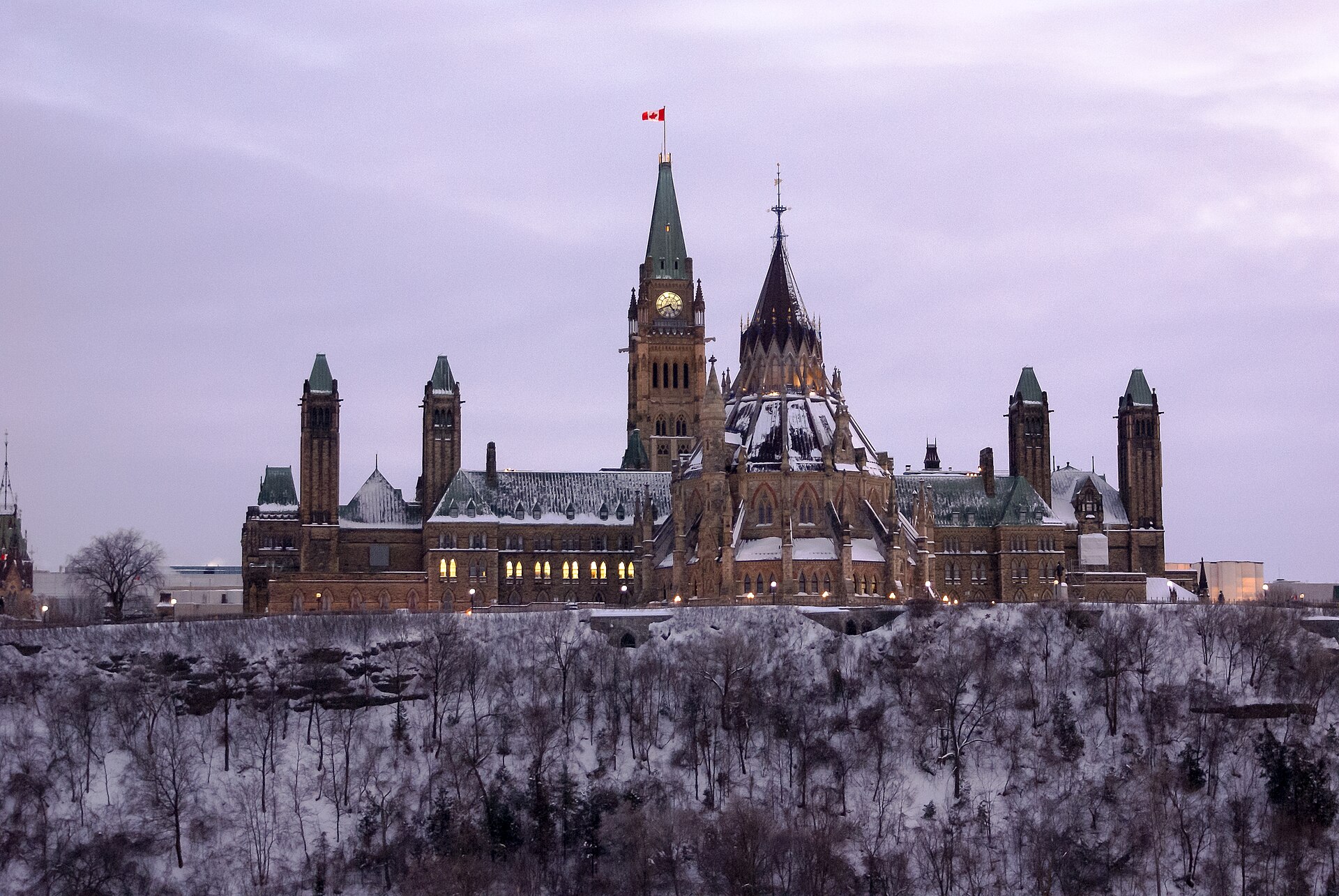
Ottawa is a city with countryside in it, on one municipal rate
Ottawa is a million people spread over 2,788 km² with a federal greenbelt cut through the middle of it, and whether you land inside that ring or beyond it decides your commute, your tax bill and your housing type more than the house does. This is a guide to the city one neighbourhood at a time, 28 of them, with the arithmetic of buying here worked out alongside it.
.jpg)
Living in Ottawa
What the household next door earns, what the government takes, how people get to work and what the two ends of the year feel like. Every figure below is the one the comparison pages run on, with the year it describes where the source publishes one, and anything the source does not publish is left out rather than guessed.
The cost of living in Ottawa, and what a home costs
Two calculators on Ontario's own rules: semi-annual compounding and the real minimum down payment tiers, and the closing costs this province actually charges.
Rent or buy in Ottawa
Whether buying beats renting in a market where prices have flattened and roughly 5,000 rental units landed in a single year. Both households start with the same cash and whichever of them has the cheaper month invests the difference, so the comparison is not rigged in either direction.
Mortgage calculator
Semi-annual compounding, every payment frequency including the accelerated ones, Ontario's land transfer tax with its first-time-buyer refund, and the 8% provincial sales tax on the insurance premium that almost no calculator charges you for.
Then find where in it to live
The neighbourhood index groups Ottawa into four districts: an editorial grouping, since the City publishes neighbourhood boundaries and nothing above them but electoral wards. Every guide keeps sourced facts apart from editorial observation, credits its photographs, and dates what it claims.

28 neighbourhood guides
A selection from the 111 neighbourhoods the Ottawa Neighbourhood Study draws, each with sourced facts, schools, parks, amenities, drive times and an honest account of the trade-offs.
Browse every neighbourhood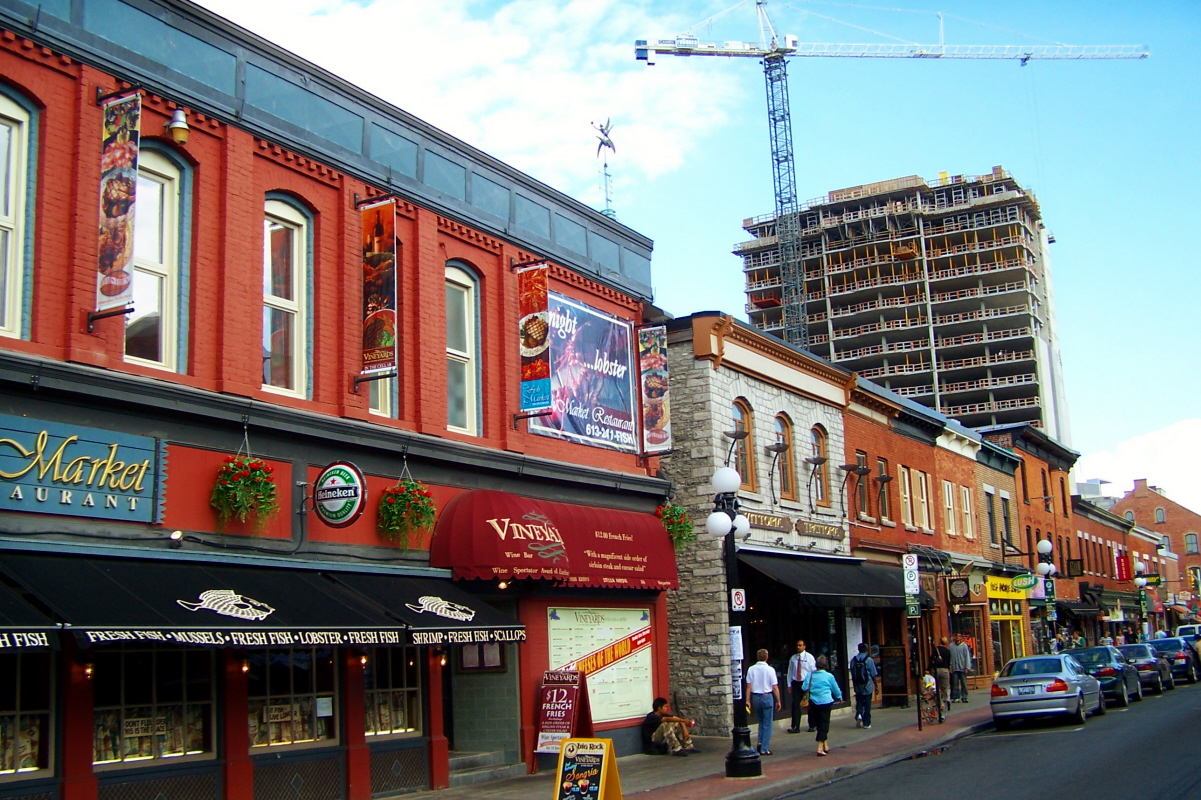
Central, west, east and south
The Greenbelt splits Ottawa into an inner city built before 1960 and four suburbs built after it, and the four sides read very differently on price, commute and what you can walk to.
Compare the four districtsWhat buying in Ottawa actually involves
The city is far larger than the built-up area it is named for. Amalgamation in 2001 folded a great deal of countryside and a dozen villages into one municipality, so an Ottawa address can mean a downtown apartment or a house on well and septic thirty kilometres out. Both pay the same municipal rate; they do not get the same services, and the urban, suburban and rural transit levies differ by area.
Federal employment shapes this market in a way no other city on this site experiences. It is stable through recessions and it moves with policy on office attendance, and the departments are spread across the city rather than concentrated downtown. Where you would actually work matters more here than the distance to Parliament Hill.
The river is a border and an opportunity. Gatineau is a different province with a different income tax, different property tax, different school arrangements and a different housing market, ten minutes from downtown. Households who compare the two properly sometimes find the answer surprising, and the bridges at rush hour are the counterweight.
Ontario's assessment freeze applies here as everywhere in the province: the base under every tax bill is still 2016 value. The result is that the published rate overstates what a buyer actually pays as a share of today's price, and the effective rate is the number worth comparing against another city.
Moving to Ottawa: check these before you commit
- Whether the property is on municipal services or on well and septic, which is common in the rural wards
- Which transit levy area the address is in, since urban, suburban and rural pay different amounts
- The effective rate on today's value rather than the published rate against a 2016 assessment
- The commute to your actual workplace, since federal offices are spread across the city
- Flood mapping along the Ottawa and Rideau rivers, which was revised after the recent spring floods
Ottawa compared
Home prices, rents, crime, climate, taxes and transit next to each of the other cities on the site, with what each does better and who should choose which. Nearest first.
- Ottawa vs Toronto352 km
- Ottawa vs Boston504 km
- Ottawa vs Greensboro1,093 km
- Ottawa vs Raleigh1,100 km
- Ottawa vs Charlotte1,214 km
- Ottawa vs Jacksonville1,756 km
- Ottawa vs Tallahassee1,823 km
- Ottawa vs Orlando1,943 km
- Ottawa vs Tampa2,032 km
- Ottawa vs St. Petersburg2,057 km
- Ottawa vs Port St. Lucie2,060 km
- Ottawa vs Cape Coral2,162 km
- Ottawa vs Hialeah2,213 km
- Ottawa vs Miami2,223 km
- Ottawa vs Dallas2,288 km
- Ottawa vs Fort Worth2,326 km
- Ottawa vs Houston2,444 km
- Ottawa vs Austin2,551 km
- Ottawa vs San Antonio2,669 km
- Ottawa vs Calgary2,876 km
- Ottawa vs El Paso3,050 km
- Ottawa vs Kelowna3,270 km
- Ottawa vs Vancouver3,539 km
- Ottawa vs Victoria3,577 km
Sourced, dated, and separated from the guesswork
Every Ottawa figure below is cited, stamped with the period it describes, and editable, because a number for the whole city rarely describes your purchase. Appreciation and investment returns are assumptions rather than facts, and they are labelled that way. Read the methodology for how the line is drawn.
- Prices, rents and tax rates: published statistics and the official schedules.
- Nothing here is a lender quote, a pre-approval or financial advice.
Where the Ottawa figures come from
- MLS® Home Price Index: Ottawa Real Estate Board, July 2026 · Canadian Real Estate Association / Ottawa Real Estate Board · retrieved Supports: Composite MLS® HPI benchmark of $634,000 in July 2026, down 0.5% year over year, Single-family benchmark of $725,000, up 0.7% year over year, Townhouse and row benchmark of $542,500, down 5.1% year over year, Apartment benchmark of $385,500, down 5.2% year over year, 1,325 sales and 4,678 active listings in July 2026
- Rental Market Survey: Ottawa, average rent by bedroom type, October 2025 · Canada Mortgage and Housing Corporation · retrieved Supports: Ottawa average purpose-built rents of $1,332 studio, $1,593 one-bedroom, $1,916 two-bedroom and $2,090 three-bedroom-plus, An overall average of $1,743 across 89,170 purpose-built units, Year-over-year increases of 3.4% on one- and two-bedroom units and 3.9% overall, Average rent of $2,320 in buildings completed in 2000 or later against $1,529 in buildings from before 1960
- Rental Market Statistics Summary: Ottawa (CV), October 2025 · Canada Mortgage and Housing Corporation · retrieved Supports: City of Ottawa purpose-built vacancy rate of 2.9% across 86,550 units, City of Ottawa average rent of $1,741 and median rent of $1,675
- 2026 Tax Policy and Other Revenue Matters · City of Ottawa, Revenue Services · retrieved Supports: Ontario's last province-wide reassessment was completed in 2016 and municipalities rely on 2016 assessment values for the 2026 tax year, The average urban Ottawa home is assessed at $415,000, A 2026 net municipal increase of $184 on that home: $166 from the 3.75% budget increase and $18 from the multi-residential ratio change, The 2026 budget was approved on 10 December 2025 with a 3.75% overall municipal tax increase, Ottawa's 2025 average municipal taxes on a representative two-storey detached house were $5,490, the lowest of Ontario's ten largest municipalities
- Education property tax rates · Government of Ontario · retrieved Supports: The residential education tax rate of 0.153% of assessed value, unchanged since 2020
- Premium information for homeowner and small rental loans · Canada Mortgage and Housing Corporation · retrieved Supports: Mortgage default insurance premium rates by loan-to-value