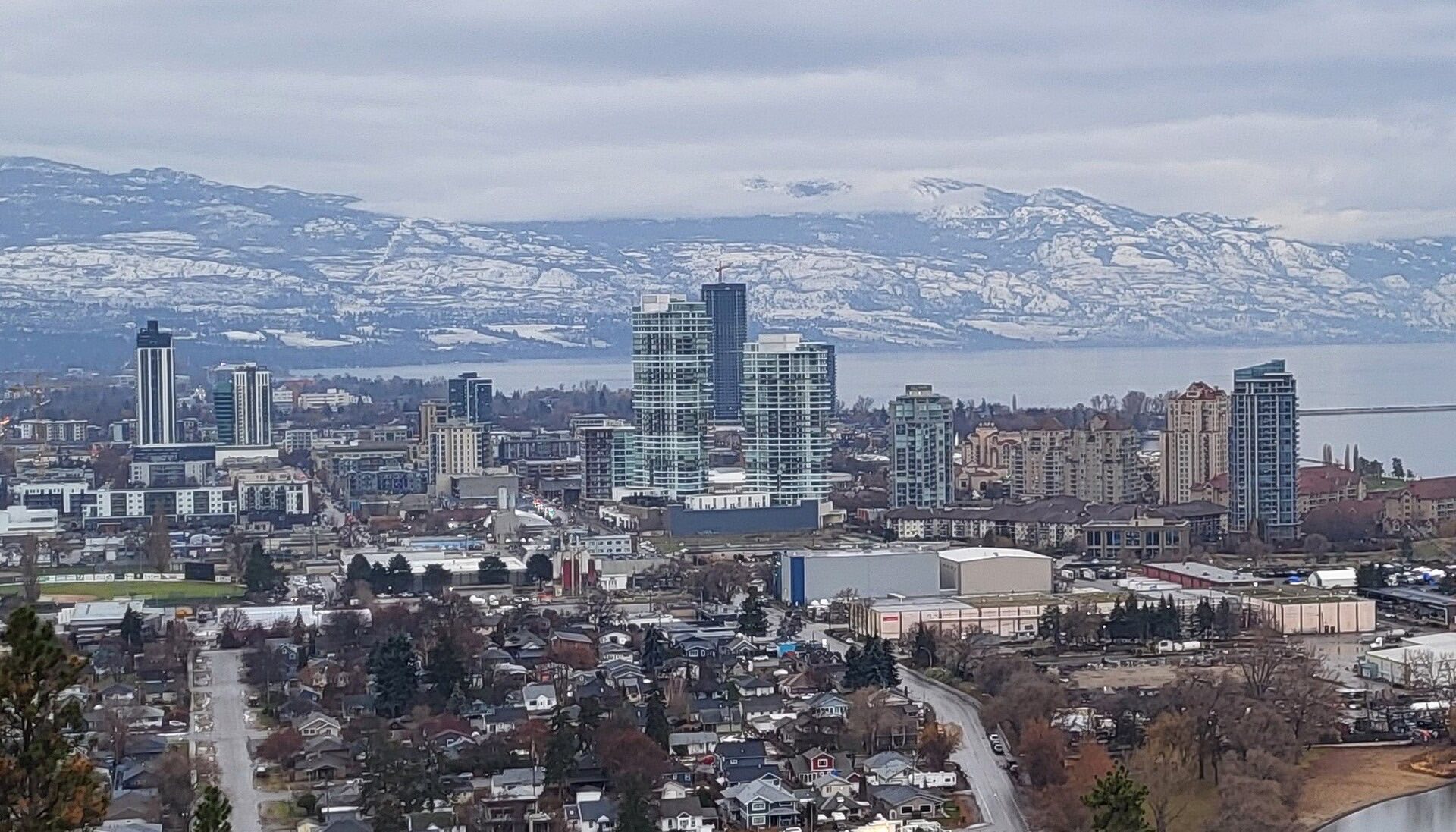
Kelowna prices wildfire before it prices the view
Kelowna is a 212 km² city strung along 20 kilometres of lakeshore, and the difference between the bench, the valley floor and the hillside decides your commute, your school catchment and your insurance premium more than the house does. This is a guide to the city one neighbourhood at a time, 12 of them, with the arithmetic of buying here worked out alongside it.
.jpg)
Living in Kelowna
What the household next door earns, what the government takes, how people get to work and what the two ends of the year feel like. Every figure below is the one the comparison pages run on, with the year it describes where the source publishes one, and anything the source does not publish is left out rather than guessed.
The cost of living in Kelowna, and what a home costs
Two calculators on British Columbia's own rules: semi-annual compounding and the real minimum down payment tiers, and the closing costs this province actually charges.
Rent or buy in Kelowna
Whether buying beats renting in a city with the loosest rental market in the country and a house benchmark still edging up. Both households start with the same cash and whichever of them has the cheaper month invests the difference, so the comparison is not rigged in either direction.
Mortgage calculator
Semi-annual compounding, every payment frequency including the accelerated ones, BC's property transfer tax with its first-time-buyer exemption, and what an extra payment takes off the end of the loan.
Then find where in it to live
The neighbourhood index groups Kelowna into four sectors: an editorial grouping, since the City publishes no neighbourhood boundary file. Every guide keeps sourced facts apart from editorial observation, credits its photographs, and dates what it claims.
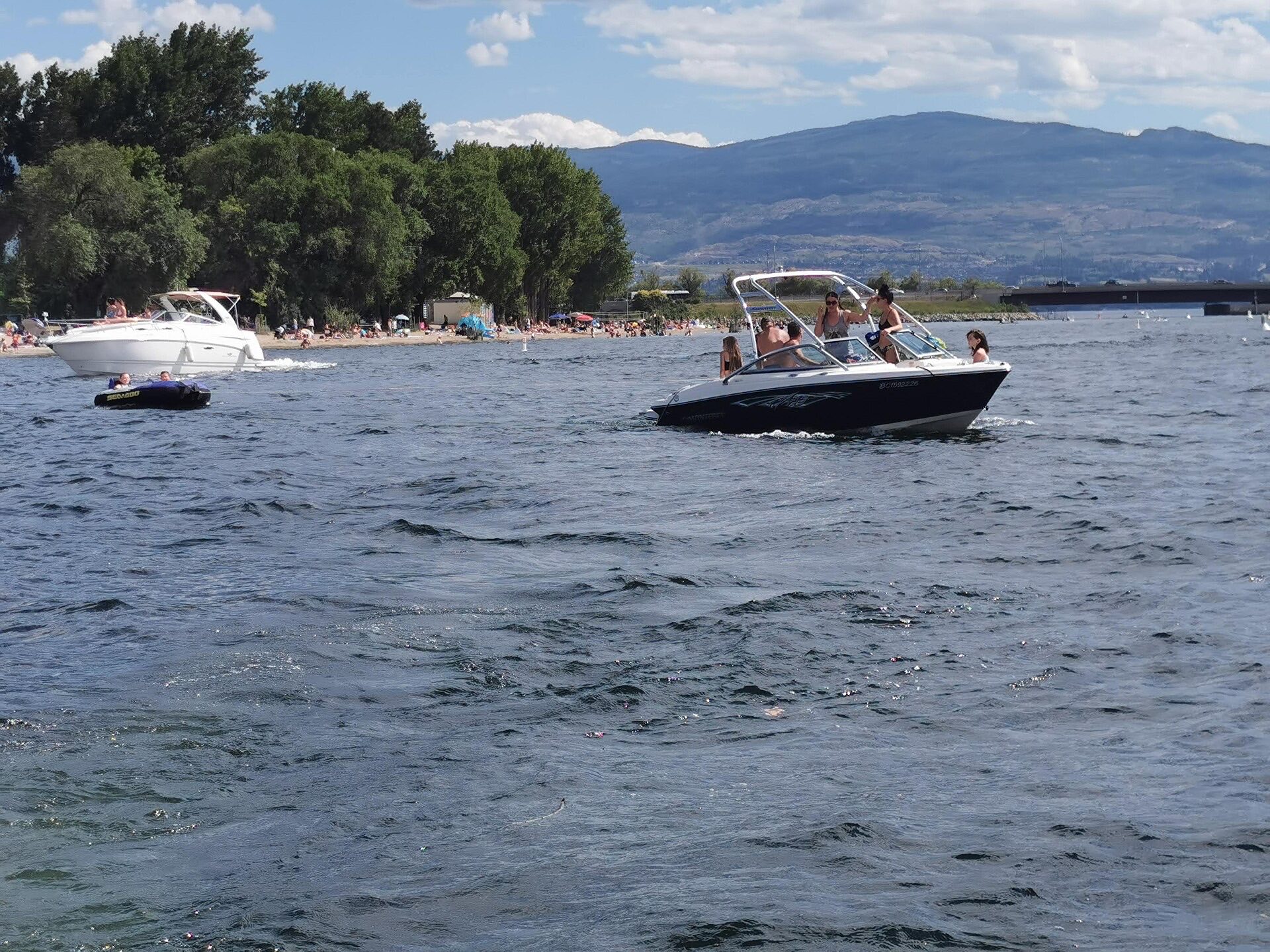
All 12 neighbourhoods
Every neighbourhood people here actually name, each with sourced facts, schools, parks, amenities, drive times and an honest account of the trade-offs.
Browse every neighbourhood
Central, North, Rutland and the Mission
The City publishes no neighbourhood boundaries at all, so these four sectors are ours, but the names are the ones people here use, and the four read very differently on price, commute and fire risk.
Compare the four sectorsWhat buying in Kelowna actually involves
Wildfire is the defining local risk and it is now a housing cost rather than a summer news story. Properties in the interface between the built-up city and the forest face higher premiums, more conditions and in some cases difficulty finding coverage at all. FireSmart work on a specific property is worth documenting, and an insurance quote belongs early in the process rather than at the end of it.
The Agricultural Land Reserve runs through the middle of this city, which is why the vineyards and orchards sit next to subdivisions and why they will stay there. It constrains what can be built and where the city can grow, and for a buyer it usually shows up as a boundary at the end of a street that is not going to move.
Water service here is not one utility. Several irrigation districts and utilities serve different parts of the city with different rates and different infrastructure, and quality advisories have historically differed street by street. Which supplier serves an address is worth asking about specifically.
The economy has two seasons and the housing market notices. Tourism, agriculture and construction peak in summer, the university adds a student rental market in winter, and a good deal of the apartment stock trades with rental restrictions or short-term letting rules attached. If the plan involves letting the property at all, read the strata bylaws before the listing.
Moving to Kelowna: check these before you commit
- The insurance quote on a wildfire-interface property, and any FireSmart work already done
- Which water utility or irrigation district serves the address, and its rate and advisory history
- The Agricultural Land Reserve boundary near the property, which decides what happens beside it
- Strata bylaws on letting, if any part of the plan depends on rental income
- Slope, drainage and access on the hillside properties, which are most of the newer stock
Kelowna compared
Home prices, rents, crime, climate, taxes and transit next to each of the other cities on the site, with what each does better and who should choose which. Nearest first.
- Kelowna vs Vancouver270 km
- Kelowna vs Victoria325 km
- Kelowna vs Calgary405 km
- Kelowna vs El Paso2,286 km
- Kelowna vs Fort Worth2,637 km
- Kelowna vs Dallas2,665 km
- Kelowna vs Austin2,840 km
- Kelowna vs San Antonio2,879 km
- Kelowna vs Houston3,015 km
- Kelowna vs Toronto3,093 km
- Kelowna vs Ottawa3,270 km
- Kelowna vs Charlotte3,509 km
- Kelowna vs Greensboro3,519 km
- Kelowna vs Raleigh3,625 km
- Kelowna vs Tallahassee3,639 km
- Kelowna vs Boston3,756 km
- Kelowna vs Jacksonville3,821 km
- Kelowna vs Tampa3,962 km
- Kelowna vs St. Petersburg3,966 km
- Kelowna vs Orlando3,985 km
- Kelowna vs Cape Coral4,102 km
- Kelowna vs Port St. Lucie4,154 km
- Kelowna vs Hialeah4,277 km
- Kelowna vs Miami4,293 km
Sourced, dated, and separated from the guesswork
Every Kelowna figure below is cited, stamped with the period it describes, and editable, because a number for the whole city rarely describes your purchase. Appreciation and investment returns are assumptions rather than facts, and they are labelled that way. Read the methodology for how the line is drawn.
- Prices, rents and tax rates: published statistics and the official schedules.
- Nothing here is a lender quote, a pre-approval or financial advice.
Where the Kelowna figures come from
- July 2026 statistics: Association of Interior REALTORS® monthly news release · Association of Interior REALTORS® · retrieved Supports: Central Okanagan single-family benchmark of $1,072,400, up about 2.3% year over year, Central Okanagan townhouse benchmark of $709,500, down 2.4% year over year, Central Okanagan condominium benchmark of $490,700, down 2.0% year over year, 1,496 residential sales and 9,630 active listings across the association's region in July 2026
- Rental Market Survey: Kelowna (CY), average rent and vacancy by bedroom type, October 2025 · Canada Mortgage and Housing Corporation · retrieved Supports: City of Kelowna one-bedroom average rent of $1,600 with a 9.1% vacancy rate, City of Kelowna two-bedroom average rent of $2,132 with a 5.5% vacancy rate, City of Kelowna three-bedroom-plus average rent of $2,780, City of Kelowna overall purpose-built vacancy rate of 6.9% across 9,159 units, Kelowna CMA vacancy rate of 6.3%, and 7.5% in the Rutland survey zone
- Schedule 702: 2026 tax rates by municipality and property class · Province of British Columbia, Ministry of Municipal Affairs · retrieved Supports: Kelowna's 2026 Class 1 residential total rate of $4.7595 per $1,000 of taxable value, The municipal share of $2.9615, the school levy of $1.3110, the regional district levy of $0.2437 and the hospital levy of $0.2050
- Schedule 704: taxes and charges on a representative house, 2026 · Province of British Columbia, Ministry of Municipal Affairs · retrieved Supports: A representative Kelowna house valued at $1,044,080 in 2026, $4,960 in variable-rate residential property taxes, $50 in parcel taxes and $1,149 in user fees: $6,159 in total
- Premium information for homeowner and small rental loans · Canada Mortgage and Housing Corporation · retrieved Supports: Mortgage default insurance premium rates by loan-to-value
- Regulations amending the Insurable Housing Loan Regulations and the Eligible Mortgage Loan Regulations (SOR/2025-55) · Canada Gazette, Part II · retrieved Supports: The $1.5 million insured price cap, 30-year amortization for first-time buyers and new builds