Ottawa vs St. Petersburg: which should you move to?
Ottawa or St. Petersburg? Housing, rent, crime, climate, income, taxes and transit, side by side, from each city's own published figures. Written for someone deciding where to live, not for a ranking.
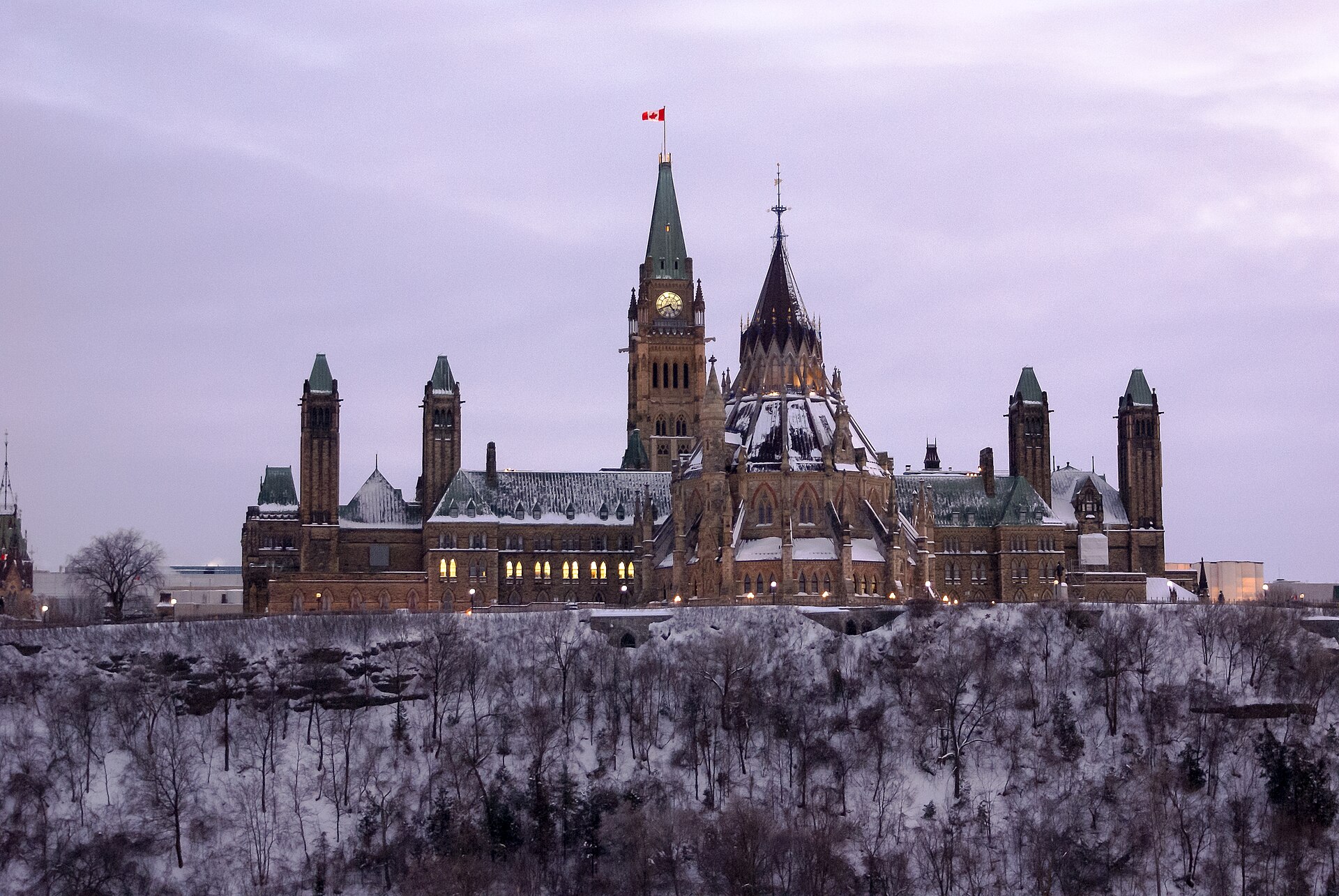
Ottawa
.jpg)

St. Petersburg

The two housing bills are in different currencies, and held against local pay Ottawa's is the lighter. Ottawa's composite benchmark is 6.2 times local median household income and Zillow's typical value for the City of St. Petersburg about 4.9 times, yet mortgage, property tax and insurance come to about $3,350 CAD a month in Ottawa, roughly 39% of the city's 2020 median, and about $2,742 USD in St. Petersburg, roughly 45% of the city's 2024 median. The cheaper St. Petersburg house costs more to hold against pay because of a 6.67% mortgage rate against 4.34%, a property tax of about 1.76% of value against 0.83% and a $390 a month homeowners policy that covers wind and not the storm surge Helene drove into the bay in 2024, which is how Florida collects what it does not take in income tax. Renting runs the same way, about 23% of median income for an Ottawa two-bedroom against about 34% on Zillow's St. Petersburg index. Homicide is rarer in Ottawa, 21 in the Ontario part of Ottawa-Gatineau in 2025 at 1.59 per 100,000, against 9 in St. Petersburg at about 3.4, though St. Petersburg's violent crime is falling and Ottawa's rising. St. Petersburg has the lower unemployment on its own measure, 4.8% against 6.8%, and a private-sector economy where Ottawa's public service is being cut. Choose Ottawa for public health care, French schooling and a train to work. Choose St. Petersburg for a 16.8 C January and a salary taxed only by Washington, if you will buy above the surge and insure against water as well as wind.
Ottawa prices are in CAD and St. Petersburg prices are in USD. The tables leave them in their own currency and compare ratios and rates instead; a conversion would be stale by the time you read it.
| Measure | Ottawa | St. Petersburg | Advantage |
|---|---|---|---|
| City population | 1,188,114 (2025) | 264,033 (2025) | Not directly comparable |
| Metro population | 1,700,014 (2025) | 3,418,895 (2025) | Not directly comparable |
| Five-year growth Growth is pressure on rents and roads as much as it is opportunity, so it is reported without a winner. | 8.9% (2016-2021) | 2.2% (2020-2025) | Not directly comparable |
What a home costs in each
The figures the two cities' rent-versus-buy and mortgage calculators run on, read from the same tables.
| Measure | Ottawa | St. Petersburg | Advantage |
|---|---|---|---|
| Benchmark home price MLS® HPI or equivalent benchmark. Lower is treated as the advantage, which is the buyer's view rather than the owner's. | $634,000 (July 2026) | $355,759 (June 2026) | Not directly comparable |
| Detached house benchmark St. Petersburg publishes a single house index rather than a composite, so the two rows repeat. | $725,000 | $355,759 | Not directly comparable |
| Apartment or condominium benchmark | $385,500 | Not published | Not directly comparable |
| Two-bedroom rent | $1,916/mo (average, October 2025) | $2,058/mo (median, June 2026) | Not directly comparable |
| One-bedroom rent | $1,593/mo | $1,770/mo | Not directly comparable |
| Two-bedroom rent against median income A year of two-bedroom rent as a share of the median household income below. A household paying the median rent out of the median income is a fiction, but it is the same fiction in both columns and it crosses currencies. | 22.5% of a year's income | 33.8% of a year's income | Ottawa |
| Mortgage payment on the benchmark, 20% down 25 years in Ottawa against 30 in St. Petersburg, each compounding the way its own country's lenders do. The rates are not a spread you can shop: they are what each market charges. | $2,762/mo at 4.34% | $1,831/mo at 6.67% | Not directly comparable |
| Price to household income Benchmark price divided by the median household income below. A ratio is comparable across currencies; the dollars are not. | 6.2× | 4.9× | St. Petersburg |
| Property tax on the benchmark home The effective rate on market value, which is what the two rates have in common and what the Advantage column is decided on; the bills are in each city's own dollars. | $5,262/yr (0.83%, 2026) | $6,248/yr (1.756%, 2025) | Ottawa |
| Transfer tax on the benchmark home Compared as a share of the price. Where the seller pays it, it is a cost of leaving rather than arriving. | $9,155 (buyer pays) | $2,490 (seller pays) | St. Petersburg |
| Rent control A cap protects a sitting tenant and does nothing for the next lease, so neither column is simply better. | 2.1% guideline (2026) | Forbidden by state law | Not directly comparable |
Ottawa: About 0.83% of market value. Ottawa levies roughly 1.26%, but against a Current Value Assessment frozen at 1 January 2016 values, because Ontario has deferred every reassessment since. The average urban home is assessed at $415,000 and pays about $5,246 in 2026, which on the $634,000 composite benchmark is 0.83%. Ottawa's municipal taxes on a representative detached house were the lowest of Ontario's ten largest cities in 2025. St. Petersburg: About 1.76% of what you pay for the house, which is lower than the 19.9197 mills St. Petersburg is charged, and the difference is Florida's homestead exemption rather than any assessment lag. The state assesses at full market value and a purchase resets the assessment to the price. What there is instead is an exemption: $25,000 of taxable value comes off for every taxing authority and a second slice comes off for all of them except the Pinellas County school board, which levies 6.2930 of the 19.9197. That second slice was $25,000 through the 2024 tax roll and has been adjusted for inflation every 1 January since, under the 2024 amendment to Article VII section 6 of the state constitution, so it is now somewhat more than $25,000. The figures here use the base amount, because the Department of Revenue sends the adjusted figure to the county property appraisers rather than publishing it. The difference is worth a few dollars a year on a bill, and the county property appraiser can tell you the amount in force. A homesteaded buyer's first-year bill is therefore about $6,248 on the $355,759 typical home value here. That 19.9197 is the figure Pinellas County publishes for this taxing district rather than a total assembled here, and St. Petersburg's own council sets 6.4525 of it. The exemption is not automatic: you file for it with the county property appraiser by 1 March of the year after you buy. The seller's tax bill is not a guide to yours. Save Our Homes caps a homesteaded property's assessed value at 3% growth a year, and that cap resets to full market value the January after the sale, so a long-tenured owner can be taxed on a fraction of what you will be taxed on for the same house. Ask the property appraiser what the assessment would be at your purchase price, not what the current bill is.
How safe each city is, by the numbers it publishes
Police-reported figures for the most recent year each force or statistics agency has released. Rates describe a whole city or metro area, and the spread between neighbourhoods inside one city is usually wider than the gap between the two cities.
| Measure | Ottawa | St. Petersburg | Advantage |
|---|---|---|---|
| Crime Severity Index Statistics Canada's weighted index for the metropolitan area, where 100 is Canada in 2006. American cities have no equivalent series. | 50.6 (2025) | Not published | Not directly comparable |
| Violent crime per 100,000 Canada counts every violent Criminal Code incident; the FBI counts four offences. The Canadian figure is always the larger one for that reason alone. | 814 (2025) | 502 (2025) | Not directly comparable |
| Property crime per 100,000 | 2,835 (2025) | 2,059 (2025) | Not directly comparable |
| Homicides Counts, not rates, and a single year in a small city moves a long way on chance alone. What each figure covers is under the table. | 21 (2025) | 9 (2025) | Not directly comparable |
The Ontario-part CSI rose from 46.85 in 2021 to 54.20 in 2023, held at 54.12 in 2024 and fell 6% to 50.61 in 2025 (table 35-10-0026-01). The violent crime rate has kept climbing, from 744 per 100k in 2021 to 814 in 2025, while property crime peaked in 2024 at 2,957 per 100k and eased to 2,835 in 2025.
What the rates cover: Total violent Criminal Code violations, rate per 100,000, Ottawa-Gatineau CMA Ontario part, table 35-10-0177-01 (10,745 incidents).
Homicides: Ottawa-Gatineau CMA Ontario part, table 35-10-0177-01; rate 1.59 per 100,000. 2024 was 27 (2.10 per 100k), the highest of the last five years.
Down, and clearly so in 2025. On the FBI CDE's annual totals violent offenses were 1,622 in 2022, 1,519 in 2023, 1,642 in 2024 and 1,325 in 2025, about 618, 573, 618 and 502 per 100,000 on each year's Vintage 2025 population, so 2025 was 19% below 2024 after three flat years. Property offenses fell from 7,052 in 2023 to 6,528 in 2024 and 5,437 in 2025, down 17% in the last year, with motor vehicle theft more than halved from 917 in 2023 to 407. The department's own figures agree in direction and nearly in count: it reported overall crime down 16% in 2025, 175 robberies against a five-year average of 224, and 406 auto thefts against an average of 735 (Patch). The CDE counts were read on 1 October 2026 from a feed last refreshed on 15 September and can still be revised.
What the rates cover: Computed: 1,325 violent offenses (murder, rape, robbery and aggravated assault) in the FBI Crime Data Explorer's summarized data for the St. Petersburg Police Department (ORI FL0521400) in calendar 2025, divided by the 264,033 Vintage 2025 city population. On the CDE's own agency population of 269,098 the rate is 492. That is close to Boston's 507 and Jacksonville's 514, above Tampa's 375.5 (on the Tampa Police Department's own counts) and Miami's 359, and almost four times Port St. Lucie's 130. The department reports to the CDE as annual totals rather than month by month, and the CDE carries a full year for each of 2022 to 2025 and nothing for 2021.
Homicides: 9 murders and nonnegligent manslaughters in 2025 in the FBI CDE, about 3.4 per 100,000 on the city population, against Tampa's 17 (4.1), Orlando's 10 (3.0) and Port St. Lucie's 4 (1.5). The department's own count, announced in January 2026, is 10 homicides, which it called the fewest since 1967, when the city had six, and 44% fewer than the 18 of 2024 (Patch, reporting the St. Petersburg Police Department). The CDE series is 16 in 2022, 13 in 2023, 18 in 2024 and 9 in 2025.
Winters, summers and what the weather can do to a house
| Measure | Ottawa | St. Petersburg | Advantage |
|---|---|---|---|
| January mean | -10.0 °C | 16.8 °C | Not directly comparable |
| July mean | 21.2 °C | 28.8 °C | Not directly comparable |
| Precipitation a year | 930 mm | 1,185 mm | Not directly comparable |
| Snowfall a year | 232 cm | 0 cm | Not directly comparable |
| Sunshine a year | 2,084 hours | Not published | Not directly comparable |
Environment and Climate Change Canada 1991-2020 normals at Ottawa Macdonald-Cartier Int'l A (climate ID 6106000). Annual mean 6.5 C, rainfall 757.2 mm. Sunshine hours are from the 1981-2010 normals at Ottawa CDA (climate ID 6105976) because the 1991-2020 airport table does not publish sunshine totals.
Hazards: Cold winters with regular snowstorms and freezing rain, spring flooding along the Ottawa River (2017 and 2019), summer heat and humidity, occasional severe thunderstorms and tornadoes (September 2018, the May 2022 derecho), and wildfire smoke episodes such as June 2023.
NOAA NCEI 1991-2020 normals for St. Petersburg Albert Whitted Airport (station USW00092806), the downtown waterfront airport about a mile east of the city's center, which is the station the brief names and has full temperature and precipitation normals: January mean 62.2F, July mean 83.8F, annual mean 74.7F, 46.65 in of precipitation. The airport's normals carry no snowfall, so the 0.0 in of snow stored here is the normal at the St. Petersburg cooperative station (USC00087886), at the same coordinates in NCEI's listing. August is the warmest month by two tenths of a degree at 84.0F, with a mean high of 89.8F; January's mean low is 55.3F. August (8.39 in) and July (7.49 in) are the wettest months, and June through September bring 29.33 in, 63% of the year; November (1.46 in) is the driest. The normals count 70.9 days a year at 90F or above, none at 100F and 0.1 nights at or below freezing. Converted here to 16.8 C, 28.8 C, 1,185 mm and 0 cm. The other stations bracket it: the cooperative station averages 62.1F in January and 83.9F in July with 52.48 in a year, and St. Pete-Clearwater International Airport (USW00012873), about 10 miles north and away from the bay, 61.6F and 83.1F with 53.62 in and 94.1 days at 90F. St. Petersburg's year is almost Tampa's (Tampa International's 62.0F and 83.8F); its January is level with Port St. Lucie's (62.3F), warmer than Orlando's (60.6F) and six degrees colder than Miami's (68.6F). Sunshine is not stored: Current Results' US city table, the source and 1961-1990 basis of the other US profiles' sunshine hours, lists Tampa (2,927 hours, at Tampa International) and no St. Petersburg station, and the 1991-2020 normals do not include sunshine; the city's nickname, the Sunshine City, rests on a Guinness record of 768 consecutive sunny days from 1967 to 1969 (Wikipedia), not on a measured annual total.
Hazards: Storm surge is the defining hazard, and 2024 showed how much of the city sits low. Hurricane Helene passed offshore on 26 September 2024 on its way to a Big Bend landfall, and the National Ocean Service tide gauge at St. Petersburg, the longest record in Tampa Bay, dating to 1947, measured 6.31 ft above mean higher high water, far above its previous record of 3.97 ft in Hurricane Elena in 1985 (National Hurricane Center). Twelve people drowned in the surge in Pinellas County, two of them in St. Petersburg and nine on the barrier islands from St. Pete Beach to Indian Rocks Beach, and Helene destroyed at least 419 homes in Pinellas and Hillsborough counties and did major damage to at least 18,512 structures (NHC). Albert Whitted recorded a gust of 82 mph that day. Two weeks later, on 9 October, Hurricane Milton came ashore at Siesta Key, about 35 miles south, as a Category 3; its track spared the bay a surge but not the rain or the wind. Albert Whitted measured 18.54 in (471 mm) on 9 October, the wettest day in its record since 2010, and the NHC gives the airport 18.88 in for the storm and a gust of 88 kt (101 mph); a volunteer gauge near the city recorded 20.40 in, the highest storm total anywhere in Milton's path. Milton tore most of the fabric roof off Tropicana Field (NHC) and toppled a construction crane onto a downtown office building that housed the Tampa Bay Times (Bay News 9). The Rays played the 2025 season at Steinbrenner Field in Tampa and returned on 6 April 2026 after repairs (Wikipedia). Wikipedia notes that neither storm made landfall in the city and that the last hurricane to strike it directly was in 1921. Heat is long rather than extreme: 70.9 days a year at 90F or above on the normals and none at 100F (37.8 C); Albert Whitted recorded 128 such days in 2024, the most in its record since 2010, and 94 in 2026 through 28 September. Frost is almost unknown on the waterfront: one night at 32F (0 C), on 18 January 2018, since 2010, and a lowest reading of 36F in 2026 on 1 February.
What people earn and what the government takes
| Measure | Ottawa | St. Petersburg | Advantage |
|---|---|---|---|
| Median household income | $102,000 CAD (2020) | $73,048 USD (2024) | Not directly comparable |
| Unemployment rate Statistics Canada and the Bureau of Labor Statistics define unemployment slightly differently; the Canadian measure runs about a point higher on the same labour market. | 6.8% (July 2026) | 4.8% (July 2026) | Not directly comparable |
| Sales tax | 13% | 7% | St. Petersburg |
| Top marginal income tax Federal plus provincial or state. The American figure leaves out payroll taxes and the cost of health insurance, both of which a Canadian household covers through the tax it pays here. | 53.53% | 37% | St. Petersburg |
| Income tax on $100,000, single filer Computed from each jurisdiction's brackets at a single filer's $100,000 and rounded to the dollar, so a gap of a dollar is rounding rather than tax. Two cities in one province or state are shown as Even, because there the two cells describe the same tax and whatever separates them is method. | $21,930 CAD | $13,449 USD | Not directly comparable |
The federal government is the anchor employer: 130,628 of 279,707 federal public servants were based in the National Capital Region at March 31, 2025, and Budget 2025 announced about 28,000 more public service job cuts by 2029. Regional unemployment ran from 6.4% in mid 2025 to 7.3% in late 2025 before easing to 6.8% in July 2026.
Main sectors: Federal public administration, Technology (Kanata North, Shopify, telecom and defence), Health care and hospitals, Post-secondary education, Tourism and national institutions.
Property tax is set by the City of Ottawa; not verified here.
BLS counted 1,559,600 nonfarm jobs in the Tampa-St. Petersburg-Clearwater MSA in August 2026 (not seasonally adjusted, preliminary), up 14,200 or 0.9% on the year. Private education and health services added the most (+9,700, or 3.8%, to 264,400), then professional and business services (+6,000, or 2.1%, to 288,800) and construction (+1,600, to 99,600), while information lost 1,700 (-5.6%, to 28,600) and federal employment 1,000 (to 30,900). The city's own employment picture is a headquarters town's: the ten principal private employers in its 2025 financial report, led by Raymond James (4,800), Johns Hopkins All Children's (2,800), Power Design and Jabil (1,700 each), employ 17,837, or 12.5% of the 147,705 people working in the city, against 20,300 for the 2016 list, which then included HSN, FIS and Bayfront Medical. Much of the commercial activity is in the Gateway area in the city's north, which it shares with Pinellas Park (Wikipedia). Unlike Port St. Lucie, most residents work in their own county: 14% of the city's workers (20,739 of 144,736) worked outside Pinellas County in 2024, 21.3% worked from home, and the mean commute for the rest was 25 minutes, with 5% spending an hour or more (ACS 2024 1-year, B08007, B08013, B08301 and B08303).
Main sectors: Finance and insurance: Raymond James, headquartered in the city and its largest private employer with 4,800 staff, Franklin Templeton (1,200) and the credit union service organization PSCU (800), in a metro with 142,400 financial activities jobs in August 2026, Health care: Johns Hopkins All Children's Hospital (2,800 staff), BayCare's St. Anthony's Hospital (1,437), HCA (1,350) and Orlando Health Bayfront Hospital, in a metro sector (private education and health services, 264,400 jobs) that added 9,700 jobs over the year, Manufacturing and engineering: Jabil, the electronics manufacturer headquartered in the city (1,700), Catalent Pharma Solutions (800) and Power Design, an electrical contractor (1,700), Utilities: Duke Energy Florida, headquartered in the city (1,250 staff), Tourism, arts and sports: the Dali Museum, the Pier, seven miles of public waterfront parks, the Rays at Tropicana Field and the IndyCar Grand Prix on downtown streets (leisure and hospitality, 167,300 metro jobs).
Property tax is the local levy that matters. Tax Foundation puts Florida's effective property tax rate on owner-occupied homes at 0.78%, and a homestead exemption takes as much as $50,000 off a permanent residence's taxable value, with the Save Our Homes limit on how fast its assessment can rise (Florida Department of Revenue). A St. Petersburg home paid 19.9197 mills for 2025 on the Pinellas County Tax Collector's published total, of which the city's own rate is 6.4525; a little above Tampa's 19.8428 in the same layer. On 17 September 2026 the City Council voted 6 to 2 to keep the city rate at 6.4525 mills for fiscal 2027, the rate it has levied since fiscal 2025, which is above the 6.3854-mill rolled-back rate and so needed a two-thirds vote; rising taxable values, about $39.3 billion, bring the city about $14.8 million more (St Pete Catalyst). Zillow's typical home value for the city was $355,759 in June 2026, down 3.9% on the year, and its typical rent $2,058; the bills, insurance and flood exposure that follow from them belong to the housing layer.
Whether you need a car
| Measure | Ottawa | St. Petersburg | Advantage |
|---|---|---|---|
| System | OC Transpo (buses, O-Train Lines 1, 2 and 4, Para Transpo); STO serves Gatineau | Pinellas Suncoast Transit Authority (PSTA), the countywide agency formed in 1984 from the St. Petersburg Municipal Transit System and the Central Pinellas Transit Authority: more than 34 bus routes including two express routes to Tampa, the Central Avenue and Suncoast Beach trolleys, and the SunRunner, Tampa Bay's first bus rapid transit line, which opened on 21 October 2022 from downtown St. Petersburg along First Avenues North and South to St. Pete Beach every 15 minutes (Wikipedia). The Cross-Bay Ferry between downtown St. Petersburg and downtown Tampa ran seasonally for eight seasons until its operator's contract ended after 2025, and PSTA bought two vessels in June 2026 to restart it (Wikipedia). There is no passenger rail: CSX's freight branch ends at a small yard northwest of downtown, the line into downtown having been abandoned in 2008. | Not directly comparable |
| Commute by public transit | 11.2% (2021) | 2.1% (2024) | Ottawa |
| Walk or cycle to work | 8.5% (2021) | 2.9% (2024) | Ottawa |
| Airport | Ottawa Macdonald-Cartier International Airport, YOW, 4.9 million passengers in 2025, up 6% on 2024 (Ottawa International Airport Authority, 2025 results) | St. Pete-Clearwater International Airport (PIE), owned by Pinellas County about 9 miles north of downtown, handled a record 2,794,067 passengers in 2025, 13.6% more than 2024's 2,458,674, almost all of them on Allegiant Air, which uses it as an operating base (Wikipedia). Most of the city's air travel goes through Tampa International Airport (TPA), about 16 miles to the northeast across the Howard Frankland Bridge, which handled 24,811,007 passengers in 2025 (TPA, as in Tampa's profile). Albert Whitted Airport on the downtown waterfront serves general aviation. | Not directly comparable |
70.6 million O-Train and bus trips in 2025, up 3.9% on 2024 (OC Transpo report to Transit Committee, February 12, 2026). Ridership fell in early 2026: 11.5 million trips in January-February versus 12.4 million a year earlier.
PSTA carried 10,441,618 unlinked trips in 2025 on the National Transit Database's monthly ridership file (Federal Transit Administration), 8,888,290 of them on its buses and 769,551 on the SunRunner, with the rest on vanpools, demand-response service and a ferry. That is a little below the 11.94 million HART carried in Hillsborough (Tampa's profile, from APTA) for a county with less than two-thirds of Hillsborough's population, and well below PSTA's own peak of 14.6 million in 2014; ridership fell to 9.1 million in 2022 and has recovered to about 10.4 to 10.5 million in each of 2024 and 2025. The SunRunner carried 1,036,048 trips in 2023, its first full year, and 769,551 in 2025.
Health care, schools and what each city is like
Health care
Care is publicly funded through OHIP after a residency waiting period for newcomers, with prescription drugs, dental and vision outside the public plan for most working-age adults. The main hospitals are The Ottawa Hospital (Civic and General campuses), CHEO for children, the Queensway Carleton and Montfort; a replacement Civic campus was promised for 2028 but construction on the hospital itself had not begun as of 2026, and finding a family doctor is the hardest part of access, with the Ontario College of Family Physicians projecting 4.4 million Ontarians without one by 2026.
Education
The University of Ottawa (bilingual) and Carleton University are the large universities, with Algonquin College and La Cite for applied programs. Publicly funded schools run through four boards: the Ottawa-Carleton District School Board, the Ottawa Catholic School Board, and French-language public and Catholic boards, so French immersion and full French schooling are both widely available.
Living there
Ottawa is a government town that behaves like a mid-sized city: quiet downtown evenings, a large share of households with two stable incomes, and a weekend life built around the Rideau Canal, the Gatineau Park hills across the river and the river pathways. Winters are long and cold, with roughly 232 cm of snow in a normal year, and summers are warm and humid. The O-Train light rail has had reliability problems since it opened in 2019, and the bus network has been cut back, so most households still drive.
Health care
Care is paid for through employer or marketplace insurance, Medicare and Medicaid, and Florida is one of the ten states that have not expanded Medicaid under the Affordable Care Act (KFF). Florida's uninsured rate was 10.9% in 2024 (2,509,782 of 23,038,464), against 8.2% nationally, on the ACS 2024 1-year estimates; the City of St. Petersburg's was 7.3% (19,374 of 263,881), below Port St. Lucie's 9.9%, Pinellas County's 9.0% and the metro's 10.0%. The city is the county's hospital center. Orlando Health Bayfront Hospital, the city's oldest, on the site of a five-room hospital of 1910, is Pinellas County's only Level II trauma center and has a Level III regional perinatal intensive care center and the Bayflite helicopter program (Wikipedia). Johns Hopkins All Children's Hospital, founded in 1926 and part of Johns Hopkins Medicine since 2011, has 259 beds and a Level I pediatric trauma center (Wikipedia). BayCare's St. Anthony's Hospital and HCA's hospitals are also among the city's ten largest private employers (City of St. Petersburg). This file did not verify a wait time figure for primary or specialist care.
Education
Pinellas County Schools, the countywide district, is shrinking: it reported more than 3,000 fewer students in 2025-26 than a year earlier (Bay News 9), its schools were 68% full against 87% ten years before, and in February 2026 the board voted to close two schools, Cross Bayou Elementary in Pinellas Park and Disston Academy in Gulfport, at the end of the 2025-26 year and to merge others (FOX 13). In higher education the city has the University of South Florida St. Petersburg, a downtown campus of about 6,500 students; Eckerd College, a private liberal arts college founded in 1958; St. Petersburg College, founded in 1927, a state college with four of its eleven campuses and centers in the city; and the Poynter Institute, the journalism school that owns the Tampa Bay Times (Wikipedia). Stetson University's law school is next door in Gulfport.
Living there
St. Petersburg is the smaller and older half of Tampa Bay's urban core: a city of 264,033 on the southern tip of the Pinellas peninsula, with more water than land inside its limits, connected to Tampa by the Gandy and Howard Frankland bridges and to Bradenton by the Sunshine Skyway. It was a railroad town before it was a resort (the Orange Belt Railway arrived in 1888 and the town was incorporated in 1892) and a retirement town for most of the twentieth century; its median age is still 43.0, the second-oldest of the Florida cities here after Port St. Lucie, though Wikipedia notes a younger turn since the Great Recession. Downtown is the draw, with the Dali Museum, the rebuilt Pier, seven miles of public waterfront parks, more than 600 murals and the Rays at Tropicana Field, who returned in April 2026 after Hurricane Milton tore off the roof but will leave: Hillsborough County voted 5 to 2 on 28 August 2026 to put $796 million toward a $2.3 billion stadium in Tampa for 2029 (WUSF). Its economy is a set of headquarters (Raymond James, Jabil, Duke Energy Florida) and hospitals (Johns Hopkins All Children's, Bayfront). The numbers set it apart from its Florida neighbors. It grew only 2.2% from 2020 to 2025 and lost residents in the year of the 2024 storms, in a county that is now losing people. Its median household income, $73,048, is $11,066 below Tampa's; its violent crime rate, 502 per 100,000 in 2025, is higher than Tampa's but falling, and its nine homicides were the fewest the police department has counted since 1967. It has the highest transit share of the Florida cities here outside Miami, at 2.1%. And it learned in 2024 what living in Tampa Bay costs: a record surge from Helene, which drowned twelve people in the county, and 18 inches of rain from Milton two weeks later.
Where each city wins, and where it loses
Ottawa's figures are in Canadian dollars and St. Petersburg's in US dollars, and against local pay the cheaper house is the dearer to hold. Ottawa's composite benchmark, a blend of houses, townhouses and apartments, was $634,000 CAD in July 2026. St. Petersburg's figure is Zillow's typical home value for the city across all homes, $355,759 USD in June 2026, 3.9% below a year earlier, which is the city's row in this site's Tampa Bay table; like Ottawa's, it covers every kind of home rather than houses alone. The headlines are 6.2 times Ottawa's 2020 median household income of $102,000 CAD and about 4.9 times St. Petersburg's 2024 median of $73,048 USD, a figure with a margin of error of $4,441. At 20% down, Ottawa's mortgage at 4.34% is $2,762 CAD a month over 25 years, and the $284,607 loan on St. Petersburg's value at 6.67%, Freddie Mac's August rate, $1,831 USD over 30. Property tax is 0.83% of market value in Ottawa, $5,262 CAD a year, against about $6,248 USD for a homesteaded owner in St. Petersburg, where a City address pays 19.9197 mills for 2025 on the Pinellas County Tax Collector's published total, the City's own 6.4525 among them beside the county, the school board, emergency medical services, the Juvenile Welfare Board, the water management district and the transit district: an effective 1.76% after Florida's homestead exemption, and about $7,087 without one. With insurance at $145 CAD and $390 USD a month, the St. Petersburg figure this site's estimate for a coastal Tampa Bay address, inside the $3,900 to $5,500 a year published for a St. Petersburg house with wind cover and with no flood cover in it, the owners carry about $3,350 CAD and $2,742 USD, roughly 39% and 45% of local median income. A two-bedroom averaged $1,916 CAD in October 2025, about 23% of Ottawa's median income. Zillow's observed rent index for St. Petersburg, across all homes, was $2,058 USD in June 2026, about 34%, so the Florida city is the dearer to rent against pay as well. Ontario caps increases at 2.1% for 2026 in units first occupied before 15 November 2018; Florida forbids rent control outright.
Homicide is the one count that crosses the border intact, though Ottawa's covers the Ontario part of its metro and St. Petersburg's a city of 264,033. The Ontario part of Ottawa-Gatineau recorded 21 homicides in 2025, 1.59 per 100,000, against 27 in 2024. St. Petersburg recorded 9 in the FBI's Crime Data Explorer, about 3.4 per 100,000; the police department's own count is 10, which it called the fewest since 1967, after 18 in 2024. The other rates are different instruments. Statistics Canada put the Crime Severity Index for the Ontario part at 50.61 in 2025, below the national 75.0; American cities have no equivalent. Ottawa's violent rate of 813.79 per 100,000 counts every violent Criminal Code violation, common assault and uttering threats included. St. Petersburg's 502 is 1,325 FBI-definition offenses of murder, rape, robbery and aggravated assault reported by the St. Petersburg Police Department, divided by the Census estimate. Property crime, 2,834.59 per 100,000 against 2,059, is defined differently too. The directions are opposite. Ottawa's violent rate has increased every year from 744 per 100,000 in 2021. St. Petersburg's violent offenses fell 19% in 2025 after three flat years, its property offenses 17%, and its motor vehicle thefts more than halved from 917 in 2023 to 407. Its counts, read on 1 October 2026, can still be revised.
The two Januaries are almost 27 degrees apart. Ottawa's mean of -10.0 C at the airport is the coldest of the cities this site compares, and St. Petersburg's 16.8 C, at Albert Whitted Airport on its downtown waterfront, comes with one night at 0 C since 2010. July is 21.2 C in Ottawa and 28.8 C in St. Petersburg, where August is warmer still and the normals count 70.9 days a year at or above 32.2 C (90F) and none at 37.8 C (100F); the airport recorded 128 such days in 2024, the most in its record since 2010. St. Petersburg gets 1,185 mm of precipitation a year against 929.8 mm, 63% of it from June to September, and no snow against Ottawa's 231.9 cm. Ottawa records 2,083.7 hours of sunshine; this site stores no sunshine figure for St. Petersburg, whose nickname, the Sunshine City, rests on a run of sunny days from 1967 to 1969 rather than a measured total. Ottawa's hazards are freezing rain, spring flooding along the Ottawa River in 2017 and 2019, the September 2018 tornadoes, the May 2022 derecho and wildfire smoke. St. Petersburg's defining hazard is storm surge. Hurricane Helene passed offshore on 26 September 2024 and the tide gauge at St. Petersburg, the longest record in Tampa Bay, measured 6.31 ft above mean higher high water against a previous record of 3.97 ft; twelve people drowned in Pinellas County, two of them in the city. Two weeks later Milton came ashore at Siesta Key, about 35 miles south, dropped 18.54 in (471 mm) on Albert Whitted in a day and tore most of the roof off Tropicana Field. Neither storm made landfall in the city, and the last to strike it directly was in 1921. An owner's utility premium over a renter is budgeted at $155 CAD a month in Ottawa, mostly heat from October to April, and an estimated $150 USD in St. Petersburg.
Ottawa's anchor is the federal government, and St. Petersburg's is a cluster of private head offices. Ottawa had 130,628 of 279,707 federal public servants based in the National Capital Region at 31 March 2025, and Budget 2025 announced about 28,000 more positions to go by 2029. St. Petersburg's largest private employers are Raymond James, headquartered in the city with 4,800 staff, Johns Hopkins All Children's Hospital with 2,800, Power Design and Jabil with 1,700 each, Duke Energy Florida and Franklin Templeton. BLS counted 1,559,600 nonfarm jobs across the Tampa-St. Petersburg-Clearwater metro in August 2026, 14,200 or 0.9% more than a year earlier, led by private education and health services, with 142,400 in financial activities; federal employment there fell by 1,000 to 30,900. The metro's unemployment rate was 4.8% in July 2026, not seasonally adjusted, up from 4.1% a year earlier, and the City of St. Petersburg's own was 4.2%. Ottawa-Gatineau's was 6.8% the same month, seasonally adjusted and above Canada's 6.4%; the two are not directly comparable, though the gap is wide. Median household income was $102,000 CAD in Ottawa in 2020 and $73,048 USD in St. Petersburg in 2024, $11,066 below Tampa's across the bay. Ontario levies a provincial income tax, so $100,000 pays about $21,930 CAD, including the $750 Ontario Health Premium and before CPP and EI, with a top combined rate of 53.53% and 13% HST. Florida levies none, so the same salary pays $13,449 USD in federal tax for 2025; the top rate is the federal 37% and sales tax is 7% in Pinellas County, the state's 6% and the Penny for Pinellas. Property tax carries more of the load instead, 1.76% on St. Petersburg's typical value against 0.83% on Ottawa's benchmark.
Transit is Ottawa's by a wide margin, though St. Petersburg has more of it than most Florida cities. In the 2021 census 11.2% of Ottawa commuters took transit and 8.5% walked or cycled, counted in May 2021 with remote work at its height, so the share now is unknown rather than low. In St. Petersburg in 2024, 2.1% took transit, the highest share of the Florida cities this site compares outside Miami, 2.9% walked or cycled, 65.6% drove alone and 21.3% worked from home. OC Transpo carried 70.6 million trips in 2025 on buses and O-Train Lines 1, 2 and 4, though the O-Train has had reliability problems since it opened in 2019. The Pinellas Suncoast Transit Authority carried 10,441,618 trips across the county in 2025, 769,551 of them on the SunRunner, Tampa Bay's first bus rapid transit line, which runs every 15 minutes from downtown St. Petersburg to St. Pete Beach. There is no passenger rail, and the seasonal Cross-Bay Ferry to downtown Tampa stopped after 2025, though PSTA bought two vessels in June 2026 to restart it. Most of the city's residents work in their own county, only 14% outside Pinellas, and the mean commute was 25 minutes. Ottawa's airport handled 4.9 million passengers in 2025, with many trips connecting through Toronto or Montreal. St. Pete-Clearwater International, about 9 miles north of downtown, handled a record 2,794,067, almost all on Allegiant, and most of St. Petersburg's flights go through Tampa International, about 16 miles away, which handled 24,811,007.
Health care is where the border shows most. In Ottawa, OHIP pays for physician and hospital care with nothing due at the point of use after a residency wait for newcomers, though prescriptions, dental and vision mostly fall outside it. The bottleneck is a family doctor: the Ontario College of Family Physicians projected 4.4 million Ontarians without one by 2026, and the replacement Civic campus, promised for 2028, had not begun construction. In St. Petersburg care is bought through an employer or marketplace plan, Medicare or Medicaid, and Florida is one of ten states that have not expanded Medicaid. Its uninsured rate was 10.9% in 2024, against 8.2% nationally; the City of St. Petersburg's was 7.3%, below both. The city is Pinellas County's hospital center: Orlando Health Bayfront Hospital is the county's only Level II trauma center, and Johns Hopkins All Children's Hospital, with 259 beds, has a Level I pediatric trauma center. This site verified no wait time for either city. Ottawa has four publicly funded school boards, English and French, public and Catholic, so French immersion and full French schooling are ordinary choices. Pinellas County Schools, the countywide district, reported more than 3,000 fewer students in 2025-26 than a year earlier, its schools were 68% full against 87% ten years before, and in February 2026 its board voted to close two schools. St. Petersburg has the University of South Florida St. Petersburg, a downtown campus of about 6,500 students, Eckerd College and four of St. Petersburg College's campuses and centers.
What people underestimate is that both tax bills rest on figures with dates on them, and how much the St. Petersburg one leaves out. Ottawa levies about 1.26% against assessments frozen at 1 January 2016, which is why the bill works out to 0.83% of what a buyer pays today, and none of this site's sources dates the next reassessment. The St. Petersburg $6,248 is the 2025 millage; on 17 September 2026 the City Council voted 6 to 2 to keep its own 6.4525 mills for fiscal 2027, above the rolled-back rate. It assumes a homestead filed by 1 March of the year after the purchase; without one the same house owes about $7,087, and Save Our Homes resets a house's assessment to market value the January after a sale, so the seller's bill is no guide. Flood cover is left out too, because a homeowners policy does not pay for rising water, and flood is what Helene did there: the City assessed 13,494 parcels for damage afterward and recorded 5,189 with major damage and 146 destroyed, parcels rather than homes. On a damaged or renovated house, FEMA's substantial improvement rule decides what may be built: if the cost of the work reaches half the structure's market value before it starts, or the structure has sustained that much damage, the whole building has to be brought up to current flood standards, which near the bay can mean elevating it. A condominium adds an association fee this site estimates at $700 a month. Getting in differs as well: an Ottawa buyer owes $9,155 CAD in Ontario land transfer tax on the benchmark, and a St. Petersburg buyer about $1,565 in documentary stamp and intangible tax on a $284,607 loan, with the seller paying 0.7% on the deed, about $2,490. The rate is the last date. Ottawa's 4.34% is fixed for a five-year term and then renews at whatever the rate is then, while the St. Petersburg 6.67% holds for thirty years; at 7.03%, Freddie Mac's rate of 24 September 2026, the St. Petersburg carry would be about $2,810, about 46% of income.
Better here
- Mortgage, property tax and insurance come to about $3,350 CAD a month, roughly 39% of the city's 2020 median household income, against about 45% in St. Petersburg, and the property tax is 0.83% of market value against an effective 1.76%.
- OHIP covers physician and hospital care whoever employs you, where Florida has not expanded Medicaid and its uninsured rate was 10.9% in 2024.
- A two-bedroom averaged $1,916 CAD in October 2025, about 23% of median household income, against about 34% on Zillow's St. Petersburg rent index.
- There were 21 homicides in the Ontario part of the metro in 2025, 1.59 per 100,000, against 9 in St. Petersburg at about 3.4.
- Transit carried 11.2% of commuters in the 2021 census and 8.5% walked or cycled, against 2.1% and 2.9% in St. Petersburg in 2024.
- July averages 21.2 C on the 1991-2020 normals, against 28.8 C in St. Petersburg, where the same normals count 70.9 days a year at or above 32.2 C (90F), and there is no hurricane season.
Worse here
- Regional unemployment was 6.8% in July 2026 against 4.8% in the Tampa-St. Petersburg metro on an unadjusted basis, and Budget 2025 announced about 28,000 more federal public service cuts by 2029.
- January averages -10.0 C on a 231.9 cm snow normal, the coldest January mean of the cities this site compares, against 16.8 C and no snow in St. Petersburg.
- Income tax on $100,000 is about $21,930 CAD for 2025 against $13,449 USD of federal tax in St. Petersburg, sales tax is 13% HST against 7%, and the top combined rate is 53.53% against 37%.
- A buyer owes $9,155 in Ontario land transfer tax on the July 2026 benchmark, against about $1,565 of Florida tax on a St. Petersburg buyer's loan.
- 4.4 million Ontarians were projected to be without a family doctor by 2026, and the replacement Civic campus promised for 2028 had not begun construction.
- The violent crime rate has increased every year since 2021, while St. Petersburg's violent offenses fell 19% in 2025.
Choose Ottawa if
- you want health coverage that comes with residency and survives a layoff
- you would take a -10.0 C January over a humid summer and a storm surge to insure against
- you are raising children and want French schooling to be an ordinary option
- you want to get to work by train or bus rather than by car
The Ottawa guide · Neighbourhoods · Ottawa rent vs buy · Ottawa mortgage calculator
Better here
- Unemployment in the Tampa-St. Petersburg metro was 4.8% in July 2026, not seasonally adjusted, against 6.8% in Ottawa-Gatineau, and its largest employers are private head offices.
- Florida levies no income tax, so $100,000 pays $13,449 USD in federal tax for 2025 and $13,170 for 2026, against about $21,930 CAD in Ottawa.
- January averages 16.8 C with no snow on the normals, against -10.0 C and 231.9 cm in Ottawa.
- Zillow's typical value of $355,759 USD is about 4.9 times the city's 2024 median household income, against 6.2 times for Ottawa's composite benchmark.
- Violent offenses fell 19% in 2025 and property offenses 17%, and the police department's 10 homicides were the fewest it has counted since 1967.
- Tampa International, about 16 miles away, handled 24,811,007 passengers in 2025, about five times Ottawa's airport.
Worse here
- Mortgage, property tax and insurance come to about $2,742 USD a month, roughly 45% of the city's median household income against 39% in Ottawa, before any flood policy.
- Property tax on the typical value is about $6,248 a year with a homestead, an effective 1.76%, and about $7,087 without one.
- Hurricane Helene pushed the bay a record 6.31 ft above mean higher high water in September 2024, and the City recorded 5,189 parcels with major damage.
- Florida is one of ten states that have not expanded Medicaid, and its uninsured rate was 10.9% in 2024 against 8.2% nationally.
- Only 2.1% of workers commuted by transit in 2024, 65.6% drove alone, and there is no passenger rail.
- The normals count 70.9 days a year at or above 32.2 C (90F), and the airport recorded 128 in 2024.
Choose St. Petersburg if
- you want a 16.8 C January and no snow to clear, and can plan around a hurricane season
- you work in finance, health care or engineering rather than for a government
- you have employer health insurance you trust and would rather pay property tax on a house than provincial income tax on a salary
- you want a mortgage rate fixed for thirty years and will buy on elevation and flood zone first
The St. Petersburg guide · Neighborhoods · St. Petersburg rent vs buy · St. Petersburg mortgage calculator
Ottawa or St. Petersburg, in short
Is Ottawa or St. Petersburg cheaper to live in?
Ottawa, to own and to rent, once each bill is held against its own city's pay, because the currencies do not convert here. The St. Petersburg house is the lower multiple of income: Zillow's typical value of $355,759 USD is about 4.9 times the city's 2024 median household income of $73,048 USD, and Ottawa's $634,000 CAD composite benchmark 6.2 times the city's 2020 median of $102,000 CAD. But an Ottawa owner pays about $3,350 CAD a month on mortgage, property tax and insurance, roughly 39% of that income, and a St. Petersburg owner about $2,742 USD, roughly 45%, because the mortgage rate is 6.67% against 4.34%, the property tax 1.76% against 0.83% and the insurance $390 a month against $145, before any flood policy. Renting runs the same way: a two-bedroom averaged $1,916 CAD in October 2025 in Ottawa, about 23% of median income, against Zillow's St. Petersburg rent index of $2,058 USD in June 2026, about 34%. St. Petersburg takes less income tax, $13,449 USD on $100,000 for 2025 against about $21,930 CAD, and less sales tax, 7% against 13%, and an Ottawa buyer funds $9,155 CAD of land transfer tax at closing.
Is Ottawa or St. Petersburg safer?
Ottawa, on homicide, the one count that crosses the border, though it is a count for the Ontario part of the metro against one for a city of 264,033. Ottawa's recorded 21 homicides in 2025, 1.59 per 100,000, against 27 in 2024; St. Petersburg recorded 9 in the FBI's file, about 3.4 per 100,000, and 10 on its police department's count, the fewest since 1967. The other rates are different instruments. Ottawa's violent rate of 813.79 per 100,000 counts every violent Criminal Code violation, including common assault, while St. Petersburg's 502 is murder, rape, robbery and aggravated assault from the FBI's counts, divided by the Census estimate and still open to revision. Property crime, 2,834.59 per 100,000 against 2,059, is defined differently as well. Statistics Canada put Ottawa's Crime Severity Index at 50.61 in 2025 against a national 75.0; American cities have no equivalent. The directions are opposite: Ottawa's violent rate has increased every year since 2021, and St. Petersburg's violent offenses fell 19% in 2025.
Which has the better climate, Ottawa or St. Petersburg?
St. Petersburg in winter and Ottawa in summer, and the winters are almost 27 degrees apart. January averages 16.8 C on St. Petersburg's waterfront with no snow, against -10.0 C and 231.9 cm in Ottawa, the coldest January mean of the cities this site compares, and an Ottawa owner heats from October to April. July averages 21.2 C in Ottawa against 28.8 C and humid in St. Petersburg, where the normals count 70.9 days a year at or above 32.2 C (90F) and the airport recorded 128 in 2024. St. Petersburg gets more precipitation, 1,185 mm against 929.8 mm, 63% of it in summer storms. Ottawa's hazards are freezing rain, Ottawa River flooding as in 2017 and 2019, tornadoes, the May 2022 derecho and wildfire smoke; St. Petersburg's is storm surge, which reached a record 6.31 ft above mean higher high water in Helene in 2024, and the rain that came with Milton two weeks later.
What does the St. Petersburg monthly figure leave out?
Flood, first. The $2,742 counts the mortgage, a homesteaded property tax of about $6,248 and $390 a month of homeowners insurance, which covers wind and not rising water, so a flood policy, priced off the elevation certificate, comes on top; the $390 is itself an estimate inside a published range of $3,900 to $5,500 a year for a St. Petersburg house with wind cover. Helene put a record surge into the bay in 2024 and the City recorded 5,189 parcels with major damage, and on a damaged or renovated house FEMA's substantial improvement rule can require the whole building to be brought up to current flood standards once the work reaches half its market value. Without a homestead filed by 1 March the tax is about $7,087, and a condominium adds an association fee this site estimates at $700 a month. Ottawa's figure has its own additions, the $9,155 land transfer tax at closing and a property tax resting on 2016 assessments, and its 4.34% rate renews after five years where the St. Petersburg 6.67% is fixed for thirty.
Where the figures come from
Housing figures are the ones behind each city's calculators, dated on those pages. The rest are listed here with the date they were retrieved. See the methodology for how facts, estimates and opinion are kept apart.
- Census Profile, 2021 Census of Population: Ottawa, City (CSD) and Ottawa-Gatineau (Ontario part) · Statistics Canada · retrieved Supports: population.city (2021 count), Five-year growth, Median household income, Transit commute share, Walk and cycle commute share
- Census Profile, 2021 Census of Population: Ottawa-Gatineau (CMA) · Statistics Canada · retrieved Supports: population.metro (2021 count), population.growthPct5y (CMA)
- Population estimates, July 1, by census subdivision, 2021 boundaries (table 17-10-0155-01) · Statistics Canada · retrieved Supports: City population
- Population estimates, July 1, by census metropolitan area and census agglomeration, 2021 boundaries (table 17-10-0148-01) · Statistics Canada · retrieved Supports: Metro population
- Crime severity index and weighted clearance rates, Canada, provinces, territories and Census Metropolitan Areas (table 35-10-0026-01) · Statistics Canada · retrieved Supports: Crime Severity Index, Crime trend
- Police-reported Crime Severity Index and crime rate, by census metropolitan area, 2025 · Statistics Canada, The Daily · retrieved Supports: Crime Severity Index, crime.propertyRatePer100k (all-crime rate context)
- Incident-based crime statistics, by detailed violations, Canada, provinces, territories, CMAs (table 35-10-0177-01) · Statistics Canada · retrieved Supports: Violent crime rate, Property crime rate, Homicides, Crime trend
- Ottawa crime rate increases in 2025, remains above Ontario average · Yahoo News Canada (Ottawa Police Service KPI report to the Police Services Board, January 26, 2026) · retrieved Supports: crime.index (OPS city CSI 55.8)
- Canadian Climate Normals 1991-2020, Ottawa Macdonald-Cartier Int'l A · Environment and Climate Change Canada · retrieved Supports: January mean, July mean, Annual precipitation, Annual snowfall
- Canadian Climate Normals 1981-2010, Ottawa CDA · Environment and Climate Change Canada · retrieved Supports: Sunshine hours
- Labour force characteristics by census metropolitan area, three-month moving average, seasonally adjusted (table 14-10-0459-01) · Statistics Canada · retrieved Supports: Unemployment rate, Labour market
- Labour Force Survey, July 2026 · Statistics Canada, The Daily · retrieved Supports: economy.unemploymentPct (Canada and Ontario comparison)
- Federal government to cut another 28,000 public service jobs by 2029 · CTV News Ottawa · retrieved Supports: Labour market
- Federal Government Jobs in Ottawa: 2026 Hiring Guide (citing Public Service Commission counts at March 31, 2025) · Via Ottawa · retrieved Supports: economy.note (NCR public servant count)
- 2025 and 2026 Combined Federal and Ontario Tax Rates Including Surtaxes · TaxTips.ca · retrieved Supports: Top marginal income tax, Income tax on $100,000
- Ontario Health Premium · TaxTips.ca · retrieved Supports: Income tax on $100,000
- 2025 Non-Refundable Personal Tax Credits, Base Amounts · TaxTips.ca · retrieved Supports: Income tax on $100,000
- Recap: February 12, 2026 Transit Committee · OC Transpo · retrieved Supports: Transit ridership
- OC Transpo sees drop in ridership to start 2026 · CTV News Ottawa · retrieved Supports: transit.ridershipNote (early 2026)
- A transformational year: Ottawa Airport Authority reports 2025 results · Ottawa International Airport Authority · retrieved Supports: Airport passengers
- More Than Four Million Ontarians Will Be Without a Family Doctor by 2026 · Ontario College of Family Physicians · retrieved Supports: Health care
- New Ottawa Civic hospital opening likely delayed by years, says project consultant · CBC News · retrieved Supports: Health care
- Annual Estimates of the Resident Population for Incorporated Places of 50,000 or More (all states, SUB-EST2025) · US Census Bureau · retrieved Supports: City population, Five-year growth, Violent crime rate, Property crime rate, Homicides, Crime trend, Character, St. Petersburg city 258,358 (April 2020 base), 262,655 (2022), 264,921 (2023), 265,855 (2024) and 264,033 (2025); Pinellas County 948,563; Clearwater 114,364; national and Florida ranks and the 92 cities of 250,000 or more
- Annual Resident Population Estimates and Components of Change for Metropolitan and Micropolitan Statistical Areas and Their Counties: April 1, 2020 to July 1, 2025 (CBSA-EST2025-ALLDATA) · US Census Bureau · retrieved Supports: Metro population, Five-year growth, Character, Tampa-St. Petersburg-Clearwater MSA 3,175,282 (April 2020 base) and 3,418,895 (2025) and its components of change; Pinellas County's 2024-25 loss of 11,834, its births, deaths and migration
- 2024 Gazetteer Files: Places (national) · US Census Bureau · retrieved Supports: point, City population, Climate normals, Airport passengers, Character, St. Petersburg city: 61.804 sq mi of land, 73.661 sq mi of water, internal point 27.762727, -82.644131
- St. Petersburg, Florida (history, geography, economy, arts, education, transportation) · Wikipedia · retrieved Supports: Climate normals, Climate hazards, Main sectors, Labour market, Transit system, Education, Character
- Crime Data Explorer summarized agency data, St. Petersburg Police Department (FL0521400): violent crime, property crime, homicide, rape, robbery, aggravated assault, burglary, larceny, motor vehicle theft and arson, 2021-2025 · FBI · retrieved Supports: Violent crime rate, Property crime rate, Homicides, Crime trend, Character
- St. Pete Crime Rates Declined In 2025: Police · Patch · retrieved Supports: Homicides, Crime trend, Character, 10 homicides in 2025 against 18 in 2024, the fewest since 1967; overall crime down 16%; 175 robberies and 406 auto thefts against five-year averages of 224 and 735
- US Climate Normals 1991-2020, station USW00092806 St. Petersburg Albert Whitted Airport (Access Data Service) · NOAA National Centers for Environmental Information · retrieved Supports: January mean, July mean, Annual precipitation, Climate normals, Climate hazards, January 62.2F, July 83.8F and August 84.0F and the monthly highs, lows and rain from the monthly series, which carries no snowfall normal for this station, and annual mean 74.7F, precipitation 46.65 in, 70.9 days at 90F, 0.0 at 100F and 0.1 nights at freezing from dataset=normals-annualseasonal-1991-2020 for the same station
- US Climate Normals 1991-2020, station USC00087886 St. Petersburg (cooperative station) (Access Data Service) · NOAA National Centers for Environmental Information · retrieved Supports: Annual snowfall, Climate normals, 0.0 in of snow (monthly and annual), January 62.1F, July 83.9F, 52.48 in of precipitation
- US Climate Normals 1991-2020, station USW00012873 St. Petersburg-Clearwater International Airport (Access Data Service) · NOAA National Centers for Environmental Information · retrieved Supports: Climate normals, January 61.6F, July 83.1F, 53.62 in of precipitation, 94.1 days at 90F
- NCEI data search, normals-monthly-1991-2020 stations within 28.0N to 27.6N and 82.85W to 82.45W · NOAA National Centers for Environmental Information · retrieved Supports: Climate normals, the stations with 1991-2020 normals in and around the city, including USW00092806 and USC00087886 at 27.7628N, 82.6261W
- Global Historical Climatology Network daily summaries, St. Petersburg Albert Whitted Airport (USW00092806), 2010-2026 · NOAA National Centers for Environmental Information · retrieved Supports: Climate hazards, 18.54 in on 9 October 2024 and a 101.1 mph gust; an 82.1 mph gust on 26 September 2024; 128 days at or above 90F in 2024 and 94 in 2026 through 28 September; 32F on 18 January 2018, the only reading at or below freezing since 2010; 36F on 1 February 2026
- Average Annual Sunshine in US Cities · Current Results (NCDC Comparative Climatic Data, 1961-1990) · retrieved Supports: Sunshine hours, Climate normals, Tampa 2,927 hours; no St. Petersburg station
- Tropical Cyclone Report: Hurricane Helene (AL092024) · NOAA National Hurricane Center · retrieved Supports: Climate hazards, Character, 6.31 ft above MHHW at the St. Petersburg tide gauge (record since 1947; previous record 3.97 ft in Elena, 1985); 12 drowned in Pinellas County, 2 in St. Petersburg; at least 419 homes destroyed and 18,512 structures with major damage in Pinellas and Hillsborough
- Tropical Cyclone Report: Hurricane Milton (AL142024) · NOAA National Hurricane Center · retrieved Supports: Climate hazards, Character, Landfall at Siesta Key as a Category 3; Albert Whitted storm total 18.88 in and gust 88 kt; maximum storm total 20.40 in at a CoCoRaHS site near St. Petersburg; Tropicana Field's fabric roof ripped off
- Tropicana Field roof damaged by Hurricane Milton, downtown St. Pete crane snapped · Bay News 9 · retrieved Supports: Climate hazards
- Tropicana Field (Milton damage, 2025 season at Steinbrenner Field, return on 6 April 2026) · Wikipedia · retrieved Supports: Climate hazards, Character
- A new Rays stadium in Tampa gets clinching Hillsborough County approval · WUSF · retrieved Supports: Character
- ACS 2024 1-year tables B19013, B25003 and B08301 for St. Petersburg, Tampa and Port St. Lucie cities, Pinellas County, the Tampa-St. Petersburg-Clearwater MSA, Florida and the US · Census Reporter API (US Census Bureau ACS) · retrieved Supports: Median household income, Transit commute share, Walk and cycle commute share, Character
- ACS 2024 1-year tables B08007 (place of work), B08013 (aggregate travel time) and B08303 (travel time to work) for St. Petersburg city and Pinellas County · Census Reporter API (US Census Bureau ACS) · retrieved Supports: Labour market
- ACS 2024 1-year table B01002 (median age) for St. Petersburg, Tampa, Port St. Lucie, Jacksonville, Miami and Orlando cities, the Tampa-St. Petersburg-Clearwater MSA and the US · Census Reporter API (US Census Bureau ACS) · retrieved Supports: Median household income, Character
- ACS 2024 1-year table B27001 (health insurance coverage) for St. Petersburg city, Pinellas County, the Tampa-St. Petersburg-Clearwater MSA, Florida and the US · Census Reporter API (US Census Bureau ACS) · retrieved Supports: Health care
- Local Area Unemployment Statistics, Tampa-St. Petersburg-Clearwater, FL MSA (LAUMT124530000000003), St. Petersburg city (LAUCT126300000000003) and Pinellas County (LAUCN121030000000003), not seasonally adjusted · US Bureau of Labor Statistics · retrieved Supports: Unemployment rate
- Current Employment Statistics, Tampa-St. Petersburg-Clearwater, FL MSA: total nonfarm (SMU12453000000000001), construction (SMU12453002000000001), supersectors (SMU1245300xx00000001), retail trade and federal government (SMU12453009091000001) · US Bureau of Labor Statistics · retrieved Supports: Main sectors, Labour market
- FY2025 Annual Comprehensive Financial Report, Statistical Section: Principal Employers · City of St. Petersburg (filed with the Florida Auditor General) · retrieved Supports: Main sectors, Labour market, Health care, Character, Raymond James & Associates 4,800, All Children's Health 2,800, Power Design 1,700, Jabil Circuit 1,700, St. Anthony's Hospital 1,437, HCA Hospital 1,350, Duke Energy 1,250, Franklin Templeton 1,200, Catalent 800, PSCU 800; 17,837 or 12.45% of 147,705; the 2016 list of 20,300
- Discretionary Sales Surtax Information for Calendar Year 2026 (DR-15DSS) · Florida Department of Revenue · retrieved Supports: Sales tax, Pinellas 1%, February 1, 1990 to December 31, 2029
- Penny for Pinellas: frequently asked questions · Penny for Pinellas (Pinellas County) · retrieved Supports: Sales tax, first approved in 1989 and in effect from 1990; renewed on November 7, 2017 for 2020-2029 with 83% support; tourists and seasonal visitors estimated to pay a third
- Florida Tax Rates & Rankings · Tax Foundation · retrieved Supports: Top marginal income tax, Income tax on $100,000, Tax notes
- 2025 Tax Brackets and Federal Income Tax Rates · Tax Foundation · retrieved Supports: Top marginal income tax, Income tax on $100,000
- 2026 Tax Brackets and Federal Income Tax Rates · Tax Foundation · retrieved Supports: Top marginal income tax, Income tax on $100,000
- Millage rates levied for 2025 taxes · Pinellas County Tax Collector · retrieved Supports: Tax notes, St Petersburg real estate total 19.9197 mills, of which the city 6.4525 (as carried in lib/metro-tampa/market.ts)
- St. Pete keeps property tax rate unchanged · St Pete Catalyst · retrieved Supports: Tax notes, 6.4525 mills for fiscal 2027 adopted 6-2 on 17 September 2026, above the 6.3854 rolled-back rate
- St. Pete holds property tax rate steady · St Pete Catalyst · retrieved Supports: Tax notes, taxable values of about $39.3 billion; ad valorem revenue up about $14.8 million; 6.4525 mills since fiscal 2025
- Zillow Home Value Index (ZHVI) and Observed Rent Index (ZORI), city files, June 2026 · Zillow Research · retrieved Supports: Tax notes, St. Petersburg $355,759, down 3.9% year over year, and rent $2,058, as carried in lib/metro-tampa/market.ts
- Monthly Module Adjusted Data Release, complete monthly ridership with adjustments and estimates (Pinellas Suncoast Transit Authority, NTD 40027) · Federal Transit Administration, National Transit Database (via data.transportation.gov) · retrieved Supports: Transit ridership, Transit system
- Pinellas Suncoast Transit Authority (history, routes, SunRunner, Cross-Bay Ferry) · Wikipedia · retrieved Supports: Transit system
- St. Pete-Clearwater International Airport (location, owner, airlines, annual passenger traffic 2024 and 2025) · Wikipedia · retrieved Supports: Airport passengers
- Status of State Medicaid Expansion Decisions · KFF · retrieved Supports: Health care
- Orlando Health Bayfront Hospital · Wikipedia · retrieved Supports: Health care, Main sectors
- Johns Hopkins All Children's Hospital · Wikipedia · retrieved Supports: Health care, Main sectors
- Pinellas County School Board considers closing schools due to low enrollment · Bay News 9 · retrieved Supports: Education
- Pinellas County Schools move forward with closures, consolidations as enrollment declines district wide · FOX 13 · retrieved Supports: Education
- MLS® Home Price Index: Ottawa Real Estate Board, July 2026 · Canadian Real Estate Association / Ottawa Real Estate Board · retrieved Supports: Composite MLS® HPI benchmark of $634,000 in July 2026, down 0.5% year over year, Single-family benchmark of $725,000, up 0.7% year over year, Townhouse and row benchmark of $542,500, down 5.1% year over year, Apartment benchmark of $385,500, down 5.2% year over year, 1,325 sales and 4,678 active listings in July 2026
- Rental Market Survey: Ottawa, average rent by bedroom type, October 2025 · Canada Mortgage and Housing Corporation · retrieved Supports: Ottawa average purpose-built rents of $1,332 studio, $1,593 one-bedroom, $1,916 two-bedroom and $2,090 three-bedroom-plus, An overall average of $1,743 across 89,170 purpose-built units, Year-over-year increases of 3.4% on one- and two-bedroom units and 3.9% overall, Average rent of $2,320 in buildings completed in 2000 or later against $1,529 in buildings from before 1960
- Rental Market Statistics Summary: Ottawa (CV), October 2025 · Canada Mortgage and Housing Corporation · retrieved Supports: City of Ottawa purpose-built vacancy rate of 2.9% across 86,550 units, City of Ottawa average rent of $1,741 and median rent of $1,675
- 2026 Tax Policy and Other Revenue Matters · City of Ottawa, Revenue Services · retrieved Supports: Ontario's last province-wide reassessment was completed in 2016 and municipalities rely on 2016 assessment values for the 2026 tax year, The average urban Ottawa home is assessed at $415,000, A 2026 net municipal increase of $184 on that home: $166 from the 3.75% budget increase and $18 from the multi-residential ratio change, The 2026 budget was approved on 10 December 2025 with a 3.75% overall municipal tax increase, Ottawa's 2025 average municipal taxes on a representative two-storey detached house were $5,490, the lowest of Ontario's ten largest municipalities
- Education property tax rates · Government of Ontario · retrieved Supports: The residential education tax rate of 0.153% of assessed value, unchanged since 2020
- Premium information for homeowner and small rental loans · Canada Mortgage and Housing Corporation · retrieved Supports: Mortgage default insurance premium rates by loan-to-value
- Regulations amending the Insurable Housing Loan Regulations and the Eligible Mortgage Loan Regulations (SOR/2025-55) · Canada Gazette, Part II · retrieved Supports: The $1.5 million insured price cap, 30-year amortization for first-time buyers and new builds
- Minimum qualifying rate for uninsured mortgages · Office of the Superintendent of Financial Institutions · retrieved Supports: The qualifying rate of the contract rate plus two points, or 5.25%
- Interest rates charged for new and existing lending by chartered banks · Bank of Canada · retrieved Supports: The default mortgage rate of 4.34%, uninsured five-year-plus fixed, funds advanced May 2026
- Calculating Land Transfer Tax · Ontario Ministry of Finance · retrieved Supports: Provincial transfer tax brackets, The conditional 2.5% band
- Municipal Land Transfer Tax rates and fees · City of Toronto · retrieved Supports: Toronto municipal transfer tax brackets, First-time buyer rebate
- Residential rent increases · Government of Ontario · retrieved Supports: 2026 rent increase guideline of 2.1%, The 2018 occupancy exemption
- Retail Sales Tax · Government of Ontario · retrieved Supports: 8% retail sales tax on insurance premiums
- Final 2025 millage rates by taxing district · Hillsborough County Property Appraiser · retrieved Supports: Published totals of 19.8428 for Tampa, 19.5319 for Temple Terrace, 18.2926 for Plant City and 18.2515 for the unincorporated county, Every component behind them, including the 0.5583 library services levy Temple Terrace and Plant City are outside and the 0.5000 transit authority levy Plant City is outside, A county General Purpose MSTU of 4.6163 paid in the unincorporated area in place of a municipal rate
- Table 1: Comparison of Taxes Levied, county and municipal governments, fiscal years 2024-25 and 2025-26 · Florida Department of Revenue, Property Tax Oversight · retrieved Supports: Independent confirmation of each municipality's own adopted 2025-26 levy in both counties
- Annual estimates of the resident population for incorporated places, 2020 to 2024 · United States Census Bureau, Population Estimates Program · retrieved Supports: 2020 census counts and 2024 estimates for each municipality, Tampa at 414,547 and St. Petersburg at 267,102; Indian Shores at 1,190
- Hurricane Helene storm surge and Pinellas County flooding, September 2024 · Latent Insurance, on National Weather Service and Pinellas County data · retrieved Supports: The largest storm surge on record for St. Petersburg, over six feet in the city and more than seven on the barrier islands, Thousands of Pinellas homes flooded, many of which had never flooded before, St. Petersburg single-family homeowners insurance of roughly $3,900 to $5,500 a year with wind coverage, and higher on the barrier islands
- Home insurance in Tampa, Florida: 2026 rates · InsuranceQuotes · retrieved Supports: Tampa homeowners insurance averaging about $2,400 a year in 2026, A Tampa Bay range of roughly $3,285 to $5,100 across Hillsborough, Pinellas and Pasco
- Primary Mortgage Market Survey · Freddie Mac · retrieved Supports: 30-year fixed-rate mortgage averaging 6.67%
- Documentary stamp tax · Florida Department of Revenue · retrieved Supports: 70 cents per $100 on a deed, in every county except Miami-Dade, which charges 60 cents plus a 45-cent surtax, 35 cents per $100 on a promissory note or other written obligation to pay money
- Governmental leasehold intangible personal property tax and the non-recurring intangible tax on mortgages · Florida Department of Revenue · retrieved Supports: A non-recurring intangible tax of 2 mills: 0.2%, on the obligation secured by a mortgage on Florida real property
- Property tax exemptions and additional benefits · Florida Department of Revenue · retrieved Supports: A $25,000 homestead exemption applying to all taxing authorities and a second slice, $25,000 in the 2024 base year and adjusted for inflation each 1 January since, applying to all but the school district, The Save Our Homes assessment limitation of 3% or the change in CPI, whichever is lower, Portability of up to $500,000 of accrued Save Our Homes benefit to a new homestead, The 1 March filing deadline
- Chapter 2023-17, Laws of Florida: preemption of rent control · The Florida Senate · retrieved Supports: The repeal of the referendum exception that had allowed a local rent control ordinance in a declared housing emergency
- 2025 Gazetteer files: places, Florida · United States Census Bureau · retrieved Supports: A land area of 61.806 square miles and a water area of 73.659 square miles for St. Petersburg city
- Helene_Damage_Assessment_Data, one point per parcel assessed after Hurricane Helene · City of St. Petersburg, ArcGIS Online · retrieved Supports: 13,494 parcels assessed after Hurricane Helene, 5,189 of them recorded as major damage and 146 as destroyed, A record per parcel rather than per home, with no description published for the layer
- Substantial improvement · Federal Emergency Management Agency · retrieved Supports: Substantial improvement is any reconstruction, rehabilitation, addition or other improvement whose cost equals or exceeds 50 percent of the market value of the structure before the start of construction, The category also covers structures that have sustained substantial damage, whatever repair work is actually carried out