Victoria vs Orlando: which should you move to?
Victoria or Orlando? Housing, rent, crime, climate, income, taxes and transit, side by side, from each city's own published figures. Written for someone deciding where to live, not for a ranking.
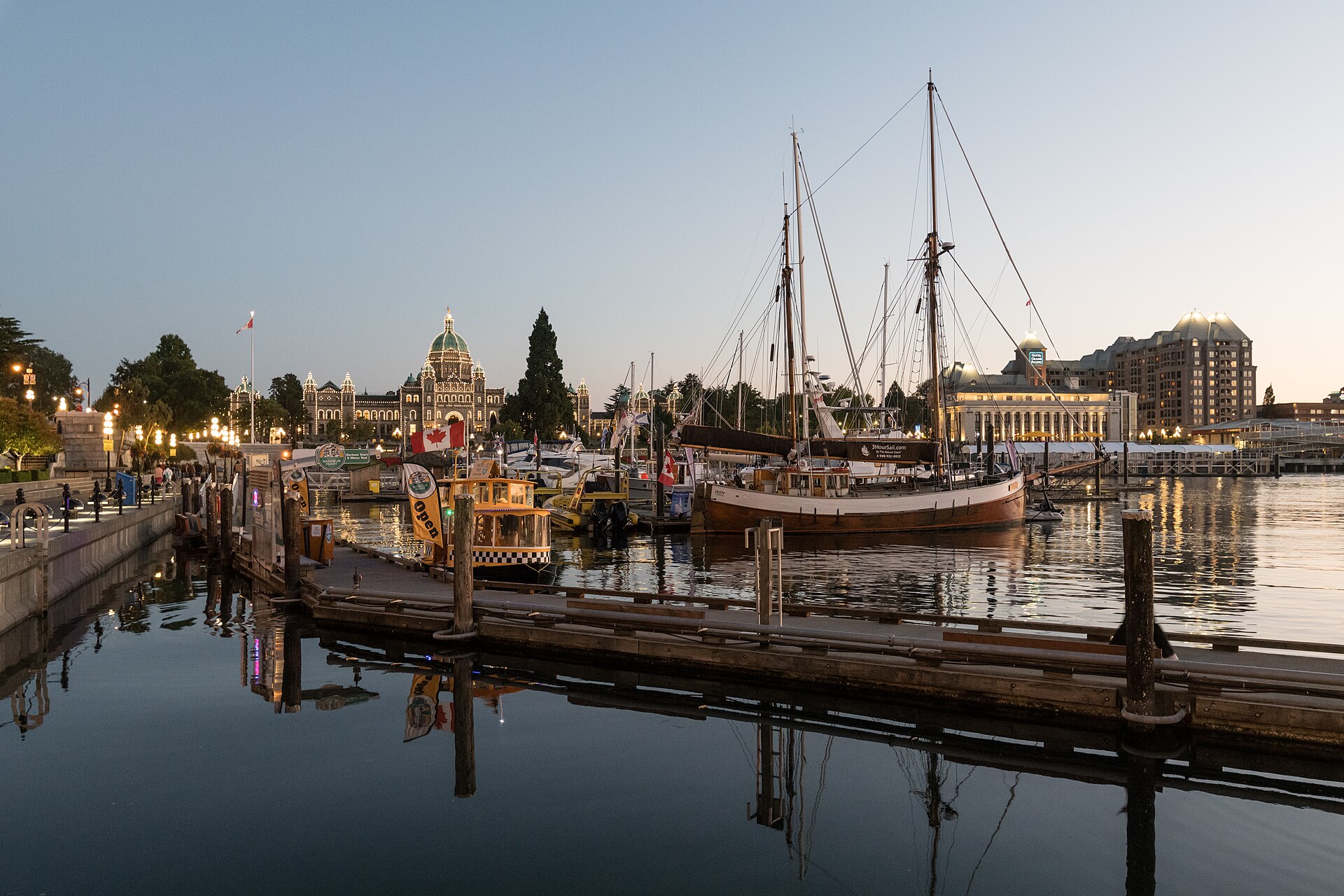


This choice comes down to what you are willing to pay for a mild climate and a walkable, publicly insured life. Victoria's benchmark home costs $1,311,000 CAD and carries a $5,712 monthly payment; Orlando's costs $375,175 USD and carries $1,931. The dollars differ, but no exchange rate closes a gap that wide. Victoria wins for people who earn Canadian incomes, want to walk or cycle to work, and would rather have Island Health than an insurance broker. Orlando wins for people who earn US dollars, have employer health cover, and want a detached house with a yard on a household income under $100,000. Nobody should pick Orlando for its transit or Victoria for its price.
Victoria prices are in CAD and Orlando prices are in USD. The tables leave them in their own currency and compare ratios and rates instead; a conversion would be stale by the time you read it.
| Measure | Victoria | Orlando | Advantage |
|---|---|---|---|
| City population | 91,867 (2021) | 333,888 (2025) | Not directly comparable |
| Metro population | 445,090 (2025) | 2,957,672 (2025) | Not directly comparable |
| Five-year growth Growth is pressure on rents and roads as much as it is opportunity, so it is reported without a winner. | 7.1% (2016-2021) | 8.3% (2020-2025) | Not directly comparable |
What a home costs in each
The figures the two cities' rent-versus-buy and mortgage calculators run on, read from the same tables.
| Measure | Victoria | Orlando | Advantage |
|---|---|---|---|
| Benchmark home price MLS® HPI or equivalent benchmark. Lower is treated as the advantage, which is the buyer's view rather than the owner's. | $1,311,000 (July 2026) | $375,175 (June 2026) | Not directly comparable |
| Detached house benchmark Victoria and Orlando publish a single house index rather than a composite, so the two rows repeat. | $1,311,000 | $375,175 | Not directly comparable |
| Apartment or condominium benchmark | $548,600 | Not published | Not directly comparable |
| Two-bedroom rent | $2,076/mo (average, October 2025) | $1,904/mo (median, June 2026) | Not directly comparable |
| One-bedroom rent | $1,594/mo | $1,637/mo | Not directly comparable |
| Two-bedroom rent against median income A year of two-bedroom rent as a share of the median household income below. A household paying the median rent out of the median income is a fiction, but it is the same fiction in both columns and it crosses currencies. | 29.3% of a year's income | 29.4% of a year's income | Victoria |
| Mortgage payment on the benchmark, 20% down 25 years in Victoria against 30 in Orlando, each compounding the way its own country's lenders do. The rates are not a spread you can shop: they are what each market charges. | $5,712/mo at 4.34% | $1,931/mo at 6.67% | Not directly comparable |
| Price to household income Benchmark price divided by the median household income below. A ratio is comparable across currencies; the dollars are not. | 15.4× | 4.8× | Orlando |
| Property tax on the benchmark home The effective rate on market value, which is what the two rates have in common and what the Advantage column is decided on; the bills are in each city's own dollars. | $7,415/yr (0.566%, 2026) | $6,043/yr (1.611%, 2025) | Victoria |
| Transfer tax on the benchmark home Compared as a share of the price. Where the seller pays it, it is a cost of leaving rather than arriving. | $24,220 (buyer pays) | $2,626 (seller pays) | Orlando |
| Rent control A cap protects a sitting tenant and does nothing for the next lease, so neither column is simply better. | 2.3% guideline (2026) | Forbidden by state law | Not directly comparable |
Victoria: The 2026 Class 1 residential total of $5.6559 per $1,000 of taxable value: municipal $3.7229 plus the CRD, local school, hospital district, BC Assessment, MFA and BC Transit levies, before the Home Owner Grant. Orlando: About 1.61% of what you pay for the house, which is lower than the 18.0878 mills Orlando is taxed at, and the difference is the homestead exemption rather than any assessment lag. Florida assesses at full market value and a purchase resets the assessment to the price, so there is no gap to correct for. What there is instead is an exemption: $25,000 of taxable value comes off for every taxing authority and a second slice comes off for all of them except the Orange County school district, which levies 6.4490 of the 18.0878. That second slice was $25,000 through the 2024 tax roll and has been adjusted for inflation every 1 January since, under the 2024 amendment to Article VII section 6 of the state constitution, so it is now somewhat more than $25,000. The figures here use the base amount, because the Department of Revenue sends the adjusted figure to the county property appraisers rather than publishing it. The difference is worth a few dollars a year on a bill, and the county property appraiser can tell you the amount in force. So a homesteaded buyer's first-year bill is the school millage on the price less $25,000 plus everything else on the price less $50,000, about $6,043 a year on the $375,175 typical home value here. The exemption is not automatic: you file for it with the county property appraiser by 1 March of the year after you buy, and until you do the rate is the full 1.81%. The seller's tax bill is not a guide to yours. Save Our Homes caps a homesteaded property's assessed value at 3% growth a year, and that cap resets to full market value the January after the sale, so a long-tenured owner can be taxed on a fraction of what you will be taxed on for the same house. Ask the property appraiser what the assessment would be at your purchase price, not what the current bill is.
How safe each city is, by the numbers it publishes
Police-reported figures for the most recent year each force or statistics agency has released. Rates describe a whole city or metro area, and the spread between neighbourhoods inside one city is usually wider than the gap between the two cities.
| Measure | Victoria | Orlando | Advantage |
|---|---|---|---|
| Crime Severity Index Statistics Canada's weighted index for the metropolitan area, where 100 is Canada in 2006. American cities have no equivalent series. | 74.6 (2025) | Not published | Not directly comparable |
| Violent crime per 100,000 Canada counts every violent Criminal Code incident; the FBI counts four offences. The Canadian figure is always the larger one for that reason alone. | 1,542 (2025) | 836 (2022) | Not directly comparable |
| Property crime per 100,000 | 3,096 (2025) | 4,036 (2022) | Not directly comparable |
| Homicides Counts, not rates, and a single year in a small city moves a long way on chance alone. What each figure covers is under the table. | 4 (2025) | 10 (2025) | Not directly comparable |
The Victoria CMA Crime Severity Index moved between 71 and 80 from 2021 to 2025 (72.7, 74.9, 80.2, 71.2, 74.6) with no sustained direction. The violent crime rate per 100,000 fell from 1,542 in 2021 to 1,439 in 2024 and then returned to 1,542 in 2025; the property crime rate fell from 3,319 in 2021 to 3,096 in 2025.
What the rates cover: Police-reported total violent Criminal Code violations, rate per 100,000, Victoria CMA, table 35-10-0177-01.
Homicides: Victoria CMA, 4 victims, 0.90 per 100,000 (table 35-10-0071-01). Counts were 5, 5, 2, 2 for 2021 through 2024.
Orlando PD reports overall crime down 18% in 2024 and another 19% in 2025, violent crime down 10% in 2024 and 9% in 2025, and shootings with victims down 41% from 2023 to 2025. Homicides fell from 31 in 2023 to 10 in 2025. The FBI's public feed has no usable Orlando data after 2022, so these are the department's own figures.
What the rates cover: FBI Crime Data Explorer, Orlando Police Department (ORI FL0480400), 2022: 2,597 violent offenses, 835.8 per 100k. 2022 is the last year with twelve complete months in the FBI feed; 2023 through 2025 show zeros for this agency, so no FBI rate exists for those years. Orlando PD's own count of violent crime incidents (a broader in-house definition) was 6,754 in 2023 and 5,928 in 2025, which would be about 1,775 per 100k on the 2025 population.
Homicides: Orlando Police Department: 10 homicides in 2025, the lowest since 1971, down from 23 in 2024 and 31 in 2023 (OPD's 2023 figure was reported as 38 in a January 2025 release and 31 in the February 2026 release). About 3.0 per 100k on the 2025 city population. FBI CDE 2022: 32 homicides, 10.3 per 100k.
Winters, summers and what the weather can do to a house
| Measure | Victoria | Orlando | Advantage |
|---|---|---|---|
| January mean | 4.6 °C | 15.9 °C | Not directly comparable |
| July mean | 17.2 °C | 28.1 °C | Not directly comparable |
| Precipitation a year | 901 mm | 1,307 mm | Not directly comparable |
| Snowfall a year | 39 cm | 0 cm | Not directly comparable |
| Sunshine a year | 2,109 hours | Not published | Not directly comparable |
Environment and Climate Change Canada 1991-2020 normals at Victoria Int'l A (climate ID 1018620, at Sidney, 25 km north of downtown) for temperature, precipitation and snowfall. Sunshine is from the 1981-2010 normals at the same station; the 1991-2020 set does not publish a sunshine normal. Downtown is drier: Victoria Gonzales 1991-2020 normals show 5.8 C in January, 16.3 C in July and 110.6 mm in the wettest month against 155.3 mm at the airport.
Hazards: The region sits on the Cascadia subduction zone and carries Canada's highest earthquake risk; summers bring wildfire smoke from the BC interior and drought-driven watering restrictions, and winters bring atmospheric-river rain and occasional short snow events that stop traffic.
NOAA 1991-2020 normals at Orlando International Airport (USW00012815): January mean 60.6F, July mean 82.6F, annual precipitation 51.45 in, annual snowfall 0.0 in, annual mean 73.0F. June through September each average 6.4 to 8.1 in of rain. Sunshine hours are not part of the NOAA normals product and were not verified.
Hazards: Hurricanes are the main hazard: Charley (2004), Irma (2017), Ian (2022, 14 in of rain and 74 mph gusts at MCO) and Milton (2024, over 15 in of rain in parts of Central Florida plus a record one-day tornado outbreak) all damaged the area. The city sits about 100 ft above sea level and 42 mi inland, so storm surge is not a concern but inland flooding, wind damage and long power outages are. Summer heat and daily thunderstorms with lightning are routine.
What people earn and what the government takes
| Measure | Victoria | Orlando | Advantage |
|---|---|---|---|
| Median household income | $85,000 CAD (2020) | $77,597 USD (2024) | Not directly comparable |
| Unemployment rate Statistics Canada and the Bureau of Labor Statistics define unemployment slightly differently; the Canadian measure runs about a point higher on the same labour market. | 5.0% (July 2026) | 4.6% (June 2026) | Not directly comparable |
| Sales tax | 12% | 6.5% | Orlando |
| Top marginal income tax Federal plus provincial or state. The American figure leaves out payroll taxes and the cost of health insurance, both of which a Canadian household covers through the tax it pays here. | 53.5% | 37% | Orlando |
| Income tax on $100,000, single filer Computed from each jurisdiction's brackets at a single filer's $100,000 and rounded to the dollar, so a gap of a dollar is rounding rather than tax. Two cities in one province or state are shown as Even, because there the two cells describe the same tax and whatever separates them is method. | $20,503 CAD | $13,449 USD | Not directly comparable |
In the 2021 Census the region's largest employers by sector were health care (29,750 workers), public administration (27,780), retail (22,540) and professional, scientific and technical services (19,655), per the South Island Prosperity Partnership's 2025 socio-economic profile. Victoria's unemployment rate is usually among the lowest of Canadian CMAs; the same report notes shortages in health care and construction and an ageing population.
Main sectors: Health care and social assistance, Public administration (provincial capital, CFB Esquimalt), Retail trade, Professional, scientific and technical services including software, Tourism, accommodation and food services.
BC has no payroll tax on employees beyond CPP and EI, and MSP health premiums were eliminated in 2020. Property transfer tax applies on purchase (1% to 3%, plus 20% foreign-buyer tax in the Victoria CMA) and a speculation and vacancy tax applies to homes left empty.
Leisure and hospitality employed 305,500 of 1,506,600 nonfarm jobs in the MSA in June 2026 (BLS CES, not seasonally adjusted, preliminary), about 20%, roughly double the national share, and those jobs pay below the private-sector average, which is why household income trails the US median despite fast job growth. Disney is the largest employer at about 77,000 in the region; AdventHealth employs about 37,700 and Lockheed Martin more than 14,000.
Main sectors: Tourism and hospitality (Disney, Universal, convention centre), Health care (AdventHealth, Orlando Health), Aerospace, defence and simulation (Lockheed Martin, Central Florida Research Park), Construction and real estate, Professional and business services.
No state or city income tax. Property tax runs around 1% of assessed value with a homestead exemption and the Save Our Homes 3% cap for owner-occupiers; not verified here.
Whether you need a car
| Measure | Victoria | Orlando | Advantage |
|---|---|---|---|
| System | Victoria Regional Transit System (BC Transit buses and handyDART); no rail. BC Ferries and Harbour Air, Helijet and the Coho and Clipper ferries connect to Vancouver and Seattle. | LYNX (bus, Orange, Osceola and Seminole counties), SunRail (commuter rail, 16 stations DeLand to Poinciana), Brightline (intercity rail from MCO to South Florida) | Not directly comparable |
| Commute by public transit | 7.7% (2021) | 1.5% (2024) | Victoria |
| Walk or cycle to work | 15.3% (2021) | 1.7% (2024) | Victoria |
| Airport | Victoria International Airport (YYJ), at Sidney, 1,986,057 passengers in 2025, up 6.1% on 2024 and the busiest year since 2018 (Victoria Airport Authority 2025 Annual Report). Domestic-heavy; most international trips connect through Vancouver or Seattle. | Orlando International Airport (MCO), 57,675,573 passengers in 2025, up 0.8% on 2024, seventh busiest in the US (GOAA press release, July 28, 2026). | Not directly comparable |
No verified systemwide annual total. BC Transit's 2025 year-in-review (Dec 19, 2025) reports the busiest route, the 95 Blink RapidBus, at more than 11,000 daily boardings; the Victoria Regional Transit Commission's Nov 2025 service plan reports 58.53 boardings per service hour by end of 2024, up 17.6% year over year and 21.2% above pre-COVID. Wikipedia cites APTA's Q4 2025 report at 26.56 million boardings for 2025 but the APTA PDF could not be fetched.
LYNX carried 21,476,203 passenger trips in FY2025 (October 2024 to September 2025), more than 67,000 per weekday, on 62 routes (LYNX Facts at a Glance). SunRail passed 1.2 million riders in calendar 2024, up 12% on 2023 (SunRail press release, January 2025); APTA puts 2025 at about 1.32 million. SunRail runs weekdays only.
Health care, schools and what each city is like
Health care
Care is paid for by BC's Medical Services Plan, with no premiums since 2020, and delivered by Island Health; prescription drugs outside hospital are covered through income-tested Fair PharmaCare, so many households carry employer extended-health plans for drugs, dental and physio. Greater Victoria has three hospitals, Royal Jubilee (the cardiac and cancer referral site for Vancouver Island), Victoria General (trauma and pediatrics) and Saanich Peninsula; the region has a well-known shortage of family doctors, and BC runs a central waitlist (Health Connect Registry) to attach new patients to primary care.
Education
The University of Victoria (about 22,000 students) is the main research university, with Camosun College for trades and transfer programs and Royal Roads University in Colwood for working adults; the University of Victoria is regularly placed in the top three Canadian comprehensive universities by Maclean's. Public K-12 is run by the Greater Victoria School District (SD61) in the core, with Sooke (SD62) in the fast-growing West Shore and Saanich (SD63) on the peninsula; there are no charter schools in BC, and French immersion seats in SD61 are allocated by lottery.
Living there
Victoria is a government and university town at the south tip of Vancouver Island with the mildest winters in Canada, a walkable and bikeable core, and a large retiree population; the trade-off is island logistics, with every mainland trip by 95-minute ferry or a short flight, and a housing market priced close to Vancouver's. Most growth since 2016 has gone to Langford and the West Shore, 15 to 25 km out along a congested Highway 1, while the City of Victoria itself is dense apartment and heritage-house neighbourhoods where a third of commuters walk or cycle. Downtown has visible street homelessness and open drug use concentrated around Pandora Avenue, which shows up in the higher-than-national violent crime rate for a metro this size.
Health care
Care is paid for through employer or marketplace insurance, Medicare and Medicaid; Florida did not expand Medicaid under the ACA, so a larger share of working adults is uninsured than in most states, and hospitality jobs often come with thin coverage. Two large non-profit systems dominate: AdventHealth Orlando (one of the biggest hospitals in the country) and Orlando Health with Orlando Regional Medical Center, the region's Level I trauma centre, plus Nemours Children's Hospital at Lake Nona and the UCF Lake Nona Hospital.
Education
The University of Central Florida enrols about 70,000 students, among the largest campuses in the US, and anchors the Central Florida Research Park; Rollins College in Winter Park and Valencia College (a two-year college with a national Aspen Prize) are the other main institutions. Orange County Public Schools is the eighth largest district in the US with roughly 200,000 students, and Florida's universal school-choice vouchers, charter schools and magnet programmes mean many families do not attend their zoned school.
Living there
Orlando is a sprawling, car-first region of master-planned subdivisions, toll roads and strip centres, with a small walkable core around Lake Eola, Thornton Park, Mills 50 and College Park, and the theme parks 15 miles southwest in a separate world of their own. Summers are long, humid and stormy, winters mild, and the population skews young and Latino, with the largest Puerto Rican community in Florida. Housing and insurance costs have risen faster than the tourism-weighted wages, and hurricane season shapes the calendar every year.
Where each city wins, and where it loses
Victoria's composite benchmark was $1,311,000 CAD in July 2026, and with 20% down at 4.34% the mortgage payment is $5,712 a month before property tax of $7,415 a year and insurance of about $185 a month. The down payment alone is $262,200, and the buyer pays $24,220 in property transfer tax on closing. Orlando's typical home was $375,175 USD in June 2026. At the higher American rate of 6.67% the payment is $1,931 a month, the down payment is $75,035, and the seller pays the transfer tax. Property tax is $6,043 with the homestead exemption filed and insurance about $310 a month, closer to Victoria's carrying costs than the prices suggest. Renting narrows the gap further: a two-bedroom averaged $2,076 CAD in Victoria in October 2025 against a $1,904 USD median in Orlando in June 2026. BC caps increases on existing tenancies at 2.3% for 2026; Florida forbids any cap.
The crime figures look lopsided and mostly are not. Victoria's CMA had a Crime Severity Index of 74.57 in 2025, with 1,541.92 violent and 3,095.97 property violations per 100,000. Orlando's last complete year in the FBI feed is 2022, when the city recorded 835.8 violent and 4,035.6 property offences per 100,000. Those violent rates cannot be set side by side. Canada counts uttering threats, common assault and criminal harassment as violent crime; the FBI counts only murder, rape, robbery and aggravated assault. Orlando PD's own broader tally of 5,928 violent incidents in 2025 works out to about 1,775 per 100,000, which is nearer the Canadian method and higher than Victoria. Homicide is the clean comparison: Victoria had 4 in 2025, or 0.90 per 100,000, and Orlando had 10, its lowest since 1971, about 3.0 per 100,000, down from 31 in 2023. Victoria's trouble is concentrated around Pandora Avenue downtown; Orlando's decline is real but rests on the department's own releases.
Victoria has the mildest winters in Canada and they are still winters: a January mean of 4.6 C at the airport, 17.2 C in July, 901.2 mm of rain, 38.6 cm of snow and about 2,109 hours of sun. Downtown is warmer and drier than the airport station. Orlando's January averages 15.9 C and July 28.1 C, with 1,307 mm of rain falling mostly in summer thunderstorms and no snow at all. What each does to a house is the real difference. Victoria sits on the Cascadia subduction zone, gets wildfire smoke from the Interior in late summer and the odd snow day that stops traffic, but its home insurance is about $185 a month. Orlando is 42 miles inland and 100 feet up, so storm surge is not the worry, but Charley, Irma, Ian and Milton all brought wind damage, inland flooding and long outages, and insurance runs about $310 a month on a house a quarter the price.
Median household income was $85,000 CAD in the Victoria CMA in 2020 and $77,597 USD in the City of Orlando in 2024 ($81,044 across the metro). Victoria's unemployment rate was 5.0% in July 2026, Orlando's 4.6% in June. The jobs differ in kind. Victoria's largest sectors are health care, provincial government and CFB Esquimalt, retail and a software cluster. Orlando's leisure and hospitality sector employed 305,500 of 1,506,600 metro jobs in June 2026, about one in five, and those jobs pay below the private average, which is why incomes trail the US median despite fast growth. On $100,000 of income a single filer pays about $20,503 CAD in Victoria and $13,449 USD federal tax in Orlando, with no state income tax. Sales tax is 12% against 6.5%. The Canadian difference buys the Medical Services Plan with no premiums; the Florida household buys its own insurance, and Florida did not expand Medicaid.
Victoria is the one place in this comparison where a household can sensibly own one car or none. In the 2021 Census 15.3% of CMA commuters walked or cycled and 7.7% took transit; inside the City of Victoria those shares were 32.1% and 11.1%, the highest active-commuting rate of any Canadian city. There is no rail, only BC Transit buses led by the 95 Blink RapidBus at more than 11,000 boardings a day. Orlando's figures are 1.7% walking and cycling and 1.5% transit in 2024. LYNX carried 21.5 million trips in its 2025 fiscal year and SunRail 1.2 million in 2024, but SunRail runs weekdays only and the region is built around toll roads and subdivisions. A car is mandatory in Orlando. The airports point the other way: MCO handled 57.7 million passengers in 2025 and is the seventh busiest in the US; YYJ handled just under 2 million and most international trips connect through Vancouver or Seattle.
Health care in Victoria is free at the point of use and hard to get into. Greater Victoria has three hospitals, with Royal Jubilee as the cardiac and cancer referral site for the Island, but the family doctor shortage is well known and new arrivals join the provincial Health Connect Registry and wait. Orlando has AdventHealth, one of the largest hospitals in the country, Orlando Regional's Level I trauma centre and Nemours Children's, and access depends on what your employer plan covers. For schools, Greater Victoria's SD61 allocates French immersion by lottery and BC has no charters; Orange County Public Schools has about 200,000 students and Florida's universal vouchers, charters and magnets mean many families do not use their zoned school. The University of Victoria has about 22,000 students; UCF has about 70,000. Victoria is a government and university town with a large retiree population. Orlando is young, Latino, sprawling, and organised around the theme parks 15 miles southwest.
What people underestimate is how little the price gap says about the monthly cost of owning, and how much it says about wealth. Orlando's property tax and insurance come to about $9,763 USD a year on a $375,175 house, roughly 2.6% of its value every year. Victoria's come to about $9,635 CAD on a $1,311,000 house, about 0.7%. The Orlando owner pays less in total but builds equity in a cheaper asset exposed to hurricanes and an insurance market that reprices after each one. The Victoria benchmark is more than fifteen times the CMA's 2020 median household income; Orlando's is under five times the city's. That is the difference between a market where a two-income professional household can buy and one where most buyers arrive with equity from somewhere else. Victoria is also an island. Every mainland trip is a 95-minute ferry or a flight, which shapes family visits and weekend plans more than newcomers expect.
Better here
- Victoria recorded 4 homicides in 2025, a rate of 0.90 per 100,000, against Orlando's 10 and roughly 3.0 per 100,000.
- Within the City of Victoria 32.1% of commuters walked or cycled to work in 2021, the highest share of any Canadian city; Orlando's figure is 1.7%.
- January averages 4.6 C and July 17.2 C, with no hurricanes, no storm surge and home insurance of about $185 CAD a month.
- Health care is covered by the Medical Services Plan with no premiums, and BC caps rent increases on existing tenancies at 2.3% for 2026.
- Unemployment was 5.0% in July 2026 and the economy rests on health care, the provincial government and a software cluster rather than tourism wages.
- A Victoria two-bedroom averaged $2,076 CAD in October 2025, only modestly above Orlando's $1,904 USD median, so renting does not carry the same gap as buying.
Worse here
- The benchmark home is $1,311,000 CAD with a $5,712 monthly payment and a $262,200 down payment, roughly three times Orlando's $1,931 and $75,035.
- Buyers pay $24,220 in property transfer tax on the benchmark; in Orlando the seller pays the $2,626.
- Income tax on $100,000 is about $20,503 CAD against $13,449 USD federal in Orlando, and sales tax is 12% against 6.5%.
- The region has a well-known family doctor shortage and new residents wait on the provincial Health Connect Registry.
- The violent crime rate of 1,541.92 per 100,000 is high for a Canadian metro of 445,000, with visible street disorder around Pandora Avenue.
- Every mainland trip means a 95-minute ferry or a flight, and YYJ's 2 million passengers a year offer few direct international routes.
Choose Victoria if
- you earn Canadian dollars and would rather spend on housing than on health insurance and hurricane cover
- you want to walk or cycle to work and keep a single car, or none, in a compact capital city
- you are retiring or working in government, health care or software and value mild winters over hot summers
- you expect to rent for years and want a legal cap on annual increases
The Victoria guide · Neighbourhoods · Victoria rent vs buy · Victoria mortgage calculator
Better here
- A typical home cost $375,175 USD in June 2026 with a $1,931 monthly payment, under a third of Victoria's benchmark payment.
- Florida has no state income tax, so a $100,000 earner pays about $13,449 in federal tax and nothing to the state; sales tax is 6.5% in Orange County.
- Unemployment was 4.6% in June 2026 and the metro added jobs quickly across tourism, health care and aerospace, with Disney employing about 77,000.
- January averages 15.9 C and there is no snow, ever.
- Orlando International handled 57.7 million passengers in 2025, seventh busiest in the US, with direct flights that Victoria cannot match.
- Homicides fell from 31 in 2023 to 10 in 2025, the lowest count since 1971.
Worse here
- Homeowners pay about $310 USD a month for insurance and $6,043 in property tax on a $375,175 house, about 2.6% of its value every year.
- Four hurricanes since 2004 (Charley, Irma, Ian, Milton) caused wind damage, inland flooding and long power outages.
- Only 1.5% of city workers took transit and 1.7% walked or cycled in 2024; a car is not optional.
- One in five metro jobs is in leisure and hospitality, which pays below the private-sector average and keeps median income below the US figure.
- Health care depends on employer or marketplace insurance, Florida did not expand Medicaid, and hospitality jobs often carry thin cover.
- Florida forbids any form of rent control, so a renewal can carry any increase the landlord chooses.
Choose Orlando if
- you earn US dollars and want a detached house with a yard on a household income under $100,000
- you have solid employer health insurance and can budget for hurricane season and rising premiums
- you work in hospitality, health care, simulation or aerospace and want a fast-growing job market
- you would rather drive everywhere in warmth than walk everywhere in rain
The Orlando guide · Neighborhoods · Orlando rent vs buy · Orlando mortgage calculator
Victoria or Orlando, in short
Is Victoria or Orlando cheaper to live in?
Orlando, by a wide margin on housing. The benchmark home is $375,175 USD with a $1,931 monthly payment, against $1,311,000 CAD and $5,712 in Victoria; the currencies differ but not by enough to matter. Orlando's property tax ($6,043) and insurance (about $310 a month) are heavier relative to the price, and its two-bedroom median of $1,904 USD is close to Victoria's $2,076 CAD average, so renters see a smaller gap. Income tax on $100,000 is about $13,449 USD in Orlando and $20,503 CAD in Victoria, though the Canadian figure includes public health coverage.
Is Victoria or Orlando safer?
On homicide, Victoria: 4 victims in 2025, or 0.90 per 100,000, against Orlando's 10, about 3.0 per 100,000. Violent crime rates cannot be compared directly because Canada counts threats and common assault as violent offences and the FBI does not; Victoria's 1,541.92 per 100,000 in 2025 sits against an Orlando FBI figure of 835.8 from 2022, the last complete year reported. Orlando's police report crime down 18% in 2024 and 19% in 2025. Victoria's Crime Severity Index has moved between 71 and 80 since 2021 with no clear direction.
Which has the better climate, Victoria or Orlando?
It depends on which season you dread. Victoria averages 4.6 C in January and 17.2 C in July, with 901 mm of rain, 38.6 cm of snow and about 2,109 sunshine hours; summers are dry and sometimes smoky. Orlando averages 15.9 C in January and 28.1 C in July, with 1,307 mm of rain concentrated in summer thunderstorms and no snow. Victoria's hazards are earthquake risk, wildfire smoke and atmospheric rivers. Orlando's are hurricanes, with four damaging storms since 2004, and the insurance bills that follow them.
How does living on Vancouver Island compare with Orlando's sprawl day to day?
Victoria's core is compact enough that a third of city commuters walk or cycle, but the region is an island: the mainland is a 95-minute ferry or a short flight away, and growth has pushed out to Langford along a congested Highway 1. Orlando has the opposite problem. Nothing is far by air, with 57.7 million passengers through MCO in 2025, but almost everything is far by road, and only 1.5% of workers use transit. In Victoria you plan around ferry sailings; in Orlando you plan around toll roads and afternoon storms.
Where the figures come from
Housing figures are the ones behind each city's calculators, dated on those pages. The rest are listed here with the date they were retrieved. See the methodology for how facts, estimates and opinion are kept apart.
- Population and dwelling counts: Canada, provinces and territories, census divisions and census subdivisions (table 98-10-0002-01) · Statistics Canada · retrieved Supports: City population, Five-year growth
- Population and dwelling counts: Census metropolitan areas, census agglomerations and census subdivisions (table 98-10-0003-01) · Statistics Canada · retrieved Supports: population.metro (2021 census count), population.growthPct5y (CMA comparison)
- Population estimates, July 1, by census metropolitan area and census agglomeration (table 17-10-0148-01) · Statistics Canada · retrieved Supports: Metro population
- Crime severity index and weighted clearance rates, police services in census metropolitan areas (table 35-10-0026-01) · Statistics Canada · retrieved Supports: Crime Severity Index, Crime trend
- Incident-based crime statistics, by detailed violations, police services in census metropolitan areas (table 35-10-0177-01) · Statistics Canada · retrieved Supports: Violent crime rate, Property crime rate, Crime trend
- Number and rate of homicide victims, by census metropolitan areas (table 35-10-0071-01) · Statistics Canada · retrieved Supports: Homicides
- Canadian Climate Normals 1991-2020, Victoria Int'l A (climate ID 1018620) · Environment and Climate Change Canada · retrieved Supports: January mean, July mean, Annual precipitation, Annual snowfall
- Canadian Climate Normals 1991-2020, Victoria Gonzales (climate ID 1018610) · Environment and Climate Change Canada · retrieved Supports: climate.note (downtown comparison)
- Canadian Climate Normals 1981-2010, Victoria Int'l A · Environment and Climate Change Canada · retrieved Supports: Sunshine hours
- Household income statistics by dwelling and household characteristics: census metropolitan areas (table 98-10-0061-01) · Statistics Canada · retrieved Supports: Median household income
- Household income statistics by household type: census subdivisions (table 98-10-0057-01) · Statistics Canada · retrieved Supports: economy.medianHouseholdIncome (city figure in note)
- Labour force characteristics, three-month moving average, by census metropolitan area, seasonally adjusted (table 14-10-0459-01) · Statistics Canada · retrieved Supports: Unemployment rate
- Greater Victoria Metropolitan Region Socio-Economic Profile 2025 · South Island Prosperity Partnership · retrieved Supports: Main sectors, Labour market
- Personal income tax rates · Province of British Columbia · retrieved Supports: Top marginal income tax
- Provincial sales tax (PST) · Province of British Columbia · retrieved Supports: Sales tax
- 2025 personal tax rates, British Columbia (combined federal and provincial) · EY Canada · retrieved Supports: Income tax on $100,000, Top marginal income tax
- Main mode of commuting by commuting duration, time leaving for work, age and gender: census metropolitan areas (table 98-10-0457-01) · Statistics Canada · retrieved Supports: Transit commute share, Walk and cycle commute share
- Main mode of commuting by commuting duration, time leaving for work, age and gender: census subdivisions (table 98-10-0458-01) · Statistics Canada · retrieved Supports: transit.transitModeSharePct (city), transit.walkBikeModeSharePct (city)
- Year in review: a successful 2025 for BC Transit · BC Transit · retrieved Supports: Transit ridership
- 2026/27 Annual Service Plan, Victoria Regional Transit Commission report #14 · BC Transit · retrieved Supports: Transit ridership
- 2025 Annual Report · Victoria Airport Authority · retrieved Supports: Airport passengers
- The sky's the limit: Victoria airport has high hopes for year ahead · Victoria News · retrieved Supports: transit.airport (exact passenger count 1,986,057)
- Hospitals and health centre locations · Island Health · retrieved Supports: Health care
- Annual Estimates of the Resident Population for Incorporated Places in Florida: April 1, 2020 to July 1, 2025 (SUB-EST2025) · US Census Bureau · retrieved Supports: City population, Five-year growth, crime.homicides rate
- Annual Resident Population Estimates for Metropolitan and Micropolitan Statistical Areas: April 1, 2020 to July 1, 2025 (CBSA-EST2025-ALLDATA) · US Census Bureau · retrieved Supports: Metro population, Five-year growth
- Crime Data Explorer, Orlando Police Department summarized offenses (violent crime, property crime, homicide), 2021-2025 · FBI · retrieved Supports: Violent crime rate, Property crime rate, crime.homicides 2022
- Proactive policing in Orlando yields significant crime reductions · WFTV · retrieved Supports: Homicides, Crime trend, crime notes
- Police say crimes, including homicides, declining in Orlando · Spectrum News 13 · retrieved Supports: Homicides, Crime trend
- Orlando Police: 2025 violent crime down 9 percent in the City Beautiful · Headline Surfer · retrieved Supports: Crime trend, crime.homicides 2024
- Orlando Police Department releases 2024 crime statistics · WFTV via Yahoo News · retrieved Supports: Crime trend
- U.S. Climate Normals 1991-2020, station USW00012815 (Orlando International Airport), monthly and annual · NOAA NCEI · retrieved Supports: January mean, July mean, Annual precipitation, Annual snowfall
- Orlando, Florida (climate and hurricane history) · Wikipedia · retrieved Supports: Climate hazards, character
- Hurricane Milton · Wikipedia · retrieved Supports: Climate hazards
- ACS 2024 1-year, tables B19013 and B08301, Orlando city and Orlando-Kissimmee-Sanford MSA · US Census Bureau via Census Reporter API · retrieved Supports: Median household income, Transit commute share, Walk and cycle commute share
- Local Area Unemployment Statistics, series LAUMT123674000000003 (Orlando-Kissimmee-Sanford MSA unemployment rate) · US Bureau of Labor Statistics · retrieved Supports: Unemployment rate
- Current Employment Statistics, series SMU12367400000000001 and SMU12367407000000001 (Orlando MSA total nonfarm and leisure and hospitality) · US Bureau of Labor Statistics · retrieved Supports: Labour market
- Top employers and talent report search results (Disney, AdventHealth, Lockheed Martin employment) · Orlando Economic Partnership · retrieved Supports: Main sectors, Labour market
- Orange County, Florida sales tax rate 2026 · Avalara · retrieved Supports: Sales tax
- 2025 Tax Brackets · Tax Foundation · retrieved Supports: Top marginal income tax, Income tax on $100,000
- Facts at a Glance · LYNX (Central Florida Regional Transportation Authority) · retrieved Supports: Transit system, Transit ridership
- SunRail Ridership Grows to 1.2 Million Riders in 2024 · SunRail · retrieved Supports: Transit ridership
- Orlando International Moves Up In 2025 National Rankings for Busiest Airport · Greater Orlando Aviation Authority · retrieved Supports: Airport passengers
- July 2026 statistics: Victoria Real Estate Board monthly news release · Victoria Real Estate Board · retrieved Supports: Victoria Core single-family benchmark of $1,311,000, down 2.8% year over year, Victoria Core condominium benchmark of $548,600, down 2.2% year over year, Victoria Core townhouse benchmark of $857,300, 673 sales and 3,847 active listings board-wide in July 2026
- Rental Market Survey: Victoria (CY), average rent by bedroom type, October 2025 · Canada Mortgage and Housing Corporation · retrieved Supports: One-bedroom average rent of $1,594, Two-bedroom average rent of $2,076, Three-bedroom-plus average rent of $3,035, Victoria CMA vacancy rate of 3.3%
- 2026 Property Tax Mill Rate · City of Victoria · retrieved Supports: 2026 Class 1 residential total rate of $5.6559 per $1,000 of taxable value, Municipal residential rate of $3.7229, of which $1.3782 is police, Additional school tax of 0.2000 above $3 million and 0.4000 above $4 million
- Home owner grant · Province of British Columbia · retrieved Supports: The grant of up to $770 on an eligible principal residence outside the northern and rural area
- Premium information for homeowner and small rental loans · Canada Mortgage and Housing Corporation · retrieved Supports: Mortgage default insurance premium rates by loan-to-value
- Regulations amending the Insurable Housing Loan Regulations and the Eligible Mortgage Loan Regulations (SOR/2025-55) · Canada Gazette, Part II · retrieved Supports: The $1.5 million insured price cap, 30-year amortization for first-time buyers and new builds
- Minimum qualifying rate for uninsured mortgages · Office of the Superintendent of Financial Institutions · retrieved Supports: The qualifying rate of the contract rate plus two points, or 5.25%
- Interest rates charged for new and existing lending by chartered banks · Bank of Canada · retrieved Supports: The default mortgage rate of 4.34%, uninsured five-year-plus fixed, funds advanced May 2026
- Property transfer tax · Province of British Columbia · retrieved Supports: Transfer tax brackets, First-time buyer and new build exemptions
- Rent increases · Province of British Columbia · retrieved Supports: 2026 rent increase guideline of 2.3%
- Zillow Home Value Index (ZHVI), all homes, mid-tier, smoothed and seasonally adjusted: city file, June 2026 · Zillow Research · retrieved Supports: A typical home value for the 35th to 65th percentile of each municipality's market, computed on one method across all twenty-four, Year-over-year change to June 2026, which is negative in twenty-two of the twenty-four, The same series and month the Charlotte metro pages use, so the two American metros can be read against each other
- 2025 Final Millage Rates · Orange County Property Appraiser · retrieved Supports: Orange County general at 4.4347 mills, the library district at 0.3748 and the St Johns River Water Management District at 0.1793, School state and local levies totalling 6.449 mills, Municipal rates from Windermere's 3.7425 to Eatonville's 7.2938, A published total against every mill code, including Winter Park's 15.3615 on codes 2, 4 and 6, Maitland's 16.3055 on code 6, and Windermere's 15.2311 on code 35 and 15.4839 on code 75, A blank library column on every Winter Park and Maitland code, which is what puts both municipalities outside the district
- Special taxing district information: the Orange County Library District's boundary · Orange County Library System · retrieved Supports: The district's boundary is Orange County exclusive of Winter Park and Maitland, each of which operates its own library, Laws of Florida chapter 99-486 as the enabling act behind it
- Final 2025 Millage Rates, fiscal year 2025-26 · Seminole County Property Appraiser · retrieved Supports: Total millage by taxing authority for every Seminole municipality, from Lake Mary's 14.3929 to Casselberry's 18.1808, School required local and discretionary levies totalling 5.2490 mills, The county fire and road MSTUs, which apply in the unincorporated area and in some cities but not others
- 2025 Final Millage Rates · Osceola County Property Appraiser · retrieved Supports: Kissimmee at 17.4114 mills and Saint Cloud at 17.8989, School levies totalling 5.3060 mills across required local, discretionary and capital, Dozens of separate municipal service taxing units in the unincorporated county, from 0.13 to 12.42 mills, which is why an unincorporated Osceola address cannot be given one rate
- 2025 Final Millage Rates by district, and the 2025 Final Millage Rates and Values Comparison Sheet · Lake County Property Appraiser · retrieved Supports: Total millage for every Lake municipality, from Leesburg's 15.9477 to Eustis's 19.8623, Leesburg's own adopted rate of 3.4752 mills, on the district sheet and again as the 2025 adopted rate on the comparison sheet, School board state and local levies totalling 6.0850 mills, The county fire, ambulance and stormwater MSTUs and which municipalities are subject to them, including that an incorporated city pays neither the fire nor the stormwater MSTU
- Annual estimates of the resident population for incorporated places, 2020 to 2024 · United States Census Bureau, Population Estimates Program · retrieved Supports: 2020 census counts and 2024 population estimates for each municipality, Leesburg's growth from 27,011 to 37,815, the fastest in the metro in percentage terms, Orlando at 334,854, which is twelve percent of its own metropolitan area
- Primary Mortgage Market Survey · Freddie Mac · retrieved Supports: 30-year fixed-rate mortgage averaging 6.67%
- Average cost of homeowners insurance in Florida, 2026 · MoneyGeek · retrieved Supports: A Florida average of about $3,815 a year against a national average of about $2,543, Orange County premiums in the $3,200 to $4,500 range, at the cheaper end of the state because the metro is inland
- Conforming loan limit values for 2026 · Federal Housing Finance Agency · retrieved Supports: A baseline one-unit conforming loan limit of $832,750 for 2026, which applies in every county in this metro
- Documentary stamp tax · Florida Department of Revenue · retrieved Supports: 70 cents per $100 on a deed, in every county except Miami-Dade, which charges 60 cents plus a 45-cent surtax, 35 cents per $100 on a promissory note or other written obligation to pay money
- Governmental leasehold intangible personal property tax and the non-recurring intangible tax on mortgages · Florida Department of Revenue · retrieved Supports: A non-recurring intangible tax of 2 mills: 0.2%, on the obligation secured by a mortgage on Florida real property
- Property tax exemptions and additional benefits · Florida Department of Revenue · retrieved Supports: A $25,000 homestead exemption applying to all taxing authorities and a second slice, $25,000 in the 2024 base year and adjusted for inflation each 1 January since, applying to all but the school district, The Save Our Homes assessment limitation of 3% or the change in CPI, whichever is lower, Portability of up to $500,000 of accrued Save Our Homes benefit to a new homestead, The 1 March filing deadline
- Chapter 2023-17, Laws of Florida: preemption of rent control · The Florida Senate · retrieved Supports: The repeal of the referendum exception that had allowed a local rent control ordinance in a declared housing emergency