Vancouver vs Kelowna: which should you move to?
Vancouver or Kelowna? Housing, rent, crime, climate, income, taxes and transit, side by side, from each city's own published figures. Written for someone deciding where to live, not for a ranking.
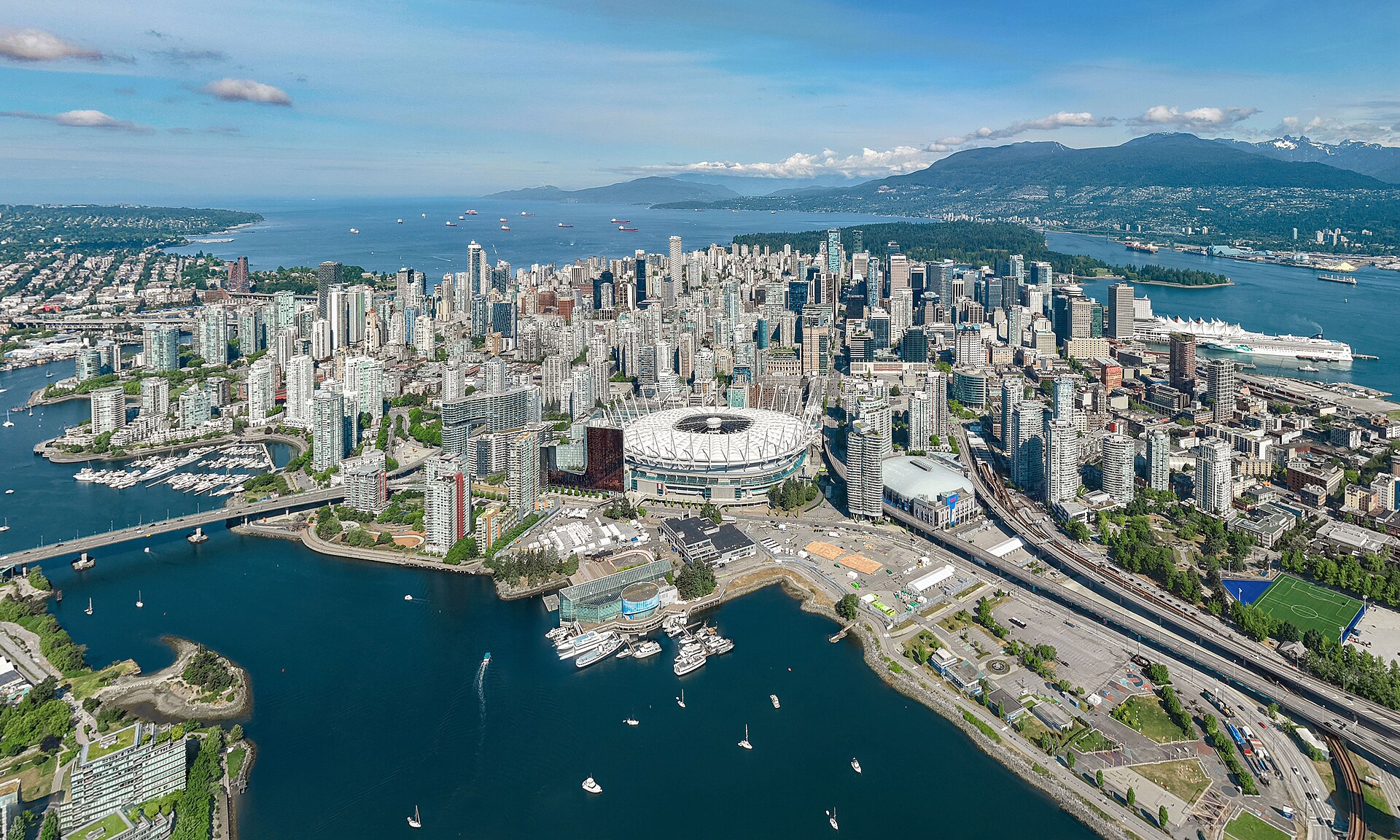
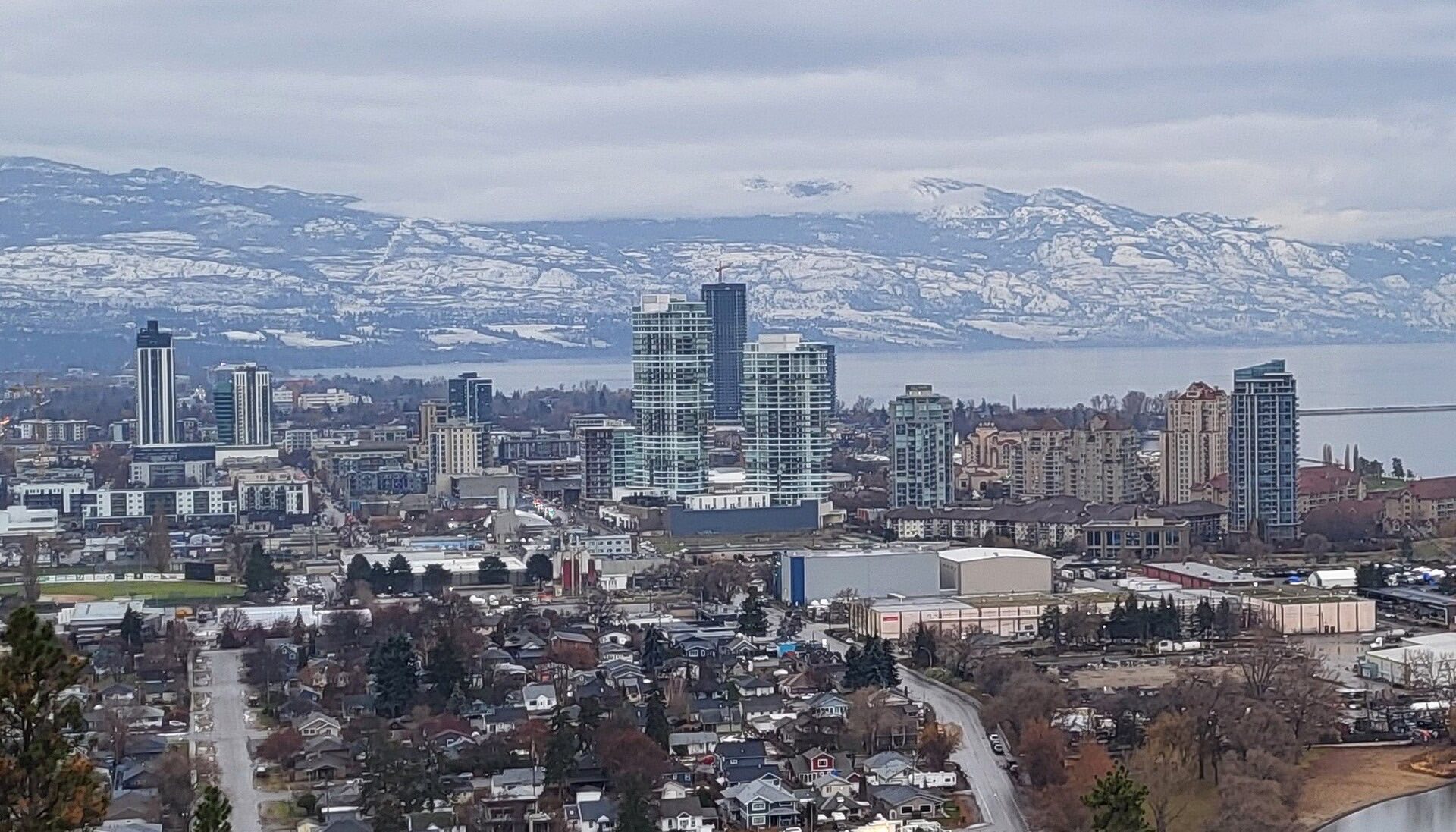

.jpg)
The trade is a detached house against a labour market. In July 2026 a house in Kelowna cost $1,072,400 against $1,822,900 in Vancouver, both CAD, and a two-bedroom rented for $2,132 a month against $2,638. Set against that, Kelowna's unemployment rate was 9.3 percent in July 2026, the highest of any Canadian metro for four months running, while Vancouver's was 6.0 percent, and Kelowna's Crime Severity Index of 103.68 sits well above Vancouver's 83.51 and the national 75.0. Kelowna is the better buy if your income does not depend on the local job market. Vancouver is the safer choice if it does.
| Measure | Vancouver | Kelowna | Advantage |
|---|---|---|---|
| City population | 662,248 (2021) | 166,278 (2026) | Not directly comparable |
| Metro population | 3,088,036 (2025) | 222,162 (2021) | Not directly comparable |
| Five-year growth Growth is pressure on rents and roads as much as it is opportunity, so it is reported without a winner. | 4.9% (2016-2021) | 13.5% (2016-2021) | Not directly comparable |
What a home costs in each
The figures the two cities' rent-versus-buy and mortgage calculators run on, read from the same tables.
| Measure | Vancouver | Kelowna | Advantage |
|---|---|---|---|
| Benchmark home price MLS® HPI or equivalent benchmark. Lower is treated as the advantage, which is the buyer's view rather than the owner's. | $1,088,800 (July 2026) | $1,072,400 (July 2026) | Kelowna |
| Detached house benchmark Kelowna publishes a single house index rather than a composite, so the two rows repeat. | $1,822,900 | $1,072,400 | Kelowna |
| Apartment or condominium benchmark | $688,000 | $490,700 | Kelowna |
| Two-bedroom rent | $2,638/mo (average, October 2025) | $2,132/mo (average, October 2025) | Kelowna |
| One-bedroom rent | $1,860/mo | $1,600/mo | Kelowna |
| Two-bedroom rent against median income A year of two-bedroom rent as a share of the median household income below. A household paying the median rent out of the median income is a fiction, but it is the same fiction in both columns and it crosses currencies. | 35.2% of a year's income | 30.1% of a year's income | Kelowna |
| Mortgage payment on the benchmark, 20% down 25-year amortization on Canadian semi-annual compounding, the convention in both. | $4,744/mo at 4.34% | $4,672/mo at 4.34% | Kelowna |
| Price to household income Benchmark price divided by the median household income below. A ratio is comparable across currencies; the dollars are not. | 12.1× | 12.6× | Vancouver |
| Property tax on the benchmark home The effective rate on market value, which is what the two rates have in common and what the Advantage column is decided on; the bills are in each city's own dollars. | $3,663/yr (0.336%, 2026) | $5,104/yr (0.476%, 2026) | Vancouver |
| Transfer tax on the benchmark home Compared as a share of the price. Where the seller pays it, it is a cost of leaving rather than arriving. | $19,776 (buyer pays) | $19,448 (buyer pays) | Kelowna |
| Rent control A cap protects a sitting tenant and does nothing for the next lease, so neither column is simply better. | 2.3% guideline (2026) | 2.3% guideline (2026) | Not directly comparable |
Vancouver: The 2026 total residential levy of $3.36394 per $1,000 of taxable value, including the provincial school, TransLink, BC Assessment, Metro Vancouver and MFA portions, before the Home Owner Grant. Kelowna: The 2026 Class 1 residential total of $4.7595 per $1,000 of taxable value: municipal $2.9615 plus the regional district, hospital, school, BC Assessment and MFA levies, before the Home Owner Grant, and before parcel taxes and utility user fees.
How safe each city is, by the numbers it publishes
Police-reported figures for the most recent year each force or statistics agency has released. Rates describe a whole city or metro area, and the spread between neighbourhoods inside one city is usually wider than the gap between the two cities.
| Measure | Vancouver | Kelowna | Advantage |
|---|---|---|---|
| Crime Severity Index Statistics Canada's weighted index for the metropolitan area, where 100 is Canada in 2006. American cities have no equivalent series. | 83.5 (2025) | 103.7 (2025) | Vancouver |
| Violent crime per 100,000 | 709 (2025) | 1,872 (2025) | Vancouver |
| Property crime per 100,000 | 4,067 (2025) | 4,749 (2025) | Vancouver |
| Homicides Counts, not rates, and a single year in a small city moves a long way on chance alone. What each figure covers is under the table. | 26 (2025) | 4 (2025) | Not directly comparable |
The Vancouver CMA Crime Severity Index fell from 92.33 in 2022 to 82.29 in 2024, then edged up 1.5% to 83.51 in 2025 while Canada's fell 5%. Within the city, VPD counts show violent crime down 15% from 6,288 incidents in 2023 to 5,343 in 2025 (the lowest rate in the five-year table) and property crime down 9% from its 2023 peak, while weapons offences and possession of stolen property rose sharply in 2025.
What the rates cover: City of Vancouver only (VPD), 5,343 violent Criminal Code incidents, 7.09 per 1,000 population, converted to per 100,000. Not a CMA figure.
Homicides: City of Vancouver (VPD culpable homicide). 11 of the 26 were victims of the April 2025 Lapu-Lapu Day festival vehicle attack; 2024 had 11 and 2023 had 15. About 3.5 per 100,000 on the city's 753,100 population estimate; the VPD table rounds the rate to 0.03 per 1,000.
The Kelowna CMA's Crime Severity Index has fallen four years running, from 126.03 in 2022 to 119.56 in 2023, 107.49 in 2024 and 103.68 in 2025, and its rank among CMAs dropped from second in 2022 to ninth in 2025. Most of the decline is in non-violent crime (128.98 in 2021 to 105.25 in 2025); the violent index has barely moved (104.48 to 101.94), and a May 2026 City of Kelowna citizen survey found one in four residents feel unsafe.
What the rates cover: Police-reported total violent Criminal Code violations per 100,000, Kelowna CMA, table 35-10-0177-01. 2024: 1,897.16; 2021: 1,947.46.
Homicides: Kelowna CMA homicide victims, table 35-10-0071-01, rate 1.58 per 100,000. 2024: 2 (0.80); 2023: 5 (2.04); 2022: 8 (3.36).
Winters, summers and what the weather can do to a house
| Measure | Vancouver | Kelowna | Advantage |
|---|---|---|---|
| January mean | 4.1 °C | -2.6 °C | Not directly comparable |
| July mean | 18.2 °C | 20.0 °C | Not directly comparable |
| Precipitation a year | 1,160 mm | 387 mm | Not directly comparable |
| Snowfall a year | 37 cm | 89 cm | Not directly comparable |
| Sunshine a year | Not published | 1,949 hours | Not directly comparable |
Environment and Climate Change Canada 1991-2020 normals, Vancouver Int'l A (climate ID 1108395). January average 4.1 C, July 18.2 C, annual precipitation 1,159.5 mm with 174 mm in January and 34 mm in July, snowfall 36.6 cm a year. The 1991-2020 normals do not publish bright sunshine hours for this station, so the table shows no sunshine figure for Vancouver.
Hazards: Wildfire smoke from the BC Interior in late summer, heat events (the June 2021 heat dome), atmospheric river flooding in the Fraser Valley (November 2021), and Cascadia earthquake risk; no hurricanes or hail of note.
Temperatures are Environment Canada 1991-2020 normals for the composite KELOWNA station (climate ID 1123939, airport site at 49 57 N 119 22 W, 433 m). The 1991-2020 tables for that station publish precipitation only for September, so precipitation, snowfall and sunshine are the 1981-2010 normals for KELOWNA A (climate ID 1123970). Summers are dry and hot (20.0 C July mean), winters cloudy and mild for the interior.
Hazards: Wildfire and summer smoke are the defining hazard: the August 2023 McDougall Creek fire jumped Okanagan Lake, put about 35,000 people under evacuation order, destroyed or damaged 189 structures and caused about $480 million in insured losses; most summers bring days of smoke from fires elsewhere in the interior. Spring freshet flooding along Okanagan Lake and Mill Creek (2017) and heat (June 2021 heat dome) are the others.
What people earn and what the government takes
| Measure | Vancouver | Kelowna | Advantage |
|---|---|---|---|
| Median household income | $90,000 CAD (2020) | $85,000 CAD (2020) | Vancouver |
| Unemployment rate | 6.0% (July 2026) | 9.3% (July 2026) | Vancouver |
| Sales tax | 12% | 12% | Even |
| Top marginal income tax Federal plus provincial or state. The American figure leaves out payroll taxes and the cost of health insurance, both of which a Canadian household covers through the tax it pays here. | 53.5% | 53.5% | Even |
| Income tax on $100,000, single filer Vancouver and Kelowna sit under one province's or state's income tax, so the two cells describe the same tax and any difference between them is one of method rather than of tax. The two cells agree to the dollar here. The Advantage column is Even for that reason, and the essay below says the same thing. | $20,500 CAD | $20,500 CAD | Even |
The Vancouver CMA unemployment rate was 6.0% in July 2026 after 6.6% in June, slightly under the national 6.4%. The regional labour market is service-heavy: the Port of Vancouver is Canada's largest, Metro Vancouver is North America's third-largest film and TV production centre, and YVR set a passenger record in 2025.
Main sectors: Port logistics and trade, Technology and digital media, Film and television production, Tourism and hospitality, Health care and education.
BC has no payroll tax on employees and MSP premiums were eliminated in 2020. Property transfer tax and the speculation and vacancy tax matter for buyers but are not income taxes.
Health care, retail and construction together account for about 41% of regional jobs, and tourism output reached $2.4 billion with 12,630 jobs in 2022. The Okanagan tech sector counted 787 companies and 32,645 jobs with a $4.98 billion economic impact in 2023 (Accelerate Okanagan/KPMG), but the CMA has carried the highest unemployment rate in Canada through spring and summer 2026 as the labour force has grown faster than jobs.
Main sectors: Health care and social assistance, Retail trade, Construction and real estate, Tourism and hospitality, Technology.
BC also levies a speculation and vacancy tax and an additional property transfer tax for foreign buyers in the Central Okanagan; MSP premiums were abolished in 2020, replaced by an employer health tax.
Whether you need a car
| Measure | Vancouver | Kelowna | Advantage |
|---|---|---|---|
| System | TransLink (SkyTrain Expo, Millennium and Canada lines; bus; SeaBus; West Coast Express) | Kelowna Regional Transit System (BC Transit, operated with the City of Kelowna, West Kelowna, Lake Country, Peachland and the regional district) | Not directly comparable |
| Commute by public transit | 22.9% (2021) | 4.0% (2021) | Vancouver |
| Walk or cycle to work | 18.4% (2021) | 9.1% (2021) | Vancouver |
| Airport | Vancouver International Airport, YVR, 26.9 million passengers in 2025, an all-time record and 2.7% above 2024 (Vancouver Airport Authority, January 2026) | Kelowna International Airport (YLW), city-owned; 2,315,432 passengers in 2025, up 8.5% on 2.13 million in 2024, ninth busiest airport in Canada. | Not directly comparable |
396.3 million boardings and 237.6 million journeys in 2025, down about 1.5% from 2024, the first annual decline since the pandemic recovery (TransLink figures reported by Daily Hive, 2026-03-25).
6.45 million rides in 2024 (up 330,000 on 2023), forecast 6.6 million for 2025 on about 219,000 service hours; more than 15,000 additional hours started January 2026 and another 12,380 are approved for 2027.
Health care, schools and what each city is like
Health care
Care is paid for through BC's Medical Services Plan, which covers residents after a waiting period of up to three months with no premiums since January 2020; prescription drugs outside hospital fall under income-tested Fair PharmaCare or employer plans. Finding a family doctor is the practical problem: the province's Health Connect Registry reported about 1.4 million BC residents without a primary care provider in mid-2025, and the main acute hospitals are Vancouver General, St. Paul's (moving to a new False Creek site), and BC Children's.
Education
The University of British Columbia (Point Grey campus) and Simon Fraser University (Burnaby, with downtown campuses) are the two research universities, alongside Emily Carr, Langara, and BCIT. K to 12 is run by the Vancouver School Board (District 39), about 50,000 students in 87 elementary and 18 secondary schools, with French immersion and mini-school programs instead of charters; independent schools receive partial provincial funding.
Living there
A dense, mountainous coastal city where most of the region's jobs and housing sit within a few kilometres of water, and where the cost of housing shapes nearly every decision about where to live. Winters are mild, grey and wet from November to March; summers are dry and bright, increasingly interrupted by wildfire smoke. Day to day it is a transit-and-bike city by Canadian standards, with strong East Asian and South Asian communities and a visible drug and homelessness crisis concentrated in the Downtown Eastside.
Health care
Care is publicly funded through the BC Medical Services Plan (no premiums since 2020) and delivered by Interior Health; Kelowna General Hospital is the interior's tertiary referral hospital with cardiac surgery and cancer care on site (BC Cancer Kelowna). Access is the problem rather than cost: KGH closed its pediatric unit for at least six weeks in May 2025 and curtailed neurology in January 2026 for lack of specialists, obstetricians warned of a collapse in primary maternity coverage, and finding a family doctor typically means a long wait on the provincial Health Connect Registry.
Education
UBC Okanagan (opened 2005, now roughly 12,000 students, with a record domestic intake of more than 3,000 new students in September 2025) and Okanagan College (about 5,200 FTE students across the valley) are the post-secondary anchors. Public schooling is School District 23 Central Okanagan, one of BC's fastest-growing districts, with French immersion and a few independent schools; there is no magnet or charter system.
Living there
Kelowna is a lake-and-orchard city of about 166,000 stretched along the east shore of Okanagan Lake, with a compact downtown, sprawling hillside subdivisions and a single bridge to West Kelowna that jams every afternoon. Summers are hot and dry and built around the beach, boats and the wineries; they also come with wildfire smoke, and the 2023 McDougall Creek fire is still a fresh memory. Housing costs are high for local wages, the unemployment rate led the country in 2026, and crime severity, though falling since 2022, is still well above the national figure.
Where each city wins, and where it loses
Read the two benchmarks by type, because they are not the same thing. Vancouver's composite of $1,088,800 in July 2026 spans a $688,000 apartment, a $1,030,400 townhouse and a $1,822,900 detached house. Kelowna's $1,072,400 is its detached price, with townhouses at $709,500 and apartments at $490,700. Rung for rung Kelowna is cheaper by $197,300 on an apartment, $320,900 on a townhouse and $750,500 on a house. The mortgage at 4.34 percent with 20 percent down is $4,744 a month in Vancouver and $4,672 in Kelowna, which looks like a wash until you notice the first buys a composite and the second buys a detached home. Property tax runs the other way, $5,104 a year in Kelowna at 0.476 percent of value against $3,663 in Vancouver at 0.336 percent. Rents favour Kelowna too, $1,600 and $2,132 for one and two bedrooms in October 2025 against $1,860 and $2,638. Both sit under BC's 2.3 percent cap for sitting tenants in 2026.
Both report into the same Statistics Canada system, so the Crime Severity Index compares directly, and Kelowna loses on it. The Kelowna CMA scored 103.68 in 2025 against 83.51 for the Vancouver CMA and 75.0 for Canada, ninth highest of 41 metros after fifth in 2024. Its violent index of 101.94 and non-violent index of 105.25 both exceed Vancouver's 80.67 and 85.35. Direction is Kelowna's one good argument: the index has fallen four years running from 126.03 in 2022, though nearly all of that is non-violent crime, since the violent index has barely moved from 104.48 in 2021. Kelowna's CMA violent rate was 1,872 per 100,000 in 2025 and its property rate 4,749. Vancouver's published 709 and 4,067 are City of Vancouver police figures rather than CMA ones and cannot be laid beside them. Homicides were 4 in the Kelowna CMA against 26 in the City of Vancouver, 11 from the April 2025 Lapu-Lapu Day attack.
These are two different climates on either side of the Coast Mountains. Vancouver averages 4.1 C in January and 18.2 C in July, with 1,159.5 mm of rain a year and 36.6 cm of snow. Kelowna averages -2.6 C in January and 20.0 C in July, with 386.9 mm of precipitation, 89 cm of snow, and 1,948.9 hours of sunshine in the 1981-2010 normals; Vancouver's station publishes no sunshine figure. Kelowna gives you a third of the rain, hotter summers, twice the snow and a winter below freezing. Fire is what it costs. In August 2023 the McDougall Creek fire crossed Okanagan Lake, roughly 35,000 people were ordered to leave, 189 structures were lost or damaged, and insured losses came to about $480 million; in most summers smoke arrives from fires elsewhere in the interior. Vancouver gets that smoke too, along with the June 2021 heat dome and atmospheric river flooding, and both cities sit in Cascadia earthquake country.
Taxes are identical, because both are in British Columbia: 12 percent sales tax, a 53.5 percent top combined marginal rate, about $20,500 of income tax on $100,000 in 2025, and no MSP premiums since 2020. That leaves the labour market to decide it, and this is the strongest fact on the table. The Kelowna CMA's unemployment rate was 9.3 percent in July 2026, the highest of any Canadian metro for a fourth straight month and up from 6.3 percent in February, while Vancouver's was 6.0 percent. Median household income in 2020 was $85,000 in the Kelowna CMA and $90,000 in Vancouver's. Kelowna runs on health care, retail and construction, which together hold about 41 percent of regional jobs, plus tourism and an Okanagan technology cluster counted at 787 companies and 32,645 jobs in 2023. Vancouver has the country's largest port, North America's third-largest film and television production centre, technology and tourism across 3.1 million people.
Vancouver is one of the few Canadian cities where a household can do without a car. TransLink's SkyTrain, buses, SeaBus and West Coast Express carried 396.3 million boardings in 2025, and in the 2021 Census 22.9 percent of City of Vancouver commuters took transit while another 18.4 percent walked or cycled. The BC Transit system in Kelowna logged 6.45 million rides in 2024 with 6.6 million forecast for 2025, and it moved 4.0 percent of city commuters in 2021 while 84.3 percent drove. Service is being added, more than 15,000 hours from January 2026 and another 12,380 approved for 2027, but the geography argues against transit replacing a car: the city is stretched along a lakeshore with one bridge to West Kelowna that jams every afternoon. Flying is the closer contest. YLW handled 2,315,432 passengers in 2025, ninth busiest in Canada, though YVR's 26.9 million and its international routes are a different proposition.
Both cities are covered by BC's Medical Services Plan with no premiums, and both sit inside the same shortage: about 1.4 million British Columbians had no family doctor in mid-2025, and a newcomer joins the Health Connect Registry and waits. Depth is what differs. Vancouver has Vancouver General, St. Paul's and BC Children's. Kelowna has one tertiary hospital, Kelowna General, which carries cardiac surgery and BC Cancer for the whole interior, and which closed its pediatric unit for at least six weeks in May 2025 and curtailed neurology in January 2026 for lack of specialists, while local obstetricians warned about primary maternity coverage. Universities are UBC and SFU against UBC Okanagan's roughly 12,000 students and Okanagan College's 5,200. Schools are the Vancouver board's 87 elementary and 18 secondary schools for about 50,000 students, or School District 23, one of BC's fastest growing. Vancouver is dense and shaped by housing cost; Kelowna is 166,278 people around a lake.
Check whether Kelowna is still growing before you commit to it. BC Stats put the city at 166,278 on 1 July 2026, down from 167,659 a year earlier, the first annual decline since at least 2001, and it arrives alongside the country's highest unemployment rate. The CMA grew 14 percent between 2016 and 2021, so this is a turn rather than a trend, but a small market with a falling population is a different bet from the one buyers made in 2021. Vancouver has its own version of the problem: Statistics Canada recorded CMA growth of 0.2 percent from July 2024 to July 2025 after a net loss of non-permanent residents. The other underrated line is what the Kelowna house costs to hold. Property tax of $5,104 and insurance at $165 a month come to about $7,080 a year before the mortgage, in a valley that burns.
Better here
- Transit can replace a car: 396.3 million boardings in 2025, and 22.9 percent of city commuters used SkyTrain, bus or SeaBus in 2021 against 4.0 percent in Kelowna.
- Unemployment was 6.0 percent in July 2026 against Kelowna's 9.3 percent, the highest of any Canadian metro.
- Property tax on the benchmark is $3,663 a year at 0.336 percent of value, against $5,104 at 0.476 percent in Kelowna.
- The Crime Severity Index was 83.51 in 2025 against Kelowna's 103.68, with a violent index of 80.67 against 101.94.
- Median household income in the CMA was $90,000 in 2020, $5,000 above Kelowna's, in a labour market of 3.1 million people.
- YVR carried a record 26.9 million passengers in 2025 with direct international service, and Vancouver General, St. Paul's and BC Children's give the region real hospital depth.
Worse here
- A detached house cost $1,822,900 in July 2026 against $1,072,400 in Kelowna, and an apartment $688,000 against $490,700.
- A two-bedroom averaged $2,638 in October 2025 against $2,132, and a one-bedroom $1,860 against $1,600.
- It rains three times as much: 1,159.5 mm a year against 386.9 mm, with 174 mm falling in January alone.
- The station publishes no sunshine normal, while Kelowna records 1,948.9 hours, and July averages 18.2 C against Kelowna's 20.0 C.
- The City of Vancouver recorded 26 homicides in 2025 against 4 in the whole Kelowna CMA.
- CMA population growth was 0.2 percent from July 2024 to July 2025 after a net loss of non-permanent residents, so the market is not tight because of demand.
Choose Vancouver if
- you need a private-sector job market with more than one industry behind it
- you want to live without a car, or with one car for a whole household
- you fly internationally and want direct service rather than a connection
- you would rather buy an apartment for $688,000 in a rail city than a house in a valley
The Vancouver guide · Neighbourhoods · Vancouver rent vs buy · Vancouver mortgage calculator
Better here
- A detached house cost $1,072,400 in July 2026, $750,500 less than Vancouver's, with townhouses at $709,500 and apartments at $490,700.
- Rents run lower at every size: $1,600 for one bedroom, $2,132 for two and $2,780 for three in October 2025.
- Summers are dry and hot, with 386.9 mm of precipitation a year, 1,948.9 hours of sunshine and a July mean of 20.0 C.
- Crime severity has come down every year since 2022, when the index stood at 126.03 and the metro ranked second of 41; in 2025 it was 103.68 and ninth.
- Insurance is budgeted at $165 a month against Vancouver's $190, and condo fees at $440 against $550.
- Kelowna International handled 2,315,432 passengers in 2025, up 8.5 percent, and is the ninth busiest airport in Canada.
Worse here
- Unemployment was 9.3 percent in July 2026, the highest of any Canadian metro for a fourth straight month, up from 6.3 percent in February.
- The Crime Severity Index of 103.68 is well above the national 75.0, with a violent rate of 1,872 per 100,000 and a property rate of 4,749.
- Wildfire is the defining hazard: McDougall Creek jumped Okanagan Lake in 2023, put about 35,000 people under evacuation order and caused roughly $480 million in insured losses.
- Property tax on the benchmark is $5,104 a year against $3,663 in Vancouver.
- The interior's only tertiary hospital went without a pediatric unit for at least six weeks from May 2025 and reduced its neurology service in January 2026.
- The city's population fell to 166,278 on 1 July 2026 from 167,659 a year earlier, its first annual decline since at least 2001.
Choose Kelowna if
- you bring your income with you, whether remote, retired or self-employed
- you want a detached house and will not get one in Vancouver at any price you can carry
- you want dry, hot summers and a real winter rather than eight months of grey rain
- you accept wildfire smoke and evacuation planning as part of the annual calendar
The Kelowna guide · Neighbourhoods · Kelowna rent vs buy · Kelowna mortgage calculator
Vancouver or Kelowna, in short
Is Vancouver or Kelowna cheaper to live in?
Kelowna, clearly, on the same kind of home. In July 2026 a detached house was $1,072,400 in Kelowna and $1,822,900 in Vancouver, a townhouse $709,500 against $1,030,400 and an apartment $490,700 against $688,000, all in Canadian dollars. Average rents in October 2025 were $1,600 and $2,132 for one and two bedrooms in Kelowna against $1,860 and $2,638. Insurance and condo fees are lower too. The exception is property tax, $5,104 a year in Kelowna against $3,663 in Vancouver, because Kelowna's rate of 0.476 percent of value is higher. Income and sales taxes are the same, since both are in British Columbia.
Is Vancouver or Kelowna safer?
Vancouver, on the only measure that compares the two directly. The Kelowna CMA's Crime Severity Index was 103.68 in 2025 against 83.51 for the Vancouver CMA and 75.0 for Canada, and Kelowna scored higher on both halves, 101.94 violent against 80.67 and 105.25 non-violent against 85.35. Kelowna's index has fallen every year since 2022, but almost all of the improvement is in non-violent crime. Homicides tell a different story: 4 in the Kelowna CMA in 2025 against 26 in the City of Vancouver, though 11 of those came from the April 2025 Lapu-Lapu Day attack. Vancouver's per-100,000 rates are city police figures and are not comparable to Kelowna's CMA rates.
Which has the better climate, Vancouver or Kelowna?
It depends on which season you mind. Kelowna is far drier and sunnier, with 386.9 mm of precipitation a year against Vancouver's 1,159.5 mm, 1,948.9 hours of sunshine where Vancouver publishes none, and a July mean of 20.0 C against 18.2 C. Vancouver's winter is milder by a wide margin, 4.1 C in January against -2.6 C, and it gets 36.6 cm of snow a year against Kelowna's 89 cm. Both get wildfire smoke in late summer and both lived through the June 2021 heat dome, but Kelowna has had fire at the city edge, which Vancouver has not.
Can you find work in Kelowna, or do you need to bring your job?
Bring it if you can. The Kelowna CMA carried the highest unemployment rate in Canada through the spring and summer of 2026, 9.3 percent in July against 6.0 percent in Vancouver, and it had climbed from 6.3 percent in February as the labour force grew faster than the jobs. The base is health care, retail and construction, about 41 percent of regional employment between them, plus tourism and a technology cluster of 787 companies and 32,645 jobs counted in 2023. That is a real economy, but it is small and seasonal at the edges, and the city's population fell in the year to July 2026.
Where the figures come from
Housing figures are the ones behind each city's calculators, dated on those pages. The rest are listed here with the date they were retrieved. See the methodology for how facts, estimates and opinion are kept apart.
- Census Profile, 2021 Census of Population: Vancouver, City (CY) and Vancouver (CMA) · Statistics Canada · retrieved Supports: City population, population.metro (2021 count), Five-year growth, Median household income, Transit commute share, Walk and cycle commute share
- Population estimates, July 1, by census metropolitan area and census agglomeration (table 17-10-0148-01) · Statistics Canada · retrieved Supports: Metro population
- The Daily: Canada's population estimates, subprovincial areas, 2025 · Statistics Canada · retrieved Supports: population.growthPct5y note
- Crime severity index and weighted clearance rates, Canada, provinces, territories and Census Metropolitan Areas (table 35-10-0026-01) · Statistics Canada · retrieved Supports: Crime Severity Index, Crime trend
- Police-reported Crime Severity Index and crime rate, by census metropolitan area, 2025 · Statistics Canada, The Daily · retrieved Supports: crime.index note (crime rate, Canada CSI)
- Vancouver Police Department Crime Incident and Crime Rate Statistics, 2021-2025 · Vancouver Police Department · retrieved Supports: Violent crime rate, Property crime rate, Homicides, Crime trend, population.city note
- Violent crime in Vancouver reaches 20-year low, according to VPD report · CTV News Vancouver · retrieved Supports: Crime trend
- Canadian Climate Normals 1991-2020, Vancouver International (Airport) · Environment and Climate Change Canada · retrieved Supports: January mean, July mean, Annual precipitation, Annual snowfall
- The Daily: Labour Force Survey, July 2026 · Statistics Canada · retrieved Supports: Unemployment rate, Labour market
- Personal income tax rates · Government of British Columbia · retrieved Supports: Top marginal income tax, Income tax on $100,000
- BC 2025 and 2026 Tax Rates and Tax Brackets · TaxTips.ca · retrieved Supports: Top marginal income tax, taxes.incomeTaxAt100k (federal brackets and basic personal amount)
- Provincial sales tax (PST) · Government of British Columbia · retrieved Supports: Sales tax
- MSP premiums · Government of British Columbia · retrieved Supports: Health care, Tax notes
- TransLink ridership sees decline in 2025, partly due to fewer young adults · Daily Hive Urbanized · retrieved Supports: Transit ridership
- YVR breaks all-time cargo and passenger records in 2025 · Vancouver Airport Authority · retrieved Supports: Airport passengers, Labour market
- Key sectors underpin Metro Vancouver's growth ambitions · Western Investor · retrieved Supports: Main sectors, Labour market
- 1.4M in B.C. Have No Family Doctor. Most Aren't Listed · The Canada Report · retrieved Supports: Health care
- Our District · Vancouver School Board · retrieved Supports: Education
- Vancouver · Wikipedia · retrieved Supports: point
- Census Profile, 2021 Census of Population: Kelowna, City (CY) and Kelowna (CMA), British Columbia (CSV download) · Statistics Canada · retrieved Supports: population.city (2021 count), Metro population, Five-year growth, Median household income, Transit commute share, Walk and cycle commute share
- Kelowna is now a shrinking city · Kelowna Daily Courier (citing BC Stats) · retrieved Supports: City population
- Table 35-10-0177-01 Incident-based crime statistics, by detailed violations, Canada, provinces, territories, Census Metropolitan Areas and Canadian Forces Military Police · Statistics Canada · retrieved Supports: Violent crime rate, Property crime rate
- Table 35-10-0071-01 Number and rate of homicide victims, by Census Metropolitan Areas · Statistics Canada · retrieved Supports: Homicides
- Crime falls in Metro Kelowna, but region still ranks 9th highest in Canada · Castanet · retrieved Supports: Crime trend
- Crime on the decline in Kelowna: Statistics Canada · Kelowna Capital News · retrieved Supports: Crime trend
- Canadian Climate Normals 1991-2020: KELOWNA (climate ID 1123939) · Environment and Climate Change Canada · retrieved Supports: January mean, July mean
- Canadian Climate Normals 1981-2010: KELOWNA A (climate ID 1123970) · Environment and Climate Change Canada · retrieved Supports: Annual precipitation, Annual snowfall, Sunshine hours
- August 2023: McDougall Creek wildfire causes devastation in West Kelowna · Kelowna Capital News · retrieved Supports: Climate hazards
- Kelowna's unemployment rate climbs for fifth straight month, worst in Canada · Kelowna Capital News · retrieved Supports: Unemployment rate
- Okanagan Tech Sector Economic Impact Hits $4.98 Billion · Accelerate Okanagan · retrieved Supports: Main sectors, Labour market
- Economic profile: Kelowna, British Columbia · Immigration, Refugees and Citizenship Canada · retrieved Supports: Main sectors, Labour market
- Transit service hours continue to increase as Kelowna sees record ridership · Castanet · retrieved Supports: Transit ridership
- Kelowna International Airport (YLW): Winter 2025/2026 Update · Tourism Kelowna · retrieved Supports: Airport passengers
- Kelowna International Airport welcomed 2.3 million passengers in 2025 · City of Kelowna · retrieved Supports: Airport passengers
- Pediatric unit at Kelowna hospital to close for at least 6 weeks amid doctor shortage · CBC News · retrieved Supports: Health care
- Kelowna General Hospital doctors warn of 'collapse' of primary maternity care coverage · CBC News · retrieved Supports: Health care
- UBC Okanagan kicks off milestone year with record domestic enrolment · UBC Okanagan News · retrieved Supports: Education
- Metro Vancouver home sales lose brief momentum: July 2026 statistics · Greater Vancouver REALTORS® · retrieved Supports: Composite benchmark price of $1,088,800 in July 2026, down 6.2% year over year, Benchmark prices by property type, with every type down on the year
- Rental Market Survey: Vancouver (CY), average rent by bedroom type, October 2025 · Canada Mortgage and Housing Corporation · retrieved Supports: One-bedroom average rent of $1,860, Two-bedroom average rent of $2,638, Metro vacancy rate of 3.7%
- Property tax rates · City of Vancouver · retrieved Supports: 2026 total residential levy of $3.36394 per $1,000 of taxable value
- Home owner grant · Province of British Columbia · retrieved Supports: The grant of up to $570 on an eligible principal residence
- Premium information for homeowner and small rental loans · Canada Mortgage and Housing Corporation · retrieved Supports: Mortgage default insurance premium rates by loan-to-value
- Regulations amending the Insurable Housing Loan Regulations and the Eligible Mortgage Loan Regulations (SOR/2025-55) · Canada Gazette, Part II · retrieved Supports: The $1.5 million insured price cap, 30-year amortization for first-time buyers and new builds
- Minimum qualifying rate for uninsured mortgages · Office of the Superintendent of Financial Institutions · retrieved Supports: The qualifying rate of the contract rate plus two points, or 5.25%
- Interest rates charged for new and existing lending by chartered banks · Bank of Canada · retrieved Supports: The default mortgage rate of 4.34%, uninsured five-year-plus fixed, funds advanced May 2026
- Property transfer tax · Province of British Columbia · retrieved Supports: Transfer tax brackets, First-time buyer and new build exemptions
- Rent increases · Province of British Columbia · retrieved Supports: 2026 rent increase guideline of 2.3%
- July 2026 statistics: Association of Interior REALTORS® monthly news release · Association of Interior REALTORS® · retrieved Supports: Central Okanagan single-family benchmark of $1,072,400, up about 2.3% year over year, Central Okanagan townhouse benchmark of $709,500, down 2.4% year over year, Central Okanagan condominium benchmark of $490,700, down 2.0% year over year, 1,496 residential sales and 9,630 active listings across the association's region in July 2026
- Rental Market Survey: Kelowna (CY), average rent and vacancy by bedroom type, October 2025 · Canada Mortgage and Housing Corporation · retrieved Supports: City of Kelowna one-bedroom average rent of $1,600 with a 9.1% vacancy rate, City of Kelowna two-bedroom average rent of $2,132 with a 5.5% vacancy rate, City of Kelowna three-bedroom-plus average rent of $2,780, City of Kelowna overall purpose-built vacancy rate of 6.9% across 9,159 units, Kelowna CMA vacancy rate of 6.3%, and 7.5% in the Rutland survey zone
- Schedule 702: 2026 tax rates by municipality and property class · Province of British Columbia, Ministry of Municipal Affairs · retrieved Supports: Kelowna's 2026 Class 1 residential total rate of $4.7595 per $1,000 of taxable value, The municipal share of $2.9615, the school levy of $1.3110, the regional district levy of $0.2437 and the hospital levy of $0.2050