Vancouver vs Miami: which should you move to?
Vancouver or Miami? Housing, rent, crime, climate, income, taxes and transit, side by side, from each city's own published figures. Written for someone deciding where to live, not for a ranking.
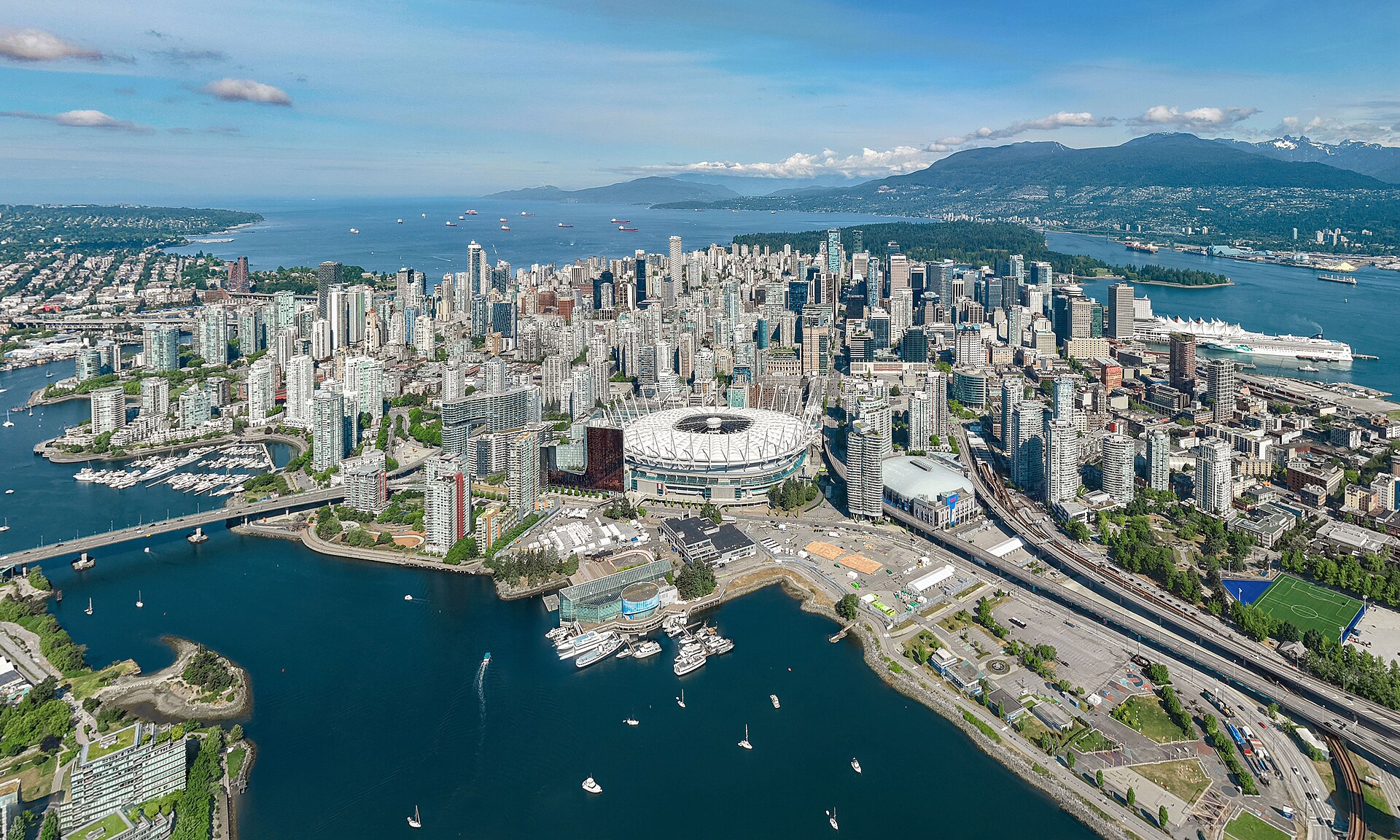


These two are more alike than the price tags suggest: dense coastal metros with real rail, big airports and populations shaped by immigration. Vancouver front-loads its cost into the purchase, a $1,088,800 CAD benchmark and $19,776 of transfer tax at the door, then charges little to keep the house. Miami buys in at $582,621 USD but takes $10,808 a year in property tax and about $505 a month in insurance, which is why the monthly carry is far closer than the sticker. Pick Vancouver to live without a car and without a health insurer. Pick Miami for a bigger job market, warmth and no state income tax.
Vancouver prices are in CAD and Miami prices are in USD. The tables leave them in their own currency and compare ratios and rates instead; a conversion would be stale by the time you read it.
| Measure | Vancouver | Miami | Advantage |
|---|---|---|---|
| City population | 662,248 (2021) | 489,812 (2025) | Not directly comparable |
| Metro population | 3,088,036 (2025) | 6,391,072 (2025) | Not directly comparable |
| Five-year growth Growth is pressure on rents and roads as much as it is opportunity, so it is reported without a winner. | 4.9% (2016-2021) | 10.8% (2020-2025) | Not directly comparable |
What a home costs in each
The figures the two cities' rent-versus-buy and mortgage calculators run on, read from the same tables.
| Measure | Vancouver | Miami | Advantage |
|---|---|---|---|
| Benchmark home price MLS® HPI or equivalent benchmark. Lower is treated as the advantage, which is the buyer's view rather than the owner's. | $1,088,800 (July 2026) | $582,621 (June 2026) | Not directly comparable |
| Detached house benchmark Miami publishes a single house index rather than a composite, so the two rows repeat. | $1,822,900 | $582,621 | Not directly comparable |
| Apartment or condominium benchmark | $688,000 | Not published | Not directly comparable |
| Two-bedroom rent | $2,638/mo (average, October 2025) | $3,004/mo (median, June 2026) | Not directly comparable |
| One-bedroom rent | $1,860/mo | $2,583/mo | Not directly comparable |
| Two-bedroom rent against median income A year of two-bedroom rent as a share of the median household income below. A household paying the median rent out of the median income is a fiction, but it is the same fiction in both columns and it crosses currencies. | 35.2% of a year's income | 54.3% of a year's income | Vancouver |
| Mortgage payment on the benchmark, 20% down 25 years in Vancouver against 30 in Miami, each compounding the way its own country's lenders do. The rates are not a spread you can shop: they are what each market charges. | $4,744/mo at 4.34% | $2,998/mo at 6.67% | Not directly comparable |
| Price to household income Benchmark price divided by the median household income below. A ratio is comparable across currencies; the dollars are not. | 12.1× | 8.8× | Miami |
| Property tax on the benchmark home The effective rate on market value, which is what the two rates have in common and what the Advantage column is decided on; the bills are in each city's own dollars. | $3,663/yr (0.336%, 2026) | $10,808/yr (1.855%, 2025) | Vancouver |
| Transfer tax on the benchmark home Compared as a share of the price. Where the seller pays it, it is a cost of leaving rather than arriving. | $19,776 (buyer pays) | $3,496 (seller pays) | Miami |
| Rent control A cap protects a sitting tenant and does nothing for the next lease, so neither column is simply better. | 2.3% guideline (2026) | Forbidden by state law | Not directly comparable |
Vancouver: The 2026 total residential levy of $3.36394 per $1,000 of taxable value, including the provincial school, TransLink, BC Assessment, Metro Vancouver and MFA portions, before the Home Owner Grant. Miami: About 1.86% of what you pay for the house, which is lower than the 19.9878 mills charged here, and the difference is Florida's homestead exemption rather than any assessment lag. The state assesses at full market value and a purchase resets the assessment to the price. What there is instead is an exemption: $25,000 of taxable value comes off for every taxing authority and a second slice comes off for all of them except the school district, which levies 6.4990 of the 19.9878. That second slice was $25,000 through the 2024 tax roll and has been adjusted for inflation every 1 January since, under the 2024 amendment to Article VII section 6 of the state constitution, so it is now somewhat more than $25,000. The figures here use the base amount, because the Department of Revenue sends the adjusted figure to the county property appraisers rather than publishing it. The difference is worth a few dollars a year on a bill, and the county property appraiser can tell you the amount in force. A homesteaded buyer's first-year bill is therefore about $10,808 on the $582,621 typical home value here. Miami runs its own fire department, so it pays none of the county's 2.3965-mill Fire Rescue district levy. One of only five municipalities in Miami-Dade in that position, and worth more than most municipal rates on this table. The exemption is not automatic: you file for it with the Miami-Dade Property Appraiser by 1 March of the year after you buy. The seller's tax bill is not a guide to yours. Save Our Homes caps a homesteaded property's assessed value at 3% growth a year, and that cap resets to full market value the January after the sale, so a long-tenured owner can be taxed on a fraction of what you will be taxed on for the same house. Ask the property appraiser what the assessment would be at your purchase price, not what the current bill is.
How safe each city is, by the numbers it publishes
Police-reported figures for the most recent year each force or statistics agency has released. Rates describe a whole city or metro area, and the spread between neighbourhoods inside one city is usually wider than the gap between the two cities.
| Measure | Vancouver | Miami | Advantage |
|---|---|---|---|
| Crime Severity Index Statistics Canada's weighted index for the metropolitan area, where 100 is Canada in 2006. American cities have no equivalent series. | 83.5 (2025) | Not published | Not directly comparable |
| Violent crime per 100,000 Canada counts every violent Criminal Code incident; the FBI counts four offences. The Canadian figure is always the larger one for that reason alone. | 709 (2025) | 359 (2025) | Not directly comparable |
| Property crime per 100,000 | 4,067 (2025) | 2,241 (2025) | Not directly comparable |
| Homicides Counts, not rates, and a single year in a small city moves a long way on chance alone. What each figure covers is under the table. | 26 (2025) | 26 (2025) | Not directly comparable |
The Vancouver CMA Crime Severity Index fell from 92.33 in 2022 to 82.29 in 2024, then edged up 1.5% to 83.51 in 2025 while Canada's fell 5%. Within the city, VPD counts show violent crime down 15% from 6,288 incidents in 2023 to 5,343 in 2025 (the lowest rate in the five-year table) and property crime down 9% from its 2023 peak, while weapons offences and possession of stolen property rose sharply in 2025.
What the rates cover: City of Vancouver only (VPD), 5,343 violent Criminal Code incidents, 7.09 per 1,000 population, converted to per 100,000. Not a CMA figure.
Homicides: City of Vancouver (VPD culpable homicide). 11 of the 26 were victims of the April 2025 Lapu-Lapu Day festival vehicle attack; 2024 had 11 and 2023 had 15. About 3.5 per 100,000 on the city's 753,100 population estimate; the VPD table rounds the rate to 0.03 per 1,000.
FBI CDE counts for Miami PD show violent offenses falling from 2,245 in 2023 to 2,225 in 2024 and 1,787 in 2025 (a 20 percent one-year drop), property offenses from 13,928 to 11,178, and homicides from 61 in 2020 to 26 in 2025. Mid-2025 the department reported robberies down 17 percent and auto thefts down 37 percent against the first half of 2024.
What the rates cover: Miami Police Department (ORI FL0130600), FBI Crime Data Explorer NIBRS summarized data, 1,787 violent offenses in calendar 2025 against a CDE agency population of 498,792. 2024: 2,225 offenses, 483.1 per 100k. Miami PD moved to NIBRS mid 2022, so 2021 is blank and 2022 is a partial year in the CDE.
Homicides: Miami PD, FBI CDE: 26 murders and nonnegligent manslaughters in 2025, 5.2 per 100k. 2024: 29 (6.4 per 100k), 2023: 32 (7.1), 2020: 61 (12.8). Miami PD said in July 2025 the city might beat its record low of 24 set in 1946.
Winters, summers and what the weather can do to a house
| Measure | Vancouver | Miami | Advantage |
|---|---|---|---|
| January mean | 4.1 °C | 20.3 °C | Not directly comparable |
| July mean | 18.2 °C | 28.9 °C | Not directly comparable |
| Precipitation a year | 1,160 mm | 1,712 mm | Not directly comparable |
| Snowfall a year | 37 cm | 0 cm | Not directly comparable |
| Sunshine a year | Not published | 3,154 hours | Not directly comparable |
Environment and Climate Change Canada 1991-2020 normals, Vancouver Int'l A (climate ID 1108395). January average 4.1 C, July 18.2 C, annual precipitation 1,159.5 mm with 174 mm in January and 34 mm in July, snowfall 36.6 cm a year. The 1991-2020 normals do not publish bright sunshine hours for this station, so the table shows no sunshine figure for Vancouver.
Hazards: Wildfire smoke from the BC Interior in late summer, heat events (the June 2021 heat dome), atmospheric river flooding in the Fraser Valley (November 2021), and Cascadia earthquake risk; no hurricanes or hail of note.
NOAA NCEI 1991-2020 monthly normals at Miami International Airport (USW00012839): January mean 68.6 F, July 84.1 F (August is warmest at 84.2 F), annual mean 77.4 F, annual precipitation 67.41 in, snow 0. Sunshine about 3,154 hours a year comes from NOAA Comparative Climatic Data (older period), not the 1991-2020 normals. Hazards: hurricanes and storm surge, seasonal king tide and rainfall flooding, heat and humidity from May to October, frequent thunderstorms (roughly 80 thunder days a year).
Hazards: Hurricanes and storm surge every June to November, with chronic tidal and rain flooding; windstorm and separate NFIP or private flood cover are a real carrying cost and coastal home premiums commonly run $4,000 to $7,000 a year or more.
What people earn and what the government takes
| Measure | Vancouver | Miami | Advantage |
|---|---|---|---|
| Median household income | $90,000 CAD (2020) | $66,337 USD (2024) | Not directly comparable |
| Unemployment rate Statistics Canada and the Bureau of Labor Statistics define unemployment slightly differently; the Canadian measure runs about a point higher on the same labour market. | 6.0% (July 2026) | 3.0% (June 2026) | Not directly comparable |
| Sales tax | 12% | 7% | Miami |
| Top marginal income tax Federal plus provincial or state. The American figure leaves out payroll taxes and the cost of health insurance, both of which a Canadian household covers through the tax it pays here. | 53.5% | 37% | Miami |
| Income tax on $100,000, single filer Computed from each jurisdiction's brackets at a single filer's $100,000 and rounded to the dollar, so a gap of a dollar is rounding rather than tax. Two cities in one province or state are shown as Even, because there the two cells describe the same tax and whatever separates them is method. | $20,500 CAD | $13,449 USD | Not directly comparable |
The Vancouver CMA unemployment rate was 6.0% in July 2026 after 6.6% in June, slightly under the national 6.4%. The regional labour market is service-heavy: the Port of Vancouver is Canada's largest, Metro Vancouver is North America's third-largest film and TV production centre, and YVR set a passenger record in 2025.
Main sectors: Port logistics and trade, Technology and digital media, Film and television production, Tourism and hospitality, Health care and education.
BC has no payroll tax on employees and MSP premiums were eliminated in 2020. Property transfer tax and the speculation and vacancy tax matter for buyers but are not income taxes.
Nonfarm employment in the Miami-Miami Beach-Kendall metropolitan division was 1,351,000 in June 2026, up 8,800 (0.7 percent) over the year, led by education and health services (+6,100) and professional and business services (+4,800); Broward shed 5,000 jobs over the same period. MIA handled nearly 3.5 million tons of cargo in 2025, the most of any US airport.
Main sectors: Trade, transportation and logistics (port and airport), Tourism and hospitality, Finance and professional services, Health care and education, Real estate and construction.
No state or local income tax. Property tax and insurance are the taxes and costs that bite in Miami: homestead exemption and the Save Our Homes 3 percent assessment cap favour long-time owners over new buyers.
Whether you need a car
| Measure | Vancouver | Miami | Advantage |
|---|---|---|---|
| System | TransLink (SkyTrain Expo, Millennium and Canada lines; bus; SeaBus; West Coast Express) | Miami-Dade Transit (Metrorail, Metromover, Metrobus); Brightline and Tri-Rail regional rail | Not directly comparable |
| Commute by public transit | 22.9% (2021) | 7.7% (2024) | Vancouver |
| Walk or cycle to work | 18.4% (2021) | 5.7% (2024) | Vancouver |
| Airport | Vancouver International Airport, YVR, 26.9 million passengers in 2025, an all-time record and 2.7% above 2024 (Vancouver Airport Authority, January 2026) | Miami International Airport, MIA, 55.3 million passengers in 2025 (about 1 percent below 2024's record 55.9 million), per Miami-Dade Aviation Department release of May 4 2026 | Not directly comparable |
396.3 million boardings and 237.6 million journeys in 2025, down about 1.5% from 2024, the first annual decline since the pandemic recovery (TransLink figures reported by Daily Hive, 2026-03-25).
Miami-Dade Transit carried 80,797,500 unlinked trips in 2025 (APTA ridership report, as cited on Wikipedia): Metrorail 14,971,300, Metromover 7,683,800, the rest on Metrobus. Q4 2025 weekday averages: Metrorail 50,300, Metromover 25,600, system 259,400.
Health care, schools and what each city is like
Health care
Care is paid for through BC's Medical Services Plan, which covers residents after a waiting period of up to three months with no premiums since January 2020; prescription drugs outside hospital fall under income-tested Fair PharmaCare or employer plans. Finding a family doctor is the practical problem: the province's Health Connect Registry reported about 1.4 million BC residents without a primary care provider in mid-2025, and the main acute hospitals are Vancouver General, St. Paul's (moving to a new False Creek site), and BC Children's.
Education
The University of British Columbia (Point Grey campus) and Simon Fraser University (Burnaby, with downtown campuses) are the two research universities, alongside Emily Carr, Langara, and BCIT. K to 12 is run by the Vancouver School Board (District 39), about 50,000 students in 87 elementary and 18 secondary schools, with French immersion and mini-school programs instead of charters; independent schools receive partial provincial funding.
Living there
A dense, mountainous coastal city where most of the region's jobs and housing sit within a few kilometres of water, and where the cost of housing shapes nearly every decision about where to live. Winters are mild, grey and wet from November to March; summers are dry and bright, increasingly interrupted by wildfire smoke. Day to day it is a transit-and-bike city by Canadian standards, with strong East Asian and South Asian communities and a visible drug and homelessness crisis concentrated in the Downtown Eastside.
Health care
Care is paid for through employer or marketplace insurance, Medicare or Medicaid, and Florida has not expanded Medicaid, so the uninsured share runs above the national rate and emergency rooms carry the gap. Jackson Memorial, the public safety-net hospital with more than 1,500 licensed beds, is the teaching hospital of the University of Miami Miller School of Medicine; Baptist Health South Florida, Mount Sinai Medical Center and the Miami VA are the other large systems.
Education
Miami-Dade County Public Schools is the third largest district in the country but enrolled 313,220 students in 2025-26, down about 13,000 in a year as charters and vouchers grew, and the board approved school closures and consolidations in 2026. Florida International University enrolls roughly 50,000 students and the private University of Miami about 20,000; magnet programs such as Design and Architecture Senior High and the choice-heavy system mean school assignment is something families actively manage.
Living there
The city proper is dense, young and majority Hispanic, with Spanish as common as English in daily business, and it has grown almost 11 percent since 2020 on finance and tech arrivals who pushed rents and condo prices up fast. Summers are long, wet and hot, winters are the reason people stay, and every household budgets for hurricane season, windstorm insurance and flooded streets at king tide. Driving is the default outside the Metrorail and Metromover corridors, and traffic is the complaint residents raise most.
Where each city wins, and where it loses
Vancouver's benchmark home was $1,088,800 CAD in July 2026 and Miami's typical home was $582,621 USD in June 2026, yet the monthly figures sit much closer than that. The payment with 20% down is $4,744 in Vancouver at 4.34% and $2,998 in Miami at 6.67%. Miami's running costs then eat most of the difference: $10,808 a year in property tax against Vancouver's $3,663, and roughly $505 a month in insurance against $190, for a full carry near $4,404 against $5,239. Measured against local pay, Vancouver's benchmark is 12.1 times the metro's 2020 median household income of $90,000 and Miami's is 8.8 times the city's 2024 median of $66,337. Rent favours Vancouver in each city's own currency: a two-bedroom averaged $2,638 there in October 2025, while Miami's median was $3,004 in June 2026.
Both cities recorded 26 homicides in 2025, and that is where the resemblance ends. Vancouver's 26 fell on a city the police size at 753,100 residents, about 3.5 per 100,000, and 11 of the victims died in one event, the April 2025 Lapu-Lapu Day festival vehicle attack. Miami's 26 murders and nonnegligent manslaughters worked out to 5.2 per 100,000, continuing a long fall from 61 in 2020. The rest of the figures measure different things. Vancouver's Crime Severity Index of 83.51 in 2025 weights every Criminal Code violation and sat above Canada's 75.0, and VPD counted 4,067 property incidents per 100,000 inside the city. Miami's FBI NIBRS totals give 358.6 violent and 2,240.8 property offences per 100,000, both down steeply in a year. Property crime is the daily grievance in Vancouver.
Vancouver is grey and wet with nothing to fear in summer; Miami is hot and wet with a season to plan around. Vancouver averages 4.1 C in January and 18.2 C in July, with 1,159.5 mm of precipitation and 36.6 cm of snow, and Environment and Climate Change Canada does not publish a sunshine normal for the airport station, so the bright-hours figure simply is not available. Miami averages 20.3 C in January and 28.9 C in July with 1,712 mm of rain and roughly 3,154 sunshine hours from an older NOAA series. The hazards matter more than the averages. Vancouver faces Interior wildfire smoke, heat events like the June 2021 dome and a Cascadia earthquake nobody can schedule. Miami faces hurricanes and storm surge every June to November plus king tide flooding, which is why coastal premiums commonly run $4,000 to $7,000 a year.
Miami's metro is twice the size and pulling away: 6,391,072 people in 2025 against Metro Vancouver's 3,088,036, with city growth of about 10.8% since 2020 while Statistics Canada put Vancouver CMA growth at 0.2% between July 2024 and July 2025 after a net loss of non-permanent residents. Unemployment was 3.0% in Miami-Dade in June 2026 and 6.0% in the Vancouver CMA in July, under Canada's 6.4%. Vancouver leans on port logistics, film and television, technology and health care; Miami on trade, tourism, finance and health, with MIA moving nearly 3.5 million tons of cargo in 2025, more than any other US airport. A single filer on $100,000 pays about $20,500 CAD in Vancouver and about $13,449 USD in Miami, and sales tax is 12% against 7%. The Canadian gap buys the Medical Services Plan.
Vancouver is the transit city here and the margin is wide. In the 2021 Census 22.9% of city commuters used transit and another 18.4% walked or cycled, and TransLink logged 396.3 million boardings in 2025 across SkyTrain, buses, the SeaBus and the West Coast Express. Miami's rail is real but narrow. Miami-Dade Transit carried 80,797,500 trips in 2025, of which Metrorail took 14,971,300 and Metromover 7,683,800, and 7.7% of city workers commuted by transit in 2024 while 15.7% worked from home. Away from those corridors a car is assumed, and traffic is the thing residents complain about first. Miami takes the airport comparison, at 55.3 million passengers in 2025 against a record 26.9 million at YVR, and Brightline and Tri-Rail give it regional rail options.
Coverage is the fork in the road. British Columbia has charged no MSP premiums since 2020 and bills nothing at the point of care, but about 1.4 million residents had no primary care provider in mid-2025; the acute hospitals are Vancouver General, St. Paul's, which is moving to a new False Creek site, and BC Children's. Miami runs on employer and marketplace insurance, with Jackson Memorial, the teaching hospital of the University of Miami Miller School of Medicine, absorbing what falls through in a state that has not expanded Medicaid. Both have serious universities: UBC and SFU on one side, Florida International at roughly 50,000 students and the private University of Miami at about 20,000 on the other. The Vancouver School Board teaches about 50,000 pupils with immersion and mini-schools; Miami-Dade enrolls 313,220 and expects families to work the choice system.
The thing people get wrong is which city is expensive month to month. Vancouver's benchmark costs nearly twice Miami's typical home, yet the carrying cost differs by under 20%, because Florida charges 1.86% of the purchase price in tax every year and insurance a Vancouver owner would find hard to believe. For renters the comparison inverts outright: Miami's median two-bedroom in June 2026 exceeded Vancouver's October 2025 average in each city's own dollars, on a lower city median income, and Florida forbids rent control while BC holds increases on a sitting tenancy to 2.3% in 2026. The trap in the other direction is the entry fee. BC's property transfer tax on the Vancouver benchmark is $19,776 and the buyer writes that cheque; Miami's $3,496 documentary stamp, at Miami-Dade's 60 cents per $100 rather than the 70 the rest of Florida charges, is the seller's.
Better here
- Living without a car is realistic: 22.9% of city commuters took transit in 2021 and 18.4% walked or cycled, against 7.7% and 5.7% in Miami.
- Property tax on the benchmark is $3,663 a year, about a third of Miami's $10,808 on a cheaper house.
- Home insurance is roughly $190 a month against $505, with no windstorm policy and no hurricane deductible.
- Rent is lighter relative to income, with a two-bedroom averaging $2,638 in October 2025 and BC capping sitting-tenancy increases at 2.3% for 2026.
- Health care runs through BC's Medical Services Plan, free of premiums since 2020 and independent of any employer.
- July averages 18.2 C, so summer is something to be outside in rather than something to survive indoors.
Worse here
- The benchmark is 12.1 times the metro median household income against Miami's 8.8 times, and the payment is $4,744 a month.
- The buyer pays $19,776 in property transfer tax at closing, where Miami's $3,496 falls on the seller.
- Income tax on $100,000 is about $20,500 CAD against $13,449 USD in Miami, and sales tax is 12% against 7%.
- Metro unemployment was 6.0% in July 2026 against 3.0% in Miami-Dade in June.
- About 1.4 million British Columbians had no primary care provider in mid-2025, so a family doctor means a long wait.
- City property crime ran 4,067 incidents per 100,000 in 2025 and the Crime Severity Index rose to 83.51 while Canada's fell.
Choose Vancouver if
- you want a metro where transit and a bicycle can replace a car outright
- you are paid in Canadian dollars and would rather buy once than pay a large tax and insurance bill every year
- you want health coverage that does not depend on an employer or a marketplace plan
- you prefer a wet mild summer to a hurricane season
The Vancouver guide · Neighbourhoods · Vancouver rent vs buy · Vancouver mortgage calculator
Better here
- The typical home cost $582,621 in June 2026 at 8.8 times the city median household income, with a payment of $2,998 a month.
- Florida levies no personal income tax, so a single filer on $100,000 keeps everything the federal government does not take.
- The metro holds 6,391,072 people and Miami-Dade unemployment was 3.0% in June 2026.
- MIA carried 55.3 million passengers in 2025 and moved more cargo than any other US airport, so connections are rarely necessary.
- Violent offences fell from 2,225 in 2024 to 1,787 in 2025 and property offences from 13,928 to 11,178.
- January averages 20.3 C, which is roughly Vancouver's July mean plus two degrees.
Worse here
- The median two-bedroom rent was $3,004 in June 2026, above Vancouver's average on a lower median household income of $66,337.
- Property tax is $10,808 a year, 1.86% of the price, and the assessment resets to what you paid the January after the sale.
- Insurance is about $505 a month before flood cover, with coastal premiums commonly $4,000 to $7,000 a year.
- Homicide ran 5.2 per 100,000 in 2025 against roughly 3.5 in Vancouver.
- Hurricanes, storm surge and king tide flooding are a fixed part of the calendar from June to November.
- Florida has not expanded Medicaid and preempts rent control, so both coverage and renewal rent depend on the market.
Choose Miami if
- you want to buy rather than rent, and want the mortgage to be the smaller number
- you earn in US dollars and want no state income tax on them
- you need the reach of a 6.4 million metro and a hub airport
- you accept driving off the Metrorail and Metromover corridors
The Miami guide · Neighborhoods · Miami rent vs buy · Miami mortgage calculator
Vancouver or Miami, in short
Is Vancouver or Miami cheaper to live in?
Closer than the headline prices suggest. Vancouver's benchmark was $1,088,800 CAD in July 2026 and Miami's typical home $582,621 USD in June 2026, but the monthly carry with 20% down works out at about $5,239 against $4,404, because Miami pays $10,808 a year in property tax and roughly $505 a month in insurance. Renting is cheaper in Vancouver in each city's own dollars: $2,638 average for a two-bedroom in October 2025 against a $3,004 median in June 2026. Against local income, Vancouver's benchmark is 12.1 times median and Miami's 8.8 times.
Is Vancouver or Miami safer?
Both counted 26 homicides in 2025, but Vancouver's fell on a larger city, about 3.5 per 100,000 against Miami's 5.2, and 11 of Vancouver's were victims of the April 2025 Lapu-Lapu Day attack. Property crime tilts the other way: 4,067 incidents per 100,000 in the City of Vancouver against 2,240.8 in Miami. The violent-crime rates are not comparable, since Vancouver's Crime Severity Index of 83.51 weights every Criminal Code violation while Miami's 358.6 per 100,000 counts a short FBI list. Miami's counts fell about 20% in a single year.
Which has the better climate, Vancouver or Miami?
Vancouver has the better summer and Miami the better winter. Vancouver averages 4.1 C in January and 18.2 C in July with 1,159.5 mm of precipitation, 36.6 cm of snow and no published sunshine normal at its airport station. Miami averages 20.3 C in January and 28.9 C in July with 1,712 mm of rain and about 3,154 sunshine hours from an older NOAA series. The costs attach to different seasons: Vancouver's late-summer smoke and its long grey November to March, Miami's humidity and its June to November hurricane season.
Can I compare Canadian and US prices directly when choosing between Vancouver and Miami?
No, and this site does not convert them. A Vancouver figure is in Canadian dollars and a Miami figure in US dollars, and when you move your salary, taxes and grocery bill all change currency at once, so an exchange rate tells you very little about the decision. Compare each city's numbers against its own incomes instead. Vancouver's benchmark is 12.1 times the metro median household income and Miami's 8.8 times the city median; Vancouver rent takes a smaller share of local pay than Miami rent does. Those ratios hold whatever the exchange rate does.
Where the figures come from
Housing figures are the ones behind each city's calculators, dated on those pages. The rest are listed here with the date they were retrieved. See the methodology for how facts, estimates and opinion are kept apart.
- Census Profile, 2021 Census of Population: Vancouver, City (CY) and Vancouver (CMA) · Statistics Canada · retrieved Supports: City population, population.metro (2021 count), Five-year growth, Median household income, Transit commute share, Walk and cycle commute share
- Population estimates, July 1, by census metropolitan area and census agglomeration (table 17-10-0148-01) · Statistics Canada · retrieved Supports: Metro population
- The Daily: Canada's population estimates, subprovincial areas, 2025 · Statistics Canada · retrieved Supports: population.growthPct5y note
- Crime severity index and weighted clearance rates, Canada, provinces, territories and Census Metropolitan Areas (table 35-10-0026-01) · Statistics Canada · retrieved Supports: Crime Severity Index, Crime trend
- Police-reported Crime Severity Index and crime rate, by census metropolitan area, 2025 · Statistics Canada, The Daily · retrieved Supports: crime.index note (crime rate, Canada CSI)
- Vancouver Police Department Crime Incident and Crime Rate Statistics, 2021-2025 · Vancouver Police Department · retrieved Supports: Violent crime rate, Property crime rate, Homicides, Crime trend, population.city note
- Violent crime in Vancouver reaches 20-year low, according to VPD report · CTV News Vancouver · retrieved Supports: Crime trend
- Canadian Climate Normals 1991-2020, Vancouver International (Airport) · Environment and Climate Change Canada · retrieved Supports: January mean, July mean, Annual precipitation, Annual snowfall
- The Daily: Labour Force Survey, July 2026 · Statistics Canada · retrieved Supports: Unemployment rate, Labour market
- Personal income tax rates · Government of British Columbia · retrieved Supports: Top marginal income tax, Income tax on $100,000
- BC 2025 and 2026 Tax Rates and Tax Brackets · TaxTips.ca · retrieved Supports: Top marginal income tax, taxes.incomeTaxAt100k (federal brackets and basic personal amount)
- Provincial sales tax (PST) · Government of British Columbia · retrieved Supports: Sales tax
- MSP premiums · Government of British Columbia · retrieved Supports: Health care, Tax notes
- TransLink ridership sees decline in 2025, partly due to fewer young adults · Daily Hive Urbanized · retrieved Supports: Transit ridership
- YVR breaks all-time cargo and passenger records in 2025 · Vancouver Airport Authority · retrieved Supports: Airport passengers, Labour market
- Key sectors underpin Metro Vancouver's growth ambitions · Western Investor · retrieved Supports: Main sectors, Labour market
- 1.4M in B.C. Have No Family Doctor. Most Aren't Listed · The Canada Report · retrieved Supports: Health care
- Our District · Vancouver School Board · retrieved Supports: Education
- Vancouver · Wikipedia · retrieved Supports: point
- Miami, FL Population (2025) · Every City in the USA (republishing Census Bureau PEP Vintage 2025) · retrieved Supports: City population, Five-year growth
- U.S. Census Bureau QuickFacts: Miami city, Florida · US Census Bureau · retrieved Supports: population.city (page returned 403 on fetch; figure confirmed via search snippet and secondary republisher)
- Largest U.S. Metro Areas by Population 2026 (Vintage 2025 estimates) · statranker.org · retrieved Supports: Metro population
- Florida MSA population estimates, April 1 2025 · Florida Office of Economic and Demographic Research · retrieved Supports: population.metro (alternative state estimate)
- Miami, FL Metro Area and Miami city profiles, ACS 2024 1-year · Census Reporter · retrieved Supports: Median household income, population.metro (ACS)
- ACS 2024 1-year table B08301 Means of Transportation to Work · Census Reporter API (US Census Bureau data) · retrieved Supports: Transit commute share, Walk and cycle commute share
- Crime Data Explorer summarized agency data, Miami Police Department (FL0130600) · FBI · retrieved Supports: Violent crime rate, Property crime rate, Homicides, Crime trend
- Miami Police Report 20% Decrease in Homicides for 1st Half of 2025 · Officer.com · retrieved Supports: Crime trend, Homicides
- U.S. Climate Normals 1991-2020, monthly and annual, station USW00012839 Miami International Airport · NOAA National Centers for Environmental Information · retrieved Supports: January mean, July mean, Annual precipitation, Annual snowfall
- Comparative Climatic Data · NOAA NCEI · retrieved Supports: climate.sunshineHours (approximate; figure taken from search summaries of CCD, not the table itself)
- Climate of Miami · Wikipedia · retrieved Supports: climate.hazards (thunderstorm days, hurricane exposure)
- Broward County June 2026 Unemployment Data · CareerSource Broward (FloridaCommerce data) · retrieved Supports: Unemployment rate, Labour market
- Discretionary Sales Surtax Information (DR-15DSS) 2026 · Florida Department of Revenue · retrieved Supports: Sales tax
- IRS releases tax inflation adjustments for tax year 2025 · Internal Revenue Service · retrieved Supports: Top marginal income tax, taxes.incomeTaxAt100k (brackets)
- FAQ: The One Big Beautiful Bill Act Tax Changes · Tax Foundation · retrieved Supports: taxes.incomeTaxAt100k ($15,750 standard deduction)
- Miami-Dade Transit · Wikipedia (citing APTA Ridership Report) · retrieved Supports: Transit ridership
- Soaring cargo growth lifts MIA to #1 in the U.S., #3 in the world · Miami International Airport · retrieved Supports: Airport passengers, Labour market
- Miami (MIA) Airport & Passenger Statistics · RoadGenius · retrieved Supports: transit.airport (2024 comparison)
- A Guide to Florida Flood Insurance (2026) · Insurify · retrieved Supports: climate.hazards (insurance costs)
- Enrollment in Miami-Dade schools is lower at the start of this year. Why? · WLRN · retrieved Supports: Education
- FIU enrollment approaches 50,000 as fall semester nears · Miami Today · retrieved Supports: Education
- Jackson Memorial Hospital · Jackson Health System · retrieved Supports: Health care
- Metro Vancouver home sales lose brief momentum: July 2026 statistics · Greater Vancouver REALTORS® · retrieved Supports: Composite benchmark price of $1,088,800 in July 2026, down 6.2% year over year, Benchmark prices by property type, with every type down on the year
- Rental Market Survey: Vancouver (CY), average rent by bedroom type, October 2025 · Canada Mortgage and Housing Corporation · retrieved Supports: One-bedroom average rent of $1,860, Two-bedroom average rent of $2,638, Metro vacancy rate of 3.7%
- Property tax rates · City of Vancouver · retrieved Supports: 2026 total residential levy of $3.36394 per $1,000 of taxable value
- Home owner grant · Province of British Columbia · retrieved Supports: The grant of up to $570 on an eligible principal residence
- Premium information for homeowner and small rental loans · Canada Mortgage and Housing Corporation · retrieved Supports: Mortgage default insurance premium rates by loan-to-value
- Regulations amending the Insurable Housing Loan Regulations and the Eligible Mortgage Loan Regulations (SOR/2025-55) · Canada Gazette, Part II · retrieved Supports: The $1.5 million insured price cap, 30-year amortization for first-time buyers and new builds
- Minimum qualifying rate for uninsured mortgages · Office of the Superintendent of Financial Institutions · retrieved Supports: The qualifying rate of the contract rate plus two points, or 5.25%
- Interest rates charged for new and existing lending by chartered banks · Bank of Canada · retrieved Supports: The default mortgage rate of 4.34%, uninsured five-year-plus fixed, funds advanced May 2026
- Property transfer tax · Province of British Columbia · retrieved Supports: Transfer tax brackets, First-time buyer and new build exemptions
- Rent increases · Province of British Columbia · retrieved Supports: 2026 rent increase guideline of 2.3%
- Zillow Home Value Index (ZHVI), all homes, mid-tier, smoothed and seasonally adjusted: city file, June 2026 · Zillow Research · retrieved Supports: A typical home value for the 35th to 65th percentile of each municipality's market, computed on one method across all twenty-four, The same series and month the Charlotte, Orlando and Palm Beach pages use, so all four American layers can be read against each other, Year-over-year change to June 2026
- Table 1: Comparison of Taxes Levied, county and municipal governments, fiscal years 2024-25 and 2025-26: Miami-Dade · Florida Department of Revenue, Property Tax Oversight · retrieved Supports: The adopted 2025-26 millage rate for Miami-Dade County and every municipality in it, The county's own components: countywide 4.5740, Fire/Rescue 2.3965, Library 0.2812 and the Unincorporated Municipal Service Area at 1.9090, Municipal rates from Sunny Isles Beach's 1.7000 to Biscayne Park's 9.3000
- 2025 millage rates and taxing authorities, Miami-Dade County · Miami-Dade County Property Appraiser · retrieved Supports: A published combined rate for unincorporated Miami-Dade of 16.9317 mills, Its components: school district 6.4990, countywide 5.7361, regional water districts 0.3911, Fire Rescue 2.3965 and UMSA 1.9090, which this layer's stack reproduces exactly, Millage code 0100, the City of Miami, at 19.9878 mills for 2025: 7.1080 of city operating levy and 0.2536 of city debt service on the countywide 12.6262, Opa-locka's municipal operating levy of 8.9797, and a 2025 total of 24.0024 for millage code 0800, A city debt service column, which nine of the twenty-four municipalities here carry: Miami 0.2536, Miami Beach 0.2779, North Bay Village 1.1666, Golden Beach 0.6000, Miami Shores 0.1331, North Miami Beach 0.2000, Miami Gardens 0.4331, Doral 0.4810 and Homestead 0.2446, A blank library district column for Hialeah, North Miami, North Miami Beach, Homestead, Miami Shores, Bal Harbour and Surfside, which are outside the county library district, A blank Fire Rescue column for Miami, Miami Beach, Coral Gables, Hialeah and Key Biscayne, which is the five this layer flags
- About Fire Rescue · Miami-Dade Fire Rescue · retrieved Supports: The Fire Rescue district covering the unincorporated county and twenty-nine municipalities, Miami, Miami Beach, Coral Gables, Hialeah and Key Biscayne operating their own fire departments and lying outside the district
- Documentary stamp tax · Florida Department of Revenue · retrieved Supports: A Miami-Dade deed rate of 60 cents per $100 rather than the 70 cents charged in every other county, A Miami-Dade surtax of 45 cents per $100, not due on a document transferring only a single-family dwelling, 35 cents per $100 on a promissory note, statewide
- Annual estimates of the resident population for incorporated places, 2020 to 2024 · United States Census Bureau, Population Estimates Program · retrieved Supports: 2020 census counts and 2024 estimates for each municipality, Miami at 487,014 and Hialeah at 235,388; Golden Beach at 1,034
- Average cost of home insurance in Florida, 2026 · MoneyGeek · retrieved Supports: A Miami-Dade County average of about $6,045 a year: below Palm Beach County's $6,614, A Florida average of about $3,815 and a national average of about $2,543
- Primary Mortgage Market Survey · Freddie Mac · retrieved Supports: 30-year fixed-rate mortgage averaging 6.67%
- Governmental leasehold intangible personal property tax and the non-recurring intangible tax on mortgages · Florida Department of Revenue · retrieved Supports: A non-recurring intangible tax of 2 mills: 0.2%, on the obligation secured by a mortgage on Florida real property
- Property tax exemptions and additional benefits · Florida Department of Revenue · retrieved Supports: A $25,000 homestead exemption applying to all taxing authorities and a second slice, $25,000 in the 2024 base year and adjusted for inflation each 1 January since, applying to all but the school district, The Save Our Homes assessment limitation of 3% or the change in CPI, whichever is lower, Portability of up to $500,000 of accrued Save Our Homes benefit to a new homestead, The 1 March filing deadline
- Chapter 2023-17, Laws of Florida: preemption of rent control · The Florida Senate · retrieved Supports: The repeal of the referendum exception that had allowed a local rent control ordinance in a declared housing emergency