
Live in Huntington Hills
A big, practical 1967 community between Nose Hill and Nose Creek. Six public schools, a curling and hockey rink the association runs, and the Thornhill pool up Centre Street.
Huntington Hills was annexed in 1961 and substantially developed from 1967, and it is one of the north's biggest established communities: 13,120 residents in 5,290 private households at the 2021 census, across a 4.7 km² boundary polygon running from Nose Hill Park's edge to the Nose Creek valley. Seventy-eight per cent of its occupied dwellings went up between 1961 and 1980, and the mix is unusually broad for the era: 56 per cent single-detached, 17 per cent apartments under five storeys and 16 per cent row houses. It also keeps an unusual amount inside its own lines, from six public schools to the association's arena and curling rink.
Thirteen thousand people between the hill and the creek
Bounded north by Beddington Boulevard, east by Deerfoot Trail and Nose Creek, south by 64 Avenue N, and west by Nose Hill Park and 14 Street W. Ward 4, in the City's North sector.
Huntington Hills was annexed in 1961, developed substantially from 1967, and filled fast: 78% of its occupied dwellings date from 1961 to 1980, and only 2% from 2001 onward. At the 2021 census it held 13,120 residents in 5,290 private households, from Nose Hill's edge to the Nose Creek valley across a 4.7 km² boundary.
Its argument is self-sufficiency: six public schools including a senior high running International Baccalaureate, the association's own gym, indoor rink, curling and hockey rink and basketball courts at 520 78 Avenue NW, the Thornhill pool at 6715 Centre St. N.W., and a Centre Street retail strip. Few Calgary communities of any era keep this much within reach.
It is honest, mixed housing: 40% of households rent, 56% of occupied dwellings are single-detached and the rest run through row houses and walk-up apartments. The median household income was $78,000 in 2020 against the city's $98,000, and 17% of residents are 65 or over against 13% citywide. The practical north at its most complete, and its oldest.
- 78% of occupied dwellings date from 1961 to 1980, the aluminum wiring era: inspect electrical
- Centre Street and Deerfoot carry real traffic on two edges
- 40% of households rent, well above the city's 31%: street upkeep varies block to block
- Airport flight paths cross the north: listen at different times
How Huntington Hills got here
- 1961The land is annexed to the City of Calgary.
- 1967Substantial development begins between the hill and the creek.
- 1970The Huntington Hills Community Association is registered as a provincial society on 9 February. Its facility at 520 78 Avenue NW still runs a gym, an indoor skating rink, a curling and hockey rink, basketball courts and playfields.
- 1961–1980Build-out at scale: 78 per cent of the community's occupied dwellings date from these two decades, and only 2 per cent from 2001 onward.
- 2019The City's last civic census counts 13,420 residents in 5,634 dwellings, 5,368 of them occupied and 3,077 owner-occupied.
- 2021The federal census counts 13,120 residents in 5,290 private households, 40 per cent of them renting, with a median household income of $78,000 in 2020 against the city's $98,000. Seventeen per cent of residents are 65 or over, against 13 per cent citywide.
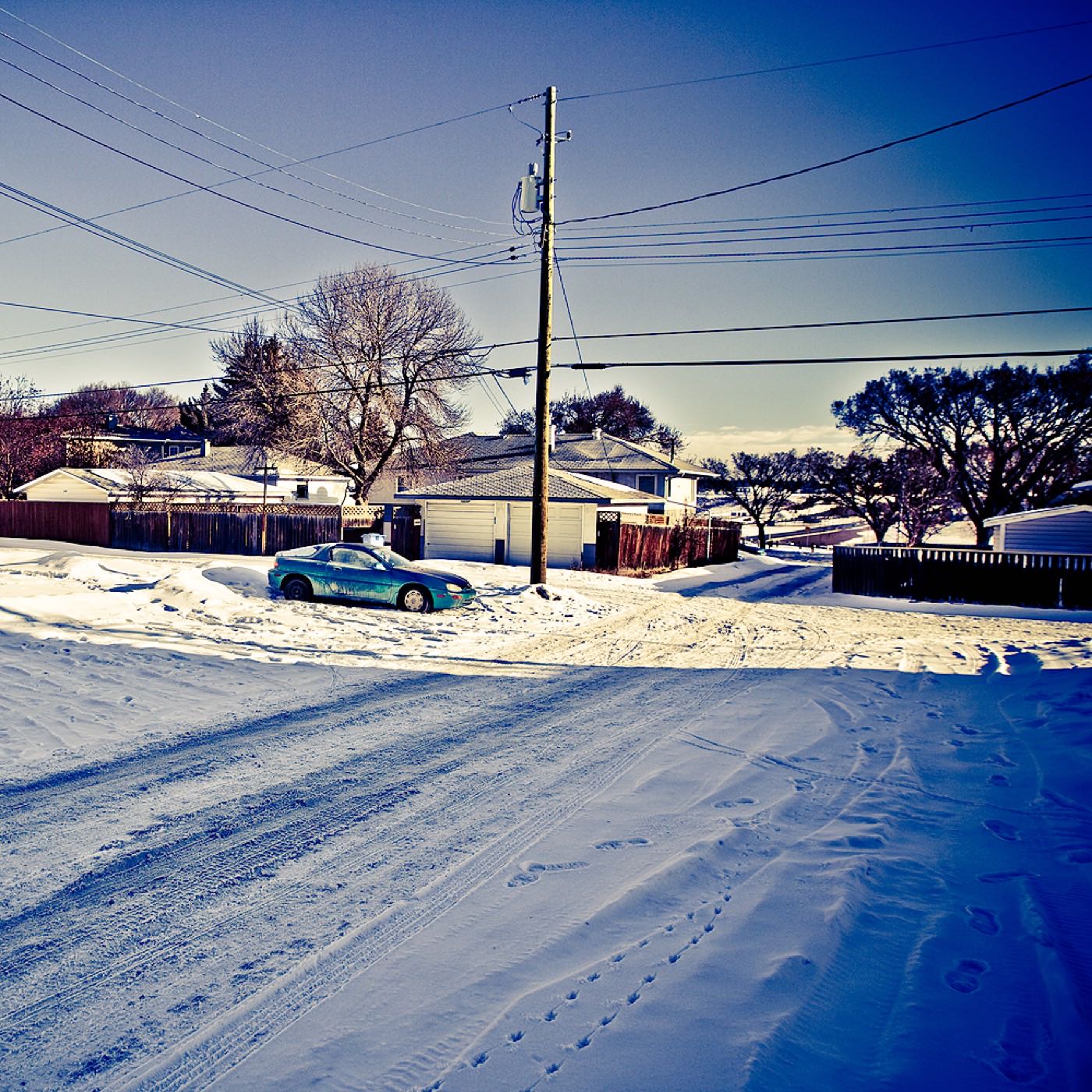
The park boundary and the creek valley
Nose Hill is the community's western boundary (direct access, no road to cross at several points) and the Nose Creek valley pathway runs the eastern edge.
What the map does not show: hill on one side, creek on the other: pick your daily walk by the wind direction.
Elsewhere in Calgary, not Huntington Hills

11 places, with real drive times
Road-adjusted distance and drive time from the centre of the community to each destination, nearest first. Filter by category.
Showing 1–11 of 11 places, nearest first.
Method: distances and drive times are estimated from the centre of the community to each destination using Calgary's road grid, and are rounded to honest ranges rather than presented as precise figures. Almost everything is inside or adjacent; the airport across Deerfoot is the quickest big run.
Every gym within reach
Thornhill is the anchor and it is yours. Confirm hours before you count on anything.
- The association's facility at 520 78 Avenue NW adds a gym, an indoor rink, curling and hockey and basketball courts
- The Winter Club is the private upgrade at the corner, though its site refuses automated clients and nothing about it is confirmed here
- Nose Hill and the creek are the free options
- Six schools' worth of gyms programme the evenings
| Facility | What it is | Drive |
|---|---|---|
| Thornhill Aquatic & Recreation Centre open | City-run, at 6715 Centre St. N.W.: pool, dive tank, hot tub, steam room, weights and cardio, and a fitness studio. | 3–4 min |
| Huntington Hills Community Centre open | The association's own facility at 520 78 Avenue NW: gym, indoor skating rink, curling and hockey rink, basketball courts and playfields. | 1–3 min |
| Calgary Winter Club open | The private option at the community's corner. Its site refuses automated clients, so treat facilities, fees and any waitlist as unconfirmed. | 2–4 min |
| Nose Hill and the creek pathway open | Free option: the park on one edge, the Nose Creek valley on the other. | 1–3 min |
Nobody in Huntington Hills drives far for recreation. That is the community's whole pitch, and it shows in the commute too: half its employed residents are at work within fifteen to twenty-nine minutes.
Six schools, K–12, inside the lines
Wikipedia lists four public elementaries for the community, Alex Munro, Catherine Nichols Gunn, Dr. J.K. Mulloy and Huntington Hills, with Sir John A. Macdonald for junior high and John G. Diefenbaker, which runs International Baccalaureate, for the senior years. On the Catholic side it names St. Helena, St. Henry and St. Hubert.
| School | Board | Note |
|---|---|---|
| Four public elementaries | Calgary Board of Education | Wikipedia lists Alex Munro, Catherine Nichols Gunn, Dr. J.K. Mulloy and Huntington Hills elementaries for the community. Huntington Hills School's own page names differentiated instruction, an Artists in Residency programme and Calgary Reads status, and does not print a grade range. |
| Sir John A. Macdonald School | Calgary Board of Education | The junior high on Wikipedia's list for the community. Nothing this guide opened from the board prints its grade range. |
| John G. Diefenbaker High School | Calgary Board of Education | Senior high inside the community. Its own page names an International Baccalaureate programme alongside core subjects, career and technology, fine and performing arts and languages. |
| St. Helena, St. Henry and St. Hubert | Calgary Catholic | Wikipedia's Catholic list for the community names St. Helena Junior High, St. Henry Elementary and St. Hubert Elementary. The Calgary Catholic School District's site refuses automated clients, so nothing here was read from the district itself. |
Alberta funds Catholic education the same way it funds public education, so there is no tuition for a resident student at either board. Confirm internal catchments. With four elementaries the street decides the school, no board page this guide could open prints an attendance area, and nothing on the Catholic side was read from the Calgary Catholic School District, whose site refuses automated clients.
Month by month, what living here looks like
Not a highlights reel: the actual annual rhythm, including the dates residents have to remember.
- Thornhill pool and the arena carry the winter without leaving the community
- Priority snow routes keep the main roads clear
- Indoor recreation carries the season
- Long dark evenings, but rarely for weeks at a stretch
- Ski traffic west on the Trans-Canada peaks on Friday and Sunday
- Coldest snaps usually break with a chinook
- Noticeably longer light by month end
- Indoor pools at their busiest
- Melt and refreeze on the side streets: ice cleats weather
- Pathways reopen as the snow goes
- First patio afternoons on the warm chinook days
- Street sweeping begins late in the month
- Last hard frosts: planting waits for the May long weekend
- Pathway and park season opens properly
- Garden centres open across the quadrant
- Migratory birds return to the parks
- Long evenings: sunset past 9pm by month end
- Lilacs and crabapples through the older streets
- Field sport seasons start on the community greens
- First genuinely warm stretches
- Peak daylight at the solstice: over 16 hours
- School year ends and the parks fill
- Evening thunderstorms begin building over the foothills
- Farmers' markets open for the season
- Calgary Stampede: ten days across the city
- Hottest month, with cool nights at this elevation
- Evening thunderstorms roll off the foothills
- Canada Day events in the parks
- Folk Festival on Prince's Island mid-month
- Kananaskis and Banff at their best, straight west
- Quietest weeks before school returns
- Smoke from western wildfires is possible
- School year restarts and morning traffic thickens
- First frost typically arrives late in the month
- Poplar and aspen colour begins
- Evenings shorten fast
- Peak autumn colour through the older tree-lined streets
- First snow is normal, and normally melts
- Snow tires go on across the quadrant
- Nose Hill's grasses turn gold
- Ski season opens west on the Trans-Canada
- Dark by 5pm
- Freeze sets in for good
- Holiday retail season begins
- Chinook arches over the western skyline on clear days
- Holiday lights through the community streets
- Outdoor rinks open when the freeze holds
- Quiet, short days between the holidays
1 more photograph of the community and its surroundings
All freely licensed, via Wikimedia Commons. Filter by category.

Showing 1–1 of 1 photographs.
About these photographs. Openly licensed images geotagged in or near Huntington Hills, found on Wikimedia Commons and served from there with full attribution. Inline photos elsewhere on the page may still come from the site's shared Calgary library.